- Company Articles
- Products and Technology
- Product knowledge
- Flexible Production Equipment: Five Way Straight Lean Pipe Joint Role

Flexible Production Equipment: Five Way Straight Lean Pipe Joint Role
Related Product
Five Way Straight Lean Pipe Joint
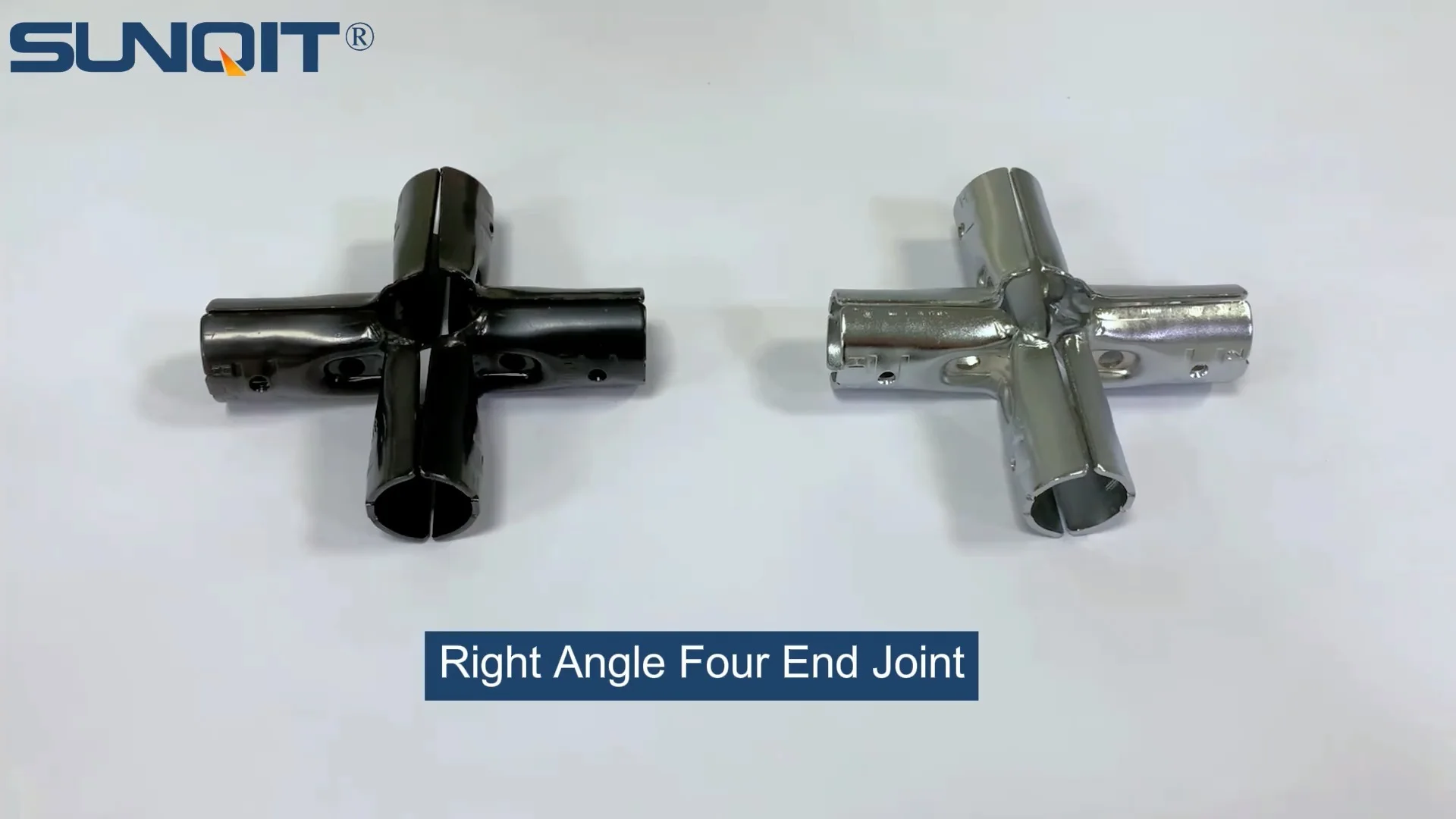
Five way straight lean pipe joint, for 5 pcs 28mm lean pipe connect in straight angle,which used widely in workbench, flow rack, hand trolley frame connection.
The Unsung Hero of Modern Factory Floors
Walk into any thriving manufacturing facility today, and you'll notice something different from the rigid, fixed assembly lines of the past. Workstations shift and adapt like living organisms—tables expand to fit new machinery, material racks reconfigure for smaller batches, and conveyor paths reroute with minimal fuss. This flexibility isn't magic; it's the result of intentional design, and at the heart of it all lies a humble yet powerful component: the lean pipe joint. Among these, the five way straight lean pipe joint stands out as a quiet workhorse, enabling the kind of adaptability that keeps factories competitive in a world where change is the only constant.
Lean manufacturing isn't just a buzzword—it's a philosophy built on eliminating waste, optimizing flow, and responding quickly to customer needs. But here's the thing: none of that works if your production equipment can't keep up. Imagine a small electronics manufacturer that suddenly lands a rush order for a new gadget. Their old, bolted-down workbenches and static material racks would grind the line to a halt as they struggle to rearrange. Now picture the same scenario with a lean system in place: workers grab a few aluminum lean pipes, snap on a five way joint, and within hours, a custom workstation emerges, ready to handle the new product. That's the power of flexibility—and it starts with components like the five way straight lean pipe joint.
Lean Pipes 101: The Backbone of Adaptable Workspaces
Before we dive into the star of the show, let's talk about the foundation it connects: lean pipes. If you've ever wondered what those silver, black, or yellow tubes are that form workbenches, racks, and trolleys in modern factories, you're looking at lean pipes. Typically made from steel with a plastic coating (PE-coated lean pipe), aluminum, or even stainless steel, these pipes are lightweight, strong, and—most importantly—designed to be assembled and disassembled in minutes.
Why does this matter? Traditional production setups use welded steel or fixed wooden structures. They're sturdy, sure, but they're also permanent. If your company shifts from making 1000-unit batches to smaller, custom orders (a trend sweeping manufacturing), those fixed structures become liabilities. Lean pipes, on the other hand, are like industrial Legos for adults. They're modular, meaning you can add a shelf here, extend a table there, or even build an entirely new material rack without calling in a welder or spending days on construction.
Real Scenario: A furniture manufacturer in Ohio recently switched to lean pipes for their assembly stations. Previously, when they introduced a new chair model, they'd have to build a custom workbench from scratch—costing $2,000 and taking three days. Now, using lean pipes and joints, they reconfigure existing setups in under four hours, spending less than $200 on additional parts. "It's like night and day," says their production manager. "We used to dread product launches; now we embrace them."

The Five Way Straight Lean Pipe Joint: Design That Delivers
What Makes It Unique?
At first glance, a five way straight lean pipe joint might look like a simple metal piece with holes. But its design is a masterclass in industrial efficiency. Unlike standard two-way or three-way joints that connect pipes in limited directions, this joint lets you attach up to five pipes in straight lines—four radiating from the sides and one through the center. Think of it as a traffic intersection for lean pipes, allowing materials, tools, and workers to move in multiple directions without bottlenecks.
Most five way joints are made from high-quality steel with a chrome plating, which adds corrosion resistance and a smooth finish that won't scratch pipes or hands during assembly. Inside, they often feature rubber or plastic gaskets that grip pipes tightly when tightened, ensuring stability even under heavy loads. Some models even allow for 360-degree rotation before locking, so you can (fine-tune) angles to perfection before securing them with a hex key. It's this combination of strength and adjustability that makes the joint indispensable.
Engineering for the Unexpected
Factories are chaotic places. Pipes get bumped, workbenches get loaded with heavy tools, and material racks are constantly restocked. The five way joint is built to handle this chaos. Engineers test these joints to withstand hundreds of pounds of vertical and horizontal force—more than enough for most factory applications. For example, a workbench assembled with five way joints can easily support a 500-pound CNC machine without wobbling, while a flow rack using these joints will keep boxes sliding smoothly even as they're loaded and unloaded dozens of times a day.
But what really sets this joint apart is its ability to adapt to mistakes. Ever tried building something and realized you put a piece in the wrong place? With traditional welding, that means cutting and redoing the work. With a five way joint? Loosen the bolt, twist the pipe into the right position, and retighten. It's forgiving, which matters when you're trying to meet a tight deadline and can't afford to waste time on perfect measurements.

Where It Shines: Real-World Applications
The five way straight lean pipe joint isn't just a theoretical solution—it's a practical tool that solves everyday problems on the factory floor. Let's look at three key areas where it makes a tangible difference: workbenches, flow racks, and custom material handling systems.
Workbenches: Your Team's Second Home
A workbench is more than just a table; it's where your team spends 8+ hours a day, assembling products, troubleshooting issues, and collaborating. A poorly designed workbench leads to wasted motion, fatigue, and frustration. The five way joint changes that by letting you build workbenches that fit your team's exact needs.
Imagine a team assembling medical devices that require both precision tools and storage for small parts. With a five way joint, you can add a shelf above the main surface for tool organizers, a side arm for a monitor mount, and a lower rack for bins—all in one structure. When a new team member joins and needs more legroom, simply remove a section of the lower rack. When the product design changes and requires a longer workspace, add two more lean pipes and another five way joint. It's customization without the custom price tag.
Flow Racks: Keeping Materials Moving
In lean manufacturing, "flow" is everything. Materials should move from storage to assembly to shipping with zero delays. Flow racks—those sloped racks where boxes or bins slide forward as the front one is removed—are critical for this. But not all products are the same size, and not all factories have the same space.
The five way joint lets you build flow racks that adapt to your materials. Need a rack for small electronic components? Use 0.5-inch swivel roller balls and narrow aluminum guide rails, connected with five way joints to create three-tiered sections. Handling larger boxes? Switch to 1-inch swivel roller balls and wider steel roller tracks, using the same joints to add side rails for stability. And when your product line expands, just add more tiers or extend the length—no need to buy a whole new rack.
Material Trolleys: Mobility Without Compromise
Ever tried pushing a heavy trolley that wobbles or gets stuck? It's not just annoying—it's dangerous. Material trolleys built with five way joints are stable, strong, and easy to maneuver. For example, a turnover trolley used to transport raw materials from the warehouse to the assembly line can be built with a square frame (using four two-way joints) and reinforced with five way joints at the corners to add cross-bracing. This keeps the trolley from flexing when loaded, even over rough factory floors.
And when you don't need the trolley anymore? Disassemble it. The lean pipes and five way joints can be repurposed into a new workbench or a temporary storage rack. It's circular manufacturing at its best—reducing waste and saving money.

Why It Matters: The Bottom-Line Benefits
At the end of the day, factories are businesses, and businesses care about results. The five way straight lean pipe joint delivers in three key areas: cost savings, time efficiency, and employee satisfaction.
Cost Savings That Add Up
Let's do the math. A traditional welded workbench costs around $1,500 and can't be changed. A lean pipe workbench with five way joints? About $300 in materials, and you can reconfigure it 10 times over. If your factory needs 10 workbenches, that's a $12,000 difference upfront. Over time, the savings grow: no need to buy new racks when product sizes change, no welding fees when layouts shift, and no storage costs for old, unused equipment.
Suppliers also play a role here. A good lean pipe supplier will offer bulk discounts on joints and pipes, and many provide free design advice to help you build exactly what you need. It's a partnership that keeps costs low and quality high.
Time: The Most Valuable Resource
In manufacturing, downtime is the enemy. The five way joint slashes downtime by making reconfigurations fast. A team of two workers can assemble a basic workbench in under an hour using these joints—compared to half a day for a welded one. When a new product launch requires a completely new line layout, what used to take a week can now be done in a weekend. That means you can start production faster, beat competitors to market, and say "yes" to rush orders you'd have to turn down before.
Happy Workers = Better Results
Here's something factories don't always talk about: how equipment affects employee morale. A worker stuck at a cramped, fixed workbench is going to get frustrated. A worker who can adjust their bench height, add a shelf for their tools, or reposition their material rack? They feel empowered. And empowered workers are more productive, more engaged, and less likely to quit. It's a small change, but it adds up to a better workplace culture—and that's priceless.
Comparing the Competition: Why Five Way Wins
| Joint Type | Directions It Connects | Best For | Limitations | Typical Load Capacity |
|---|---|---|---|---|
| Two-Way Straight | 2 (straight line) | Simple rails, long conveyors | Can't build complex structures | Up to 300 lbs |
| Three-Way T-Joint | 3 (one straight, one perpendicular) | Adding shelves to a single rail | Limited to T-shapes | Up to 400 lbs |
| Four-Way Cross | 4 (two perpendicular lines) | Square frames, simple workbenches | No vertical connections | Up to 450 lbs |
| Five Way Straight | 5 (four horizontal, one vertical) | Custom workbenches, flow racks, trolleys | Slightly bulkier than simpler joints | Up to 600 lbs |
As the table shows, each joint has its place, but the five way straight lean pipe joint offers the most versatility. It's like having a Swiss Army knife in your toolbox—you might not need all five connections every time, but when you do, you'll be glad it's there. For example, building a workbench with a shelf, a tool rail, and a lower storage rack? The five way joint lets you do all three with fewer parts than using multiple three-way and four-way joints. Fewer parts mean faster assembly, fewer things to go wrong, and a cleaner, stronger structure.
Choosing the Right Joint: Tips for Success
Not all five way straight lean pipe joints are created equal. To get the most out of your investment, keep these tips in mind:
1. Match the joint to your pipe material. If you're using aluminum lean pipe, make sure the joint's inner diameter fits snugly—aluminum pipes are sometimes slimmer than steel ones. A good supplier will list pipe compatibility on their website, so double-check before ordering.
2. Don't skimp on quality. A cheap joint might save you a few dollars now, but it will bend or strip under heavy use. Look for joints made from high-grade steel with chrome plating—they'll last longer and perform better.
3. Think about future needs. Even if you don't need all five connections today, buy joints that can grow with you. It's easier to have extra capacity than to realize you need a new joint type six months from now.
4. Train your team. These joints are easy to use, but a quick 10-minute training session will ensure everyone knows how to tighten them properly (not too loose, not too tight—just enough to grip the pipe). This prevents wobbly structures and extends the life of both joints and pipes.
The Future of Flexible Manufacturing
As factories move toward smaller batches, custom products, and "lights-out" automation, the need for flexible equipment will only grow. The five way straight lean pipe joint is already evolving to meet these needs. Some manufacturers are experimenting with joints that include built-in sensors to monitor load weight or detect loosening bolts—alerting maintenance teams before a problem occurs. Others are developing lighter, stronger materials like carbon fiber-reinforced plastic joints for applications where weight matters, like mobile robots or aerospace manufacturing.
But even as technology advances, the core value of the five way joint remains the same: it puts control back in the hands of factory workers and managers. In a world where change is constant, that control is the key to staying competitive. It's not just about building better products—it's about building better factories, ones that can adapt, grow, and thrive no matter what the market throws at them.
Final Thoughts: More Than Just a Joint
The five way straight lean pipe joint is easy to overlook. It's small, it's simple, and it doesn't have flashy features. But in the hands of a creative team, it becomes something extraordinary: a tool that turns empty factory floors into dynamic workspaces, that turns rigid processes into flexible systems, and that turns "we can't" into "we can."
So the next time you walk through a factory and see a workbench that fits a team's exact needs, a flow rack that keeps materials moving, or a trolley that glides smoothly across the floor, take a closer look. Chances are, there's a five way joint holding it all together—quietly, reliably, and ready for whatever comes next. In the end, that's the real power of lean manufacturing: it's not about perfection; it's about progress. And progress, as any factory manager will tell you, starts with the right tools.