- Company Articles
- Products and Technology
- Installation And Maintenance
- Flexible Production Line Stability: Adjustable Leveling Feet for Conveyor Alignment

Flexible Production Line Stability: Adjustable Leveling Feet for Conveyor Alignment
Related Product
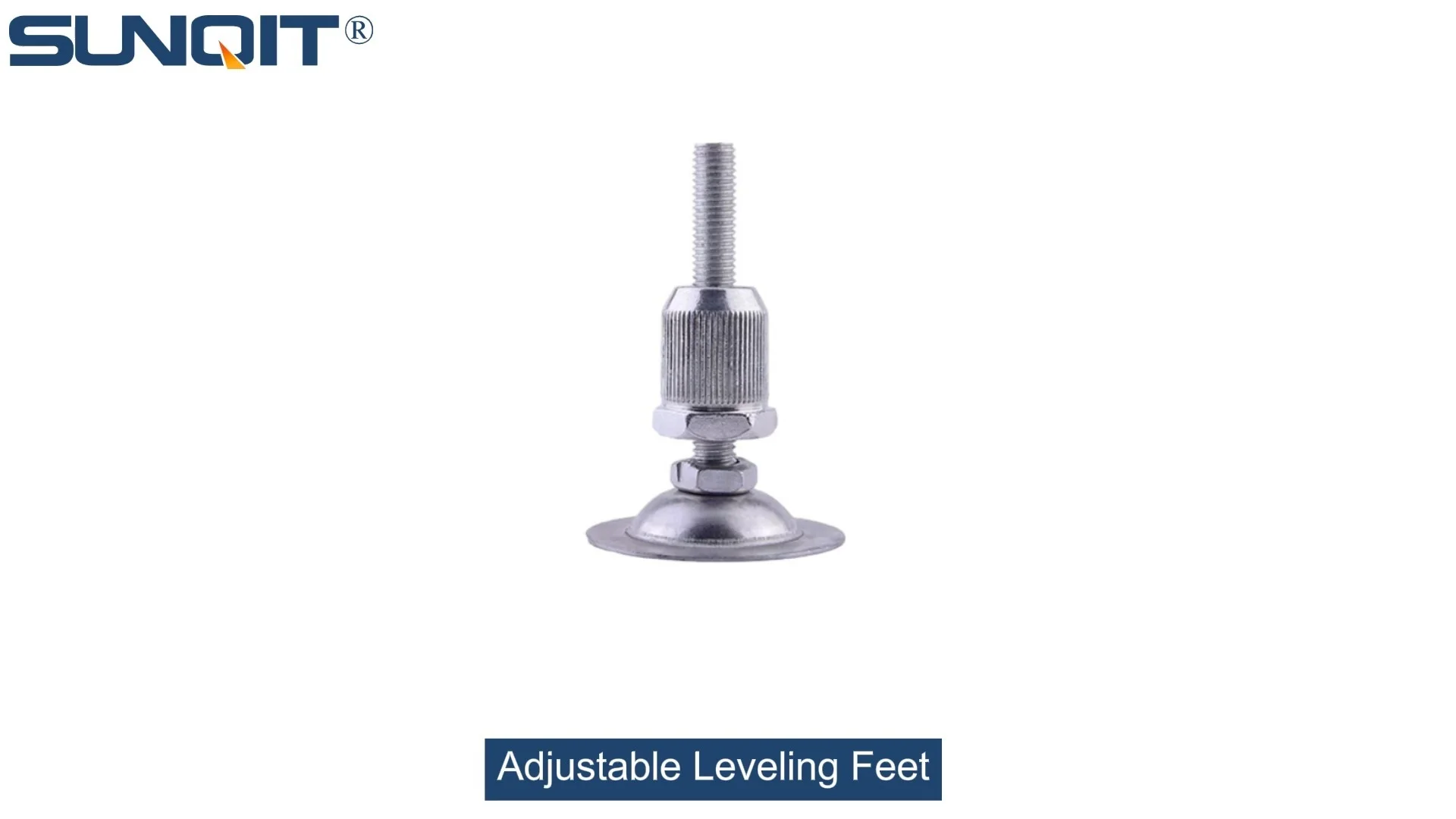
Adjustable Leveling Feet
Adjustable leveling feet are designed to keep machines level when placed on uneven or sloped ground. Otherwise known as adjustable equipment feet, they are available to order in a wide variety of size and load capacity combinations.
Walk into any manufacturing plant, and you'll likely hear the steady hum of conveyors moving products, the clink of parts on roller tracks, and the focused chatter of workers at workbenches. These elements—conveyors, roller tracks, workbenches—are the backbone of modern production lines, designed to keep operations flowing smoothly. But what happens when that flow stutters? When a conveyor belt starts to skew, causing boxes to jam? When a workbench wobbles, making precise assembly a struggle? More often than not, the culprit is something surprisingly small: instability in the foundation of these systems. And that's where adjustable leveling feet quietly step in as the unsung heroes of production line reliability.
In the world of lean manufacturing, where efficiency and waste reduction are king, even the tiniest inefficiencies can add up. A misaligned conveyor might seem like a minor annoyance, but over time, it leads to product damage, worker frustration, and costly downtime. Adjustable leveling feet aren't just about "leveling"—they're about creating a stable, adaptable base that keeps your entire lean system working in harmony. Let's dive into why these unassuming components matter, how they solve real-world problems, and why they're a non-negotiable part of any flexible production setup.
The Hidden Cost of Wobbly Foundations: When Conveyors Go Off-Kilter
Imagine a busy automotive parts plant. The morning shift is in full swing, and a conveyor line is supposed to carry plastic moldings from the injection machine to the assembly workbench. But today, something's off. Every few minutes, a molding slides to the edge of the conveyor, gets stuck, and the line grinds to a halt. A technician rushes over, adjusts the belt, and the line starts again—only for the problem to repeat 15 minutes later. By lunch, the team has lost nearly an hour of production time, and morale is plummeting.
This scenario is all too common, and more often than not, the root cause isn't a faulty conveyor motor or a worn belt. It's the floor—or rather, the conveyor's inability to adapt to an uneven floor. Factory floors, even those poured with precision, are rarely perfectly level. Over time, shifts in the building's foundation, heavy equipment traffic, or even minor settlements can create small dips and bumps. For conveyors, which rely on a consistent, level surface to move products smoothly, these imperfections are a recipe for disaster.
The consequences go beyond downtime. Misaligned conveyors can cause products to scrape against side rails, leading to scuffs, cracks, or even complete damage. In industries like electronics manufacturing, where delicate circuit boards or components are in play, a single jam can ruin hundreds of dollars' worth of parts. For workers, a wobbly conveyor or unstable workbench isn't just annoying—it's a safety hazard. A sudden shift could cause a worker to lose balance, or a tool to slide off a tilted workbench, leading to injuries.
Then there's the impact on the lean system as a whole. Lean manufacturing thrives on predictable, repeatable processes. When conveyors aren't aligned, production timelines get thrown off. Workers have to slow down to monitor for jams, which disrupts the flow of the entire line. What was supposed to be a "pull system," where each station only produces what the next needs, turns into a series of stops and starts. Waste creeps in—waste of time, waste of materials, waste of worker energy—and suddenly, that lean system isn't so lean anymore.
Adjustable Leveling Feet: The Basics
So, what exactly are adjustable leveling feet, and how do they fix these problems? At their core, they're simple devices: a threaded stem attached to a base, designed to be screwed into the bottom of equipment like conveyors, workbenches, or roller track supports. By turning the stem, you can raise or lower the height of each foot individually, compensating for uneven floors and ensuring the equipment sits perfectly level.
But don't let their simplicity fool you. Modern adjustable leveling feet are engineered with precision. The stem is typically made from steel or stainless steel for durability, while the base—often rubber, plastic, or metal—provides grip to prevent slipping. Some models even include anti-vibration features, absorbing the shock of heavy machinery to keep the equipment stable during operation. Others are ESD (electrostatic discharge) compliant, critical for electronics manufacturing where static electricity can damage sensitive components.
Let's break down the key components:
- Threaded Stem: The "adjustable" part. Most stems use standard metric threads (like M10 or M12), allowing for precise height adjustments—often up to 50mm or more. The threading ensures that once set, the foot stays in place, even under heavy loads.
- Base: The part that touches the floor. Rubber bases are popular for their anti-slip properties and ability to dampen vibrations. Metal bases, often with a larger surface area, are better for heavy-duty applications where maximum stability is needed.
- Mounting Plate: Attaches the foot to the equipment. Some feet screw directly into threaded holes on the conveyor or workbench frame, while others use bolts or welds for a more permanent fix.
The beauty of adjustable leveling feet lies in their adaptability. Unlike fixed feet or shims (temporary, wedge-shaped pieces of material used to prop up equipment), leveling feet can be adjusted on the fly. If the floor shifts over time, or if you move the conveyor to a new location, you don't need to replace anything—just tweak the feet to re-level the system. This flexibility makes them ideal for dynamic production environments where layouts change frequently, a hallmark of modern lean manufacturing.

Why Conveyors Can't Afford to Skip Leveling Feet
Conveyors are perhaps the most critical application for adjustable leveling feet. Think about how a conveyor works: a belt or chain moves over rollers, and products ride on top. For the belt to track straight, the entire conveyor frame must be level both horizontally (side to side) and longitudinally (front to back). If one side is even slightly lower than the other, the belt will drift toward the lower side, causing it to rub against the frame. Over time, this wears down the belt edges, creates friction that strains the motor, and leads to those frustrating jams we talked about earlier.
Gravity is the conveyor's worst enemy when it's out of level. Even a 1-degree slope can cause products to slide to one side. For roller tracks, which rely on gravity to move items (like in a flow rack), an uneven setup can mean products move too fast, too slow, or not at all. Imagine a flow rack in a warehouse where boxes are supposed to glide smoothly to the picking station. If the roller track is tilted incorrectly, some boxes might get stuck halfway, while others come crashing down—hardly efficient.
Adjustable leveling feet solve this by giving you control over each "corner" of the conveyor or roller track. Let's say you're installing a 20-foot conveyor. You start by placing a level on the frame. If the left rear corner is lower than the right, you simply screw up the leveling foot on that corner until the bubble in the level centers. Do the same for the front, and suddenly, the entire conveyor is level. It's a simple process, but it makes all the difference in how the system performs.
And it's not just about initial setup. Over time, even the sturdiest conveyors can shift. Maybe a heavy pallet was dropped nearby, causing the floor to settle slightly. Maybe the bolts holding the conveyor frame together loosen, throwing off alignment. With adjustable feet, you don't have to call in a technician or replace the entire system. A quick check with a level and a few turns of the feet, and you're back to optimal performance.

Beyond Conveyors: Leveling Feet in the Lean System Ecosystem
While conveyors are a primary use case, adjustable leveling feet play a role in nearly every piece of equipment in a lean system. Let's take workbenches, for example. A wobbling workbench might not seem as critical as a misaligned conveyor, but think about the worker assembling small components on it. A shaky surface makes precision work harder—screws won't line up, parts might roll off, and over time, the worker's hands and wrists fatigue from compensating for the movement. Adjustable feet ensure the workbench is rock-solid, letting the worker focus on the task, not the table.
Then there are flow racks and turnover trolleys. Flow racks, which use gravity to feed products to the front, rely on a precise incline. Too steep, and products slide too fast; not steep enough, and they get stuck. Adjustable feet let you fine-tune that angle, ensuring a consistent flow. Turnover trolleys, used to move materials between stations, need stable feet to prevent tipping—especially when loaded with heavy parts. A trolley that leans to one side isn't just a safety risk; it can damage the materials inside.
Even aluminum profiles, a staple in modular lean systems, benefit from leveling feet. Aluminum profiles are used to build everything from custom workstations to machine guards, and their modularity means they're often reconfigured. When you disassemble and reassemble a structure made from aluminum profiles, the new layout might sit on a different part of the floor—one that's not perfectly level. Adjustable feet make it easy to adapt, ensuring the structure stays stable no matter where it's placed.
In short, adjustable leveling feet are the glue that holds the lean system together. They turn rigid, one-size-fits-all equipment into flexible, adaptable tools that can evolve with your production needs. And in a world where manufacturers are under pressure to pivot quickly—whether to meet changing customer demands or adapt to new product lines—that flexibility is priceless.

Key Features to Look for in Adjustable Leveling Feet
Not all adjustable leveling feet are created equal. To get the most out of them, you need to choose the right ones for your application. Here are the key features to consider:
Load Capacity
First and foremost: how much weight can the feet support? A small workbench might only need feet rated for 100kg each, but a heavy-duty conveyor carrying 500kg loads will require feet rated for 200kg or more. Exceeding the load capacity can bend the stem or crack the base, leading to instability—and potentially dangerous failures.
Thread Size and Adjustment Range
The thread size (e.g., M10, M12) determines how much you can adjust the height. A larger thread size generally allows for a longer stem, meaning a greater adjustment range. If your floor has significant dips, you'll need feet with a longer stem to compensate. For most factory applications, an adjustment range of 30mm to 50mm is sufficient, but some specialized feet offer up to 100mm of travel.
Base Material
The base material affects grip, durability, and compatibility with your floor. Rubber bases are excellent for non-slip performance and vibration dampening, making them ideal for conveyors and workbenches. Nylon bases are chemical-resistant, a good choice for environments with oils or solvents. Metal bases, often with a larger footprint, are best for extremely heavy loads, though they can scratch delicate floors if not paired with a rubber pad.
ESD Compliance
In electronics manufacturing, static electricity is a major concern. ESD-compliant leveling feet are made with conductive materials that dissipate static, preventing it from building up and damaging sensitive components. If your production line handles circuit boards, semiconductors, or other ESD-sensitive items, this feature is non-negotiable.
Locking Mechanism
Once you've adjusted the feet to the perfect height, you don't want them to loosen over time. Look for feet with a locking nut or jam nut that can be tightened against the equipment frame, securing the stem in place. This prevents vibration from unscrewing the foot and throwing the equipment out of level.
To help visualize these features, here's a comparison of three common adjustable leveling feet models, ideal for different applications in a lean system:
| Model Name | Thread Size (mm) | Max Load Capacity (kg) | Base Material | Adjustment Range (mm) | Best For | Special Features |
|---|---|---|---|---|---|---|
| Standard Rubber Foot | M10 | 150 | Rubber | 0-30 | Workbenches, Light Conveyors | Anti-slip, Vibration-dampening |
| Heavy-Duty Steel Base | M16 | 500 | Steel with Rubber Pad | 0-50 | Heavy Conveyors, Flow Racks | High load capacity, Locking nut |
| ESD-Compliant Nylon | M12 | 200 | Conductive Nylon | 0-40 | ESD Workstations, Electronics Assembly | Static dissipation, Chemical-resistant |
Installation and Maintenance: Keeping It Level
Installing adjustable leveling feet is straightforward, but there are a few best practices to ensure they work effectively:
- Start with a Clean Slate: Before installing, clean the floor under where the equipment will sit. Dirt, debris, or oil can prevent the feet from gripping properly, leading to slipping.
- Use a Spirit Level: A good spirit level is essential. Place it across the equipment frame both longitudinally and horizontally, adjusting the feet until the bubble is centered in both directions. For long conveyors, check level at multiple points—don't assume one end being level means the whole thing is.
- Tighten Locking Nuts: Once level, tighten the locking nuts (if included) against the equipment frame. This prevents the feet from loosening due to vibration.
- Test Under Load: Equipment can settle slightly when loaded, so it's a good idea to test level after adding typical operating weights. A conveyor that's level when empty might tilt when loaded with heavy boxes—adjust the feet accordingly.
Maintenance is equally important. Over time, feet can loosen, or the base can wear down. Here's how to keep them in top shape:
- Inspect Regularly: Add a quick level check to your weekly equipment inspection routine. A 5-minute check can catch minor misalignments before they turn into major problems.
- Clean the Threads: Dust, oil, and debris can build up on the threaded stem, making adjustments difficult. Wipe them down periodically with a clean cloth, and apply a light coat of anti-seize lubricant if they start to stick.
- replace Worn Bases: If the rubber base is cracked or the nylon is worn smooth, replace the foot. A worn base loses grip, increasing the risk of slipping.
Case Study: How Leveling Feet Transformed an Electronics Plant's Production Line
To put this all in perspective, let's look at a real-world example. A mid-sized electronics manufacturer specializing in smartphone components was struggling with a recurring problem: their main assembly conveyor kept jamming. The line produced circuit boards, which are delicate and easily damaged. Each jam resulted in scratched boards, and the team was losing about 2 hours of production time per week fixing the issue.
The plant manager initially blamed the conveyor belt, replacing it twice—at a cost of $2,000 each time—but the problem persisted. A technician was finally sent to inspect the line, and what he found was surprising: the conveyor frame itself was out of level by nearly 8mm from one side to the other. The floor, which had been poured when the plant was built 10 years earlier, had settled slightly under the weight of the equipment, creating a gentle slope.
The solution? Installing adjustable leveling feet. The technician replaced the fixed metal feet on the conveyor with heavy-duty steel-base feet (M16 thread, 500kg capacity) and spent 30 minutes adjusting them to level the frame. The results were immediate: the belt tracked straight, jams stopped, and production time lost to conveyor issues dropped to zero.
But the benefits didn't stop there. With the conveyor stable, the team noticed other improvements. The circuit boards moved more smoothly to the assembly workbench, which was also fitted with adjustable feet, reducing the number of dropped components. Worker satisfaction increased—no more stopping to fix jams—and the plant manager estimated the total savings (from reduced downtime, fewer damaged parts, and lower maintenance costs) at over $50,000 per year. All from a $300 investment in leveling feet.
This story isn't unique. Across industries, adjustable leveling feet are quietly solving problems that once required expensive equipment replacements or major floor repairs. They're a testament to the idea that in lean manufacturing, sometimes the smallest changes yield the biggest results.
Why Shims and Fixed Feet Fall Short
You might be wondering: Why not just use shims? Shims are cheap, easy to find, and seem like a quick fix for uneven floors. But here's the problem: shims are temporary. They slip, compress, or break under pressure, especially under the dynamic loads of a running conveyor. What was a "level" setup one day can be wobbly the next, leading to the same problems you had before.
Fixed feet, meanwhile, offer no adjustability. If the floor is uneven, you're stuck—either the equipment rocks, or you have to shim it anyway. And if you ever move the equipment, you'll need to start from scratch, potentially buying new feet or cutting new shims to fit the new location.
Adjustable leveling feet, by contrast, are a permanent solution. They're designed to stay in place, even under constant vibration and load. They adapt to changes in the floor over time, and they make reconfiguring your production line a breeze. In the long run, they're far more cost-effective than shims or fixed feet—not just in terms of money, but in terms of the time and frustration they save.
The Future of Leveling Feet: Smart and Connected
As manufacturing becomes more connected and data-driven, even simple components like leveling feet are getting smarter. Some manufacturers are experimenting with "smart" leveling feet equipped with sensors that monitor tilt, vibration, and load. These sensors send data to a central dashboard, alerting maintenance teams when a foot starts to loosen or the equipment becomes unlevel—before a jam or failure occurs.
Imagine a scenario where your conveyor's leveling feet detect a 2mm shift in level overnight. Instead of waiting for a jam, the system sends an alert to your phone, and you dispatch a technician to adjust the feet during the morning maintenance window. Downtime is avoided, and the line runs smoothly all day. It's predictive maintenance at its finest, and it's only possible because of the humble leveling foot.
While smart feet are still in the early stages, they're a sign of where manufacturing is headed: toward systems that are not just efficient, but self-aware. And as lean systems evolve to include more automation and robotics—technologies that demand even greater precision—adjustable leveling feet will only grow in importance.
Conclusion: Stability as the Foundation of Flexibility
In the rush to adopt the latest lean tools—automated guided vehicles, AI-powered quality control, modular aluminum profile systems—it's easy to overlook the basics. But as we've seen, adjustable leveling feet are anything but basic. They're the foundation upon which flexible, efficient production lines are built. Without stable conveyors, level workbenches, and steady roller tracks, even the most advanced lean system will falter.
The next time you walk through your production facility, take a moment to look down. Underneath those conveyors and workbenches, you'll find the quiet heroes: adjustable leveling feet, working tirelessly to keep things moving. They might not be flashy, but they're essential. And in a world where every second of downtime counts, every part saved matters, and every worker's focus is critical, essential is more than enough.
So, invest in the right leveling feet. Take the time to install them properly. Check them regularly. Your lean system—and your bottom line—will thank you.