- Company Articles
- Products and Technology
- Solution
- Flexible Production Lines: 4040r EU Standard Aluminum Profile Modular Design

Flexible Production Lines: 4040r EU Standard Aluminum Profile Modular Design
Related Product
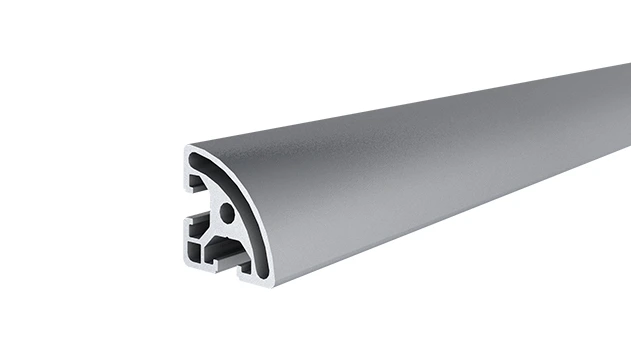
4040R EU Standard Aluminum Profile
4040R is a 4.00x4.00 CM fractional 40 series square extrusion T-slot profile with two side open T-slots, each side with 4.00cm face,the other side is round face. The profile has align-a-grooves to assist in aligning connecting profiles.
Walk into any modern factory today, and you'll notice a quiet revolution underway. The clunky, rigid production lines of the past—those monolithic structures built to crank out one product for decades—are making way for something smarter, lighter, and infinitely more adaptable. In an era where consumer demands shift overnight, where "batch size one" is no longer a buzzword but a business necessity, and where downtime can cost thousands per minute, flexibility isn't just an advantage; it's survival. This is where modular design steps in, and at the heart of this movement lies a humble yet powerful component: the
4040r EU standard aluminum profile
.
The Case for Flexibility: Why Traditional Lines Are Failing
Let's start with the problem. Traditional production lines are built like fortresses—strong, stable, and nearly impossible to change. They're designed for scale, optimized to pump out identical products day in, day out. But today's market doesn't reward that. Think about it: a smartphone manufacturer might need to tweak a assembly line to accommodate a new camera module next month. A medical device company could get a rush order for a custom tool that requires reconfiguring workstations overnight. Even automotive suppliers, once the kings of mass production, now juggle electric vehicle parts, legacy components, and prototype parts—all on the same factory floor.
Rigid lines can't keep up. Reconfiguring them means hiring welders, ordering custom steel parts, and shutting down production for weeks. The math is brutal: downtime costs add up, missed deadlines erode customer trust, and the inability to pivot means losing out to competitors who can. What manufacturers need is a system that bends without breaking—a set of building blocks that can be rearranged, added to, or repurposed in hours, not months. That's where modular aluminum profiles come in, and the 4040r EU standard is leading the charge.
Rigid lines can't keep up. Reconfiguring them means hiring welders, ordering custom steel parts, and shutting down production for weeks. The math is brutal: downtime costs add up, missed deadlines erode customer trust, and the inability to pivot means losing out to competitors who can. What manufacturers need is a system that bends without breaking—a set of building blocks that can be rearranged, added to, or repurposed in hours, not months. That's where modular aluminum profiles come in, and the 4040r EU standard is leading the charge.
What Is the 4040r EU Standard Aluminum Profile?
At first glance, the 4040r might look like just another metal bar. But look closer, and you'll see why it's become the backbone of flexible production. Let's break it down:
Dimensions & Design: The "4040" refers to its cross-section—40mm by 40mm, a sweet spot that balances strength and versatility. The "r" stands for "rounded," a key detail that sets it apart from sharp-edged profiles. Those rounded edges aren't just for safety (though they do reduce workplace injuries from bumps and scrapes); they also make it easier to handle during assembly and reduce wear on aluminum profile accessories like brackets and connectors.
Material Matters: Made from high-grade aluminum alloy, this profile is a study in contradictions: it's lightweight enough for a single worker to carry, yet strong enough to support heavy machinery. Aluminum's natural corrosion resistance means it holds up in dusty factories, humid environments, and even cleanrooms—no rust, no degradation, just reliable performance year after year.
EU Standard Compliance: The "EU standard" label isn't just marketing. It means the 4040r meets strict European norms for quality, safety, and environmental impact. From material purity to dimensional accuracy, every profile is tested to ensure consistency. For manufacturers, this translates to peace of mind: no surprises when ordering replacements, no mismatched parts, and seamless integration with other EU-standard components.
But the real magic? The T-slots. Running along all four sides of the profile, these grooves are like the Lego studs of the industrial world. They let you attach almost anything—shelves, lights, sensors, tools—without drilling or welding. Just slide a T-slot nut into the groove, tighten a bolt, and you're done. Need to move a tool holder six inches to the left? Loosen the bolt, slide, retighten. It's that simple.
Dimensions & Design: The "4040" refers to its cross-section—40mm by 40mm, a sweet spot that balances strength and versatility. The "r" stands for "rounded," a key detail that sets it apart from sharp-edged profiles. Those rounded edges aren't just for safety (though they do reduce workplace injuries from bumps and scrapes); they also make it easier to handle during assembly and reduce wear on aluminum profile accessories like brackets and connectors.
Material Matters: Made from high-grade aluminum alloy, this profile is a study in contradictions: it's lightweight enough for a single worker to carry, yet strong enough to support heavy machinery. Aluminum's natural corrosion resistance means it holds up in dusty factories, humid environments, and even cleanrooms—no rust, no degradation, just reliable performance year after year.
EU Standard Compliance: The "EU standard" label isn't just marketing. It means the 4040r meets strict European norms for quality, safety, and environmental impact. From material purity to dimensional accuracy, every profile is tested to ensure consistency. For manufacturers, this translates to peace of mind: no surprises when ordering replacements, no mismatched parts, and seamless integration with other EU-standard components.
But the real magic? The T-slots. Running along all four sides of the profile, these grooves are like the Lego studs of the industrial world. They let you attach almost anything—shelves, lights, sensors, tools—without drilling or welding. Just slide a T-slot nut into the groove, tighten a bolt, and you're done. Need to move a tool holder six inches to the left? Loosen the bolt, slide, retighten. It's that simple.

Aluminum Profile Accessories: The Glue That Holds Modularity Together
A profile alone is just a stick. It's the
aluminum profile accessories
that turn it into a production powerhouse. Let's meet the crew:
Connectors: These are the Swiss Army knives of the modular world. 90° angle brackets, 45° elbows, 135° joints—each designed to lock profiles together securely. The best part? They're tool-free or require just a hex key, so even new operators can assemble structures without training.
End Caps: Simple but essential. These plastic or aluminum caps snap onto the ends of profiles, covering sharp edges (even the rounded "r" profiles benefit from this) and keeping dust out of T-slots.
Panel Holders: Need to mount a control panel, a whiteboard, or a safety shield? Panel holders slide into T-slots and clamp down, holding materials up to 10mm thick. No drilling, no adhesives—just quick, secure attachment.
Wheels & Casters: For mobile setups (think workbench carts or movable assembly stations), heavy-duty casters with brakes attach directly to profile bases. Lock them in place for stability during production, unlock to roll the entire setup to a new location.
The beauty of these accessories is their universality. Because they're all designed to fit the 4040r's T-slots and EU-standard dimensions, you can mix and match from different suppliers without compatibility headaches. It's like building with a global toolkit—one that grows with your needs.
Connectors: These are the Swiss Army knives of the modular world. 90° angle brackets, 45° elbows, 135° joints—each designed to lock profiles together securely. The best part? They're tool-free or require just a hex key, so even new operators can assemble structures without training.
End Caps: Simple but essential. These plastic or aluminum caps snap onto the ends of profiles, covering sharp edges (even the rounded "r" profiles benefit from this) and keeping dust out of T-slots.
Panel Holders: Need to mount a control panel, a whiteboard, or a safety shield? Panel holders slide into T-slots and clamp down, holding materials up to 10mm thick. No drilling, no adhesives—just quick, secure attachment.
Wheels & Casters: For mobile setups (think workbench carts or movable assembly stations), heavy-duty casters with brakes attach directly to profile bases. Lock them in place for stability during production, unlock to roll the entire setup to a new location.
The beauty of these accessories is their universality. Because they're all designed to fit the 4040r's T-slots and EU-standard dimensions, you can mix and match from different suppliers without compatibility headaches. It's like building with a global toolkit—one that grows with your needs.
Building a Lean System: How 4040r Profiles Support Lean Manufacturing
Lean manufacturing isn't just about cutting costs—it's about eliminating waste, streamlining workflows, and empowering workers to improve processes daily. The 4040r modular system aligns perfectly with these goals, turning lean principles from theory into tangible action.
Waste Reduction: Traditional lines generate waste in hidden ways. Overproduction? Often because reconfiguring is too slow, so you make extra to avoid downtime. Excess inventory? Storing custom steel parts "just in case." With 4040r, you eliminate this. Profiles and accessories are lightweight and stackable, so you store only what you need. Reconfigurations are fast, so you produce to demand, not to a rigid schedule.
Ergonomics & Worker Empowerment: A lean system puts workers first, and modular profiles make ergonomic adjustments a breeze. Need to lower a workbench by 5cm for a shorter operator? Swap out a connector for a shorter one. Want to add a tool rail at arm height? Slide on a bracket and tighten. Workers aren't stuck with "one-size-fits-all" setups—they can tweak their stations to reduce fatigue, boosting productivity and morale.
Visual Management: Lean thrives on visibility. With 4040r profiles, you can mount color-coded bins, status lights, or Kanban boards directly to the line. Need to flag a bottleneck? Add a red light. Celebrate a milestone? Swap it for green. The T-slots make it easy to update visuals as processes change, keeping everyone on the same page.
Waste Reduction: Traditional lines generate waste in hidden ways. Overproduction? Often because reconfiguring is too slow, so you make extra to avoid downtime. Excess inventory? Storing custom steel parts "just in case." With 4040r, you eliminate this. Profiles and accessories are lightweight and stackable, so you store only what you need. Reconfigurations are fast, so you produce to demand, not to a rigid schedule.
Ergonomics & Worker Empowerment: A lean system puts workers first, and modular profiles make ergonomic adjustments a breeze. Need to lower a workbench by 5cm for a shorter operator? Swap out a connector for a shorter one. Want to add a tool rail at arm height? Slide on a bracket and tighten. Workers aren't stuck with "one-size-fits-all" setups—they can tweak their stations to reduce fatigue, boosting productivity and morale.
Visual Management: Lean thrives on visibility. With 4040r profiles, you can mount color-coded bins, status lights, or Kanban boards directly to the line. Need to flag a bottleneck? Add a red light. Celebrate a milestone? Swap it for green. The T-slots make it easy to update visuals as processes change, keeping everyone on the same page.
From Workbench to Flow Rack: Real-World Applications
Let's get concrete. How do manufacturers actually use 4040r profiles and accessories? Here are two common setups that showcase their flexibility:
The Modular Workbench: A traditional workbench is a fixed piece of furniture. A 4040r workbench is a chameleon. Start with a base frame of 4040r profiles. Add a plywood or aluminum top (using panel holders). Mount a shelf above for tools (angle brackets). Attach a pegboard on the side (T-slot hooks). Need a vice? Bolt it to the top using T-slot nuts. Tomorrow, if you need to add a computer monitor arm? Slide in a bracket. Next month, if the team needs a longer bench? Add two more profiles and a new top section. It grows with you.
The Flow Rack: Material handling is a silent productivity killer—if parts are hard to reach, workers waste time fetching them. A flow rack built with 4040r profiles solves this. Frame the rack with vertical 4040r posts. Attach inclined rails (using angle brackets) with roller tracks. Parts slide down by gravity, always presenting the next item at the front. Need to adjust the angle for heavier parts? Loosen the brackets, tilt the rails, retighten. Add a second level? Stack another frame on top. It's material flow made simple, and it adapts to whatever parts you're handling today.
The Modular Workbench: A traditional workbench is a fixed piece of furniture. A 4040r workbench is a chameleon. Start with a base frame of 4040r profiles. Add a plywood or aluminum top (using panel holders). Mount a shelf above for tools (angle brackets). Attach a pegboard on the side (T-slot hooks). Need a vice? Bolt it to the top using T-slot nuts. Tomorrow, if you need to add a computer monitor arm? Slide in a bracket. Next month, if the team needs a longer bench? Add two more profiles and a new top section. It grows with you.
The Flow Rack: Material handling is a silent productivity killer—if parts are hard to reach, workers waste time fetching them. A flow rack built with 4040r profiles solves this. Frame the rack with vertical 4040r posts. Attach inclined rails (using angle brackets) with roller tracks. Parts slide down by gravity, always presenting the next item at the front. Need to adjust the angle for heavier parts? Loosen the brackets, tilt the rails, retighten. Add a second level? Stack another frame on top. It's material flow made simple, and it adapts to whatever parts you're handling today.
Traditional vs. Modular: A Side-by-Side Comparison
Still skeptical? Let's put traditional rigid setups and 4040r modular systems head-to-head:
| Feature | Traditional Rigid Setup | 4040r Modular System |
|---|---|---|
| Setup Time | Weeks to months (welding, custom fabrication) | Hours to days (tool-free assembly) |
| Reconfiguration Cost | High (custom parts, labor, downtime) | Low (reuse existing profiles/accessories) |
| Adaptability | Fixed (designed for one product) | Unlimited (rearrange for new products/tasks) |
| Worker Involvement | Limited (only engineers/contractors can modify) | High (operators can adjust stations as needed) |
| Scalability | Linear (add entire new lines) | Modular (add/remove sections as needed) |
| Long-Term Value | Depreciates quickly (obsolete with product changes) | Appreciates (reusable across projects, years of service) |
The numbers speak for themselves. Modular systems aren't just "flexible"—they're a smarter investment. They turn capital expenses (fixed lines) into operational assets that adapt to your business's changing needs.
A Day in the Life: How One Factory Cut Downtime by 70%
Let's step into the shoes of Maria, a production manager at a mid-sized electronics plant. Last year, her team faced a crisis: a major client ordered a new sensor module, requiring a complete rework of their assembly line. The old line, built with welded steel, would take 6 weeks to reconfigure—time they didn't have.
Maria's solution? She switched to 4040r profiles. Her team spent 2 days assembling new workbenches, flow racks, and testing stations using pre-cut profiles and accessories. They reused 80% of the accessories from the old setup, just rearranging them. By the end of the week, the line was running, and the client's order was shipped on time. "We didn't just meet the deadline—we did it without hiring contractors or shutting down other lines," Maria says. "Now, when a new order comes in, the team jokes, 'Let's just build a new station this afternoon.'"
Stories like Maria's are becoming common. Manufacturers aren't just buying profiles—they're buying time, agility, and the freedom to say "yes" to opportunities that would have been impossible before.
Maria's solution? She switched to 4040r profiles. Her team spent 2 days assembling new workbenches, flow racks, and testing stations using pre-cut profiles and accessories. They reused 80% of the accessories from the old setup, just rearranging them. By the end of the week, the line was running, and the client's order was shipped on time. "We didn't just meet the deadline—we did it without hiring contractors or shutting down other lines," Maria says. "Now, when a new order comes in, the team jokes, 'Let's just build a new station this afternoon.'"
Stories like Maria's are becoming common. Manufacturers aren't just buying profiles—they're buying time, agility, and the freedom to say "yes" to opportunities that would have been impossible before.
The Future of Production: Where Modular Design Is Headed
The 4040r EU standard aluminum profile isn't a passing trend—it's the foundation of the next manufacturing revolution. Here's what's on the horizon:
Industry 4.0 Integration: Imagine sensors mounted directly into T-slots, tracking production metrics in real time. Or IoT-enabled accessories that alert maintenance when a caster wheel wears thin. Modular profiles are already compatible with smart components, turning lines into connected ecosystems.
Sustainability: Aluminum is 100% recyclable, and modular systems generate less waste—no more cutting custom steel parts that end up in landfills. As eco-conscious manufacturing grows, the 4040r's green credentials will become even more valuable.
Mass Customization: With modular lines, factories can produce small batches of custom products as efficiently as mass-produced ones. Think a furniture manufacturer switching from standard chairs to custom ergonomic models in hours, or a toy company rolling out limited-edition designs without retooling.
Industry 4.0 Integration: Imagine sensors mounted directly into T-slots, tracking production metrics in real time. Or IoT-enabled accessories that alert maintenance when a caster wheel wears thin. Modular profiles are already compatible with smart components, turning lines into connected ecosystems.
Sustainability: Aluminum is 100% recyclable, and modular systems generate less waste—no more cutting custom steel parts that end up in landfills. As eco-conscious manufacturing grows, the 4040r's green credentials will become even more valuable.
Mass Customization: With modular lines, factories can produce small batches of custom products as efficiently as mass-produced ones. Think a furniture manufacturer switching from standard chairs to custom ergonomic models in hours, or a toy company rolling out limited-edition designs without retooling.
Conclusion: Building the Factory of Tomorrow, Today
The 4040r EU standard aluminum profile isn't just a component—it's a mindset. It's about letting go of the "set it and forget it" approach to production and embracing adaptability as a core value. In a world where change is the only constant, modular design isn't optional; it's the key to staying competitive, innovative, and ready for whatever the market throws next.
So, whether you're a small workshop looking to scale or a large manufacturer fighting to keep up with demand, consider this: the most powerful production line isn't the one that does one thing perfectly. It's the one that can do anything—today, tomorrow, and for years to come. And it all starts with a simple, 40mm by 40mm aluminum profile.
So, whether you're a small workshop looking to scale or a large manufacturer fighting to keep up with demand, consider this: the most powerful production line isn't the one that does one thing perfectly. It's the one that can do anything—today, tomorrow, and for years to come. And it all starts with a simple, 40mm by 40mm aluminum profile.