- Company Articles
- Products and Technology
- Solution
- Flexible Production Lines: Aluminum Workbench A's Role in Agile Manufacturing

Flexible Production Lines: Aluminum Workbench A's Role in Agile Manufacturing
Related Product
Aluminum Workbench A
Aluminum tube workbench is more flexible and durable, compared with traditional PE/ABS coated steel tube. It is easy to assemble, anti corrosion, rust protection, and recycle use after disassemble.
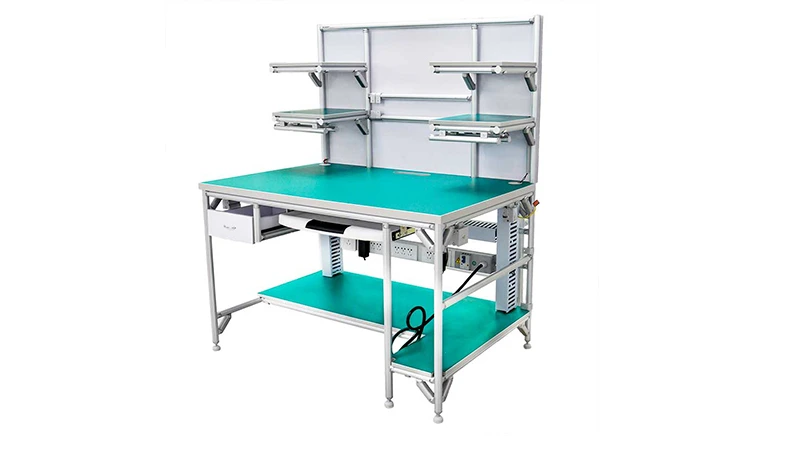
In today's fast-paced manufacturing landscape, the ability to adapt isn't just a competitive advantage—it's a survival skill. As consumer demands shift, product lifecycles shrink, and market trends evolve overnight, factories are no longer built around rigid, one-size-fits-all production lines. Instead, the future belongs to agile manufacturing: systems designed to pivot quickly, minimize waste, and maximize responsiveness. At the heart of this transformation lies a humble yet powerful tool: the Aluminum Workbench A. More than just a workspace, it's a cornerstone of flexible production, seamlessly integrating with lean systems, flow racks, and conveyors to create lines that adapt as quickly as your business needs.
The Rise of Agile Manufacturing: Why Rigidity No Longer Works
Not long ago, manufacturing was dominated by mass production. Factories churned out identical products for years, relying on fixed machinery and static workflows to achieve economies of scale. But those days are fading. Today's customers expect customization—whether it's a smartphone with a unique case, a medical device tailored to a specific procedure, or an automotive part designed for a niche market. Add to that the pressure to reduce time-to-market and cut costs, and it's clear: rigid production lines simply can't keep up.
Agile manufacturing emerged as the solution. Rooted in the principles of lean systems—eliminating waste, optimizing flow, and empowering teams—it prioritizes flexibility, modularity, and continuous improvement. But agility isn't just about mindset; it requires the right tools. Traditional workbenches, often made of heavy wood or steel, are bulky and hard to reconfigure. They lock production lines into fixed layouts, making it costly and time-consuming to adapt to new products or processes. This is where Aluminum Workbench A steps in: a modern solution built for the way we manufacture now.
What Makes Aluminum Workbench A Unique?
At first glance, a workbench might seem like a simple piece of equipment. But in the context of agile manufacturing, its design can make or break a production line's flexibility. Aluminum Workbench A stands out for three key reasons: its material, its modularity, and its seamless integration with other lean tools. Let's break them down.
1. Aluminum Profile: Lightweight Strength That Lasts
Aluminum Workbench A is constructed from high-grade aluminum profile—an material chosen for its unbeatable balance of strength and weight. Unlike steel, which is heavy and prone to rust, aluminum is corrosion-resistant, making it ideal for factories where moisture or chemicals are present. It's also lightweight enough that a single worker can reposition the bench without heavy machinery, yet strong enough to support the demands of assembly, testing, or packaging tasks. This combination of portability and durability is a game-changer for teams that need to rearrange their workspace on the fly.
But the benefits of aluminum profile go beyond weight and strength. Its smooth, clean surface is easy to clean and maintain, which is critical in industries like food processing or pharmaceuticals where hygiene is non-negotiable. And because aluminum is a sustainable material—100% recyclable and energy-efficient to produce—it aligns with the growing focus on eco-friendly manufacturing practices.
2. Modular Design: Build (and Rebuild) Without Limits
Agile manufacturing thrives on modularity—the ability to mix and match components to create custom solutions. Aluminum Workbench A embraces this (philosophy) with a design that's as flexible as your workflow. Unlike traditional workbenches, which come in fixed sizes and configurations, Aluminum Workbench A is built using a system of aluminum profile accessories, including joints, brackets, and clamps. This means you can adjust its height, add shelves, attach tool holders, or even extend its length in minutes—no welding or specialized tools required.
For example, if your team switches from assembling small electronics to larger mechanical parts, you can easily add a second tier to the workbench for extra storage. If you need to integrate a conveyor system to move parts from one station to the next, Aluminum Workbench A's compatible with roller track connectors, allowing you to attach a flow rack or conveyor directly to the bench. And when a project ends, you can disassemble the bench and repurpose its components for a new setup—eliminating waste and reducing costs.
3. Integration with Lean Systems: A Hub for Efficient Workflows
Aluminum Workbench A isn't just a standalone tool; it's a hub that connects the various elements of a lean system. In agile manufacturing, every step should add value—from the moment raw materials enter the factory to the second the finished product ships. This requires seamless flow: parts should move smoothly between workstations, tools should be within arm's reach, and waste (like excess inventory or unnecessary movement) should be minimized.
Aluminum Workbench A excels here. Pair it with a flow rack, and you create a "supermarket" of parts right at the worker's fingertips, reducing the time spent walking to retrieve materials. Add a conveyor, and you automate the transfer of (semi-finished products) between stations, cutting down on manual handling. Even small details, like adjustable feet that level the bench on uneven floors or ESD (electrostatic discharge) surfaces for electronics assembly, ensure that the workbench adapts to the specific needs of your lean system—not the other way around.

Key Features of Aluminum Workbench A: A Closer Look
To truly understand how Aluminum Workbench A transforms production lines, let's dive into its core features. The table below compares it to traditional steel workbenches, highlighting the advantages that make it indispensable for agile manufacturing:
| Feature | Aluminum Workbench A | Traditional Steel Workbench |
|---|---|---|
| Material | High-grade aluminum profile (lightweight, corrosion-resistant) | Heavy steel (prone to rust, difficult to move) |
| Weight | ~30-40 kg (easily repositioned by 1-2 workers) | ~80-100 kg (requires forklifts or machinery to move) |
| Assembly Time | 30-60 minutes (tool-free with aluminum joints) | 2-4 hours (requires welding or bolts) |
| Reconfigurability | High (easily add shelves, extensions, or accessories) | Low (fixed design; modifications require cutting/welding) |
| Integration with Lean Tools | Compatible with flow racks, conveyors, and roller tracks | Limited (often requires custom adapters) |
| Durability | Long lifespan (resistant to dents, rust, and wear) | Prone to rust and paint chipping over time |
| Cost Over Time | Lower (reusable components, minimal maintenance) | Higher (fixed design, replacement costs for new layouts) |
As the table shows, Aluminum Workbench A's advantages extend far beyond its material. Its true power lies in how these features work together to support agile manufacturing. Let's explore a few of these in more detail.
Adjustable and Ergonomic: Putting Workers First
Agile manufacturing isn't just about machines—it's about people. A tired or uncomfortable worker is less productive, more prone to errors, and more likely to miss deadlines. Aluminum Workbench A prioritizes ergonomics with adjustable height settings, allowing workers to customize the bench to their ideal position (whether sitting or standing). This reduces strain on the back, shoulders, and wrists, leading to happier teams and fewer injuries.
Even small touches make a difference. The bench's smooth edges prevent cuts, while its non-slip surface keeps tools and parts from sliding during assembly. For industries like electronics, where static electricity can damage sensitive components, Aluminum Workbench A is available with ESD-safe surfaces, ensuring that products are protected from costly defects.
Space-Saving Design: Making the Most of Your Factory Floor
Factory space is a valuable resource, and agile manufacturing demands that every square meter adds value. Aluminum Workbench A's compact, modular design helps maximize space efficiency. Unlike traditional workbenches, which often have bulky frames or fixed storage, Aluminum Workbench A can be customized to fit tight corners or line up perfectly with other stations. Its lightweight nature also means it can be mounted on casters (if needed), allowing teams to move the bench out of the way during deep cleaning or reconfiguration.
For example, in a small contract manufacturing facility handling multiple projects, Aluminum Workbench A can be arranged in a U-shape for one project, then rearranged into a straight line for the next—all without wasting space on permanent structures. This flexibility is a lifesaver for factories operating in urban areas, where real estate costs are high and expansion is often not an option.

Real-World Applications: How Aluminum Workbench A Drives Results
To understand the impact of Aluminum Workbench A, let's look at a real-world example. Consider a mid-sized electronics manufacturer producing smart home devices. A few years ago, the company struggled with long setup times: switching from assembling smart thermostats to smart locks took 8 hours, requiring workers to disassemble steel workbenches, rewire tools, and reposition heavy conveyors. This slow turnaround meant they couldn't take on small-batch orders, limiting their revenue and market reach.
Then, the company invested in Aluminum Workbench A and a lean system upgrade. Today, their production line is unrecognizable. Workers can reconfigure the Aluminum Workbench A stations in 30 minutes: adjusting heights, adding ESD mats for sensitive components, and attaching flow racks stocked with the specific parts needed for smart locks. Conveyors, connected via roller track placon mounts, are easily shifted to align with the new layout. As a result, setup times dropped by 95%, and the company now handles 10x more small-batch orders—all while reducing waste and increasing on-time delivery rates.
This isn't an isolated case. Automotive suppliers use Aluminum Workbench A to build custom toolkits for prototype parts. Medical device manufacturers rely on its clean, corrosion-resistant surface to meet strict regulatory standards. Even furniture makers have adopted it, using the bench's modular design to switch between assembling chairs, tables, and cabinets with minimal downtime.
Overcoming Common Production Hurdles with Aluminum Workbench A
Agile manufacturing isn't without its challenges. Let's explore how Aluminum Workbench A addresses some of the most common pain points factories face:
Challenge 1: High Changeover Costs
Problem: Traditional production lines require significant time and labor to reconfigure, making small-batch orders unprofitable. Solution: Aluminum Workbench A's tool-free assembly and modular components cut changeover times from hours to minutes. Workers can swap out accessories, adjust heights, or reposition the bench without specialized training, making small runs feasible and profitable.
Challenge 2: Poor Space Utilization
Problem: Fixed workbenches and rigid layouts leave dead space, reducing overall productivity. Solution: Aluminum Workbench A's compact design and mobility let teams rearrange the factory floor on demand. For example, during peak seasons, benches can be grouped to create assembly cells; during slow periods, they can be spread out to accommodate maintenance or training.
Challenge 3: Inconsistent Quality
Problem: Wobbly or poorly designed workbenches lead to errors, such as misaligned parts or dropped tools. Solution: Aluminum Workbench A's sturdy aluminum profile and adjustable feet ensure a stable workspace, even on uneven floors. Its ergonomic design also reduces worker fatigue, leading to fewer mistakes and higher-quality products.
Challenge 4: Difficulty Scaling Up (or Down)
Problem: Adding new production lines requires significant capital investment in permanent infrastructure. Solution: Aluminum Workbench A is scalable by design. Need to double production? Add more benches and connect them with conveyors. Slow season? Disassemble excess benches and store their components for later use. This "pay-as-you-grow" model reduces financial risk and ensures you only invest in what you need, when you need it.
The Future of Flexible Production: What's Next for Aluminum Workbench A?
As manufacturing continues to evolve, Aluminum Workbench A will only become more critical. Here are three trends shaping its future:
1. Smart Factory Integration
The rise of Industry 4.0 is bringing sensors, IoT connectivity, and data analytics to the factory floor. (Future) Aluminum Workbench A models may include built-in sensors that track usage, monitor tool performance, or alert teams when parts are running low. Imagine a bench that automatically sends a notification to the warehouse when a flow rack is nearly empty, or one that adjusts its height based on a worker's biometrics to optimize ergonomics. These innovations will make agile manufacturing even more efficient, turning data into actionable insights.
2. Sustainable Manufacturing
Consumers and regulators are increasingly demanding eco-friendly production practices. Aluminum Workbench A, made from recyclable aluminum profile, aligns with this trend. (In the future), we may see benches made from recycled aluminum, further reducing their carbon footprint. Additionally, their modular design will play a key role in the circular economy: instead of discarding old workbenches, factories will repurpose their components, minimizing waste and lowering raw material costs.
3. Customization at Scale
As 3D printing and on-demand manufacturing grow, factories will need to handle even more product variations—sometimes producing one-of-a-kind items. Aluminum Workbench A's adaptability will be essential here, allowing workers to switch between projects with zero downtime. Whether it's assembling a custom medical implant or a personalized consumer gadget, the bench will serve as a flexible foundation for mass customization.
Conclusion: Aluminum Workbench A—Your Partner in Agile Manufacturing
In the world of agile manufacturing, flexibility isn't a luxury—it's a necessity. Aluminum Workbench A embodies this principle, offering a lightweight, modular, and durable solution that adapts to your changing needs. From its aluminum profile construction to its seamless integration with lean systems, flow racks, and conveyors, it's more than a workbench: it's a catalyst for innovation, enabling factories to take on new challenges, reduce waste, and deliver value to customers faster than ever before.
Whether you're a small contract manufacturer or a large automotive supplier, Aluminum Workbench A can transform your production line. It's not just an investment in equipment; it's an investment in your ability to thrive in an unpredictable market. So, take the first step toward agility today. Your team, your customers, and your bottom line will thank you.