- Company Articles
- Products and Technology
- Solution
- Flexible Production Lines: How Aluminum Guide Rail B Supports Modular Manufacturing

Flexible Production Lines: How Aluminum Guide Rail B Supports Modular Manufacturing
Related Product
Aluminum Guide Rail B
The aluminum guide rails hold the transport goods securely on the roller track. For installation, the guide rails are simply pushed over the roller tracks.To protect sensitive products.
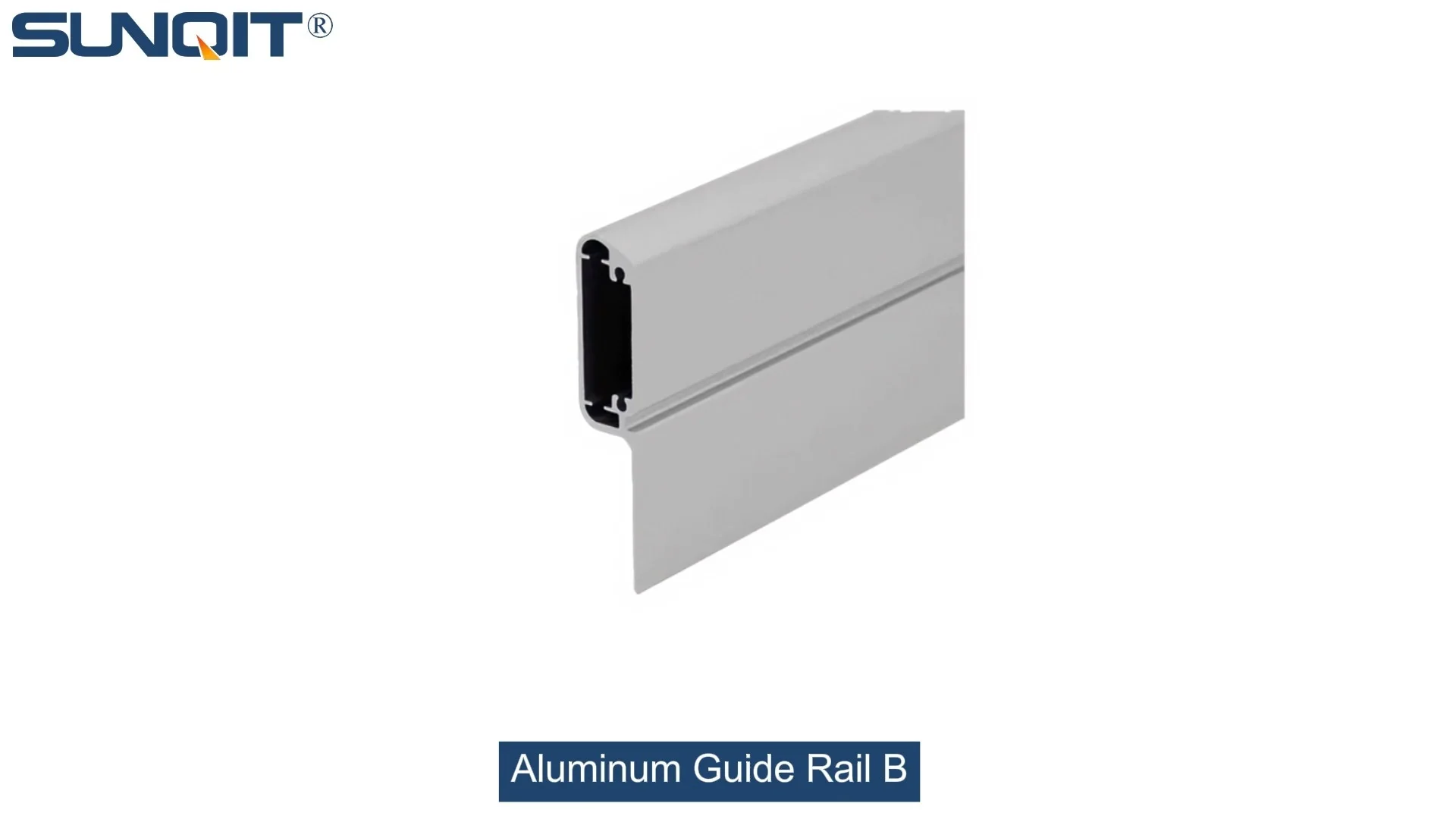
Walk into any modern manufacturing facility today, and you'll notice a quiet revolution underway. The rigid, one-size-fits-all production lines of the past are making way for something smarter, more adaptable, and infinitely more responsive: modular manufacturing systems. At the heart of this shift lies a seemingly simple component with outsized impact— Aluminum Guide Rail B . But this isn't just another piece of metal. It's the backbone that turns static factories into dynamic hubs capable of keeping pace with today's fast-changing market demands.
Let's start with the reality manufacturers face daily: consumer tastes shift overnight, new regulations pop up without warning, and product life cycles shrink faster than ever. A factory that can't pivot quickly? It gets left behind. That's where modular systems come in. And if modular systems are the body, Aluminum Guide Rail B is the spine—strong yet flexible, connecting every part while allowing for seamless movement and adaptation.
The Problem with "Set It and Forget It" Production Lines
Think about the last time you tried to rearrange a heavy piece of furniture alone. It's clunky, time-consuming, and you probably scratched the floor. Now imagine that furniture is a 50-foot production line built with welded steel and fixed components. When a new product comes in—say, a slimmer smartphone or a compact medical device—you're not just moving a couch; you're tearing down and rebuilding an entire system. Days (or weeks) of downtime, wasted materials, and frustrated teams become the norm.
Traditional manufacturing setups were designed for stability, not speed. They thrived in eras where a single product model might stay on the line for years. But today? A 3C electronics manufacturer might need to switch between assembling smartwatches, wireless earbuds, and tablet chargers in the same week. A medical equipment producer could suddenly shift from surgical tool kits to diagnostic device components overnight. Rigid lines can't handle that. They turn opportunity into overhead, and agility into a distant dream.
Aluminum Guide Rail B: The Unsung Hero of Modular Flexibility
Enter Aluminum Guide Rail B—quietly changing the game without fanfare. What makes this aluminum extrusion profile so special? It starts with the material: high-grade aluminum that balances strength and lightness. Unlike heavy steel rails, it's easy to handle, so your team can reconfigure sections without cranes or specialized tools. But the real magic is in the design.
Aluminum Guide Rail B features precision-engineered T-slots that snap into compatible accessories—think roller track connectors, end supports, and mounting brackets—with zero welding required. Need to extend a line by 10 feet? Slide in a new rail section and lock it with a few bolts. Want to adjust the angle for a steep incline? Swap out the end support with a wheel for smooth transitions. It's like building with advanced Lego blocks, but for factories.
And let's talk sustainability—a buzzword, sure, but one that hits home when you're staring at a pile of discarded steel rails from a line that's obsolete. Aluminum Guide Rail B is built to last, but more importantly, it's built to adapt. When your production needs change, you don't throw it away; you reconfigure it. That's "reusable, sustainable improvement" in action—the core of lean manufacturing that saves costs and cuts waste year after year.
| Feature | Traditional Steel Rails | Aluminum Guide Rail B |
|---|---|---|
| Weight | Heavy (requires machinery for movement) | Lightweight (easily repositioned by hand) |
| Assembly Time | Hours (welding, drilling, painting) | Minutes (tool-free T-slot connections) |
| Adaptability | Fixed (permanent configurations only) | Modular (reconfigurable for new products) |
| Longevity | Prone to rust; limited lifespan | Corrosion-resistant; reusable for decades |

Building a Complete System: From Guide Rails to Workstations
Aluminum Guide Rail B doesn't work alone. It's the foundation of a larger ecosystem designed to make your entire line modular. Let's break down the key players that turn a single rail into a full flexible production solution:
Lean Pipe Workbench: Where Precision Meets Flexibility
Every production line needs a command center—the workstation where operators assemble, test, or package products. Enter the Lean Pipe Workbench, often built with the same aluminum lean pipe and internal rotary aluminum joints that complement Aluminum Guide Rail B. Take Workbench E, for example: a single-deck station with a sturdy aluminum frame that can be outfitted with ESD (electrostatic discharge) surfaces for sensitive electronics like 3C components. Need to add a tool rack or a monitor mount? The T-slots on the workbench legs let you clip on accessories in seconds. No more drilling holes or calling in a carpenter—just quick, easy customization that keeps your team focused on what they do best.
Flow Rack: Keeping Materials Moving, Always
What good is a flexible line if your materials are stuck in a static warehouse? Flow Rack (or Material Rack B, with its 3-row, 3-floor design) uses gravity and roller tracks—often guided by Aluminum Guide Rail B—to keep parts flowing to the line exactly when needed. Imagine a 3C assembly plant where smartphone cases need to reach Station 5 by 10 AM. The Flow Rack's inclined roller tracks (fitted with plastic guide rails in yellow or grey for visibility) let cases glide down smoothly, eliminating bottlenecks. And when you switch to larger medical device components? Adjust the rail angles or add dividers—no tools, no downtime.
Conveyor: Bridging the Gaps Without Fuss
Now, connect your workstations and flow racks with a Conveyor system that plays well with Aluminum Guide Rail B. Whether it's a belt conveyor for small parts or a roller conveyor for heavier loads, the modular design means you can add curves, inclines, or even 90-degree turns by linking rail sections. For example, in an automotive parts plant, a 40 Steel Roller Track with yellow wheels might carry engine components from the Flow Rack to the Lean Pipe Workbench, then onto final assembly. If tomorrow you need to route parts to a new inspection station? Disconnect a section, add a swivel joint, and you're done. It's logistics with a "plug-and-play" attitude.
| Component | Role | Real-World Impact |
|---|---|---|
| Aluminum Guide Rail B | Modular backbone for rails and frames | Reduces reconfiguration time by 70% vs. steel |
| Lean Pipe Workbench | Customizable workstations for assembly/testing | ESD surfaces cut 3C electronics defects by 40% |
| Flow Rack | Gravity-fed material storage and delivery | Medical device plants report 30% faster material access |
| Conveyor | Seamless material transport between stations | Automotive parts lines see 25% less manual handling |

Beyond Components: Lean Solutions That Grow With You
Here's the truth: buying a guide rail or a workbench isn't enough. What manufacturers really need is a partner who understands their unique chaos—the late-night design changes, the seasonal spikes, the pressure to do more with less. That's where custom Lean Solutions come in. It's not just about selling parts; it's about listening.
Take a 3C assembly client we worked with recently. They needed to shift between assembling 10 different smartphone models monthly, each with unique tooling and part requirements. We started with a baseline of Aluminum Guide Rail B, Lean Pipe Workstations, and Flow Racks, but the magic was in the details: designing quick-change tool holders that clip onto the workbenches, integrating ESD roller tracks for sensitive circuit boards, and adding caster wheels to workstations so they could be wheeled into storage when not in use. The result? A 50% reduction in changeover time and a team that stopped dreading model switches.
Or consider a medical device manufacturer facing strict regulatory audits. They needed traceability, cleanliness, and flexibility—three things that rarely go together. Our solution? Stainless steel roller balls (1-inch swivel) for easy cleaning, aluminum honeycomb panels for lightweight, sterile work surfaces, and a modular layout that could expand as they added new product lines. No more choosing between compliance and agility.

The Bottom Line: It's About More Than Production Lines
At the end of the day, Aluminum Guide Rail B and the modular systems it enables aren't just about making factories run smoother. They're about empowering teams. When your operators can adjust their workbench height in 5 minutes instead of 5 days, they feel valued. When your engineers can prototype a new line layout over lunch, innovation thrives. When your CFO sees lower waste and higher throughput, everyone wins.
Manufacturing isn't just about machines—it's about people. And people do their best work when they're not fighting rigid systems. So whether you're in 3C assembly, medical devices, or automotive parts, remember: the future isn't in bigger factories. It's in smarter, more flexible ones. And it all starts with a simple aluminum rail that refuses to stay static.
Ready to stop adapting to your production line? Let your production line adapt to you.