- Company Articles
- Products and Technology
- Solution
- Flexible Production Lines: How Flat Swivel Castor Wheel with Brake Enhances Workflow Agility

Flexible Production Lines: How Flat Swivel Castor Wheel with Brake Enhances Workflow Agility
Related Product
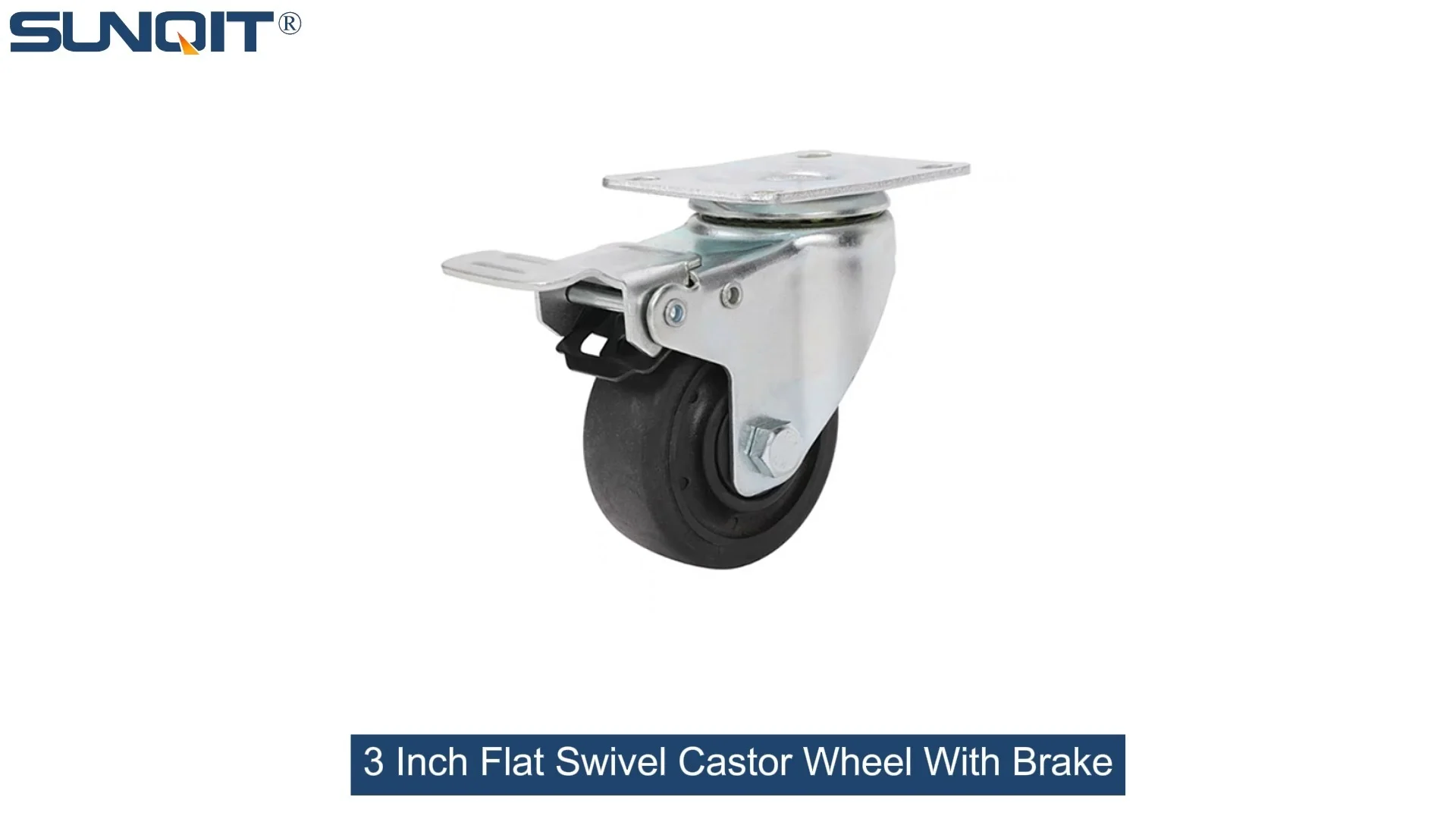
Flat Swivel Castor Wheel With Brake
Chair Casters Ball Bearing Wheels Rubber Base with brake design. Resistant to abrasion, impact and corrosion. Heavy payload can hold 70Kgs per pcs,which can make it works at a stable and smooth status.
The Pulse of Modern Manufacturing: Why Agility Matters
Walk into any successful manufacturing facility today, and you'll notice a common theme: movement . Not the chaotic hustle of disorganized labor, but the intentional, fluid motion of materials, tools, and teams adapting to shifting demands. In an era where customer preferences change overnight and product lifecycles shrink by the quarter, rigidity in production lines isn't just inefficient—it's a death sentence for competitiveness. This is where the concept of workflow agility takes center stage: the ability to reconfigure, adapt, and respond quickly without sacrificing quality or safety. And while large-scale automation and advanced software often grab headlines, some of the most impactful innovations in agility are surprisingly small, components working behind the scenes. One such unsung hero? The flat swivel castor wheel with brake .
To understand why this component matters, let's start by examining the challenges of traditional production setups. For decades, factories relied on fixed workstations, immovable material racks, and static assembly lines. If a product design changed, or demand spiked for a different SKU, reconfiguring the floor would take days—if not weeks. Workers wasted precious time walking back and forth between distant workbenches and storage areas. Materials sat idle, bottlenecking production. Safety risks increased as teams struggled to maneuver heavy equipment manually. These inefficiencies didn't just eat into profits; they left companies vulnerable to faster, more adaptable competitors. Enter the lean system —a framework built on eliminating waste, optimizing flow, and fostering continuous improvement. At its core, lean manufacturing isn't just about cutting costs; it's about creating systems that breathe , adjusting to needs in real time. And to make that breathing possible, every element of the production line, from the largest conveyor to the smallest wheel, must align with the goal of flexibility.
Lean Systems: The Foundation of Adaptable Production
A lean system isn't a one-size-fits-all solution; it's a mindset that permeates every aspect of operations. From inventory management (think just-in-time delivery) to worker training (cross-functional teams), lean is about stripping away the non-essential to focus on value. But even the best lean strategies falter if the physical infrastructure can't keep up. Imagine designing a workflow that prioritizes "flow" (one of lean's core principles) but forcing materials to move through a maze of fixed obstacles. It's like trying to dance in a straightjacket—you might have the rhythm, but your body can't follow. This is where adaptable equipment becomes critical. Tools like modular workbench units, adjustable flow rack systems, and mobile storage solutions are the bones of a lean production line. They're designed to be reconfigured quickly, grow or shrink with demand, and move where they're needed most. But none of this mobility would be possible without reliable, durable casters that balance maneuverability with stability.
Let's break this down with a concrete example: the workbench . In a traditional setup, a workbench is bolted to the floor, a permanent fixture where assembly, testing, or packaging happens. If a team needs to collaborate on a project across two departments, they're out of luck—either the workbench stays, or the team splits, slowing communication. Now, replace that fixed workbench with one mounted on flat swivel castor wheels with brakes . Suddenly, the workbench becomes a mobile hub. Need to align it with a new flow rack for faster material access? Push it into place. Want to bring it directly to a maintenance team for on-the-spot repairs? Swivel it through tight aisles. And when it's time to work, engage the brake, and it locks into position—stable as any fixed bench, but infinitely more versatile. This isn't just convenience; it's a paradigm shift. Workers spend less time moving materials and more time adding value. Teams collaborate seamlessly. And when production needs change, the line adapts in hours, not days.
The Science of the Swivel: Why This Castor Wheel Stands Out
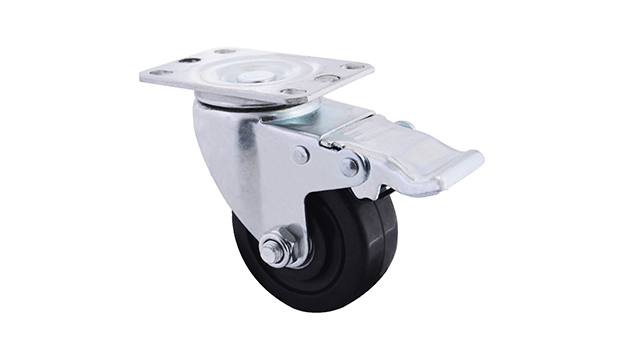
Not all casters are created equal. In industrial settings, where loads can exceed hundreds of pounds and floors are rarely perfectly smooth, a cheap, flimsy wheel won't cut it. The flat swivel castor wheel with brake is engineered for the demands of modern manufacturing, with three key features that make it indispensable:
1. 360° Swivel for Unmatched Maneuverability: Unlike rigid casters that only roll forward and backward, swivel casters rotate on a vertical axis, allowing the wheel to turn in any direction. This is game-changing in tight spaces—think navigating around machinery, squeezing through doorways, or aligning a workbench with precision next to a flow rack . The "flat" design (a low-profile mounting plate) keeps the center of gravity low, reducing the risk of tipping even with heavy loads. For example, a fully loaded workbench with tools and materials might weigh 500+ pounds, but with flat swivel casters, a single worker can move it smoothly without straining.
2. Integrated Brake for Safety and Stability: Mobility is useless if the equipment won't stay put when needed. The brake mechanism—typically a foot-operated lever that locks the wheel and/or swivel plate—ensures the caster remains stationary during use. This is critical for safety: imagine assembling delicate electronics on a workbench that rolls unexpectedly, or loading materials onto a flow rack that shifts mid-task. The brake turns a mobile tool into a fixed one in seconds, giving workers confidence and reducing error.
3. Durability for Industrial Environments: These casters aren't designed for office chairs. They're built with heavy-duty materials: reinforced steel mounting plates, polyurethane or rubber wheels that resist wear and floor damage, and sealed bearings to prevent dust and debris from jamming the swivel mechanism. In factories where oil, coolant, and debris are part of daily life, this durability ensures the casters perform reliably for years, reducing maintenance costs and downtime.
To put this in perspective, let's compare two scenarios: a factory using traditional fixed equipment versus one with mobile setups using flat swivel castor wheels with brakes . The difference isn't just in speed—it's in resilience .

From Theory to Practice: Real-World Impact of Mobile Workstations
Let's dive into a case study to see how these components come together. Consider a mid-sized electronics manufacturer producing smartphone components. Prior to adopting lean principles, their production line was a maze of fixed workbench stations and static flow rack units. When a new client requested a modified component design, the team faced a dilemma: reconfigure the line for the new part (taking 3 days of downtime) or run a separate, smaller line (splitting resources and increasing costs). Neither option was ideal. Then, they partnered with a supplier specializing in lean solutions, upgrading their workbenches and flow racks with flat swivel castor wheels with brakes .
The results were transformative. For starters, reconfiguring the line for the new component took just 4 hours instead of 3 days. Workers moved the mobile workbenches into a U-shape (optimizing team communication) and positioned the flow racks directly adjacent to each station, cutting material retrieval time by 60%. The brake feature ensured that even during high-speed assembly, workbenches stayed stable, reducing defects from accidental movement by 22%. But the biggest win? Adaptability. When the client later increased order volume by 50%, the factory didn't need to invest in new equipment—they simply repositioned existing workbenches and flow racks to create a second parallel line, meeting demand without expanding their footprint. As the plant manager put it: "We used to build our production around the equipment. Now, the equipment bends to our production needs."
Another example comes from the automotive industry, where a tier-1 supplier of engine parts struggled with bottlenecks in their inspection process. Inspectors were stationed at a fixed workbench, while parts arrived via conveyor and sat in queues, waiting to be checked. By mounting inspection tools on mobile workbenches with swivel casters, inspectors could now move directly to the conveyor's end, eliminating the queue entirely. The casters' 360° movement allowed them to pivot between multiple conveyor lanes, and the brakes kept tools steady during precise measurements. Inspection time per part dropped by 18%, and the backlog disappeared within a week.
These stories aren't anomalies. They're examples of how the right lean system —paired with thoughtful, flexible components—turns inefficiencies into opportunities. And at the heart of that flexibility is often a simple, robust wheel: the flat swivel castor with brake.

Beyond the Wheel: Building a Culture of Agility
It's important to note that while components like the flat swivel castor wheel with brake are critical, they're most effective when part of a broader commitment to agility. A lean system requires buy-in from leadership, training for workers, and a willingness to experiment. For instance, workers need to feel empowered to reposition a workbench or flow rack if it improves their workflow—not wait for approval from a supervisor. Teams should regularly audit the production floor, asking: "Is this layout serving us, or are we serving the layout?" When that mindset takes hold, even small tools become catalysts for big change.
Moreover, the choice of components matters. Not every caster, workbench, or flow rack will deliver the same results. Manufacturers should prioritize suppliers who understand their specific needs—whether it's corrosion-resistant casters for food processing, ESD-safe wheels for electronics, or heavy-duty models for automotive assembly. The best suppliers don't just sell parts; they partner with clients to design solutions that grow with their business. For example, a supplier might recommend adjustable-height workbenches with compatible casters, ensuring that as the team expands or takes on new tasks, the equipment scales with them.
The Future of Manufacturing: Small Tools, Big Dreams
As we look ahead, the demand for workflow agility will only intensify. With trends like mass customization, on-demand production, and lights-out factories on the rise, rigidity will become even costlier. But so will overcomplicating solutions. Sometimes, the most powerful innovations are the ones that solve a single problem exceptionally well—like making a workbench move when it needs to, and stay still when it must. The flat swivel castor wheel with brake is a testament to that idea: a small, unassuming component that, when paired with a lean system , transforms how work gets done.
So, the next time you walk through a factory, take a moment to notice the details. Look at the workbenches gliding into place, the flow racks shifting to align with new lines, the teams collaborating without barriers. Behind that movement is often a wheel—quiet, reliable, and essential. And in that wheel, you'll see the future of manufacturing: not just machines, but adaptable ecosystems where every part, no matter how small, contributes to a more agile, resilient, and human-centered way of working.
In the end, workflow agility isn't about speed alone. It's about empowerment —giving teams the tools they need to respond, innovate, and thrive in an unpredictable world. And if a simple castor wheel can help with that? Then it's not just a wheel. It's a step forward.
| Aspect | Traditional Fixed Setup | Modern Mobile Setup (with Flat Swivel Castor Wheels with Brake) |
|---|---|---|
| Reconfiguration Time | 3–5 days (requires tools, team labor, and downtime) | 2–4 hours (single worker, no tools needed) |
| Worker Movement Waste | High: Workers walk 1–2 miles/day retrieving materials/tools | Low: Tools/materials move to workers; walking reduced by 60% |
| Adaptability to Demand Spikes | Limited: Fixed capacity; requires overtime or new equipment | High: Reposition workbenches/flow racks to scale production lines |
| Safety Incidents (due to manual handling) | Higher: Risk of strains from lifting/moving heavy items | Lower: Casters reduce manual lifting; brakes prevent accidental movement |
| Space Utilization | Inefficient: Fixed layouts leave dead space between stations | Optimal: Workbenches/racks nest together when not in use; space reclaimed by 30% |