- Company Articles
- Products and Technology
- Product knowledge
- Flexible Production Lines: How Two Way Aluminum Pipe Joints Improve Adaptability

Flexible Production Lines: How Two Way Aluminum Pipe Joints Improve Adaptability
Related Product
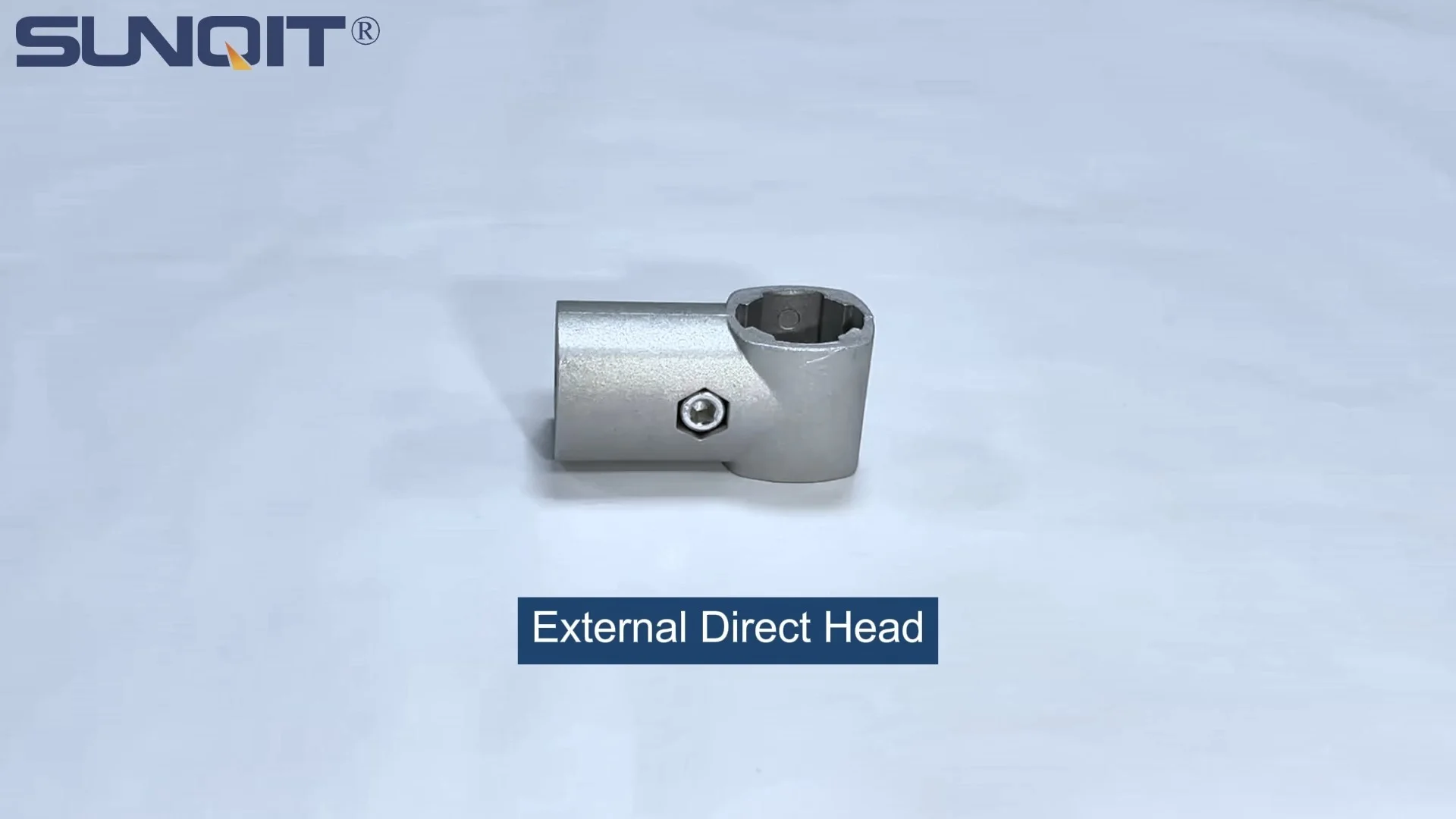
Two Way Aluminum Pipe Joint
Aluminum 2 way pipe joint for 28mm aluminum pipe connection in 2 direction.
In the fast-paced world of modern manufacturing, where consumer demands shift overnight and product lifecycles shrink by the quarter, one challenge looms larger than most: adaptability. A factory that could efficiently produce 10,000 units of a single product a decade ago now struggles to keep up with batches of 500 units across five different product lines—all while maintaining quality, reducing waste, and keeping costs in check. The culprit? Rigid production lines built with fixed, welded steel frames, custom tooling, and one-size-fits-all workstations. These systems, once the backbone of industrial efficiency, now act as anchors, slowing down innovation and limiting responsiveness. Enter flexible production lines: modular, reconfigurable setups designed to pivot quickly. At the heart of this revolution lies a deceptively simple component: the two way aluminum pipe joint.
While it may not grab headlines like AI-powered robots or 3D printers, the two way aluminum pipe joint is quietly transforming factory floors around the globe. Paired with aluminum profiles, roller tracks, and lean system principles, these joints turn static workspaces into dynamic ecosystems where change is not just possible, but effortless. In this article, we'll explore how this unassuming component is redefining adaptability in manufacturing—from reducing downtime during reconfigurations to cutting long-term costs, and empowering teams to iterate faster than ever before.
The Problem with Rigidity: Why Traditional Production Lines Are Failing
To understand the value of flexible systems, it's critical to first recognize the limitations of traditional production setups. For decades, manufacturing relied on heavy, welded steel structures: workbenches bolted to the floor, conveyor belts fixed in place, and material racks built to specific dimensions. These systems were engineered for one goal—maximizing output for a single product. But in today's market, where a electronics manufacturer might need to switch from assembling smartwatches to fitness trackers in a week, or a automotive supplier must adjust to new emission standards mid-quarter, rigidity becomes a liability.
Consider Maria, a production supervisor at a mid-sized medical device plant in Ohio. Last year, her team was tasked with producing a new line of portable oxygen concentrators—a product with different dimensions, weight, and assembly steps than their existing models. The existing workbench, a steel behemoth welded together five years prior, was too low, too narrow, and lacked space for the new testing equipment. "We had two options," Maria recalls. "Either spend $12,000 on a custom-built workbench and wait three weeks for it to arrive, or try to modify the old one with grinders and welders, which would take two days of downtime. Both choices felt like losing." Her experience is far from unique. Across industries, manufacturers report that reconfiguring traditional production lines eats up 15-20% of their annual labor hours and delays product launches by an average of 25%.
The costs go beyond time and money. Welded steel structures are prone to rust in humid environments, require specialized tools to modify, and are nearly impossible to repurpose once a product is discontinued. A 2023 survey by the Manufacturing Flexibility Institute found that 68% of factories discard at least 30% of their fixed equipment when shifting production lines—creating waste that contradicts sustainability goals and strains budgets.
The Rise of Flexible Production: Modular Components as the Solution
In response to these challenges, the industry has turned to flexible production lines—systems built with modular, interchangeable components that can be quickly assembled, disassembled, and reconfigured. Unlike traditional setups, which are designed for permanence, flexible lines prioritize adaptability. At the core of this shift are lightweight, durable materials and smart connector systems that allow teams to build, modify, and repurpose structures on demand.
Aluminum has emerged as a star material in this movement. Its unique properties—high strength-to-weight ratio, corrosion resistance, and compatibility with precision machining—make it ideal for modular systems. But aluminum alone isn't enough. To truly enable flexibility, manufacturers need connectors that can join aluminum pipes and profiles in multiple configurations without welding, drilling, or specialized skills. This is where the two way aluminum pipe joint comes into play.
What Are Two Way Aluminum Pipe Joints?
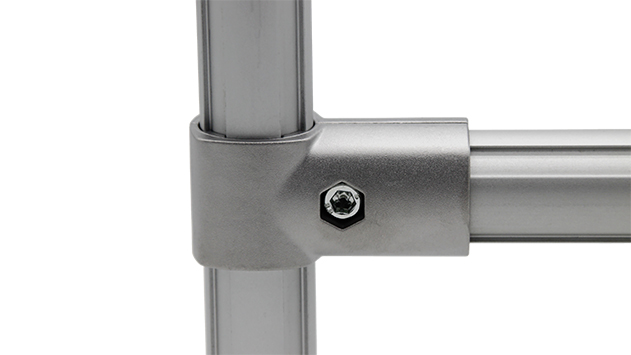
Two way aluminum pipe joints are precision-engineered connectors designed to link aluminum pipes or profiles at angles (typically 90 degrees or straight) with minimal effort. Made from high-grade aluminum alloys (often 6063-T5, known for its strength and weldability), these joints feature internal threads, slots, or clamping mechanisms that secure pipes in place using simple hand tools—no welding torches or power drills required.
Unlike one-way joints, which only connect two pipes in a straight line, two way joints offer versatility in orientation. For example, a single two way joint might allow a pipe to extend horizontally from a vertical post (forming an "L" shape) or connect two parallel pipes (forming a "T" or "cross" shape, depending on the design). Some advanced models even include rotating components, enabling (fine adjustments) of angles to accommodate uneven floors or custom layouts.
But what truly sets these joints apart is their modularity. They're designed to work seamlessly with standard aluminum profiles—extruded aluminum beams with T-slots that allow for easy attachment of accessories like shelves, brackets, or roller tracks. This compatibility turns individual pipes and joints into building blocks: with a few components, a team can assemble a workbench in the morning, reconfigure it into a material rack by afternoon, and break it down into parts for storage by evening.
The Benefits of Two Way Aluminum Pipe Joints in Production Lines
The value of two way aluminum pipe joints lies in their ability to address the key pain points of traditional systems: time, cost, durability, and sustainability. Let's break down their impact across these areas.
1. Lightning-Fast Assembly and Reconfiguration
Traditional steel workbenches or material racks require teams of skilled welders and hours (or days) of labor to build. With two way aluminum pipe joints, the process is dramatically simplified. John, a lead assembler at a California-based aerospace parts supplier, describes the difference: "Last month, we needed a new inspection station for a rush order. Using aluminum profiles and two way joints, three of us built a 6-foot workbench with a shelf, tool rail, and LED light bar in 45 minutes. Five years ago, that would have taken two welders a full day. Now, we don't even need power tools—just hex keys and a rubber mallet."
The speed extends to reconfiguration. When Maria's medical device plant finally switched to modular workbenches with two way joints, modifying the setup for the new oxygen concentrators took just 90 minutes. "We loosened the joints, adjusted the height of the tabletop, added a side shelf for the testing gear, and tightened everything back up," she says. "No downtime, no mess, no $12,000 bill. We were assembling units by lunch."
2. Cost Savings Through Reusability
Modular systems built with two way joints reduce costs in two key ways: lower upfront investment and reduced waste from obsolescence. While aluminum components may have a higher initial price tag than welded steel, their reusability drives long-term savings. A 2022 study by the Lean Manufacturing Association compared the 5-year cost of a traditional steel workbench versus a modular aluminum workbench with two way joints. The results were striking: the steel workbench cost $3,500 upfront and required $2,200 in modifications/replacement over five years. The aluminum system cost $4,200 upfront but only $300 in adjustments (new joints, additional pipes) and was fully repurposed twice, avoiding $8,000 in new equipment costs.
For small and medium-sized manufacturers (SMEs), this is transformative. "As a startup, we couldn't afford to tie up capital in custom equipment," says Raj, founder of a sustainable packaging company in Texas. "Our first production line was built entirely with aluminum profiles and two way joints. When we outgrew it six months later, we disassembled it and used 90% of the parts to build a larger line. We saved $25,000 that year alone."
3. Durability Without the Weight
Critics once dismissed aluminum as "too flimsy" for industrial use, but modern alloys and joint designs have silenced those concerns. Two way aluminum pipe joints, when paired with 2.0mm or 3.0mm thick aluminum profiles, can support loads of up to 500 lbs per linear foot—more than enough for most assembly tasks, material storage, or light conveyor systems. Unlike steel, aluminum resists rust and corrosion, making it suitable for humid environments like food processing plants or coastal factories.
Mike, a maintenance manager at a seafood processing facility in Maine, notes the difference: "Our old steel material racks would rust within a year, even with paint. We switched to aluminum racks with two way joints three years ago, and they still look brand new. No more replacing rusted parts, no more contamination risks from flaking paint. It's been a game-changer for food safety."
4. Sustainability: Reducing Waste, Cutting Carbon Footprints
In an era where consumers and regulators demand greener practices, modular systems offer significant sustainability benefits. Traditional steel structures often end up in landfills when production lines change, but aluminum components are infinitely reusable. A single two way joint can be part of a workbench today, a roller track tomorrow, and a turnover trolley next month. Even when components do reach the end of their lifespan, aluminum is 100% recyclable, with 95% less energy required to recycle it than to produce new aluminum.
The environmental impact adds up. A 2023 report by the Sustainable Manufacturing Forum found that factories using modular aluminum systems reduced their equipment waste by 72% and cut carbon emissions from production line reconfigurations by 65%, compared to those using traditional steel.

Real-World Applications: How Two Way Joints Transform Production Lines
The versatility of two way aluminum pipe joints makes them suitable for nearly every corner of the factory floor. Let's explore their most impactful applications, from workbenches to material flow systems.
Workbenches: The Backbone of Assembly
Workbenches are the heart of any production line, and their design directly impacts efficiency. With two way joints, workbenches become customizable platforms that adapt to tasks, operator heights, and tool requirements. For example, a electronics assembler might need a bench with a (ESD) top, overhead lighting, and tool hooks—all of which can be attached via the T-slots in aluminum profiles. When the product changes, the same bench can be raised, widened, or fitted with new accessories (like cable management trays or bin holders) in minutes.
At a smartphone assembly plant in Vietnam, teams use aluminum workbenches with two way joints to accommodate different phone models. "Each model has unique fixtures—some need a tilted surface for screen installation, others require a flat area for battery testing," explains Linh, the plant's operations director. "Instead of 10 different workbenches, we have 5 modular ones that we reconfigure daily. It saves 40% of floor space and eliminates the clutter of unused equipment."
Roller Tracks: Streamlining Material Flow
Efficient material flow is critical to reducing bottlenecks. Roller tracks, which use gravity or powered rollers to move parts between workstations, are a staple of lean manufacturing—but traditional roller tracks are often fixed in place. With two way aluminum joints, roller tracks become dynamic systems that can be extended, shortened, or rerouted as needed.
Consider a furniture manufacturer that produces both dining chairs and coffee tables. Chair frames are lightweight and can move quickly along a steep roller track, while tables are heavier and require a gentler slope. Using aluminum profiles and two way joints, the plant can adjust the track's angle in 15 minutes by repositioning the support legs. "Before, we had two separate tracks—one for chairs, one for tables," says Mark, the plant manager. "Now, we use one track and reconfigure it twice a day. We've cut material handling time by 30%."
Material Racks: Adapting to Inventory Needs
Material racks store raw materials, work-in-progress, and finished goods—but inventory levels fluctuate with demand. A clothing manufacturer might need extra rack space during peak seasons (e.g., back-to-school) and less during lulls. Modular racks built with two way joints solve this by allowing teams to add shelves, adjust heights, or even split racks into smaller units.
A sportswear brand in Portugal uses this flexibility to manage seasonal spikes. "In Q4, we stockpile fleece for winter jackets, so we need 8-foot-tall racks," says Ana, the logistics coordinator. "In Q2, we switch to lightweight fabrics for summer shirts, which fit on 4-foot racks. With aluminum joints, we take apart the tall racks, shorten the posts, and add more shelves. It takes two people half a day instead of a week of building new racks."
| Feature | Traditional Steel Production Components | Modular Aluminum Systems with Two Way Joints |
|---|---|---|
| Assembly Time | 8-12 hours for a workbench (requires welding/bolting) | 30-60 minutes for a workbench (hand tools only) |
| Reconfiguration Ease | Requires cutting/welding; 2-3 days of downtime | Tool-free adjustments; 30-90 minutes of downtime |
| Weight | Heavy (500+ lbs for a standard workbench) | Lightweight (150-200 lbs for a comparable workbench) |
| Durability | Prone to rust; welds weaken over time | Corrosion-resistant; joints maintain strength with reuse |
| Cost Over 5 Years | $5,000-$8,000 (initial + replacement/modifications) | $3,000-$4,500 (initial + minor accessory costs) |
| Sustainability | 90% of components end up in landfills | 95%+ of components reusable; 100% recyclable |
Material Racks and Turnover Trolleys
Beyond static storage, two way joints excel in mobile systems like turnover trolleys—carts used to transport materials between stations. Traditional steel trolleys are heavy and fixed in size, but aluminum trolleys with two way joints are lightweight, foldable, and adjustable. A warehouse team can modify a trolley's shelf height to carry bulkier items or remove shelves entirely to transport large components.
At a automotive parts plant in Germany, turnover trolleys with aluminum joints have reduced operator fatigue. "Our old steel trolleys weighed 200 lbs empty," says Klaus, a warehouse supervisor. "Now, the aluminum ones weigh 60 lbs, and we can adjust the handle height for each operator. Ergonomic injuries are down 50%, and our teams can move materials 30% faster."
Case Study: How a Small Manufacturer Cut Lead Times by 40% with Modular Systems
Precision Parts Co., a family-owned manufacturer of custom machine components in Michigan, faced a crisis in 2022. Their biggest client, a medical device company, demanded a 30% reduction in lead times to compete with overseas suppliers. With just 12 employees and a shop floor of 5,000 square feet, Precision Parts needed a solution that wouldn't require expanding their facility or hiring more workers.
Their answer? A complete overhaul of their production line using aluminum profiles, two way joints, and lean system principles. Previously, their workflow was linear: raw materials entered at one end, moved through machining, assembly, and inspection, and exited at the other. But with custom orders varying in size and complexity, bottlenecks formed daily.
Working with a local supplier, they replaced fixed steel workbenches with modular aluminum ones, built adjustable roller tracks to route parts around bottlenecks, and added mobile turnover trolleys for materials. The two way joints were critical: when a rush order for 500 small gears came in, the team reconfigured three workbenches into a dedicated assembly cell in 2 hours, doubling output for that product. For larger, bulkier components, they extended the roller track by 10 feet using spare aluminum pipes and joints, reducing material handling time by 25%.
The results were transformative. Lead times dropped from 14 days to 8 days, on-time delivery rates rose from 75% to 98%, and the team avoided the $150,000 cost of expanding their facility. "We didn't add a single machine or employee," says owner Tom Wilson. "We just made our existing space work smarter. The two way joints were the glue that held it all together—literally and figuratively."

Choosing the Right Components: Beyond the Joint
While two way aluminum pipe joints are powerful, their effectiveness depends on pairing them with compatible components. Here are key considerations for building a flexible system:
Aluminum Profiles: The Foundation
Aluminum profiles (or extrusions) are the "pipes" that joints connect. They come in various sizes (e.g., 20x20mm, 30x30mm, 40x40mm) and feature T-slots along their length, which allow accessories like shelves, brackets, and tools to be attached without drilling. When selecting profiles, consider load capacity (thicker walls for heavier tasks), slot size (to fit accessories), and compatibility with joint designs.
Accessories: Enhancing Functionality
Joints and profiles are just the start. Accessories like casters (for mobility), ESD workbench tops (for electronics), and roller track guides (for material flow) extend the system's capabilities. Look for accessories designed for modularity—many suppliers offer clamp-on bins, LED light bars, and tool holders that attach directly to aluminum profiles.
Supplier Partnerships: Ensuring Quality and Support
Not all aluminum components are created equal. Choosing a reputable supplier ensures that joints, profiles, and accessories are precision-machined to fit together seamlessly. Look for suppliers that offer technical support—many provide CAD models, assembly guides, and even on-site training to help teams maximize their modular systems.
The Future of Manufacturing: Flexibility as a Competitive Edge
As manufacturing continues to evolve—driven by trends like mass customization, nearshoring, and Industry 4.0—flexibility will no longer be a "nice-to-have" but a requirement for survival. Factories that cling to rigid systems will struggle to keep up with competitors that can pivot in days, not months.
Two way aluminum pipe joints, while small in size, represent a big idea: that manufacturing systems should adapt to people, not the other way around. They empower teams to innovate, respond to challenges, and turn constraints into opportunities. As Maria, the medical device supervisor, puts it: "We used to see change as a problem. Now, with our modular line, change is just another puzzle to solve—and we have the tools to solve it quickly."
For manufacturers ready to embrace the future, the path is clear: invest in systems that grow with you. Start small—a single modular workbench, a section of adjustable roller track—and experience the benefits firsthand. Chances are, you'll wonder how you ever worked without them.
In the end, the most powerful production lines aren't the ones with the fastest machines or the biggest budgets. They're the ones that can change, adapt, and thrive in a world where the only constant is change. And with two way aluminum pipe joints leading the way, that future is already here.