- Company Articles
- Products and Technology
- Solution
- Flexible Production Lines: Integrating 40 Aluminum Roller Track Grey with Conveyors

Flexible Production Lines: Integrating 40 Aluminum Roller Track Grey with Conveyors
Related Product
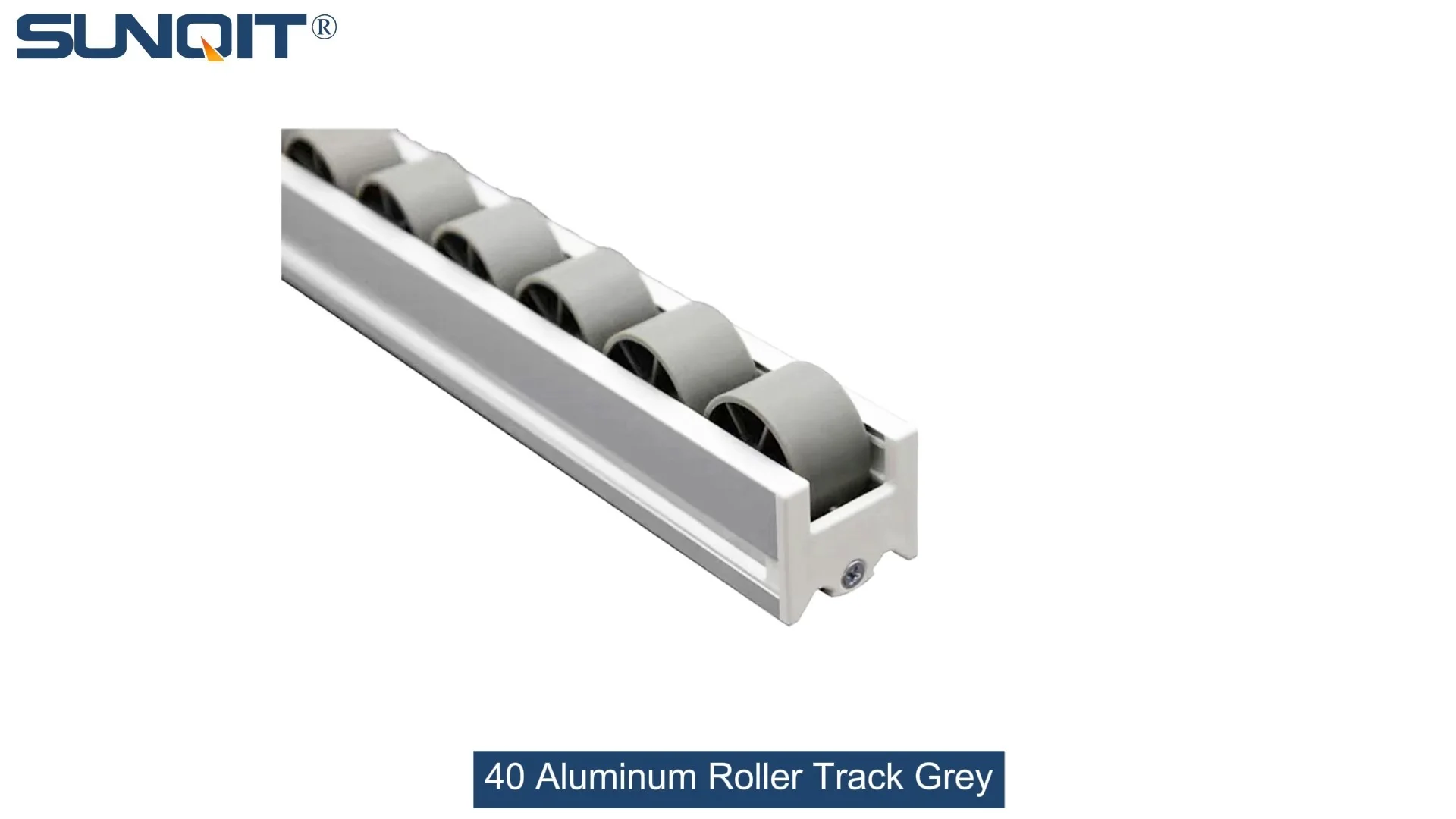
40 Aluminum Roller Track Grey
Durable and smooth-running modular roller rails. The system is fully assembled. The roller rail profile contains plastic rollers mounted on steel axles. Aluminum frame with plastic wheel make it anti corrosion,and material convey more smooth.
Walk into any modern manufacturing facility today, and you'll notice a quiet revolution unfolding on the production floor. Gone are the days of rigid, one-size-fits-all assembly lines that grind to a halt at the first sign of change. Instead, you'll find dynamic, adaptable spaces where materials glide smoothly from one station to the next, workers move with purpose, and every square foot of space is optimized for efficiency. At the heart of this transformation? Components like the 40 aluminum roller track grey and roller conveyors, working in harmony to redefine what "flexible production" truly means.
For manufacturers, the pressure to do more with less has never been greater. Customer demands shift overnight, product lifecycles shrink, and competition grows fiercer by the day. In this environment, a production line that can't pivot quickly isn't just inefficient—it's a liability. That's where integrating 40 aluminum roller track grey with conveyors comes into play. This combination isn't just about moving parts from Point A to Point B; it's about building a system that bends without breaking, adapts without disruption, and turns chaos into a well-orchestrated dance of productivity. Let's dive into how these components work, why they matter, and how they're reshaping the future of manufacturing.
The Backbone of Modern Movement: Unpacking 40 Aluminum Roller Track Grey
Before we talk about integration, let's get to know the star of the show: the 40 aluminum roller track grey. At first glance, it might seem like just another piece of hardware—an unassuming strip of aluminum with rollers embedded along its length. But looks can be deceiving. This track is engineered with precision, designed to solve some of the most common headaches manufacturers face daily.
Let's start with the basics. The "40" in its name refers to its width: 40 millimeters, a sweet spot that balances stability with flexibility. Too narrow, and it might struggle with heavier loads; too wide, and it becomes bulky, eating up valuable floor space. Aluminum, the material of choice, is a game-changer here. Unlike steel, which is heavy and prone to rust, aluminum is lightweight yet surprisingly strong—think of it as the featherweight champion of industrial materials. This means the track is easy to install, adjust, and reconfigure, even for small teams. And that "grey" finish? It's not just for aesthetics. Grey is neutral enough to blend into any workspace, reducing visual clutter, but it's also highly visible, making it easier for workers to track material flow and spot anomalies (like a stuck part) at a glance.
But the real magic is in the rollers. The 40 aluminum roller track grey typically features small, evenly spaced rollers that spin with minimal friction. When paired with the right conveyor system, these rollers turn even the heaviest bins or parts into seemingly weightless objects, gliding along the track with barely a push. This isn't just about speed—it's about consistency. Inconsistent movement is the enemy of efficiency; a part that gets stuck here, a bin that slows down there, and suddenly your entire line is out of sync. The smooth, reliable motion of these rollers eliminates those hiccups, keeping production flowing like a well-tuned river.
Another unsung benefit? Durability. Manufacturing floors are tough environments—dust, moisture, occasional impacts, and constant use can wear down even the sturdiest equipment. Aluminum's natural resistance to corrosion means the track holds up in humid or damp conditions, while its structural integrity ensures it won't warp or bend under repeated stress. Compare that to plastic tracks, which can crack under heavy loads, or steel tracks that rust and require constant maintenance, and it's clear why aluminum has become the go-to material for forward-thinking facilities.
Why Grey? The Practicality Behind the Color
You might be wondering: why grey? Why not bright yellow, or bold blue? The answer lies in functionality. In a busy production environment, visual clarity is key. Bright colors can be distracting, making it harder for workers to focus on the task at hand. Grey, on the other hand, is calm and unobtrusive, creating a backdrop that lets the materials—the actual stars of the show—stand out. It's also highly resistant to showing scratches or scuffs, which means the track maintains a clean, professional look even after years of use. For facilities that prioritize 5S principles (sort, set in order, shine, standardize, sustain), this is a small detail that makes a big difference in maintaining a tidy, organized workspace.
| Roller Track Type | Material | Weight Capacity | Corrosion Resistance | Best For |
|---|---|---|---|---|
| 40 Aluminum Roller Track Grey | Aluminum Alloy | Medium to Heavy Loads (up to 50kg/m) | High (resistant to moisture, oils) | Flexible production lines, lean systems, indoor use |
| Plastic Roller Track Guide Rail Yellow | Polypropylene | Light Loads (up to 20kg/m) | Medium (prone to UV damage over time) | Light assembly, temporary setups, low-budget projects |
| Steel Roller Track | Mild Steel | Heavy Loads (up to 100kg/m) | Low (requires painting/coating) | Outdoor use, extremely heavy parts (e.g., automotive frames) |
As the table shows, 40 aluminum roller track grey strikes a unique balance that makes it ideal for the demands of modern manufacturing. It's not the lightest option, nor the absolute strongest, but it's the most versatile—capable of handling the majority of industrial loads while remaining adaptable enough to grow with your business.
Bridging the Gap: How Roller Conveyors and 40 Aluminum Roller Track Grey Work Together
A roller track on its own is like a highway without cars—it has potential, but it needs a system to bring it to life. That's where roller conveyors come in. Roller conveyors are the workhorses of material handling, using a series of rotating rollers to move products along a path. When integrated with 40 aluminum roller track grey, they create a seamless material flow system that's both powerful and precise.
Let's break down the integration process. Imagine a typical assembly line for small electronics, like smartphone components. The line might start with a storage area where raw materials are kept, then move to a workbench where circuit boards are assembled, followed by a testing station, and finally packaging. To connect these stations, you'd use roller conveyors to transport bins of components from storage to the workbench. But here's the catch: the conveyor alone might not align perfectly with the workbench's height, or it might need to navigate a tight corner. That's where the 40 aluminum roller track grey steps in. The track can be mounted directly onto the conveyor frame, or used as a bridge between conveyors, ensuring materials glide smoothly from one segment to the next without jamming or tipping.
The key to this integration is compatibility. Both the track and the conveyor are designed with modularity in mind, meaning they can be connected using a range of aluminum profile accessories—think brackets, connectors, and end supports. For example, a roller track placon mount for aluminum profile flat can attach the track directly to an aluminum extrusion profile, which is commonly used to build conveyor frames. This modularity means you're not locked into a single layout; if you need to add a new workbench or reposition a conveyor, you can simply disconnect the track, adjust the components, and reconnect—no welding, no heavy machinery, no downtime.
Another advantage of this pairing is speed control. Roller conveyors can be powered (using motors) or gravity-fed (relying on inclines). The 40 aluminum roller track grey works with both. In a gravity system, the track's smooth rollers reduce friction, allowing materials to flow downhill at a steady pace. In a powered system, the track ensures that even when the conveyor speeds up or slows down, the load remains stable, preventing spills or damage. This level of control is crucial for delicate operations, like handling glass components or sensitive electronics, where a sudden jolt could ruin hours of work.
Let's consider a real-world example. A medical device manufacturer we worked with recently was struggling with bottlenecks in their packaging line. Their old system used plastic tracks and manual carts, which meant workers were constantly stopping to move materials, leading to delays and ergonomic strain. We replaced the plastic tracks with 40 aluminum roller track grey and integrated it with a gravity-fed roller conveyor. The result? Materials now flow automatically from the assembly station to packaging, reducing manual handling by 60% and cutting down on wait times. Workers can focus on quality control instead of pushing carts, and the line can handle 20% more volume without adding extra shifts. It's a small change on paper, but the impact rippled through their entire operation.

Lean Systems in Action: Efficiency That Goes Beyond Movement
If integration is about movement, then lean systems are about meaning. Lean manufacturing—the philosophy of eliminating waste, streamlining processes, and continuous improvement—has been around for decades, but it's only recently that tools like 40 aluminum roller track grey and roller conveyors have made it accessible to manufacturers of all sizes. These components don't just support lean systems; they embody them.
Let's start with waste elimination. In lean terms, waste (or "muda") comes in many forms: overproduction, waiting, unnecessary transportation, defects, and more. A poorly designed material handling system is a hotbed for several of these. For example, if parts are stored 50 feet away from the assembly line, workers spend hours each day walking back and forth—unnecessary transportation. If a conveyor frequently jams, the line stops, leading to waiting. The integrated system of 40 aluminum roller track grey and conveyors attacks these wastes head-on.
By bringing materials directly to the point of use—say, a workbench positioned along the conveyor line—you eliminate unnecessary movement. The track's smooth flow reduces jams, cutting down on waiting time. And because the system is modular, you can scale production up or down as needed, avoiding overproduction. It's lean thinking made tangible.
Another pillar of lean is "just-in-time" (JIT) production, where materials arrive exactly when they're needed, not a minute earlier or later. This minimizes inventory costs and frees up warehouse space. But JIT requires precise timing, and that's hard to achieve with a clunky material handling system. The 40 aluminum roller track grey, with its consistent rolling action, ensures that materials move at a predictable pace, so you can schedule deliveries to the workbench with pinpoint accuracy. No more stockpiling parts "just in case"—the system becomes reliable enough to trust with tight timelines.
Perhaps the most underrated benefit, though, is how this integration supports continuous improvement. Lean isn't a one-and-done project; it's a mindset. With a modular system, you can experiment with small changes—adding a new track segment here, repositioning a conveyor there—and measure the impact. Did productivity increase? Did errors decrease? If not, you can easily revert the changes. This flexibility turns the production floor into a lab for innovation, where every worker can contribute ideas for improvement, knowing the system can adapt to their suggestions.

Beyond Movement: Workbenches as the Heart of the Integrated System
So far, we've talked about moving materials, but what happens when they stop moving? That's where workbenches come in. A workbench isn't just a table; it's the command center where workers assemble, test, inspect, and package products. In an integrated system, the workbench is positioned strategically along the roller conveyor and 40 aluminum roller track grey, creating a seamless transition from movement to action.
Let's take the "Workbench E (Single Deck-Without Caster)" as an example. This is a simple, sturdy workbench designed for stationary use, often placed directly next to a conveyor line. The 40 aluminum roller track grey can be extended right up to the bench's edge, so materials roll off the track and onto the work surface with minimal effort. Workers don't have to reach or bend—everything they need is within arm's reach, reducing fatigue and improving ergonomics.
But it's not just about placement. The best workbenches in these systems are customizable, with features like tool rails, storage bins, and ESD (electrostatic discharge) protection for sensitive electronics. For instance, an ESD workstation would be paired with the track and conveyor to handle circuit boards, ensuring that static electricity doesn't damage components as they move from the conveyor to the bench. This level of coordination—where the track, conveyor, and workbench all work toward the same goal—turns individual tasks into a cohesive process.
Consider a scenario where a worker is assembling a small appliance. The parts bin arrives via the roller conveyor, gliding along the 40 aluminum roller track grey until it reaches their workbench. They open the bin, take what they need, and the empty bin is sent back along the return track—all without the worker leaving their station. When the assembly is complete, the finished product is placed back on the track, which carries it to the next station (testing, packaging, etc.). This "flow" eliminates wasted steps, keeps workers focused, and ensures that every minute of their shift is spent adding value, not moving things around.
Workbenches also play a role in quality control. By positioning an inspection bench immediately after the assembly station, you can catch defects early, before they move further down the line. The track ensures that products arrive at the inspection bench in a consistent orientation, making it easier for inspectors to check for flaws. If a defect is found, the product can be quickly routed to a repair station via a side track, without disrupting the main flow. This kind of agility is only possible when the workbench is fully integrated with the movement system.

The Unsung Heroes: Aluminum Profile Accessories That Make Integration Possible
If the 40 aluminum roller track grey and roller conveyors are the stars of the show, then aluminum profile accessories are the supporting cast—small, unassuming components that make the magic happen. Without them, integration would be nearly impossible. These accessories are the glue that holds the system together, allowing you to connect tracks to conveyors, adjust heights, add supports, and customize layouts to fit your unique needs.
Take, for example, the roller track placon mount for aluminum profile high. This bracket is designed to attach the 40 aluminum roller track grey to a tall aluminum extrusion profile, raising the track to the perfect height for a conveyor or workbench. Without it, you'd be stuck trying to rig up a solution with mismatched parts, which is unstable and unsafe. Similarly, the roller track placon mount center support bracket adds stability to long stretches of track, preventing sagging under heavy loads. It's a small part, but it ensures the track remains level and functional for years.
Connectors are another critical accessory. The "90° Aluminum Pipe Joint Inside Connection" allows you to turn corners with the track, so the conveyor can navigate around obstacles or follow the shape of your facility. Meanwhile, the "Internal Rotary Aluminum Joint" lets you adjust the track's angle, making it possible to create inclines or declines for gravity-fed systems. These joints are easy to tighten and loosen, so you can reconfigure the track layout in minutes, not hours.
Casters and leveling feet are also part of the accessory ecosystem. While a stationary workbench might not need casters, a mobile turnover trolley could use "Caster Wheel" accessories to move materials between the conveyor line and storage areas. Leveling feet, like the "Anti-Slip Adjustable Leveling Feet," ensure that the track and conveyor remain stable on uneven floors, preventing wobbling or shifting during operation. Even something as simple as a "Plastic Roller Track Guide Rail Grey" (a smaller, complementary track) can be used to guide small parts along the main track, preventing them from veering off course.
The beauty of these accessories is that they're designed to work together. You don't have to mix and match brands or guess if a bracket will fit a track—most manufacturers design their accessories to be compatible with their roller tracks and aluminum profiles. This standardization reduces complexity, speeds up installation, and makes maintenance a breeze. When a connector wears out, you can replace it with a new one in minutes, without having to redesign the entire system.
Real-World Impact: How Integration Transforms Manufacturing Floors
At this point, you might be thinking, "This all sounds great in theory, but does it actually work in practice?" The answer is a resounding yes. Let's look at two case studies that show how integrating 40 aluminum roller track grey with conveyors and workbenches has transformed real manufacturing operations.
Case Study 1: Automotive Parts Supplier
A mid-sized automotive parts supplier was struggling with inefficiencies in their brake component assembly line. Their old system used steel conveyors and manual carts, which were slow and prone to breakdowns. Workers spent 25% of their time moving parts between stations, and the line could only handle one product type at a time. They decided to upgrade to a system featuring 40 aluminum roller track grey, roller conveyors, and Workbench E stations.
The results were dramatic. By integrating the track and conveyors, they reduced manual material handling by 40%, freeing up workers to focus on assembly. The modular design allowed them to add a second product line by simply reconfiguring the track layout, increasing capacity without expanding their facility. Defect rates dropped by 15% because the consistent flow of materials reduced errors from mishandling. Within six months, the investment paid for itself in increased productivity and reduced waste.
Case Study 2: Electronics Manufacturer
A manufacturer of small electronic components (think sensors and circuit boards) was facing challenges with lead times and space constraints. Their facility was cramped, and their old plastic tracks kept jamming, causing delays. They needed a system that was compact, reliable, and compatible with their ESD workstations.
They opted for a gravity-fed system using 40 aluminum roller track grey, roller conveyors, and ESD workstations. The aluminum track was mounted overhead in some areas (using aluminum profile accessories like ceiling brackets) to save floor space, with materials feeding down to workstations as needed. The smooth-rolling track eliminated jams, cutting downtime by 30%. The ESD workstations, paired with the track, prevented static damage to components, reducing scrap rates by 20%. Best of all, the modular design allowed them to add new stations as demand grew, without disrupting existing operations.
These case studies share a common theme: integration isn't just about buying new equipment—it's about rethinking how your facility operates. When the 40 aluminum roller track grey, roller conveyors, workbenches, and accessories all work in harmony, the whole becomes greater than the sum of its parts. It's not just a production line; it's a flexible, adaptable ecosystem that can grow with your business.
Choosing the Right Components: A Guide for Manufacturers
If you're convinced that integrating 40 aluminum roller track grey with conveyors is the right move for your facility, the next step is choosing the right components. With so many options on the market, it can be overwhelming, but breaking it down into key considerations will help you make informed decisions.
1. Assess Your Load Requirements
Start by understanding what you'll be moving. How heavy are your materials? A 40 aluminum roller track grey can handle medium to heavy loads (up to 50kg per meter), but if you're moving something extremely heavy (like engine blocks), you might need a reinforced steel track. On the flip side, if you're moving small, lightweight parts (like jewelry components), a plastic track might suffice—but remember, plastic isn't as durable for long-term use.
2. Consider Your Space
Measure your facility carefully. Do you have tight corners? Will you need to mount tracks overhead or under workbenches? The modularity of aluminum components makes them ideal for small spaces, but you'll still need to plan for clearance (e.g., height for overhead tracks, width for conveyors). Don't forget about future growth—leave room to add more track segments or conveyors down the line.
3. Think About Environment
Will the system be used indoors or outdoors? Aluminum is corrosion-resistant, making it great for indoor use with occasional moisture (like in a food processing plant). If you're using it outdoors, look for anodized aluminum (which has an extra protective layer) or consider stainless steel components. For ESD-sensitive environments (electronics, medical devices), ensure all components (track, conveyor, workbench) are ESD-compliant.
4. Prioritize Ergonomics
Your workers are your most valuable asset—design the system around them. Position workbenches at a comfortable height (typically 75-85cm for standing work), and ensure the track brings materials to waist level, so workers don't have to bend or reach. Add features like anti-fatigue mats under workstations and tool organizers to reduce clutter. A system that's efficient but hard to use will lead to burnout and turnover.
5. Choose a Reputable Supplier
Finally, partner with a supplier who understands both the components and the principles of lean manufacturing. Look for suppliers who offer not just products, but also design support—someone who can help you layout the system, recommend accessories, and troubleshoot issues. A good supplier will also provide warranties on their products, giving you peace of mind that your investment is protected.
The Future of Flexible Production: Where Do We Go From Here?
As manufacturing continues to evolve, one thing is clear: flexibility will only become more important. The rise of customization (think "mass personalization"), shorter product cycles, and global supply chain disruptions means that rigid systems will be left behind. Integrating components like 40 aluminum roller track grey with conveyors, workbenches, and aluminum profile accessories isn't just a trend—it's a survival strategy.
Looking ahead, we'll likely see even more innovation in this space. Smart sensors embedded in roller tracks could monitor material flow in real-time, alerting managers to bottlenecks before they become problems. Robotics could work alongside these systems, picking products off the track and placing them on workbenches with precision. And 3D-printed accessories might allow manufacturers to create custom brackets or connectors on-demand, further reducing lead times.
But even with all these advancements, the core principle will remain the same: systems should serve people, not the other way around. The 40 aluminum roller track grey and its counterparts are tools to empower workers, streamline processes, and turn chaos into order. They're not about replacing humans—they're about giving humans the support they need to do their best work.
So, whether you're running a small workshop or a large factory, take a look at your production floor. Are there bottlenecks? Are workers spending too much time moving materials? Could your layout be more efficient? If the answer is yes, it might be time to consider integrating 40 aluminum roller track grey with conveyors. It's a small change that can lead to big results—faster production, happier workers, and a business that's ready to thrive in the future of manufacturing.
In the end, flexible production isn't just about machines and tracks. It's about creating a workplace where innovation is possible, where change is embraced, and where every part of the operation works together to deliver value. The 40 aluminum roller track grey, roller conveyors, workbenches, and accessories are more than components—they're the building blocks of that future. And that future starts today, on your production floor.