- Company Articles
- Products and Technology
- Solution
- Flexible Production Lines: Integrating Aluminum Honeycomb Panels for Modular Workstations

Flexible Production Lines: Integrating Aluminum Honeycomb Panels for Modular Workstations
Related Product
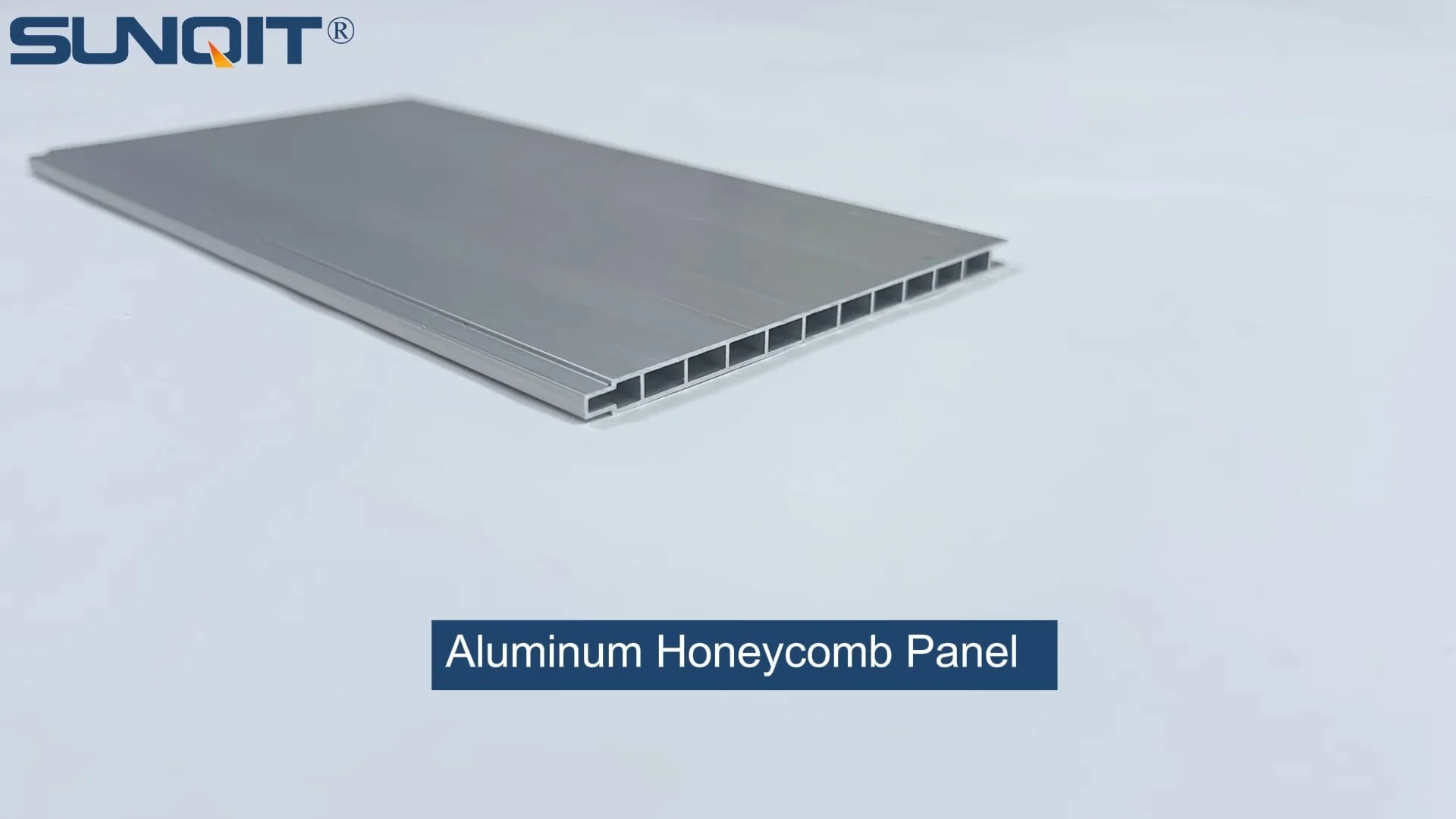
Aluminum Honeycomb Panel
Aluminum honeycomb panel used as table top, side wall, it is connected one pcs by one pcs from the side slot to make a full pieces.This panel width 105mm, 55mm, 35mm are optional for slection.
In today's fast-paced manufacturing landscape, the ability to adapt quickly isn't just a competitive advantage—it's a necessity. As consumer demands shift toward customization and shorter production cycles, factories and assembly plants are rethinking their workflows. At the heart of this transformation lies the concept of flexible production lines, where rigidity gives way to adaptability. And one of the most impactful innovations driving this change? Modular workstations built with aluminum honeycomb panels , paired with versatile components like aluminum profiles and aluminum pipe . These systems aren't just about building workbenches—they're about creating production environments that grow, change, and evolve alongside your business.
The Shift to Flexible Production Lines: Why Traditional Workstations Fall Short
Think about the typical factory floor of 20 years ago. Workstations were often fixed, heavy, and built for a single purpose. A wooden workbench might serve for assembling one product, but if the company pivoted to a new item—say, from small electronics to larger machinery—that bench became obsolete. Workers would either with ill-fitting equipment, leading to inefficiencies and ergonomic issues, or the company would incur significant costs to replace the entire setup. Steel workbenches, while sturdier, weren't much better: they were heavy, hard to reconfigure, and prone to rust in humid environments.
Today, that model no longer works. A manufacturer might need to switch between producing 100 units of Product A in the morning and 50 units of Product B in the afternoon. Or a startup might scale from a small batch operation to mass production in months. Fixed workstations can't keep up. This is where flexible production lines step in, designed around the principles of modularity, lightweight strength, and quick reconfiguration. And at the core of these systems is a material that's revolutionizing workstation design: aluminum honeycomb panels.
The Core of Modular Workstations: What Makes Aluminum Honeycomb Panels Special?
If you've never seen an aluminum honeycomb panel up close, imagine a sheet that's surprisingly lightweight but remarkably strong. The secret is in its structure: a honeycomb-shaped core (usually made of aluminum) sandwiched between two thin aluminum sheets. This design borrows from nature—bees' honeycombs are strong enough to hold honey and larvae despite being made of wax—translating to a material that's both rigid and lightweight. For workstations, this means a surface that can support heavy tools, components, and assemblies without bowing, while remaining easy to move and reposition when needed.
But the benefits don't stop there. Aluminum honeycomb panels are inherently stable, resisting warping even in temperature fluctuations—a common issue in factories with varying heat or humidity. They're also resistant to scratches, dents, and corrosion, which is crucial in environments where spills (of oil, coolant, or cleaning agents) are part of daily life. Unlike wood, they won't splinter or absorb moisture, and unlike solid steel, they won't add unnecessary weight that makes reconfiguration a hassle. For workers, this translates to a sturdy, reliable surface that stays level and intact, even after years of heavy use.

Building Blocks: Aluminum Profiles and Aluminum Pipe as the Backbone
A modular workstation is only as good as its frame, and here's where aluminum profiles and aluminum pipe shine. Aluminum profiles—extruded pieces with T-slots along their length—are the unsung heroes of modular design. These slots allow for quick attachment of accessories: shelves, tool holders, lighting, or even monitors. Need to add a side shelf to your workstation? Slide a bracket into the T-slot, tighten a screw, and you're done. No drilling, no welding, no waiting for a maintenance crew. This flexibility is a game-changer for teams that need to adjust their setup on the fly.
Aluminum pipe, often used in conjunction with profiles, adds another layer of adaptability. Unlike rigid steel pipes, aluminum pipe is lightweight and easy to cut, bend, or connect using simple joints. This makes it ideal for building custom frames, material racks, or even mobile carts that can be wheeled between workstations. For example, a manufacturer assembling small parts might use aluminum pipe to create a overhead shelf for tools, while a larger assembly line could use it to build a roller track system for moving components between stations. The key is that these structures aren't permanent—if tomorrow's project requires a taller frame or a wider shelf, the pipe can be disassembled, reconfigured, and reused.
Together, aluminum honeycomb panels, profiles, and pipe create a system where every component works in harmony. The honeycomb panel provides a stable, durable work surface; the profiles form the adjustable frame; and the pipe adds customizability for specific tasks. It's a modular approach that turns a single workstation into a blank canvas for productivity.

Lean System Integration: Reducing Waste, Boosting Efficiency
Flexible workstations aren't just about adaptability—they're also about aligning with lean system principles. Lean manufacturing, at its core, is about eliminating waste: wasted time, wasted space, wasted effort. Traditional workstations often contribute to these inefficiencies. A fixed bench might require workers to walk extra steps to retrieve tools, or a cluttered surface might slow down assembly. Modular systems, by contrast, are designed to minimize waste at every turn.
Take, for example, a workstation built with aluminum honeycomb panels and aluminum profiles. The T-slots in the profiles allow tools to be mounted exactly where workers need them—no more reaching across the bench or fumbling through drawers. The lightweight honeycomb panel means the entire workstation can be moved closer to a conveyor line, reducing the distance parts need to travel. And if a production line needs to shrink or expand, the workstation can be disassembled and rebuilt in minutes, rather than hours (or days) of downtime.
Another lean benefit is scalability. A small startup might begin with a single modular workstation, then add more as orders increase. A larger factory could reconfigure an entire line from assembling Product X to Product Y in a single shift, simply by rearranging panels, profiles, and pipe. This agility reduces the "waste of waiting"—a common lean pitfall where production stalls due to inflexible infrastructure. In short, modular workstations don't just support lean systems; they embody them.
Traditional vs. Modular Workstations: A Side-by-Side Comparison
| Feature | Traditional Workstations (Wood/Steel) | Modular Workstations (Aluminum Honeycomb + Profiles) |
|---|---|---|
| Weight | Heavy (50-100+ kg for a standard bench) | Lightweight (20-30 kg for a similar-sized bench) |
| Assembly Time | Hours to days (requires tools, welding, or professional installation) | Minutes to hours (tool-free or basic hand tools) |
| Reconfigurability | Limited (often requires rebuilding from scratch) | High (components can be disassembled and reused) |
| Durability | Moderate (wood warps, steel rusts, surfaces scratch easily) | High (aluminum resists corrosion, honeycomb panels withstand heavy use) |
| Ergonomics | Fixed height and layout (may not suit all workers) | Adjustable height, customizable tool placement (supports worker comfort) |
| Cost Over Time | Higher (replacement costs, downtime for reconfiguration) | Lower (reusable components, minimal downtime) |
Real-World Applications: How Modular Workstations Transform Workflows
To understand the impact of modular workstations, let's look at a hypothetical but realistic scenario: a mid-sized electronics manufacturer producing circuit boards. A few years ago, their assembly line relied on fixed steel workbenches. When they landed a contract for a new, larger circuit board model, they faced a problem: the existing benches were too short, and the steel frames couldn't be adjusted. They had two options: buy new benches (costing tens of thousands of dollars) or delay production (risking the contract). Instead, they switched to modular workstations with aluminum honeycomb panels and aluminum profiles.
The transformation was striking. The new workstations were built to the exact height needed for the larger boards, with T-slots holding soldering irons, magnifying lamps, and ESD (electrostatic discharge) mats—all within arm's reach of workers. When the contract ended and they returned to smaller boards, the benches were reconfigured: the honeycomb panels were adjusted, and the profiles were shortened. No new equipment, no downtime, no wasted money. Today, they estimate saving over 30% on workstation-related costs annually, thanks to reusability and reduced downtime.
Another example comes from the automotive parts industry. A supplier needed to switch between assembling door handles and side mirrors—two products with very different tool and component needs. With modular workstations, they solved this by creating interchangeable "kits": one set of aluminum pipe racks for door handle tools, another for mirrors. When production shifted, workers swapped the kits in under 15 minutes. The aluminum honeycomb panels, meanwhile, held up to the constant sliding of parts and occasional drops, maintaining a smooth, level surface year after year.
Beyond the Workbench: Accessories That Enhance Flexibility
A modular workstation is more than just a bench and a frame—it's a system, and the right accessories can take its flexibility to the next level. Let's start with casters: adding locking caster wheels to the base of an aluminum profile frame turns a stationary workstation into a mobile one. Need to move it closer to a conveyor? Unlock the casters and roll it into place. Working on a large assembly? Cluster several mobile workstations together to create a temporary production island, then split them apart when done.
Roller tracks are another essential accessory. Made from aluminum or plastic, these tracks can be mounted to the edge of a honeycomb panel workbench, allowing parts to slide smoothly from one station to the next. For example, a worker assembling a product can push it along the roller track to the next workstation, eliminating the need to lift and carry heavy items. And because roller tracks are compatible with aluminum profiles, they can be adjusted for height or angle to match the flow of the line.
Adjustable leveling feet are a small but critical detail. Factories floors are rarely perfectly flat, and uneven workstations can cause parts to roll off or strain workers' backs. Aluminum profile-based workstations often include leveling feet that screw into the base, allowing precise adjustments to keep the honeycomb panel surface perfectly level—even on rough concrete.
Sustainability and Cost-Effectiveness: The Long-Term Value of Modular Systems
In an era where sustainability is a growing priority, modular workstations offer an eco-friendly alternative to traditional setups. Aluminum is one of the most recyclable materials on the planet—nearly 75% of all aluminum ever produced is still in use today. When a modular workstation reaches the end of its life (which, given the durability of aluminum honeycomb panels and profiles, could be decades), its components can be recycled with minimal energy input. This reduces waste and lowers the carbon footprint of manufacturing operations.
From a cost perspective, modular systems also deliver long-term savings. While the upfront cost might be slightly higher than a basic wooden workbench, the ability to reconfigure and reuse components means you won't need to replace the entire workstation every time your needs change. A study by the Manufacturing Technology Insights found that companies using modular workstations reported a 25-40% reduction in workstation-related costs over five years, thanks to lower replacement and downtime expenses.
Consider also the human cost: workers are more productive and less prone to injury when their workstations are ergonomic and efficient. A modular setup that reduces reaching, bending, or lifting can lower the risk of musculoskeletal disorders, cutting down on lost workdays and workers' compensation claims. In this way, the investment in modular workstations pays off not just in dollars, but in a healthier, happier team.
Future Trends: Where Modular Workstations Are Headed
As technology advances, modular workstations are evolving too. One emerging trend is the integration of smart features: sensors embedded in aluminum profiles that track usage (e.g., how often a workstation is reconfigured), or IoT-enabled tool holders that alert managers when supplies are running low. Imagine a honeycomb panel workbench that automatically adjusts its height based on a worker's biometrics, or a roller track that syncs with a conveyor system to optimize part flow.
Another trend is the use of advanced materials alongside aluminum honeycomb panels, such as carbon fiber composites for even lighter frames, or antimicrobial coatings on panels to reduce contamination in medical device manufacturing. And as 3D printing becomes more accessible, custom aluminum profile accessories—like tool holders shaped for a specific component—can be printed on-site, further reducing lead times for reconfiguration.
Conclusion: Building the Factory of the Future, One Workstation at a Time
Flexible production lines aren't a passing fad—they're the future of manufacturing. And at the center of this future are modular workstations built with aluminum honeycomb panels, aluminum profiles, and aluminum pipe. These systems combine strength, adaptability, and sustainability to create production environments that can keep up with the demands of modern business.
Whether you're a small startup looking to scale or a large factory aiming to stay competitive, the message is clear: rigid workstations belong in the past. The future belongs to systems that grow with you, reduce waste, and empower your team to work smarter. So why wait? Start building your flexible production line today—and see how modular workstations can transform your operations, one honeycomb panel at a time.