- Company Articles
- Products and Technology
- Product knowledge
- Flexible Production Lines: Lean Pipe Clamp B as a Core Modular Component

Flexible Production Lines: Lean Pipe Clamp B as a Core Modular Component
Related Product
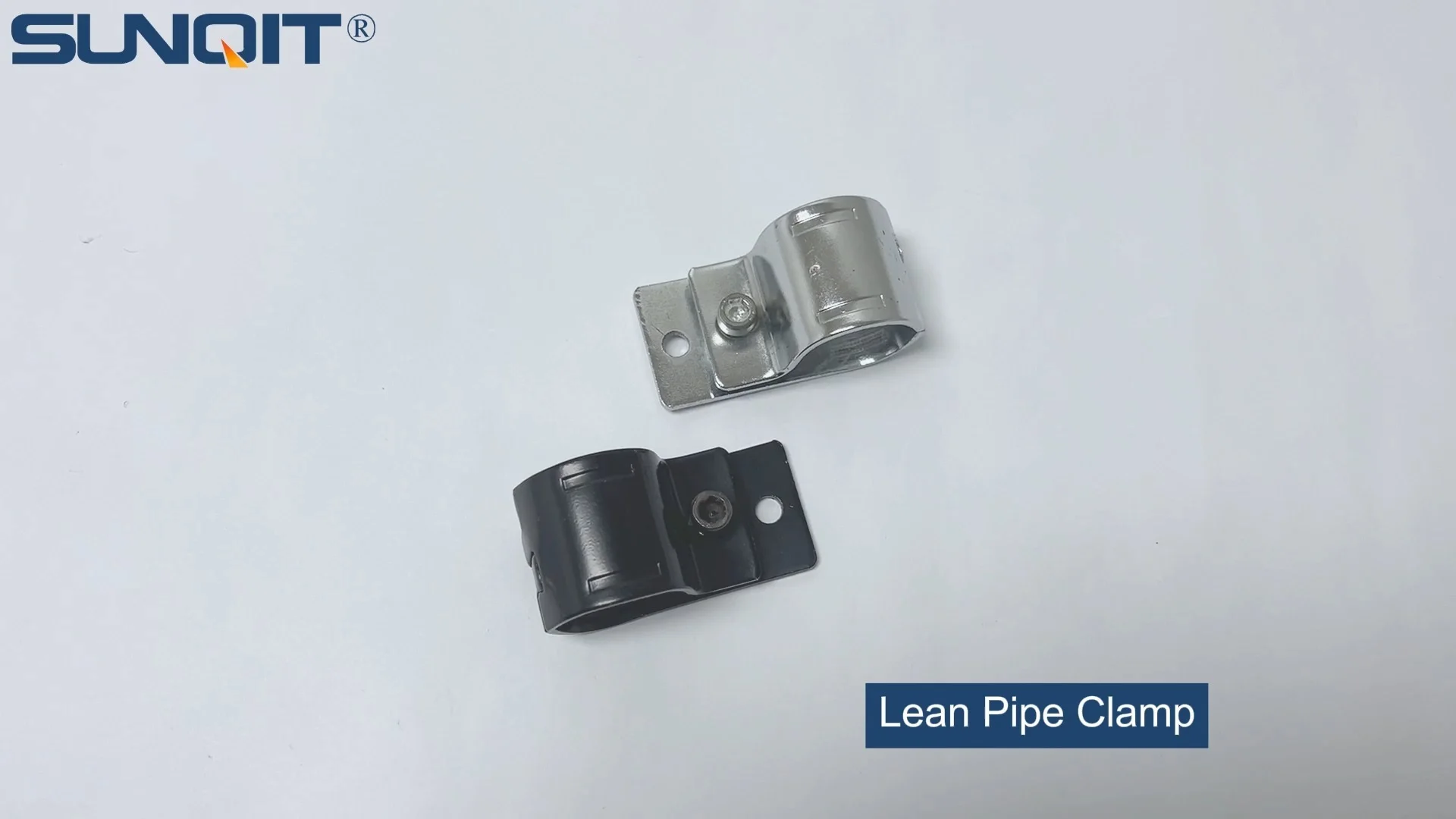
Lean Pipe Clamp
Lean pipe clamp is used for rack system hang monitor or other panel for workbenck, flowrack in production daily use.
The Changing Face of Modern Manufacturing
Walk into any manufacturing facility today, and you'll likely notice a quiet revolution underway. Gone are the days of rigid, one-size-fits-all production lines that take weeks to reconfigure and cost a fortune to adapt. Instead, forward-thinking factories are embracing flexibility—designing spaces that can pivot with customer demands, scale with growth, and empower workers to customize their environments. At the heart of this shift lies the concept of lean manufacturing, a philosophy built on efficiency, adaptability, and continuous improvement. And within the toolkit of lean systems, one unassuming component has emerged as a linchpin: the lean pipe clamp B.
Lean systems aren't just about cutting costs or speeding up production—they're about creating production lines that feel human. Lines that workers can adjust to reduce strain, that managers can retool to launch new products in days instead of months, and that businesses can scale without overhauling their entire setup. To understand how lean pipe clamp B fits into this vision, let's start with the basics: the building blocks of modular production, and why traditional setups have fallen short.
From Rigid to Responsive: The Problem with Traditional Production Lines
Traditional production lines are often built with permanence in mind. Welded steel frames, fixed conveyor belts, and bolted-down workbenches made sense when manufacturing focused on mass-producing a single product for years. But today's market moves faster. A electronics manufacturer might need to switch from assembling smartphones to tablets in weeks; a automotive parts supplier might shift from electric vehicle components to hybrid parts overnight. Rigid setups can't keep up.
Consider the example of a mid-sized furniture factory I visited last year. They'd invested in a custom-built workbench line for assembling dining chairs—solid wood frames, fixed-height tables, and manual material carts. When a client ordered a batch of taller bar stools, the team spent three days disassembling the workbenches, cutting new wood supports, and rebolting everything into place. By the time they were done, they'd lost valuable production hours and overspent on labor. Worse, the new setup was just as rigid as the old one—if the next order called for shorter stools, the process would repeat.
This is where modular systems step in. Instead of welding or bolting components together, modular setups use standardized parts that click, clamp, and connect—no special tools, no permanent modifications, no wasted time. And among these parts, lean pipe clamp B is the unsung hero that holds it all together.

What Is Lean Pipe Clamp B, and Why Does It Matter?
At first glance, lean pipe clamp B might seem like a simple piece of hardware—and in many ways, that's its greatest strength. It's a compact, durable clamp designed to secure lean pipes (hollow metal or aluminum tubes) to joints, frames, or other components. Unlike traditional clamps that require tightening with wrenches or permanent adhesives, lean pipe clamp B is engineered for speed and flexibility. Most models feature a quick-release lever or a hand-tightened knob, allowing workers to adjust, remove, or reposition pipes in minutes.
But its true value lies in its versatility. Lean pipe clamp B isn't just for holding pipes together—it's a bridge between different elements of a production line. Need to attach a roller track to a workbench? Use a clamp B to secure the track to the bench's aluminum profile frame. Want to adjust the height of a material rack? Loosen the clamps, slide the pipes to the new position, and retighten. Need to add a caster wheel to a trolley for mobility? Clamp B connects the wheel mount to the trolley's frame without drilling.
Take a typical scenario: a small electronics workshop building custom circuit boards. Their ESD workbench (a staple in electronics to prevent static damage) needs a roller track to feed components from the storage area to the assembly station. With lean pipe clamp B, they can attach the roller track directly to the workbench's aluminum profile legs. If a worker finds the track is too low, causing them to bend awkwardly, they can loosen the clamps, raise the track by 6 inches, and lock it back in place—all in under five minutes. No tools, no downtime, no frustration.

The Role of Lean Pipe Clamp B in Modular Lean Systems
To truly appreciate lean pipe clamp B, it helps to think of modular production lines as 3D puzzles. The pieces are lean pipes (often aluminum or steel), joints (which connect pipes at angles), workbenches, roller tracks, and accessories like caster wheels. Lean pipe clamp B is the "glue" that holds these pieces together—but unlike glue, it's temporary, adjustable, and reusable.
Let's break down its key roles:
- Quick Assembly: Traditional production lines require welding, drilling, or specialized tools. With lean pipe clamp B, a team can assemble a basic workbench in under an hour. Just slide pipes into joints, secure with clamps, and you're done.
- Easy Reconfiguration: When a production line needs to change, there's no need to dismantle everything. Loosen the clamps, adjust the pipes, and retighten. A manufacturer shifting from small parts to larger components, for example, can widen a roller track by adding extra pipes and clamps in minutes.
- Scalability: Start small with a single workbench, then add more as orders grow. Lean pipe clamp B makes it easy to connect new modules to existing ones—no need to buy a whole new system.
- Ergonomics: Workers come in all sizes, and one-height-fits-all workbenches lead to fatigue and injuries. With clamp B, teams can adjust the height of their work surfaces, the angle of roller tracks, or the position of tool holders to fit their bodies. Happier workers mean higher productivity.
Perhaps the most powerful example of this versatility comes from a medical device manufacturer I consulted with last year. They needed a production line that could handle both small, delicate components (like pacemaker parts) and larger, bulkier items (like hospital bed rails). Using lean pipe clamp B, they built a hybrid system: a low-profile aluminum profile workbench for small parts, connected via roller tracks (secured with clamps) to a taller material rack. When switching between products, they simply adjusted the roller track angle with the clamps to control the speed of parts flow—gentle for delicate items, steeper for heavier ones. The result? A 40% reduction in changeover time and a 25% drop in worker complaints about strain.

Traditional vs. Modular: A Side-by-Side Comparison
Still not convinced that lean pipe clamp B is worth the investment? Let's put it to the test with a real-world comparison. Below is a breakdown of how traditional production setups stack up against modular systems built with lean pipe clamp B and other lean components.
| Feature | Traditional Production Line | Modular Line with Lean Pipe Clamp B |
|---|---|---|
| Assembly Time | Weeks (requires welding, drilling, custom fabrication) | Hours to days (no special tools; clamps and joints snap together) |
| Reconfiguration Cost | High (often requires new parts, labor, and downtime) | Low (reuse existing pipes and clamps; adjust in minutes) |
| Worker Adaptability | Limited (fixed setups can't be adjusted for height, angle, or workflow) | High (workers can customize their stations to reduce fatigue) |
| Scalability | Cost-prohibitive (adding capacity means buying new equipment) | Affordable (add modules incrementally with clamps and pipes) |
| Long-Term ROI | Low (rigid setups become obsolete as needs change) | High (reusable components adapt to evolving demands) |
Beyond the Clamp: Integrating with Other Lean Components
Lean pipe clamp B rarely works alone. Its true power shines when paired with other modular components, creating systems that are greater than the sum of their parts. Let's explore how it integrates with three key elements: aluminum profiles, roller tracks, and workbenches.
Aluminum Profiles: The Backbone of Sturdy, Lightweight Frames
Aluminum profiles are extruded metal beams with T-slots, designed to connect with bolts, brackets, and—you guessed it—lean pipe clamp B. They're strong yet lightweight, making them ideal for building workbench frames, material racks, or machine guards. When combined with clamp B, aluminum profiles become infinitely adjustable. For example, a manufacturer might use aluminum profiles to build the base of a workbench, then attach lean pipes (for added height or flexibility) using clamp B. If they later need to add a shelf, they can slide a new aluminum profile into the T-slot and secure it with a clamp—no drilling required.
Roller Tracks: Streamlining Material Flow
Roller tracks are essential for moving parts from one station to the next—think of them as the "highways" of a production line. But traditional roller tracks are fixed in place, making it hard to adjust their angle, length, or height. With lean pipe clamp B, roller tracks become dynamic. Clamps can attach tracks to workbenches, aluminum profiles, or even overhead racks, and their position can be tweaked to optimize flow. A team assembling appliances, for instance, might angle a roller track slightly downward to let heavy parts glide to the next station, reducing manual lifting. If the parts change size, they can widen the track by adding more rollers and securing them with clamp B.
Workbenches: The Heart of the Production Line
Workbenches are where the magic happens—the place where workers assemble, inspect, and package products. A good workbench should be sturdy, ergonomic, and adaptable. Lean pipe clamp B makes all three possible. By combining lean pipes, aluminum profiles, and clamps, manufacturers can build workbenches with adjustable heights, integrated tool holders, and attached roller tracks. One factory I worked with even added a "floating" shelf using clamp B—workers could swing it out of the way when not in use, freeing up space for larger projects.
Real-World Impact: Stories from the Factory Floor
Numbers and features tell part of the story, but the real proof of lean pipe clamp B's value lies in the experiences of manufacturers who've adopted it. Let's look at two case studies that highlight its transformative impact.
Case Study 1: A Small Electronics Workshop Scales Without Overhead
A family-owned electronics workshop in Ohio started with just two employees and a single workbench. They built custom circuit boards for local businesses, but as orders grew, they needed to expand. Instead of investing in a $50,000 prefab production line, they opted for a modular setup: aluminum profiles for frames, lean pipes for shelving, and lean pipe clamp B to hold it all together.
In the first year, they added three more workbenches, each connected by roller tracks secured with clamp B. When a client ordered a larger batch of boards requiring extra testing space, they reconfigured one workbench into a testing station in an afternoon—no contractors, no downtime. Today, they employ 12 people and have a production line that can handle 10x their initial output, all without ever replacing their core modular system.
Case Study 2: A Automotive Supplier Cuts Changeover Time by 80%
A Michigan-based automotive supplier used to spend 48 hours reconfiguring their production line whenever they switched from making parts for sedans to SUVs. The process involved dismantling welded steel racks, repositioning conveyor belts, and rebolting workbenches. After switching to a modular system with lean pipe clamp B, they cut that time to just 8 hours.
Workers now loosen clamps to adjust the height of material racks, reposition roller tracks to accommodate larger SUV parts, and reattach tool holders to optimize workflow—all with basic hand tools. The result? They've taken on three new clients in a year, as they can now fulfill smaller, specialized orders without sacrificing speed.
Investing in Flexibility: Why Lean Pipe Clamp B Pays Off
At this point, you might be wondering: Does the upfront cost of modular components like lean pipe clamp B justify the investment? The short answer is yes—but it's important to think long-term. Traditional setups might seem cheaper initially, but they come with hidden costs: downtime during reconfigurations, lost opportunities to take on new orders, and the eventual need to replace the entire system.
Modular systems, by contrast, grow with your business. A lean pipe clamp B costs a few dollars, but its ability to extend the life of your pipes, workbenches, and roller tracks makes it invaluable. Plus, the reduced downtime and increased productivity often lead to ROI within the first year.
Consider this: A mid-sized manufacturer I worked with calculated that each reconfiguration of their old production line cost $15,000 in labor and lost output. With their new modular setup using lean pipe clamp B, reconfigurations cost $500 (mostly in worker time) and take a fraction of the time. Over two years, they saved over $100,000—more than enough to cover the cost of their modular components.
The Future of Manufacturing: Lean, Modular, and Human-Centric
As manufacturing continues to evolve—driven by trends like customization, sustainability, and Industry 4.0—flexibility will only become more critical. Consumers want products tailored to their needs; businesses want to reduce waste; and workers want environments that respect their well-being. Lean systems, with lean pipe clamp B at their core, are poised to meet all these demands.
Imagine a future where a factory floor can be reconfigured overnight to produce medical supplies during a crisis, then switch back to consumer goods when the emergency passes. Where workers design their own workstations using modular tools, reducing injuries and boosting morale. Where small businesses can compete with industry giants by scaling their production lines affordably. This future isn't far off—and it starts with components like lean pipe clamp B.
In the end, manufacturing isn't just about making things—it's about making things work for people. Lean pipe clamp B might be a small component, but it's a big step toward a more adaptable, efficient, and human manufacturing industry.