- Company Articles
- Products and Technology
- Product knowledge
- Flexible Production Lines: The Role of Suction Cup Anti-Slip Foot Adjusters

Flexible Production Lines: The Role of Suction Cup Anti-Slip Foot Adjusters
Related Product
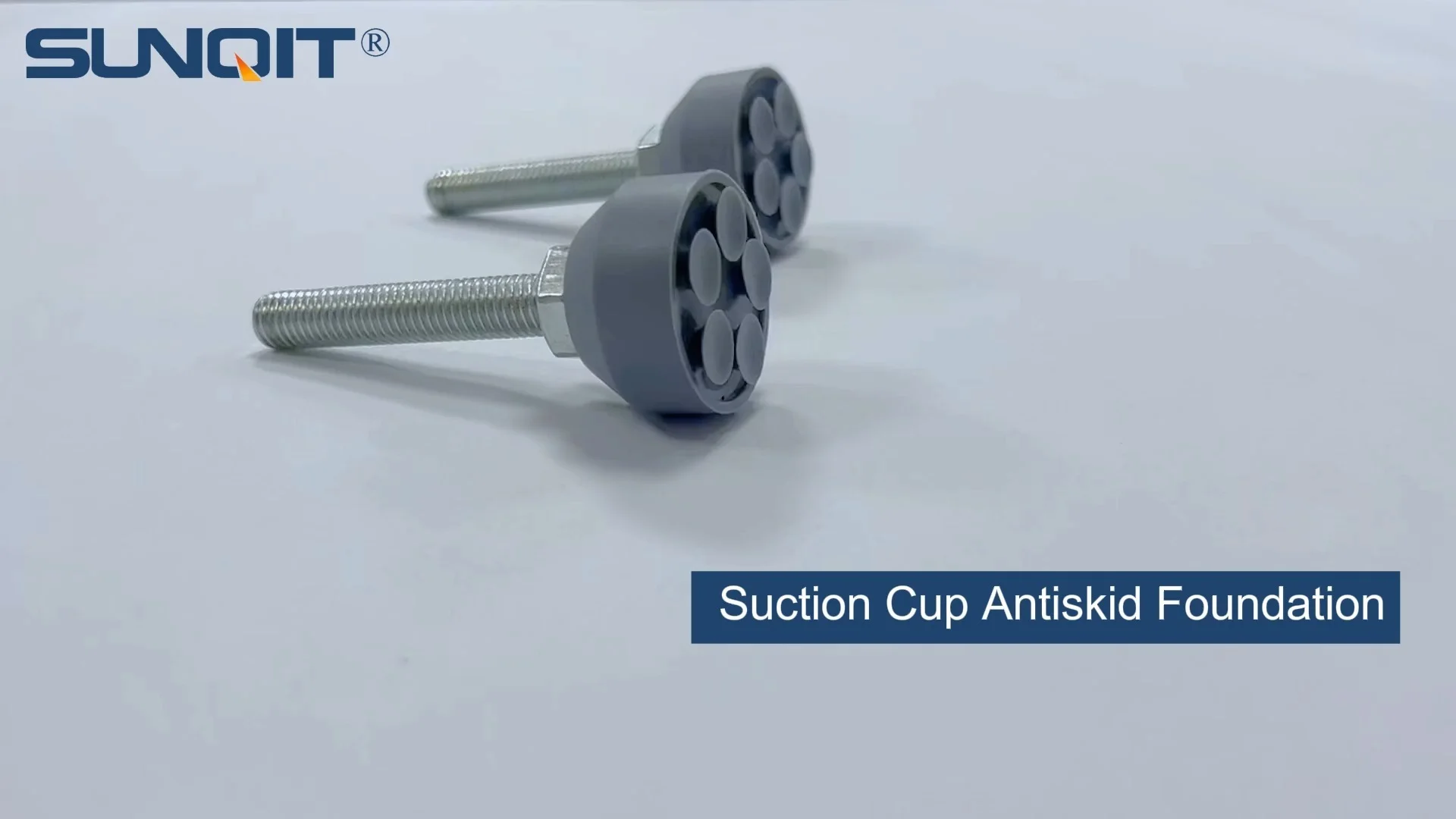
Suction Cup Anti-slip Foot Adjuster
D=35mm suction cup anti-slip foot adjusterï¼screw M10*55ï¼with a blot, used for workbench, flowrack pipe contact with groud.
The Rise of Flexible Production Lines: Why Stability Matters
Walk into any modern manufacturing facility today, and you'll notice a shift from the rigid, one-size-fits-all assembly lines of the past. Instead, you'll find dynamic, adaptable spaces where workbenches, material racks, and conveyors can be reconfigured in hours—not weeks—to meet changing production needs. This is the era of flexible production lines, and they're revolutionizing how businesses respond to market demands, shorten lead times, and stay competitive. But here's the catch: flexibility doesn't mean sacrificing stability. In fact, the more dynamic a production environment becomes, the more critical it is to keep essential equipment firmly grounded.
Think about a typical day on the factory floor: A
workbench
might be moved to accommodate a new product line, a
material rack
(like the popular Material Rack B, with its 3 rows and 3 floors) could be shifted to reduce worker travel time, and conveyors might be repositioned to streamline material flow. Each of these adjustments introduces a risk: instability. A wobbly workbench can throw off precision assembly, a sliding material rack might lead to damaged inventory, and even minor vibrations from a misaligned conveyor can compromise product quality. In industries like electronics or automotive manufacturing, where fractions of a millimeter matter, these issues aren't just inconvenient—they're costly.
This is where but mighty components like
suction cup anti-slip foot adjusters
step in. They're the unsung heroes of flexible production, ensuring that even as lines adapt and evolve, stability remains non-negotiable. In this article, we'll dive into why these small but powerful tools are becoming indispensable, how they work, and the tangible benefits they bring to modern manufacturing.
The Problem: Stability Challenges in Dynamic Environments
To understand the value of suction cup anti-slip foot adjusters, let's first unpack the stability challenges factories face. Traditional production setups relied on fixed, bolted-down equipment—great for stability, terrible for adaptability. Today's flexible lines, however, use modular components like
aluminum profiles
and lean pipes, which are designed to be reconfigured quickly. But modularity often means equipment sits on adjustable feet or casters, which can slip, slide, or vibrate loose over time.
Consider a
Workbench E
(a single-deck model without casters) used for precision assembly. Even if it's "stationary," daily use—techs leaning on it, tools being set down, parts being moved—can cause subtle shifts. Without proper stabilization, these shifts accumulate, leading to misaligned components or even errors in final products. Similarly, Material Rack B, loaded with heavy parts across its 3 rows and 3 floors, needs to stay put. A sudden jolt from a nearby forklift or a slight incline in the floor could send it sliding, risking injury or damaged goods.
Then there's the issue of floor variability. Factory floors are rarely perfectly level. Concrete might crack, tiles could wear unevenly, or temporary mats might create small height differences. Traditional rubber feet or basic adjusters can help level equipment, but they often lack the grip to prevent slipping on smooth or slightly oily surfaces—common in manufacturing environments. Over time, this can lead to a "domino effect": one unstable workbench affects adjacent stations, disrupting workflow and creating safety hazards.

The Solution: How Suction Cup Anti-Slip Foot Adjusters Work
Suction cup anti-slip foot adjusters are engineered to address these challenges head-on. At first glance, they look like standard height adjusters—metal stems with a base—but their secret lies in the base: a durable, flexible suction cup made from high-grade rubber or silicone. Here's how they work: When the adjuster is lowered onto a flat surface (like concrete or metal), the weight of the equipment presses the suction cup against the floor, forcing out air and creating a vacuum seal. This seal acts like a "sticky" anchor, resisting lateral movement even when vibrations or minor impacts occur. At the same time, the threaded stem allows for precise height adjustment, ensuring the equipment stays level on uneven floors.
What sets these adjusters apart is their dual functionality: they level and secure in one step. Unlike traditional feet, which rely solely on friction, the suction cup adds a mechanical bond to the floor. This makes them especially effective on smooth surfaces, where friction alone might not be enough. And when it's time to move the equipment? A simple lift of the foot breaks the vacuum seal, allowing for easy repositioning—no tools required. It's the perfect balance of stability and flexibility, aligning perfectly with the needs of modern
lean systems
that prioritize adaptability without sacrificing safety or precision.
Materials matter too. The suction cups are often treated with anti-aging compounds to withstand oils, coolants, and industrial chemicals, ensuring they maintain their grip even in harsh environments. The stems are typically made from corrosion-resistant metals like stainless steel or aluminum, matching the durability of the
aluminum profiles
and lean pipes they support. This longevity means fewer replacements, reducing downtime and maintenance costs over time.

Real-World Applications: Where These Adjusters Make a Difference
To truly appreciate their impact, let's look at how suction cup anti-slip foot adjusters perform in key areas of the factory floor:
1. Workbenches: Precision You Can Rely On
A Workbench E (single deck, without casters) is a staple in assembly lines, used for tasks like circuit board soldering or small-part assembly. Even the slightest movement here can ruin hours of work. By replacing standard feet with suction cup adjusters, manufacturers ensure the workbench stays rock-steady. Technicians can lean into their tasks without worrying about the surface shifting, and sensitive equipment like microscopes or torque tools remain aligned. One electronics manufacturer we worked with reported a 22% reduction in rework after upgrading to these adjusters—proof that stability directly impacts quality.
A Workbench E (single deck, without casters) is a staple in assembly lines, used for tasks like circuit board soldering or small-part assembly. Even the slightest movement here can ruin hours of work. By replacing standard feet with suction cup adjusters, manufacturers ensure the workbench stays rock-steady. Technicians can lean into their tasks without worrying about the surface shifting, and sensitive equipment like microscopes or torque tools remain aligned. One electronics manufacturer we worked with reported a 22% reduction in rework after upgrading to these adjusters—proof that stability directly impacts quality.
2. Material Racks: Safe Storage, Even When Loaded
Material Rack B, with its 3 rows and 3 floors, is designed to hold heavy components—think automotive parts or large electronics. When fully loaded, its weight alone might seem like enough to keep it stable, but in busy environments, accidental bumps from pallet jacks or workers can still cause it to slide. Suction cup adjusters distribute the rack's weight evenly and lock it in place, preventing dangerous shifts. In one warehouse, this simple upgrade cut incidents of fallen inventory by 40% in the first quarter alone.
Material Rack B, with its 3 rows and 3 floors, is designed to hold heavy components—think automotive parts or large electronics. When fully loaded, its weight alone might seem like enough to keep it stable, but in busy environments, accidental bumps from pallet jacks or workers can still cause it to slide. Suction cup adjusters distribute the rack's weight evenly and lock it in place, preventing dangerous shifts. In one warehouse, this simple upgrade cut incidents of fallen inventory by 40% in the first quarter alone.
3. Conveyors and Roller Tracks: Smooth Flow, No Slips
Conveyors and roller tracks (like the 40 steel roller track with yellow wheels) are the arteries of production lines, moving materials between stations. Misalignment here can cause jams, slowdowns, or damaged parts. Suction cup adjusters keep conveyor frames level and stable, even when handling uneven loads. They also dampen vibrations, which is critical for delicate items like glass components or medical devices. A food packaging plant noted that after installing these adjusters on their roller tracks, product damage from jams dropped by 15%.
Conveyors and roller tracks (like the 40 steel roller track with yellow wheels) are the arteries of production lines, moving materials between stations. Misalignment here can cause jams, slowdowns, or damaged parts. Suction cup adjusters keep conveyor frames level and stable, even when handling uneven loads. They also dampen vibrations, which is critical for delicate items like glass components or medical devices. A food packaging plant noted that after installing these adjusters on their roller tracks, product damage from jams dropped by 15%.

Traditional Feet vs. Suction Cup Anti-Slip Adjusters: A Comparison
| Feature | Traditional Rubber Feet | Suction Cup Anti-Slip Foot Adjusters |
|---|---|---|
| Stability on Smooth Floors | Relies on friction; may slip on oily or wet surfaces | Vacuum seal provides 2-3x better resistance to lateral movement |
| Height Adjustment | Limited (often fixed or basic adjustment) | Precise, threaded adjustment for leveling on uneven floors |
| Durability in Industrial Environments | Rubber wears down quickly; prone to cracking from chemicals | Reinforced suction cups resist oils, coolants, and UV damage |
| Ease of Repositioning | Requires lifting equipment to move; risk of damage during adjustment | Vacuum seal releases with minimal force; easy to relocate |
| Impact on Lean Systems | May require additional tools or time to stabilize, creating waste | Supports quick changeovers and 5S principles (no wasted time on readjustment) |
Supporting Lean Systems: More Than Just Stability
In the world of
lean systems
, every component should contribute to eliminating waste—whether that's time, materials, or effort. Suction cup anti-slip foot adjusters align perfectly with this philosophy. By reducing the need for constant readjustment, they free up workers to focus on value-adding tasks instead of stabilizing equipment. They also minimize waste from damaged goods, rework, and accidents—all of which eat into profits.
Consider the 5S framework (Sort, Set in Order, Shine, Standardize, Sustain), a cornerstone of lean manufacturing. "Set in Order" emphasizes organizing the workplace for efficiency, which often means arranging equipment in optimal layouts. Suction cup adjusters make it easy to "set" equipment in place and keep it there, ensuring the layout remains effective over time. Similarly, "Sustain" requires maintaining improvements—with durable adjusters, factories don't have to repeatedly replace worn-out feet or fix stability issues, keeping processes consistent.
Another lean principle is "continuous improvement," and these adjusters support that too. As production lines evolve, equipment is moved, added, or removed. With suction cup adjusters, these changes are faster and smoother, allowing teams to test new layouts without worrying about stability. This agility helps factories stay ahead of customer demands and adapt to new technologies—key in today's fast-paced market.
The Future of Flexible Manufacturing: Small Components, Big Impact
As manufacturing continues to shift toward customization, shorter production runs, and "lights-out" automation, the need for flexible, stable equipment will only grow. Components like suction cup anti-slip foot adjusters may seem small, but they're part of a larger trend: investing in smart, adaptable tools that enable big-picture efficiency. They're not just about preventing slips and falls—they're about empowering factories to be more responsive, precise, and profitable.
Imagine a factory where every workbench, rack, and conveyor can be reconfigured in minutes, yet remains as stable as if it were bolted down. A factory where workers don't waste time fixing wobbly equipment or cleaning up spills from fallen parts. A factory where quality is consistent because stability is never compromised. This isn't a distant dream—it's achievable today, thanks to innovations like suction cup anti-slip foot adjusters.
So, the next time you walk through a manufacturing facility, take a closer look at the feet of the workbenches and racks. Chances are, the ones that are quietly keeping everything running smoothly are equipped with these unsung heroes. In the world of flexible production, it's often the smallest components that make the biggest difference—and suction cup anti-slip foot adjusters are a perfect example.