- Company Articles
- Products and Technology
- Solution
- Flexible Production Lines with 4040B EU Standard Aluminum Profile: Adaptable to 3C Electronics Assembly

Flexible Production Lines with 4040B EU Standard Aluminum Profile: Adaptable to 3C Electronics Assembly
Related Product
4040B EU Standard Aluminum Profile
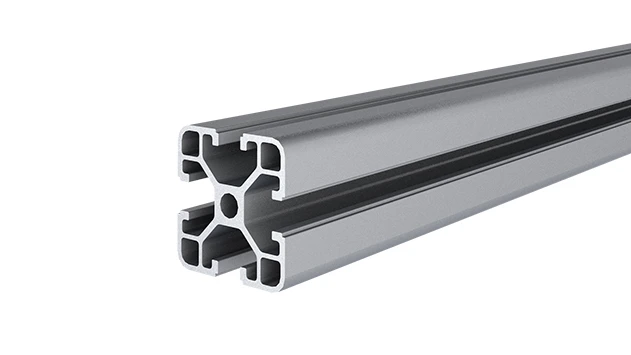
4040B is a 4.00x4.00 CM fractional 40 series square extrusion T-slot profile with four open T-slots, each side with 4.00cm face. The profile has align-a-grooves to assist in aligning connecting profiles.
If you've ever held a brand-new smartphone or unboxed a sleek laptop, you're holding more than just a device—you're holding the result of a lightning-fast assembly process. In the world of 3C electronics (computers, communication, and consumer electronics), product lifecycles are shorter than ever. A new model hits the market, and within months, it's replaced by something sleeker, faster, or more feature-packed. For manufacturers, this pace isn't just a challenge—it's a make-or-break reality. Traditional production lines, built with rigid steel frames and fixed workstations, simply can't keep up. They're slow to set up, impossible to reconfigure quickly, and leave little room for the small-batch, customized runs that define modern 3C manufacturing. So, what's the solution? Enter the 4040B EU standard aluminum profile—a material that's quietly revolutionizing how 3C products are built, one modular component at a time.
The 3C Assembly Challenge: Why Rigidity Fails
Let's start with the basics: 3C electronics assembly is a high-stakes game of speed and precision. Imagine building a smartwatch with 100+ tiny components, or a tablet that requires seamless alignment of a glass screen and a fragile circuit board. Now, imagine doing this while the design team tweaks the battery size, or the marketing team demands a limited-edition colorway. Traditional production lines, with their welded steel frames and bolted-down workbenches, weren't designed for this kind of chaos. To reconfigure a line for a new product, you'd need to cut metal, weld new joints, or even build entirely new workstations—costing weeks of downtime and thousands of dollars. For small batches or prototype runs, this is often impossible. Manufacturers end up stuck with underused equipment or miss tight launch windows, all because their production lines can't pivot.
Ergonomics adds another layer of complexity. 3C assembly line workers spend hours hunched over workbenches, handling delicate parts. A one-size-fits-all workstation height or fixed tool placement leads to fatigue, errors, and even injuries. Traditional lines offer little flexibility here, too—adjusting a bench height might require disassembling and rebuilding it, which no busy plant has time for. And let's not forget material flow: components need to move smoothly from storage to assembly to testing, but rigid conveyor systems or static racks create bottlenecks when production needs change.
4040B EU Standard Aluminum Profile: The Foundation of Flexibility
So, what makes 4040B EU standard aluminum profile different? Let's break it down. First, the basics: 4040B is a type of aluminum extrusion profile, meaning it's formed by pushing heated aluminum through a die to create a specific cross-sectional shape. The "4040" refers to its dimensions—40mm by 40mm—a size that strikes the perfect balance between strength and versatility. The "B" denotes a specific groove design (part of EU standards) that ensures compatibility with a wide range of accessories. Unlike steel, aluminum is lightweight (about 1/3 the weight of steel) but surprisingly strong, making it easy to handle without sacrificing durability. It's also corrosion-resistant, which is critical in electronics plants where cleanliness and precision are non-negotiable.
But the real magic lies in its T-slot design. Run your finger along a 4040B profile, and you'll notice long, narrow grooves (slots) along its length. These slots are where the flexibility happens. Aluminum profile accessories—things like joints, brackets, shelves, and even roller track connectors—snap or bolt into these slots, creating strong, secure connections that can be disassembled just as easily. No welding, no drilling, no special tools. A worker with a hex key can assemble a basic workstation in under an hour, or take it apart and rebuild it in a new configuration by lunchtime. This modularity is why 4040B isn't just a material; it's a system built for adaptability.

Building Blocks: How 4040B Powers Flexible Production Lines
A production line is only as flexible as its components. With 4040B, every part—from workbenches to material racks—works together to create a system that bends, not breaks, when demands change. Let's dive into the key players:
Workbenches: The Customizable Heart of the Line
Walk into any 3C assembly plant, and workbenches are the first thing you'll notice. They're where the action happens—soldering, screwing, testing, and inspecting. With 4040B, these workbenches transform from static tables into dynamic workspaces. Need a bench that's 80cm high for a worker assembling circuit boards, and 90cm high for someone attaching screens? No problem. Swap out a few 4040B vertical supports (using aluminum profile accessories like internal rotatary joints) and adjust the height in minutes. Adding a shelf for tools? Slide a bracket into the T-slot, tighten a screw, and it's done. Even specialized needs, like ESD (electrostatic discharge) protection for sensitive components, are easy to handle—just attach an ESD mat to the bench top using T-slot clips, and you're compliant.
Take the "Workbench E (single deck-without caster)" as an example—a common 4040B-based design. It starts as a simple frame of 4040B profiles connected by aluminum joints, but it can be customized with add-ons: tool rails, LED task lights, or even small roller tracks for feeding components directly onto the deck. And if production shifts to a new product that requires a longer bench? Just add more 4040B sections and accessories. No need to buy a new bench—this one evolves with you.
Roller Tracks: Smooth Material Flow, Any Direction
Material flow is the lifeblood of 3C assembly. Imagine a bin of battery packs that needs to move from storage to the "battery installation" workstation, then to testing, then to final assembly. With rigid conveyor belts, you're stuck with a fixed path. If a workstation moves (even by a few feet), the conveyor becomes useless. Roller tracks, built with 4040B aluminum profile, solve this problem brilliantly. These tracks consist of small wheels (often plastic or steel) mounted on a 4040B frame, allowing bins, trays, or even entire subassemblies to glide along with minimal effort.
What makes 4040B roller tracks so flexible? It's all in the mounting. Using accessories like "roller track placon mount for aluminum profile flat" or "roller track placon mount center support bracket," you can attach tracks directly to 4040B workbenches, racks, or even the floor. Need to reroute the track around a new workstation? Loosen the brackets, reposition the 4040B frame, and tighten—done. For small-batch runs, you can even build temporary roller track "bridges" between workstations using lightweight 4040B sections and caster wheels (more on those later), then disassemble them when the run ends. It's material flow on demand.
Take the "plastic roller track guide rail yellow" or "aluminum guide rail A"—these accessories snap into 4040B T-slots to keep bins aligned, preventing jams. And with options like "swivel roller balls 1 inch" (small, omnidirectional wheels) for tight corners or "85 staggered roller track" for heavy loads, 4040B-based roller tracks handle everything from tiny screws to full subassemblies.
Caster Wheels: Mobility That Keeps Up
Mobility might seem like a small detail, but in a dynamic 3C plant, it's a game-changer. A workstation that can't move is a workstation that can't adapt. Enter caster wheels—another component that shines when paired with 4040B aluminum profile. These small, wheeled attachments bolt directly to the base of 4040B frames, turning workbenches, roller track stands, or material racks into mobile units.
Picture this: You're assembling a prototype batch of 50 smart speakers. The main line is busy with the standard model, so you need a temporary workstation. With 4040B, you build a compact bench, attach four caster wheels (with brakes, to keep it stable when in use), and roll it to a quiet corner of the plant. When the prototype run is done, roll it back to storage or repurpose it as a testing station. No heavy lifting, no disassembly—just push and go. Even better, caster accessories like "caster wheel brake" or "caster accessories for rough floors" ensure stability on any surface, from smooth concrete to slightly uneven warehouse floors.
Aluminum Profile Accessories: The Glue That Holds It All Together
If 4040B is the backbone of flexible production lines, aluminum profile accessories are the muscles, joints, and ligaments that make movement possible. These small but mighty components—joints, brackets, end caps, and connectors—turn 4040B profiles into anything from a simple shelf to a complex assembly line. Let's take a closer look at a few game-changers:
- Internal Rotatary Aluminum Joints: These allow 4040B profiles to pivot 360 degrees, making it easy to adjust angles for workbenches or material racks. Need a workstation that tilts for better access to a component? A few twists of this joint, and you're set.
- 90° Aluminum Profile Connectors: For building square or rectangular frames (like workbench legs or rack sides), these connectors lock two 4040B profiles at a perfect right angle—no measuring, no welding, just a tight, secure fit.
- End Caps: These plastic or rubber caps snap onto the ends of 4040B profiles, preventing sharp edges (critical for worker safety) and keeping dust out of T-slots. They're small, but they make a big difference in durability and safety.
- Parallel Fixation Aluminum Pipe Joints: When you need two 4040B profiles to run side by side (like the rails of a roller track), these joints keep them perfectly aligned and spaced, ensuring smooth material flow.
The beauty of these accessories is their universality. Thanks to EU standards, a 90° connector from one supplier works with a 4040B profile from another, giving manufacturers the freedom to mix and match components. This interoperability cuts down on costs and ensures that even older 4040B setups can be upgraded with new accessories.
Real-World Impact: How 4040B Transforms a 3C Plant
Let's put this all together with a real-world example. Meet "TechNova," a mid-sized 3C manufacturer that builds smart home devices—think smart bulbs, thermostats, and security cameras. A few years ago, TechNova was struggling with its production lines. Their steel-framed workbenches took 2 weeks to set up for a new product, and reconfiguring for small batches (like a 500-unit run of a limited-edition smart bulb) was so costly they often skipped it. Worker turnover was high, too—employees complained about uncomfortable workstations and the physical strain of moving heavy component bins.
Then, TechNova switched to 4040B EU standard aluminum profile. Here's what changed:
New Product Launch: When TechNova's design team finalized a new smart thermostat with a slimmer profile, the old line would have needed 2 weeks of downtime to rebuild workstations. With 4040B, the team disassembled the existing workbench frames, adjusted the height using internal rotary joints, added new shelves with aluminum profile brackets, and installed a short roller track to feed the new, smaller circuit boards. Total setup time? 2 days. The product launched on schedule, and the line was ready for the next prototype run the following week.
Small-Batch Flexibility: A major retailer asked for 1,000 smart bulbs in a custom "ocean blue" color—far smaller than TechNova's usual 10,000-unit runs. Instead of building a new line, TechNova repurposed three 4040B workbenches (adding caster wheels to make them mobile), set up a temporary roller track from the paint station to assembly, and used aluminum profile accessories to add color-specific tool holders. The run was completed in 3 days, and the workbenches were back on the main line by the end of the week—no wasted space, no wasted money.
Ergonomic Wins: Workers now adjust their 4040B workbenches daily using simple lever-adjustable joints. A quick survey showed a 30% drop in reported fatigue, and error rates on delicate soldering tasks fell by 15%. The plant manager noted, "We used to have workers calling out sick with back pain; now, they're asking to adjust their benches for better workflow. It's a culture shift."
Beyond Flexibility: The Hidden Benefits of 4040B
Flexibility is the headline benefit of 4040B, but it's far from the only one. Let's dive into the perks that keep manufacturers coming back:
Cost Savings: Invest Once, Reuse Forever
Traditional production lines are a "buy-and-replace" investment. A steel workstation might cost $500, but if you need to reconfigure it, you'll likely throw it away and buy a new one. 4040B is different. Aluminum profile accessories and profiles are reusable—you can disassemble a workstation and rebuild it as a material rack, or take apart a roller track and turn it into a testing bench. Over time, this cuts capital expenses by 40-60%, according to industry reports. Even better, 4040B's lightweight design reduces shipping costs—no need for heavy machinery to move components around the plant.
Sustainability: Green Manufacturing, One Profile at a Time
Aluminum is 100% recyclable, and 4040B profiles are often made from recycled aluminum (up to 70% in some cases). Unlike steel, which requires energy-intensive welding and painting, 4040B is extruded and finished with eco-friendly anodizing (a process that adds a protective layer without toxic chemicals). When a 4040B setup reaches the end of its life, the profiles can be melted down and reused, cutting down on waste. For 3C manufacturers under pressure to reduce their carbon footprint, this is a major win.
Scalability: Grow Without Overbuilding
3C demand is unpredictable. One quarter, you're swamped with orders; the next, you're scaling back. 4040B lines grow with you. Need to add a workstation during peak season? Buy a few extra profiles and accessories, assemble it in a day, and integrate it into your existing line. Slow season? Disassemble the extra stations and store the components—no wasted space. This "pay-as-you-grow" model means you never overinvest in equipment you might not need.
Traditional vs. 4040B-Based Lines: A Side-by-Side Comparison
| Feature | Traditional Rigid Steel Lines | 4040B Aluminum Profile Lines |
|---|---|---|
| Setup Time for New Product | 2–4 weeks (requires welding, cutting, and custom fabrication) | 1–3 days (modular assembly with hand tools) |
| Reconfiguration Ease | Nearly impossible; requires rebuilding or replacing components | Simple; disassemble and reassemble using aluminum profile accessories |
| Cost Over 5 Years | High (replacement costs for outdated equipment) | 40–60% lower (reusable components, minimal replacement) |
| Adaptability to Small Batches | Poor; not cost-effective for runs under 5,000 units | Excellent; reconfigure in days for runs as small as 100 units |
| Ergonomic Adjustability | Limited; fixed heights and tool placement | High; adjust workbench height, angle, and tool position in minutes |
| Sustainability | Low; steel is recyclable but requires energy-heavy processing | High; aluminum is highly recyclable, minimal waste in assembly |
The Future of 3C Assembly: Built on 4040B Flexibility
The 3C electronics industry isn't slowing down. If anything, it's accelerating. As consumers demand more customization, faster innovation, and greener products, manufacturers need production lines that can keep pace. 4040B EU standard aluminum profile isn't just a trend—it's the foundation of this future. It turns production lines from static obstacles into dynamic, evolving systems that adapt to new products, small batches, and worker needs. It reduces costs, cuts downtime, and makes sustainability achievable. And perhaps most importantly, it gives 3C manufacturers the freedom to experiment, iterate, and launch products with the speed their customers expect.
So, the next time you unbox a new gadget, take a moment to appreciate the invisible hero behind it: the 4040B aluminum profile, quietly holding together a production line that's as flexible and innovative as the device in your hands. In the world of 3C assembly, rigidity is the past. Flexibility—powered by 4040B—is the future.