- Company Articles
- Products and Technology
- Application Cases
- Flexible Production Lines with 4080A EU Standard Aluminum Profile: Case Studies

Flexible Production Lines with 4080A EU Standard Aluminum Profile: Case Studies
Related Product
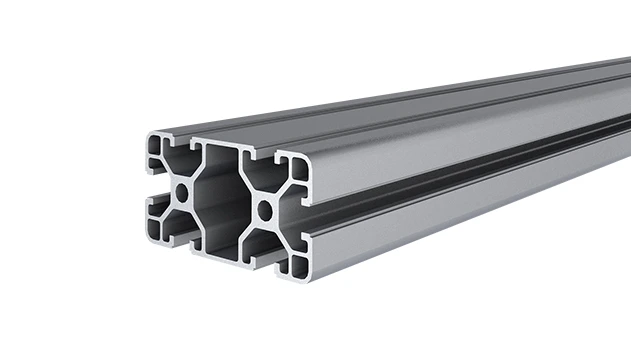
4080A EU Standard Aluminum Profile
4080A is a 4.00x8.00 CM fractional 40 series square extrusion T-slot profile with two side open T-slots, each side with 4.00cm face, two side with 8.00cm face. The profile has align-a-grooves to assist in aligning connecting profiles.
Walk into any thriving manufacturing facility today, and you'll sense it immediately—the hum of adaptability. Gone are the days when production lines were bolted to the floor, rigid as stone, and resistant to change. In an era where customer demands shift overnight, new product launches accelerate, and market trends pivot without warning, rigidity isn't just inefficient—it's a death sentence for competitiveness. The factories that thrive now are the ones that bend without breaking, that reconfigure in days instead of months, and that empower workers rather than constrain them. At the heart of this transformation? Smart, modular tools that turn "what if" into "right now." And few tools have proven as game-changing as the 4080A EU standard aluminum profile .
If you're in manufacturing, you've probably heard of aluminum profiles—those sleek, T-slotted rails that form the backbone of modern workbenches, conveyors, and material racks. But not all profiles are created equal. The 4080A EU standard aluminum extrusion profile stands out for a reason: it's the sweet spot between strength, flexibility, and practicality. Let's dive into why this unassuming piece of metal has become the unsung hero of flexible production, and how real factories are using it to transform their operations—one joint, one workbench, one conveyor at a time.
What Makes 4080A Aluminum Profile the Backbone of Flexible Manufacturing?
First, let's get technical—but don't worry, we'll keep it human. The 4080A EU standard aluminum extrusion profile is exactly what it sounds like: an aluminum alloy shape, extruded under high pressure to form a consistent, durable structure. Its name gives away its dimensions: 40mm in width and 80mm in height. But numbers alone don't tell the story. What makes this profile special is its design: a sleek, hollow structure with T-slots running along its length. These slots aren't just for show—they're the secret to its modularity. Slide in a bolt, clip on a joint, or attach a bracket, and suddenly you're not just building a structure; you're crafting a system that can evolve.
Aluminum, by nature, is a dream material for manufacturing. It's lightweight (about a third the weight of steel), which means workers can maneuver components without straining. It's corrosion-resistant, so it holds up in dusty factories, humid warehouses, or even cleanrooms. And it's infinitely recyclable, aligning with the sustainability goals that modern businesses can't ignore. But the 4080A takes it further. Its 40x80mm cross-section strikes a perfect balance: strong enough to support heavy tools (we're talking hundreds of kilograms) but not so bulky that it limits design creativity. Pair it with aluminum profile accessories —think internal rotatary joints, parallel clamps, or end caps—and you've got a toolkit that can build just about anything, from a simple workbench to a full-scale automated production line.
But don't just take our word for it. Let's step into three factories that swapped rigidity for flexibility, and in doing so, redefined what their production lines could achieve. Each story is different, but they all share a common thread: the 4080A aluminum extrusion profile, and the lean system suppliers who knew how to wield it.
Case Study 1: Automotive Parts Manufacturer – From Weeks of Downtime to Days of Adaptation
The Challenge: Chasing Moving Targets in a Fast-Changing Industry
Imagine a factory floor where every production line is a fixed masterpiece—welded steel, concrete anchors, no room for error. For decades, that's how things worked at Precision Auto Parts, a mid-sized manufacturer supplying suspension components to major car brands. But in 2023, their world turned upside down. Car manufacturers started rolling out new electric vehicle models every 6–8 months, each with slightly different part dimensions and assembly requirements. Precision's old lines, built for one part and one part only, couldn't keep up.
"We'd spend 4–6 weeks reconfiguring a line for a new part," recalls Maria Gonzalez, Precision's Production Manager. "Welders would cut steel frames, electricians would reroute cables, and by the time we were done, the next model was already on the horizon. We were bleeding money on downtime and losing bids because we couldn't promise fast turnaround."
The Solution: A Lean System Built on 4080A Aluminum Extrusion Profiles
Maria's team knew they needed a change. After researching options, they partnered with a lean system supplier specializing in aluminum-based solutions. The supplier's pitch was simple: replace rigid steel with 4080A aluminum extrusion profiles and modular accessories. "At first, I was skeptical," Maria admits. "Steel is strong—could aluminum really handle 50kg suspension parts slung across conveyors?"
The answer, it turned out, was a resounding yes. The supplier designed a system centered on three key elements: adjustable workbenches, roller conveyors, and material racks—all built with 4080A profiles.
- Workbenches with Ergonomic Flexibility: Using 4080A frames and aluminum honeycomb panels (lightweight but strong), the team built workstations that could adjust height, angle, and width. Internal rotatary aluminum joints allowed workers to tilt benches 30° forward for assembly tasks, reducing shoulder strain. "Our old benches were fixed at 36 inches—too low for some workers, too high for others," Maria says. "Now, everyone can tweak their station in 2 minutes. Absenteeism due to back pain dropped by 40%."
- Roller Conveyors for Smooth Part Flow: To move heavy parts between stations, the supplier installed roller conveyors using 4080A as the frame and 40 steel roller track (yellow wheels, to match Precision's safety standards). Aluminum guide rails kept parts aligned, while roller track placon mount brackets secured the system to the floor—no welding required. "If we need to reroute the conveyor, we just loosen a few bolts and reposition the 4080A sections," Maria explains. "What used to take a week now takes a day."
- Material Racks That Grow with Demand: The factory's old steel racks were static—each shelf held exactly 10 parts, no more. The new system used 4080A to build adjustable racks with swivel roller balls (1 inch, stainless steel) on each shelf. "Now, when a new part is 2 inches taller, we just move the shelf up using aluminum profile accessories—no cutting, no welding," Maria says. "We've increased storage capacity by 30% in the same floor space."
The Result: From Playing Catch-Up to Leading the Pack
Six months after installation, the results spoke for themselves. Line reconfiguration time dropped from 6 weeks to 3 days. Labor costs for retooling fell by 75%. And Precision won a major contract with a leading EV manufacturer, thanks to their ability to promise 2-week turnaround on new part lines. "The 4080A profiles didn't just fix our production problems—they changed how we think about manufacturing," Maria says. "We're no longer reacting to change; we're ready for it."

Case Study 2: Electronics Assembly Plant – ESD Safety Meets Adaptable Design
The Challenge: Static, Errors, and Stagnant Productivity
Over in the electronics industry, MicroTech Assemblies faced a different set of hurdles. Specializing in circuit board assembly for smartphones, their factory was a maze of static-sensitive components and tight deadlines. "One static discharge could fry a $500 chip," says Raj Patel, MicroTech's Operations Director. "Our old workbenches were wood-topped, which generated static, and the steel frames were heavy—impossible to move when we needed to rearrange lines for new phone models."
Adding to the frustration: workers were constantly reaching across fixed workbenches, leading to dropped components and errors. "We were averaging 2% error rates on assemblies—way too high for our clients," Raj says. "And with new phone launches every quarter, we needed a line that could shrink, expand, or pivot without disrupting production."
The Solution: An ESD Workbench Ecosystem with 4080A Aluminum
MicroTech turned to a lean system supplier with expertise in ESD-safe manufacturing. The solution? A fully modular workspace built around 4080A aluminum extrusion profiles and ESD-compliant components.
"Aluminum is naturally conductive, which is a game-changer for ESD," the supplier's engineer explained to Raj. "Pair 4080A with an ESD workbench top (carbon fiber laminate) and grounding cables, and you eliminate static buildup."
The system included:
- ESD Workbenches (Single Deck, No Casters): Built with 4080A frames, these benches featured adjustable height (via heavy-duty split foot seats) and ESD mats. Aluminum pipe clamps secured tools to the bench, preventing them from sliding. "Workers no longer have to reach—tools are right where they need them," Raj says. "Error rates dropped to 0.5% in the first month."
- Aluminum Guide Rails for Component Transport: To move small components (like resistors and capacitors) between stations, the supplier installed aluminum guide rail A along the workbenches. Plastic roller track guide rails (grey, to blend with the cleanroom aesthetic) allowed trays to glide smoothly, reducing jostling that caused component damage.
- Modular Lighting and Power: Using T-slots in the 4080A profiles, the team added LED light bars and power strips that could be repositioned as needed. "If we add a new assembly step, we just slide a power strip along the T-slot and plug it in," Raj says. "No more extension cords tripping people."
The Result: A Factory That Breathes with Change
Today, MicroTech's assembly lines are unrecognizable. Static-related failures are a thing of the past, and workers rave about the ergonomic setups. "When we launched the new XPhone model, we needed to add two more workstations," Raj says. "We ordered two 4080A kits from our supplier, assembled them in 4 hours, and were running production the next day. Our clients couldn't believe we didn't miss a deadline."
Best of all? The 4080A system is scalable. "We're expanding to smartwatch assembly next year," Raj adds. "Instead of building new lines from scratch, we'll just reconfigure the aluminum profiles we already have. That's sustainability and cost-savings in one."
Case Study 3: Medical Device Manufacturer – Compliance, Cleanliness, and Quick Changeovers
The Challenge: Meeting FDA Standards Without Sacrificing Speed
For MedTech Innovations, a manufacturer of surgical tools, flexibility isn't just about speed—it's about survival. The FDA requires strict documentation of production processes, and any change to a line (even moving a shelf) must be validated and logged. "Our old stainless steel lines were compliant but rigid," says Dr. Lisa Chen, MedTech's Quality Director. "If we wanted to add a new tool to our lineup, we'd spend 3 months validating the reconfigured line—time we couldn't afford."
Cleanliness was another issue. Steel lines had crevices where bacteria could hide, requiring hours of scrubbing. "Our cleaning crew spent 2 hours nightly sanitizing lines," Lisa says. "We needed something easier to clean but just as durable."
The Solution: 4080A Aluminum – The FDA-Approved Flexible Alternative
MedTech's supplier recommended 4080A aluminum extrusion profiles for a simple reason: aluminum is non-porous, corrosion-resistant, and easy to sanitize. "Unlike steel, aluminum doesn't rust, and its smooth surface has no cracks for germs to hide," the supplier explained. "Plus, it's lightweight enough to move, but strong enough to support sterile tool carts."
The centerpiece of the new system was material rack B (3 rows, 3 floors) , built entirely with 4080A profiles. Each shelf featured stainless steel swivel roller balls (1 inch) to allow tools to glide forward without lifting—critical for sterile environments where dropping a tool could contaminate the area.
"The racks are modular, so we can add or remove shelves by just sliding them along the 4080A posts," Lisa says. "And because the aluminum is smooth, we wipe them down with disinfectant in 10 minutes instead of 2 hours. Our cleaning crew now has time to focus on other tasks."
The supplier also built turnover trolleys using 4080A frames and plastic roller track guide rails (grey, to avoid glare under cleanroom lights). "Trolleys used to be steel—heavy and hard to maneuver," Lisa notes. "The aluminum ones weigh half as much, so workers can move them with one hand. We've had zero injuries from strained backs since switching."
The Result: Compliance Without Compromise
Today, MedTech's validation process for line changes takes 2 weeks instead of 3 months. "The 4080A system is so consistent—every joint, every shelf is identical—that the FDA our modular approach," Lisa says. "We just document the new configuration, test it once, and we're good to go."
Sales have followed: the company's ability to launch new tools faster has helped them capture 15% more market share. "Aluminum isn't just a material here—it's a strategic advantage," Lisa adds. "We're now the go-to supplier for hospitals that need custom surgical kits quickly."
Why 4080A Aluminum Profile Isn't Just a Trend—It's the Future of Manufacturing
These case studies share a common lesson: flexibility isn't a luxury anymore. It's how factories compete, innovate, and thrive. And at the center of that flexibility is the 4080A EU standard aluminum extrusion profile—a material that marries strength with adaptability, durability with sustainability, and precision with practicality.
Whether you're building an ESD workbench for electronics, a roller conveyor for automotive parts, or a sterile rack for medical devices, 4080A and its ecosystem of aluminum profile accessories (joints, clamps, guide rails) let you design for today while planning for tomorrow. And with the right lean system supplier, you're not just buying parts—you're partnering with experts who understand your unique challenges.
So, what's holding your factory back? Rigid lines that can't keep up? Workers struggling with outdated tools? Compliance headaches that slow innovation? It might be time to take a closer look at 4080A aluminum extrusion profiles. As Maria from Precision Auto Parts puts it: "We didn't just upgrade our lines—we upgraded our mindset. With 4080A, we don't fear change anymore. We welcome it."
The future of manufacturing isn't about building bigger lines. It's about building smarter, more human lines—ones that adapt, grow, and empower. And it all starts with a simple profile: 40mm by 80mm, extruded from aluminum, and ready to transform your factory.
| Feature | 4080A Aluminum Profile | Traditional Steel |
|---|---|---|
| Weight (per meter) | ~2.5kg | ~8kg |
| Reconfiguration Time | Hours to days | Weeks to months |
| Corrosion Resistance | High (natural oxide layer) | Low (requires painting/coating) |
| Sustainability | 100% recyclable, low energy to produce | High carbon footprint, recycling requires energy |
The data speaks for itself. 4080A aluminum extrusion profiles aren't just changing how factories look—they're changing how they think. And in a world where the only constant is change, that's the most valuable tool of all.