- Company Articles
- Products and Technology
- Solution
- Flexible Production with Lean Pipe Clamp B Chrome: Adapting to Demand Changes

Flexible Production with Lean Pipe Clamp B Chrome: Adapting to Demand Changes
Related Product
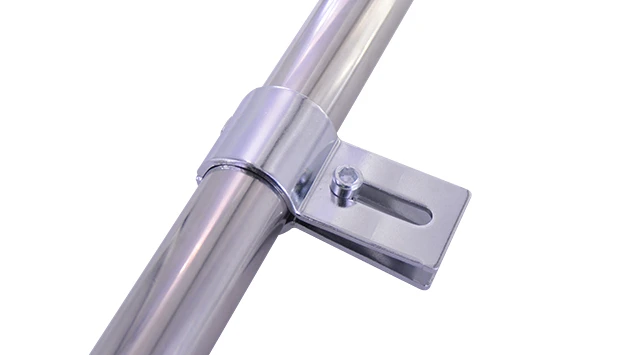
Lean Pipe Clamp B Chrome
Lean pipe clamp is used for turnover trolley, workbench, flowrack adjust the frame or fix some accessory.
How modular components are reshaping modern manufacturing agility
The Shifting Tides of Manufacturing: Why Rigidity No Longer Works
Walk into any manufacturing facility today, and you'll likely hear the same refrain from floor managers: "We need to do more with less—faster." Consumer expectations are evolving at breakneck speed, product lifecycles are shrinking, and market demands swing wildly between peaks and valleys. A factory that could reliably produce 10,000 units of a single product a decade ago now finds itself scrambling to switch between 20 different variants in a single week. In this environment, rigidity is the enemy. Traditional production lines, bolted to the floor and designed for one specific task, are becoming relics of a bygone era. They take weeks to reconfigure, drain budgets with constant overhauls, and leave teams frustrated when a sudden order spike or design change renders their setup obsolete.
This is where flexible production systems step in—and at the heart of this revolution lies a humble yet powerful component: the
Lean Pipe Clamp B Chrome
. You might not have noticed it before, but this unassuming connector is quietly transforming how factories adapt to change. Paired with components like
lean pipe workbenches
,
flow racks
, and
aluminum profiles
, it's creating production environments that bend, not break, when demand shifts. Let's dive into how this works, why it matters, and how these tools can turn your facility from a static operation into a dynamic, demand-responsive powerhouse.
From Fixed to Fluid: The Rise of Lean Manufacturing Systems
Lean manufacturing has been around for decades, but its principles—eliminating waste, optimizing flow, and continuous improvement—have never been more critical. At its core, lean is about creating value with minimal resources, and a key part of that is flexibility. Traditional setups often treat production lines as permanent structures: once built, they're modified only when absolutely necessary, and even then, the process is costly and time-consuming. Lean systems flip this script by prioritizing modularity. Instead of building a line for a product, they build a system that can be reimagined for any product.
Imagine a toy manufacturer that suddenly needs to switch from producing action figures to remote-controlled cars. A traditional line might require new conveyor belts, custom workstations, and weeks of downtime. A lean system, however, uses interconnected components that can be disassembled, rearranged, and reassembled in hours. The difference? Modular building blocks that work together seamlessly. And at the center of this modularity are connectors like the Lean Pipe Clamp B Chrome. These clamps aren't just fasteners—they're the glue that holds flexibility together.
Meet the Unsung Hero: Lean Pipe Clamp B Chrome Explained
Let's start with the basics: What exactly is a Lean Pipe Clamp B Chrome? At first glance, it looks like a simple metal bracket with a few screws, but its design is deceptively clever. Made from high-quality steel with a chrome-plated finish, it's built to withstand the wear and tear of factory floors—scratches, impacts, and the occasional spill. But its real magic lies in its functionality. The clamp is designed to securely fasten two lean pipes (or aluminum profiles) at 90-degree angles, but here's the kicker: it can be loosened, repositioned, and retightened in minutes. No welding, no drilling, no specialized tools—just a hex key and a few twists.
Compare this to traditional connectors, which are often welded or bolted permanently. If you need to adjust the height of a workstation or reangle a flow rack, you'd have to cut the old connections, weld new ones, and repaint the metal. With the Lean Pipe Clamp B Chrome, you simply loosen the screws, move the pipes to the new position, and tighten them back up. It's like building with industrial-grade Legos for adults. This adjustability is why it's become a staple in lean environments: it turns "permanent" structures into temporary setups that can evolve with your needs.
But why chrome? Chrome plating isn't just for shine—it adds a layer of corrosion resistance, making the clamp ideal for environments where moisture or chemicals are present, like automotive or electronics manufacturing. It also reduces friction, making adjustments smoother and preventing the clamp from seizing up over time. When you're reconfiguring a workbench for the third time in a month, the last thing you want is a stuck clamp slowing you down. The chrome finish ensures that even after repeated use, these clamps keep performing reliably.
Building Blocks of Flexibility: Key Components That Work with Lean Pipe Clamp B Chrome
A single clamp can't revolutionize a factory on its own—it needs a supporting cast of components that play well together. Let's break down the most essential ones and how they work with the Lean Pipe Clamp B Chrome to create flexible production systems.
1. Lean Pipe Workbenches: Your Customizable Command Center
The
lean pipe workbench
is the workhorse of any production line. Whether it's for assembly, testing, or packaging, a well-designed workbench can make or break efficiency. Traditional workbenches are often one-size-fits-all: fixed height, fixed surface area, and no room for customization. Lean pipe workbenches, by contrast, are built using—you guessed it—lean pipes and Lean Pipe Clamp B Chrome connectors. This means you can adjust the height to fit different operators (no more straining backs!), add shelves or tool holders where needed, and even attach
caster wheels
for mobility.
Here's how it works: Start with a frame of aluminum or steel lean pipes. Use Lean Pipe Clamp B Chrome to connect the vertical and horizontal pipes, forming the basic structure. Add a wooden, metal, or anti-static top (critical for electronics manufacturing) using brackets secured by the same clamps. Need a shelf for tools? Attach a few more pipes and clamps. Want to move the workbench to a new area when production shifts? Swap out fixed feet for caster wheels, secured with—you guessed it—more clamps. It's customization without the custom price tag.
One electronics manufacturer we worked with recently shared a story that perfectly illustrates this. They were producing small circuit boards on a fixed workbench, but when a new client ordered a larger board, the surface area wasn't enough. Instead of buying a new workbench, they simply added two extension pipes to the sides using Lean Pipe Clamp B Chrome, attached a larger top, and were back to production in under an hour. The total cost? Less than $200 in materials, compared to $2,000 for a new custom workbench. That's the power of modularity.
2. Flow Racks: Keeping Materials Moving Without the Fuss
Material flow is the lifeblood of production. If parts get stuck in transit, bottlenecks form, and deadlines slip.
Flow racks
solve this by using gravity to move materials from the loading end to the picking end, ensuring a steady supply to workstations. But traditional flow racks are often built with fixed angles and spacing, making them useless if you switch to larger or smaller parts. Lean flow racks, built with lean pipes and Lean Pipe Clamp B Chrome, change that.
The beauty of these racks is in their adjustability. The roller tracks (which guide materials down the rack) are mounted on pipes that can be repositioned using the clamps. Need to increase the angle for heavier parts? Loosen the clamps, tilt the tracks up a few degrees, and retighten. Switching to smaller bins? Adjust the spacing between the tracks by moving the vertical support pipes, secured with—you guessed it—Lean Pipe Clamp B Chrome. Even the number of levels can be changed: add a new horizontal pipe between the vertical supports, clamp it in place, and you've got an extra shelf.
A food packaging plant we consulted for faced a common problem: seasonal demand spikes. During the holidays, they needed to double their output of snack packs, which meant adding more flow racks to handle the increased material volume. Instead of buying new racks, they reconfigured existing ones by adding levels and adjusting roller spacing using clamps. The entire process took a team of two just four hours, and they avoided spending $15,000 on new equipment. When the season ended, they disassembled the extra levels and returned the racks to their original setup—no waste, no hassle.
3. Aluminum Profiles: Lightweight Strength for Modern Factories
While lean pipes are often made of steel,
aluminum profiles
are gaining popularity for their unique advantages: they're lighter, resistant to corrosion, and compatible with the same Lean Pipe Clamp B Chrome connectors. This makes them ideal for applications where weight matters, like mobile workstations or overhead racks. Aluminum's natural conductivity also makes it a good choice for electronics manufacturing, where grounding and static control are critical.
The key here is compatibility. Lean Pipe Clamp B Chrome isn't picky about what it connects—it works with steel pipes, aluminum profiles, and even a mix of both. This flexibility lets factories choose the best material for each job without worrying about connector compatibility. For example, a heavy-duty assembly line might use steel pipes for the main frame (for strength) and aluminum profiles for adjustable components (for lighter weight and easier handling). The clamps seamlessly bridge the two materials, creating a unified system.
One automotive supplier we worked with made the switch to aluminum profiles for their mobile trolleys, which transport parts from the warehouse to the assembly line. By replacing steel pipes with aluminum and using Lean Pipe Clamp B Chrome to secure the frames, they reduced trolley weight by 30%. This made it easier for operators to push them around the factory floor, cutting down on fatigue and improving overall movement efficiency. The clamps ensured the aluminum frames stayed rigid, even when loaded with heavy parts—a win-win for safety and productivity.
| Feature | Traditional Fixed Systems | Lean Pipe Systems with Clamp B Chrome |
|---|---|---|
| Reconfiguration Time | Weeks (requires welding, drilling, or new parts) | Hours (loosen/tighten clamps; no special tools) |
| Customization | Limited (designed for one product/task) | Unlimited (mix/match pipes, profiles, and components) |
| Cost Over Time | High (frequent overhauls and new equipment) | Low (reuse components; minimal new purchases) |
| Adaptability to Demand Changes | Poor (struggles with spikes, product changes) | Excellent (quickly scales up/down or repurposes) |
| Durability | High (but at the cost of flexibility) | High (chrome-plated steel and aluminum resist wear) |
Real-World Impact: How Flexible Systems Solve Common Manufacturing Headaches
Let's move beyond theory and look at how these components are solving real problems for manufacturers across industries. From small workshops to global giants, the benefits of Lean Pipe Clamp B Chrome and modular systems are universal.
Case Study 1: Electronics Manufacturer Tackles Product Variability
A mid-sized electronics company producing smartphone components was struggling with product variability. They manufactured over 50 different circuit board variants, each requiring slightly different assembly setups. Traditional workbenches meant operators were constantly moving between stations, wasting time and increasing errors. By switching to lean pipe workbenches with Lean Pipe Clamp B Chrome, they created "hot swap" stations: operators could reconfigure their workbench in 15 minutes by adjusting shelves, tool holders, and lighting using clamps. The result? A 30% reduction in setup time, a 15% drop in errors, and happier operators who no longer felt tied to a single task.
Case Study 2: Automotive Supplier Adapts to Just-In-Time (JIT) Demands
A tier-one automotive supplier was struggling to meet JIT delivery requirements for a major car manufacturer. Their fixed flow racks couldn't keep up with the frequent changes in part sizes and volumes, leading to stockouts and rushed shipments. They replaced traditional racks with lean flow racks built using aluminum profiles and Lean Pipe Clamp B Chrome. Now, when the automaker changes their order (which happens 2-3 times a week), the supplier adjusts the roller spacing and rack levels in under an hour. Stockouts have dropped by 40%, and they've become the automaker's "supplier of the month" three times in a row.
Case Study 3: Small Batch Producer Eliminates Overhead Costs
A small machinery shop specializing in custom parts was drowning in overhead costs from specialized equipment. They produced everything from hydraulic fittings to medical device components, each requiring unique jigs and fixtures. By switching to lean pipe workbenches with caster wheels and Lean Pipe Clamp B Chrome, they created a single, mobile workstation that could be outfitted with custom jigs using clamps. Instead of storing 10 different workbenches, they now have one that adapts to each job. Tooling costs have dropped by 25%, and they've freed up 500 square feet of floor space—space they're now using to take on more orders.
Debunking Myths: Why Modular Systems Are Stronger Than You Think
Despite their benefits, some manufacturers are hesitant to adopt modular systems, fearing they're "flimsy" compared to traditional setups. Let's address these myths head-on:
Myth 1: "Modular systems can't handle heavy loads."
Not true. Lean Pipe Clamp B Chrome, when properly tightened, can secure pipes and profiles that support hundreds of pounds. Chrome-plated steel clamps paired with thick-walled aluminum profiles or steel pipes create structures that are more than strong enough for most manufacturing tasks. In fact, many automotive suppliers use these systems to hold engines and transmissions during assembly—hardly lightweight jobs.
Myth 2: "They're more expensive than traditional setups."
Initially, modular components might cost slightly more than basic welded steel, but the long-term savings are enormous. Traditional setups require constant replacement or modification; modular systems are reused repeatedly. Over five years, most manufacturers see a 40-60% reduction in equipment costs. Plus, the labor savings from faster reconfigurations alone often pay for the system within a year.
Myth 3: "They take too long to learn how to use."
On the contrary, modular systems are designed for simplicity. A new operator can learn to assemble a basic workbench with Lean Pipe Clamp B Chrome in under an hour. No welding certifications, no complex blueprints—just a hex key and common sense. Most suppliers even offer free training sessions to get teams up to speed.
The Future of Manufacturing: Where Flexibility Meets Innovation
As manufacturing continues to evolve—with trends like mass customization, Industry 4.0, and reshoring reshaping the landscape—flexibility will only become more critical. The factories of tomorrow won't just produce products; they'll produce
adaptability
. And at the center of that adaptability will be components like the Lean Pipe Clamp B Chrome, lean pipe workbenches, and flow racks—tools that turn change from a threat into an opportunity.
Imagine a future where a factory can reconfigure its entire production line overnight to meet a sudden order. Where small businesses can compete with giants by quickly pivoting to new markets. Where waste is eliminated not just from processes, but from equipment and space. This future isn't far off—it's already here, and it's built on modular systems that prioritize flexibility.
So, what's stopping you? If your facility is still relying on rigid, fixed setups, it's time to ask: How much are you losing to downtime, inefficiency, and missed opportunities? The Lean Pipe Clamp B Chrome and its supporting components aren't just tools—they're investments in your ability to thrive in a world where change is the only constant.
Final Thoughts: Your Facility, Reimagined
At the end of the day, manufacturing is about solving problems—problems like tight deadlines, shifting demands, and shrinking budgets. The Lean Pipe Clamp B Chrome, paired with lean pipe workbenches, flow racks, aluminum profiles, and caster wheels, is a problem-solver. It's a way to turn "we can't" into "we can—easily." It's a way to build a factory that grows with your business, adapts to your customers, and empowers your team to do their best work.
So, take a walk through your facility today. Look at your production line, your workbenches, your storage racks. Ask yourself: Are these systems holding you back, or are they helping you move forward? If the answer is the former, it might be time to embrace the flexibility of modular lean systems. Your bottom line, your team, and your ability to compete in tomorrow's market will thank you.