- Company Articles
- Products and Technology
- Solution
- Flexible Production with Lean Pipe Clamps: Customization Possibilities

Flexible Production with Lean Pipe Clamps: Customization Possibilities
Related Product
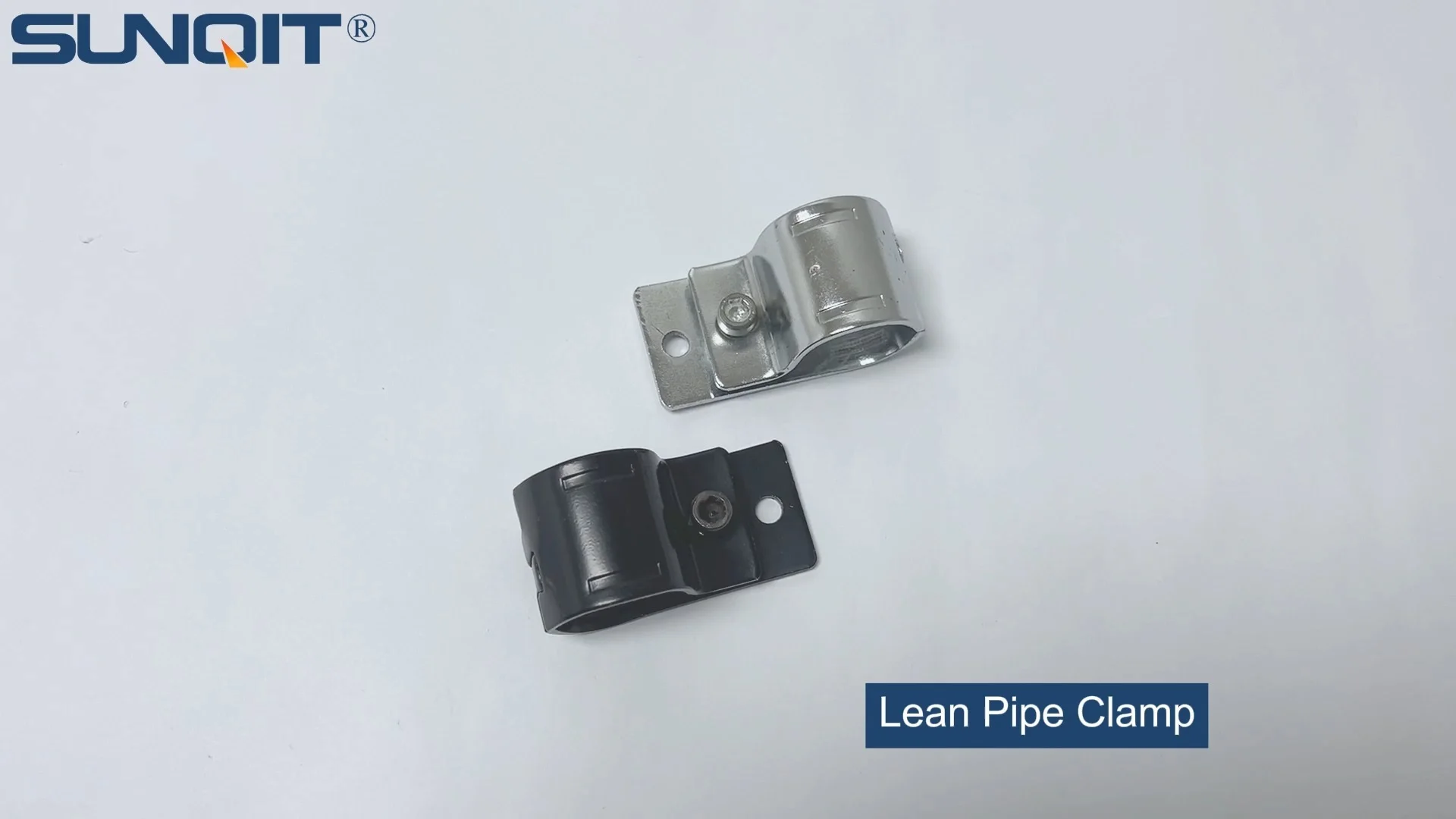
Lean Pipe Clamp
Lean pipe clamp is used for rack system hang monitor or other panel for workbenck, flowrack in production daily use.
Step onto the factory floor of a mid-sized electronics manufacturer, and you'll spot a common challenge: last month's production line setup is already outdated. A new product launch requires rearranging workstations, but the rigid steel frames and welded structures take days to modify—if they can be modified at all. Teams waste hours waiting for tools, and deadlines slip as the line struggles to adapt. This isn't just inefficiency; it's a bottleneck that stifles innovation. But walk a few aisles over, and you'll find a different story: a section where workbenches shift with a twist of a joint, flow racks reconfigure in minutes, and conveyors extend or shorten as easily as adjusting a bookshelf. The secret? Lean pipe clamps. These unassuming components are quietly revolutionizing how manufacturers build, adapt, and thrive in an era where flexibility isn't just a nice-to-have—it's survival.
The Problem with Rigid Systems: Why Flexibility Matters Now More Than Ever
Manufacturing has always been about change. New products, shifting demand, evolving safety standards—each requires production lines to pivot. Yet for decades, the industry relied on fixed infrastructure: heavy steel workbenches bolted to the floor, conveyors welded into place, and flow racks designed for a single product. When change came, the solution was often to tear down and rebuild, a process that ate into profits and delayed time-to-market.
Consider a automotive parts supplier I worked with last year. They specialized in custom brackets for electric vehicles, and their order volume spiked 300% in six months. Their existing production line, built with traditional steel workbenches, couldn't keep up. The benches were too low for taller workers, too narrow for new component sizes, and impossible to reposition without a crew of welders. Morale dropped as teams strained to adapt, and errors increased. By the time they finally replaced the setup, they'd lost two key clients to competitors with more agile systems.
This isn't an isolated case. In today's market, where consumer preferences shift overnight and product lifecycles shrink from years to months, rigidity is a liability. What manufacturers need isn't just equipment—it's a system that grows, changes, and learns with them. Enter lean pipe clamps: the unsung heroes of flexible production.
What Are Lean Pipe Clamps, Anyway? Breaking Down the Basics
At first glance, a lean pipe clamp might look like a simple piece of hardware—a metal or plastic connector with a few bolts. But don't let its simplicity fool you. These clamps are the linchpin of a modular system that lets you build, modify, and repurpose production tools without specialized skills or tools. Think of them as the "Lego bricks" of manufacturing: strong enough to hold heavy loads, yet easy enough for anyone on the team to snap together or take apart.
Most lean pipe clamps are designed to connect lean pipes (hollow tubes made of steel, aluminum, or stainless steel) at various angles—90 degrees, 45 degrees, even 180-degree swivels. They're typically made of die-cast aluminum or reinforced plastic, chosen for durability and lightweight handling. The magic lies in their design: a clamp wraps around two pipes, and a simple lever or bolt tightens it into place. No welding, no drilling, no waiting for maintenance. A single worker can reconfigure a section of the line in 15 minutes, not 15 hours.
Take the parallel lean pipe joint , for example. It connects two pipes side-by-side, perfect for building sturdy shelves or reinforcing workbench edges. Or the 90-degree crossing lean pipe joint , which lets you create vertical supports without weakening the structure. These clamps aren't just connectors—they're problem-solvers. Need to add a shelf to a workbench for new tools? Grab a clamp and a pipe. Want to angle a flow rack to reduce bending for workers? Swap out a straight joint for a 30-degree one. The possibilities are as endless as your team's creativity.

Building Blocks: Lean Pipe Clamps and the Ecosystem That Powers Them
Lean pipe clamps don't work alone. They're part of a larger ecosystem of components designed for modularity. To truly unlock flexibility, you need to understand how clamps pair with pipes, profiles, and accessories. Let's break down the key players:
Lean Pipes: The Backbone of the System
Pipes are the "bones" of any lean system, and they come in a range of materials to suit different needs. Steel pipes are strong and cost-effective, ideal for heavy-duty applications like automotive assembly. Aluminum lean pipes, on the other hand, are lightweight and corrosion-resistant—perfect for cleanrooms or food processing lines. Stainless steel pipes shine in environments where hygiene is critical, like pharmaceutical manufacturing. Each pipe works seamlessly with lean pipe clamps, so you can mix and match materials based on your workspace.
Aluminum Profiles: Adding Strength and Precision
For projects that need extra rigidity or custom shapes, aluminum profiles are a game-changer. These extruded aluminum beams have T-slots along their length, letting you slide in clamps, brackets, or accessories without drilling. Pair an aluminum profile with a lean pipe clamp, and you've got a workbench that's both sturdy and adjustable. I recently helped a medical device manufacturer build a testing station using 4040 aluminum profiles and steel lean pipes. The T-slots let them attach monitors, tool holders, and ESD mats exactly where workers needed them, while the clamps allowed quick height adjustments for ergonomic testing.
Accessories: The Finishing Touches That Make a Difference
Clamps and pipes form the structure, but accessories turn that structure into a functional workspace. Casters let you roll workbenches where they're needed; roller tracks turn static racks into dynamic flow systems; and adjustable feet keep everything level on uneven floors. Even small details, like plastic end caps for pipes (to prevent snags on wiring) or anti-slip mats, add up to a system that feels tailored to your team's needs.
| Component Type | Key Features | Best For | Customization Level |
|---|---|---|---|
| Steel Lean Pipes | 1.2-2.0mm thickness, powder-coated finish, high load capacity (up to 300kg/m) | Heavy-duty assembly lines, automotive manufacturing | High (cut to length, compatible with all clamp types) |
| Aluminum Lean Pipes | Lightweight (1/3 the weight of steel), corrosion-resistant, smooth surface | Cleanrooms, food processing, electronics assembly | Very High (anodized finishes, custom lengths, T-slot compatibility) |
| Lean Pipe Clamps | Die-cast aluminum or reinforced plastic, tool-free adjustment, multi-angle connections | Any modular system—workbenches, flow racks, conveyors | Extremely High (swap angles, add/remove pipes in minutes) |
| Aluminum Profiles | Extruded T-slot design, precision engineering, compatible with clamp accessories | Precision workstations, testing stations, ESD-sensitive areas | High (custom cuts, integrated accessories, color options) |

Customization in Action: Building Your Dream Workspace, One Clamp at a Time
The real power of lean pipe clamps lies in customization. They don't force you into a one-size-fits-all setup—they let you design a system that fits your team, your products, and your space. Let's walk through three common scenarios where clamps transform production: building a lean pipe workbench, designing a flow rack, and configuring a conveyor system.
Scenario 1: The Ergonomic Lean Pipe Workbench
Workbenches are the heart of any assembly line, and getting them right can mean the difference between a productive team and a frustrated one. Traditional workbenches are static: fixed height, fixed width, fixed everything. With lean pipe clamps, you start with a blank canvas.
Take a small electronics manufacturer I consulted with last quarter. They assembled circuit boards for smart home devices, and their team included workers ranging from 5'2" to 6'4". Their old workbenches, at 36 inches tall, left shorter workers straining to reach the back and taller workers hunching over. The solution? A lean pipe workbench built with adjustable height legs. Using 1.5mm aluminum lean pipes and 90-degree internal rotation joints, we set the base height at 34 inches, then added telescoping leg extensions clamped at 2-inch intervals. Now, each worker adjusts their section in 30 seconds—no tools needed. Error rates dropped 22%, and absenteeism due to back pain fell by half.
But customization goes beyond height. Need a shelf for tools? Add two parallel pipes and a plywood top, secured with parallel lean pipe joints. Want to integrate a monitor arm? Slide a T-slot bracket into an aluminum profile and clamp it in place. Even small touches, like adding caster wheels (with brake clamps) so the bench can roll to a maintenance area, turn a static workbench into a mobile command center.
Scenario 2: Flow Racks That Keep Pace with Demand
Flow racks are the arteries of production, moving materials from storage to assembly lines. But traditional racks are often overbuilt for some products and underbuilt for others, leading to wasted space or damaged goods. With lean pipe clamps, you design racks that adapt to your inventory.
A bakery supplier I worked with had a unique challenge: they distributed frozen dough to grocery stores, and their order sizes varied from 10 to 1000 units per SKU. Their old flow racks, with fixed 12-inch lanes, wasted space for small orders and couldn't handle the weight of large ones. Using lean pipe clamps and roller tracks, we built adjustable lanes. By adding or removing cross-pipes (clamped with 45-degree reinforce joints), they could widen lanes to 24 inches for bulk orders or narrow them to 6 inches for samples. The roller tracks, mounted with placon mount brackets, reduced friction so even heavy dough boxes glided smoothly. Within three months, they'd cut material handling time by 40% and eliminated 15% of warehouse space previously used for "overflow" racks.
Scenario 3: Conveyors That Grow with Your Business
Conveyors are often the most expensive part of a production line, and replacing them is a major investment. But with lean pipe clamps, you can extend, shorten, or reroute conveyors without replacing the entire system.
Consider a beverage bottler facing seasonal demand spikes. Their summer production of iced tea jumps 500%, but their winter production of hot cocoa drops by half. A traditional conveyor system would either be too small in summer (causing bottlenecks) or too large in winter (wasting energy). Instead, they use a modular conveyor built with aluminum roller tracks and lean pipe clamps. In summer, they add 10-foot sections by clamping new tracks to the existing frame; in winter, they remove sections and store them. The clamps ensure the tracks align perfectly, so bottles never jam, and the aluminum frame is light enough for two workers to reconfigure in an hour. They've saved over $100,000 in conveyor replacement costs in three years, and they're now the go-to bottler for seasonal brands.

Beyond Flexibility: The Hidden Benefits of Lean Pipe Systems
Flexibility is the headline benefit of lean pipe clamps, but it's far from the only one. These systems deliver value across every aspect of your operation, from cost savings to employee satisfaction.
Cost Savings: Build Once, Adapt Forever
Traditional production setups are a "buy and replace" cycle. A workbench lasts 5 years, then you scrap it and buy a new one. With lean pipe systems, you invest once and adapt indefinitely. Pipes and clamps are reusable—if you no longer need a workbench, take it apart and build a flow rack. Even better, modular systems reduce downtime during reconfigurations. A study by the Manufacturing Flexibility Institute found that companies using lean pipe systems cut reconfiguration time by 87% compared to traditional setups, translating to $50,000+ in annual savings for mid-sized manufacturers.
Employee Empowerment: When Teams Own Their Workspace
I've never met a worker who didn't have ideas for improving their workspace. But traditional systems leave them powerless—"That's just how the bench is built." With lean pipe clamps, teams take ownership. If a line operator notices a shelf is in the way, they can move it. If a supervisor wants to test a new layout, they can prototype it in an afternoon. This sense of ownership boosts morale and innovation. A furniture manufacturer I worked with reported a 35% increase in employee suggestions after installing lean pipe workbenches—many of which led to process improvements.
Sustainability: Less Waste, More Efficiency
In an era of increasing environmental regulations, sustainability isn't just good for the planet—it's good for business. Lean pipe systems are inherently green: aluminum and steel are 100% recyclable, and modular designs reduce waste from overbuilding. A packaging company I consulted with reduced their carbon footprint by 18% after switching to lean pipe flow racks, simply by reusing components and cutting down on scrapped materials. They even qualified for a local sustainability grant, turning their eco-friendly choice into a competitive advantage.
Choosing the Right Lean Pipe System: What to Look for in a Supplier
Not all lean pipe systems are created equal. To get the most out of your investment, you need a supplier who understands your needs—not just someone selling parts. Here's what to look for:
Quality Materials: Don't Skimp on Durability
A clamp that bends under load or a pipe that rusts in a humid environment will cost you more in the long run. Look for suppliers who use high-grade materials: 6063-T5 aluminum for profiles (resistant to warping), 1.5mm+ steel for heavy-duty pipes, and reinforced nylon or die-cast aluminum for clamps. Ask for load-testing data—reputable suppliers will have no problem sharing it.
Customization Support: Beyond the Catalog
Your operation is unique, so your system should be too. Avoid suppliers who only offer "off-the-shelf" solutions. The best partners will work with you to design custom components—like a specialized joint for a tight corner or a color-coded pipe system for 5S organization. A good litmus test: ask if they provide 3D modeling services to prototype your design before you buy.
Training and Support: Empowering Your Team
Even the best system is useless if your team doesn't know how to use it. Look for suppliers who offer on-site training: how to assemble clamps, how to safely reconfigure workbenches, how to troubleshoot common issues. Some suppliers even provide "lean coaches" to help you optimize your layout for efficiency—a service that pays for itself in weeks.
The Future of Flexible Production: Where Lean Pipe Systems Are Headed
As manufacturing evolves, so too will lean pipe systems. I'm already seeing exciting innovations on the horizon, like smart clamps with built-in sensors that alert teams when a joint is loose or a pipe is overloaded. Imagine a flow rack that sends a notification to your phone when it's 80% full, or a workbench that adjusts its height automatically based on who's using it (via RFID badges). These aren't science fiction—they're prototypes being tested in factories today.
Another trend is the integration of lean systems with automation. Collaborative robots ("cobots") are becoming smaller and more affordable, and lean pipe workbenches provide the perfect flexible base for them. A pharmaceutical manufacturer I visited last month had a cobot mounted on a lean pipe cart, rolling between workstations to assist with packaging. When production shifted, they simply repositioned the cart with a few clamps—no reprogramming, no downtime.
But perhaps the most promising development is the democratization of lean systems. Once reserved for large manufacturers with big budgets, modular setups are now accessible to small businesses and startups. A local craft brewery near me recently built a canning line using aluminum lean pipes and clamps, costing a third of a traditional system. They've since expanded twice, reusing 90% of their original components each time.
Final Thoughts: Flexibility Isn't Just a Tool—It's a Mindset
At the end of the day, lean pipe clamps are more than hardware. They're a symbol of a manufacturing philosophy that puts adaptability, employee empowerment, and continuous improvement at the center. They remind us that the best production systems aren't just built—they're nurtured, evolved, and shaped by the people who use them.
So if you're stuck with a rigid setup that's holding your team back, ask yourself: What could we accomplish if our workspace adapted as quickly as we do? The answer might be closer than you think—in a simple clamp, a length of pipe, and the courage to build something better.
After all, in manufacturing, as in life, the most successful systems aren't the ones that stay the same. They're the ones that grow.