- Company Articles
- Products and Technology
- Product knowledge
- Flexible Workstation Design: Five Way Straight Lean Pipe Joint Integration

Flexible Workstation Design: Five Way Straight Lean Pipe Joint Integration
Related Product
Five Way Straight Lean Pipe Joint
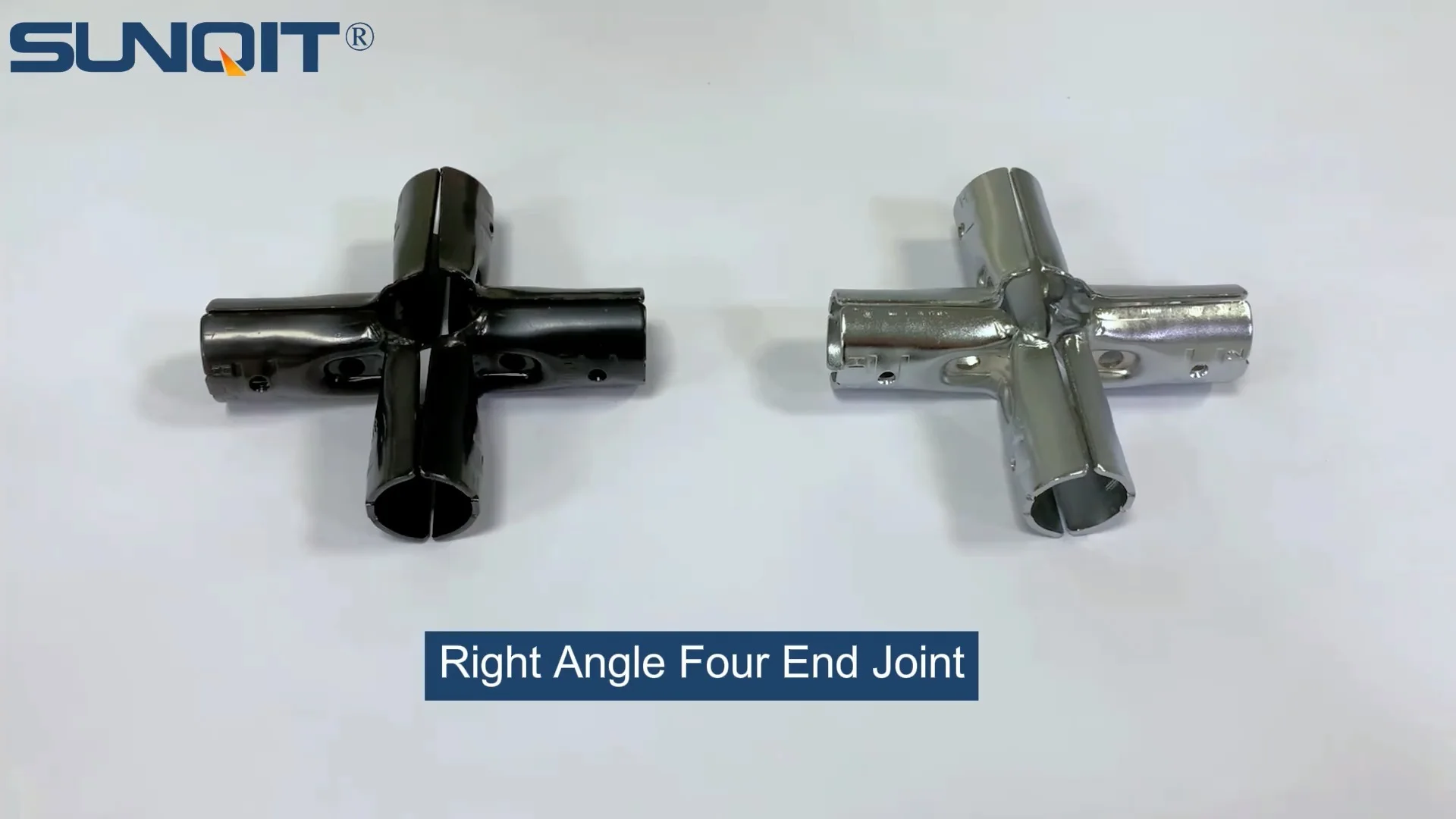
Five way straight lean pipe joint, for 5 pcs 28mm lean pipe connect in straight angle,which used widely in workbench, flow rack, hand trolley frame connection.
In the fast-paced world of manufacturing and production, the difference between a thriving operation and a struggling one often comes down to how well a workspace adapts. Traditional workstations—rigid, one-size-fits-all structures bolted to the floor—once seemed like the norm. But today, as production demands shift overnight, product lines evolve, and teams grow or shrink, those static setups have become liabilities. They waste time, limit creativity, and leave employees wrestling with tools and layouts that don't fit their needs. Enter the era of flexible workstation design, where adaptability isn't just a buzzword—it's the backbone of efficiency. And at the heart of this revolution? The five way straight lean pipe joint.
If you've ever walked through a factory or warehouse, you've likely seen the telltale signs of inefficiency: workbenches cluttered with tools that don't belong, materials stacked in hard-to-reach corners, and employees stretching or bending awkwardly to complete tasks. These aren't just minor inconveniences—they add up to lost hours, increased fatigue, and even higher turnover. But what if your workstation could evolve with you? What if, instead of tearing down and rebuilding a setup every time a new product launches, you could simply reconfigure it in minutes? That's the promise of lean pipe systems, and the five way straight lean pipe joint is the key that unlocks that potential.
Understanding Lean Pipe: The Foundation of Flexibility
Before diving into the specifics of the five way straight lean pipe joint, let's take a step back and appreciate the system it belongs to: lean pipe. Also known as "lean tube" or "kitchen pipe" (a nod to its early use in restaurant kitchens), lean pipe is a simple yet ingenious concept. It consists of lightweight, durable pipes—typically made of steel with a plastic coating, aluminum, or stainless steel (from the stainless steel pipe series )—and a variety of joints that connect them. The magic lies in its modularity: these pipes and joints can be assembled, disassembled, and reassembled infinitely, allowing for endless configurations.
Lean pipe systems were born from the principles of lean manufacturing, a philosophy centered on minimizing waste while maximizing value. Traditional manufacturing setups often suffer from "waste of motion" (employees moving more than necessary), "waste of waiting" (materials or tools taking too long to arrive), and "waste of overprocessing" (using overly complex systems for simple tasks). Lean pipe addresses these by creating workspaces that are tailored to the task, adaptable to change, and easy to maintain.
What makes lean pipe so effective? For starters, it's affordable. Compared to custom metal fabrication or fixed industrial workbenches, lean pipe systems cost a fraction of the price. They're also lightweight, which means they can be moved with ease (especially when paired with caster wheels ), yet sturdy enough to support heavy tools and materials. And perhaps most importantly, they empower employees. Unlike rigid setups that require engineering degrees to modify, lean pipe systems can be adjusted by anyone with basic tools, giving teams the autonomy to optimize their own workspaces.
The Five Way Straight Lean Pipe Joint: A Connector That Changes Everything
At the core of any lean pipe system are the joints. These small, unassuming components are what turn individual pipes into functional structures—workbenches, flow racks, conveyors, and more. Most joints connect two or three pipes at standard angles (90°, 45°, etc.), but the five way straight lean pipe joint takes this versatility to a new level. As the name suggests, it allows for the connection of up to five pipes in a straight line or at various angles, making it possible to build complex, multi-dimensional structures with minimal parts.
Let's break down its design. The five way joint typically features a central hub with five ports, each designed to snugly fit a lean pipe. These ports can be oriented in different directions—some straight, some at 90° angles—to accommodate various configurations. Made from durable materials like zinc-plated steel or aluminum, the joint is built to withstand the wear and tear of industrial environments. Many models also include a locking mechanism, such as a set screw or spring-loaded pin, to ensure pipes stay securely in place once assembled.
But why five ways? Why not stick with simpler two or three-way joints? The answer lies in complexity and efficiency. Imagine building a workbench with a shelf, a tool rack, and a material bin. With traditional joints, you might need multiple connectors at each intersection, leading to a cluttered, heavy structure. The five way joint consolidates these connections into a single component, reducing the number of parts needed and simplifying assembly. This not only saves time during setup but also makes the structure lighter and more stable.
Real-World Versatility: From Workbenches to Flow Racks
To truly appreciate the five way straight lean pipe joint, let's look at how it transforms common workstation elements:
1. The Adaptive Workbench
A basic workbench might seem simple, but in reality, it needs to support a wide range of tasks: assembly, packaging, quality control, and more. With the five way joint, you can build a workbench that grows with your needs. Start with a standard tabletop supported by four legs (connected via five way joints at the corners). Need a shelf for tools? Add two vertical pipes from the corner joints, connected by horizontal pipes for the shelf. Want a overhead rack for hanging supplies? Extend upward from the same joints. Need to move the workbench? Attach caster wheels to the bottom of the legs—no need to disassemble and rebuild.
What if your team includes employees of different heights? No problem. The five way joint makes it easy to adjust the height of the workbench by simply moving the leg pipes up or down and resecuring the joints. This ergonomic flexibility reduces strain and fatigue, leading to happier, more productive employees. And when production needs change—say, you switch from assembling small electronics to larger machinery—you can reconfigure the workbench in minutes by adding or removing sections, rather than buying a brand-new one.
2. Streamlined Flow Racks
In manufacturing, material flow is everything. A flow rack —a shelving unit with roller tracks that allow materials to slide forward as items are removed—keeps inventory organized and accessible. Building a flow rack with traditional materials can be time-consuming, but with lean pipe and five way joints, it's a breeze. The five way joints serve as the vertical supports, connecting horizontal roller tracks at different heights. Each joint can anchor multiple tracks (top, middle, bottom), ensuring the rack is stable even when fully loaded.
For example, a three-tier flow rack might use five way joints at each vertical post, with horizontal pipes extending from the joints to support the roller tracks. The joints also allow for easy adjustment of track angles—critical for ensuring materials flow smoothly without jamming. And if you need to add more tiers or widen the rack later, simply add more pipes and joints; no cutting or welding required.
3. Integrated Conveyor Systems
Conveyors are the arteries of a production line, moving materials from one station to the next. While large-scale conveyor systems are often fixed, smaller operations can benefit from flexible, lean pipe-based conveyors. The five way joint plays a key role here, supporting the conveyor frame and integrating it with workstations. For instance, a small belt conveyor might be mounted on a lean pipe frame, with five way joints connecting the frame to the workbench, creating a seamless transition between assembly and packaging.
Roller conveyors, in particular, pair well with five way joints. The joints can support the roller track while also allowing for curves, elevation changes, or diverters—all without the need for custom fabrication. This flexibility is a game-changer for small to medium-sized businesses that can't afford dedicated conveyor systems but still need to optimize their workflow.

Traditional vs. Lean: A Comparison Table
| Aspect | Traditional Workstation | Lean Pipe with Five Way Joint |
|---|---|---|
| Setup Time | Weeks to months (custom fabrication, installation) | Hours to days (modular assembly with basic tools) |
| Cost | High (custom materials, labor, disposal of old setups) | Low to moderate (reusable components, minimal labor) |
| Flexibility | Rigid (difficult to modify without major rework) | Highly flexible (reconfigurable for new tasks, teams, products) |
| Scalability | Limited (requires new fabrication for expansion) | Unlimited (easily add pipes/joints to expand or shrink) |
| Maintenance | Costly (specialized parts, professional repair) | Simple (replace individual joints/pipes; no special tools) |
| Employee Satisfaction | Often low (awkward layouts, limited control over workspace) | High (customizable to individual needs, reduces strain) |

Beyond the Joint: Accessories That Enhance the System
While the five way straight lean pipe joint is a star player, it doesn't work alone. A robust lean pipe system relies on a suite of accessories that complement the joint's functionality, turning basic pipes into a fully integrated workstation. Let's explore some key accessories and how they work with the five way joint:
Casters and Mobility
Even the most well-designed workstation becomes less useful if it can't be moved. Caster wheels —especially swivel casters with brakes—solve this problem. Attached to the bottom of lean pipe legs (via joints or mounting plates), casters allow workbenches, flow racks, and even small conveyors to be rolled to different areas of the facility. The five way joint ensures the legs are securely connected, providing a stable base for the casters to support. This mobility is invaluable for facilities with limited space or variable production schedules—imagine rolling a workstation from the assembly line to the shipping area during peak times, then returning it when needed.
Aluminum Profiles and Work Surfaces
For workbenches and tables, the surface itself is critical. While wooden or plastic tops are common, aluminum profiles offer a durable, lightweight alternative. Aluminum profiles—extruded pieces with T-slots for easy attachment—can be connected to lean pipe frames using five way joints, creating sturdy work surfaces that resist scratches, chemicals, and heat. The T-slots also allow for quick attachment of accessories like tool holders, monitor arms, or bins, further customizing the workspace.
Roller Tracks and Material Flow
Earlier, we mentioned flow racks and conveyors, but the roller track itself deserves a closer look. Roller tracks consist of small wheels mounted on a frame, allowing materials (like boxes or bins) to slide with minimal effort. When integrated with lean pipe systems, roller tracks are typically supported by horizontal pipes connected via five way joints. This setup ensures the track is level and stable, preventing jams and ensuring smooth flow. Some roller tracks even include guides or side rails (made from aluminum or plastic) to keep materials aligned—these can be attached directly to the five way joints, eliminating the need for extra brackets.
Joints for Every Angle
While the five way joint is versatile, there are times when a specialized joint is needed. For example, 90° crossing joints allow pipes to intersect perpendicularly without overlapping, while swivel joints enable rotation for adjustable components like lamp arms or tool holders. The five way joint often serves as a central hub, connecting these specialized joints to create complex structures. For instance, a workbench might use five way joints at the corners, with 45° reinforce joints supporting angled braces for extra stability, and swivel joints holding adjustable shelves.

Overcoming Common Workstation Challenges
Every manufacturing or warehouse facility faces unique challenges, but the five way straight lean pipe joint offers solutions to some of the most common:
Space Constraints
Small facilities often struggle with making the most of limited square footage. Traditional workstations are bulky and fixed, leaving little room for maneuvering. Lean pipe systems with five way joints, however, are compact and customizable. Wall-mounted workbenches (supported by five way joints anchored to vertical pipes) free up floor space, while fold-down shelves (using hinge joints) can be stowed when not in use. Even vertical space is utilized—overhead racks built with five way joints keep tools and materials off the floor but within reach.
Changing Production Needs
Seasonal demand, new product launches, or shifts in customer preferences can turn a once-efficient workstation into a bottleneck. With traditional setups, adapting means halting production for days or weeks. Lean pipe systems with five way joints allow for "just-in-time" reconfiguration. For example, a holiday rush might require doubling packing stations—simply disassemble unused flow racks, reusing the pipes and five way joints to build additional workbenches. When the rush ends, the extra stations can be broken down and stored, freeing up space again.
Employee Turnover and Training
High turnover rates mean constantly training new employees, who may struggle with complex, unfamiliar workstations. Lean pipe systems are intuitive—their modular design makes it easy to see how components fit together. New hires can quickly learn to adjust their workbench height, reposition shelves, or reorganize tools, reducing training time and increasing confidence. Plus, because employees can customize their workspaces, they're more likely to take ownership of their efficiency, leading to better retention.
Looking Ahead: Lean Pipe in the Age of Smart Manufacturing
As manufacturing evolves toward Industry 4.0—with smart sensors, automation, and data-driven decision-making—lean pipe systems are evolving too. While the five way straight lean pipe joint is a physical component, it plays a role in this digital transformation. For example, smart workbenches might include IoT sensors mounted on lean pipe frames (connected via five way joints) that monitor tool usage, track inventory levels, or alert managers when maintenance is needed. The flexibility of the lean pipe system makes it easy to integrate these new technologies without overhauling the entire workstation.
Even as factories become more automated, human workers remain essential. Collaborative robots ("cobots") often work alongside employees, and lean pipe workstations with five way joints can be designed to accommodate these robots—providing a stable platform for cobot arms, integrating safety barriers, or creating shared work surfaces. The adaptability of the system ensures that as new technologies are adopted, the workstation can evolve to support them.
Conclusion: Building Workstations That Grow With You
In the end, the goal of any workstation design is to support people in doing their best work. Rigid, outdated setups create frustration and inefficiency, while flexible, adaptable systems empower employees and drive productivity. The five way straight lean pipe joint is more than just a connector—it's a tool for transformation. By simplifying assembly, reducing costs, and enabling endless configurations, it turns ordinary pipes into powerful, custom workspaces that can keep up with the demands of modern manufacturing.
Whether you're a small startup looking to optimize your first production line or a large enterprise aiming to streamline operations, lean pipe systems with five way joints offer a path forward. They're not just about saving time or money—they're about creating workspaces that respect the people who use them, fostering creativity, and building a foundation for long-term success. So why settle for a workstation that limits you? Choose flexibility. Choose lean. Choose the five way straight lean pipe joint.