- Company Articles
- Products and Technology
- Solution
- Flexible Workstation Design: Integrating Aluminum Honeycomb Panels for Quick Reconfiguration

Flexible Workstation Design: Integrating Aluminum Honeycomb Panels for Quick Reconfiguration
Related Product
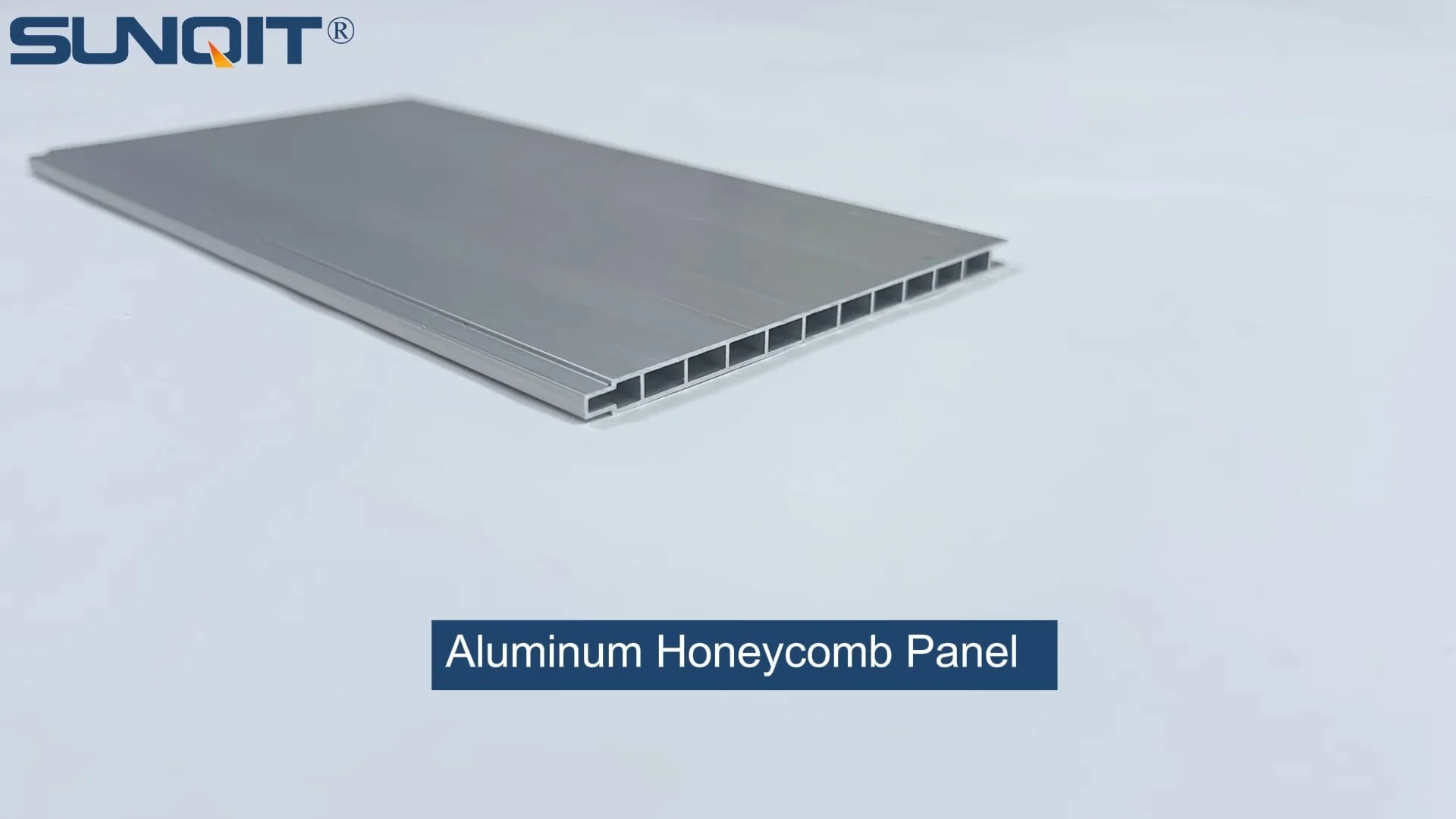
Aluminum Honeycomb Panel
Aluminum honeycomb panel used as table top, side wall, it is connected one pcs by one pcs from the side slot to make a full pieces.This panel width 105mm, 55mm, 35mm are optional for slection.
1. The Shift to Adaptive Workspaces: Why Flexibility Matters in Modern Manufacturing
Walk into any manufacturing facility today, and you'll likely notice a stark difference from a decade ago. Production lines that once ran rigidly, churning out the same product day in and day out, are now dynamic ecosystems—shifting, evolving, and adapting to new demands almost overnight. This transformation isn't just about technology; it's about the very spaces where work happens. At the heart of this change? The workstation.
Modern manufacturing thrives on agility. Whether it's a sudden spike in demand for a new product variant, a pivot to smaller batch sizes, or the integration of new assembly processes, today's factories can't afford to be tied down by static, one-size-fits-all workstations. A workstation that works perfectly for assembling smartphones this month might need to be reimagined next month for tablet components. The cost of downtime, retooling, or replacing entire setups is too high—and the pressure to stay competitive too fierce—to rely on inflexible designs.
This is where the concept of "flexible workstation design" takes center stage. It's not just about making workstations movable; it's about creating systems that can be reconfigured quickly, cost-effectively, and without specialized tools or expertise. And in this quest for flexibility, one material has emerged as a quiet revolutionary: the aluminum honeycomb panel. When paired with modular components like aluminum profiles and roller tracks, it's changing how we think about what a workstation can be—and how quickly it can adapt.
Modern manufacturing thrives on agility. Whether it's a sudden spike in demand for a new product variant, a pivot to smaller batch sizes, or the integration of new assembly processes, today's factories can't afford to be tied down by static, one-size-fits-all workstations. A workstation that works perfectly for assembling smartphones this month might need to be reimagined next month for tablet components. The cost of downtime, retooling, or replacing entire setups is too high—and the pressure to stay competitive too fierce—to rely on inflexible designs.
This is where the concept of "flexible workstation design" takes center stage. It's not just about making workstations movable; it's about creating systems that can be reconfigured quickly, cost-effectively, and without specialized tools or expertise. And in this quest for flexibility, one material has emerged as a quiet revolutionary: the aluminum honeycomb panel. When paired with modular components like aluminum profiles and roller tracks, it's changing how we think about what a workstation can be—and how quickly it can adapt.
2. The Shortcomings of Traditional Workstations: Why Rigidity Fails in a Fast-Paced World
To appreciate the impact of aluminum honeycomb panels, it helps to first understand the limitations of the workstations they're replacing. For decades, factories relied on two primary types of workstations: heavy steel frames with solid wood or metal tops, or lightweight but flimsy plastic setups. Both came with significant drawbacks that clash with today's need for agility.
Take traditional steel workstations, for example. They're built to last—often weighing hundreds of pounds, bolted to the floor, and designed for a single, fixed purpose. While their durability is undeniable, this rigidity becomes a liability when production needs change. Reconfiguring a steel workstation might require cutting, welding, or drilling new holes—tasks that take hours (if not days) and demand skilled labor. Even moving them is a Herculean effort, often requiring forklifts or multiple workers. The result? Downtime, increased labor costs, and a factory floor that can't keep up with shifting priorities.
On the flip side, lightweight plastic workstations offer portability but lack the structural integrity needed for heavy-duty tasks. Their surfaces scratch easily, warp under heat, and can't support the weight of tools, fixtures, or materials common in manufacturing. They're disposable by design—cheap to buy but expensive to replace when they wear out.
Then there's the issue of customization. Traditional workstations are often "built to spec" for a specific process. If a team needs to add a shelf, mount a tool holder, or integrate a conveyor, it's rarely a plug-and-play fix. Instead, it means ordering custom parts, waiting for delivery, and disrupting production to install them. In a world where time-to-market can make or break a product, this "wait and adapt" model is no longer viable.
Take traditional steel workstations, for example. They're built to last—often weighing hundreds of pounds, bolted to the floor, and designed for a single, fixed purpose. While their durability is undeniable, this rigidity becomes a liability when production needs change. Reconfiguring a steel workstation might require cutting, welding, or drilling new holes—tasks that take hours (if not days) and demand skilled labor. Even moving them is a Herculean effort, often requiring forklifts or multiple workers. The result? Downtime, increased labor costs, and a factory floor that can't keep up with shifting priorities.
On the flip side, lightweight plastic workstations offer portability but lack the structural integrity needed for heavy-duty tasks. Their surfaces scratch easily, warp under heat, and can't support the weight of tools, fixtures, or materials common in manufacturing. They're disposable by design—cheap to buy but expensive to replace when they wear out.
Then there's the issue of customization. Traditional workstations are often "built to spec" for a specific process. If a team needs to add a shelf, mount a tool holder, or integrate a conveyor, it's rarely a plug-and-play fix. Instead, it means ordering custom parts, waiting for delivery, and disrupting production to install them. In a world where time-to-market can make or break a product, this "wait and adapt" model is no longer viable.

3. Aluminum Honeycomb Panels: The Lightweight Powerhouse Reshaping Workstations
Enter aluminum honeycomb panels—a material that seems to defy the laws of physics, packing remarkable strength into an incredibly lightweight structure. At first glance, they might look like any other flat panel, but their magic lies in their construction.
So, what exactly is an aluminum honeycomb panel? Imagine a sandwich: two thin aluminum sheets (the "faces") bonded to a central core made of aluminum hexagonal cells, arranged like a beehive. This honeycomb core is what gives the panel its unique properties. The hexagonal structure distributes weight evenly across the panel, making it surprisingly strong—often comparable to solid aluminum or steel—while using a fraction of the material. The result? A panel that's up to 70% lighter than a solid aluminum sheet of the same size and strength.
Let's break down the benefits that make aluminum honeycomb panels ideal for workstation design:
Lightweight yet incredibly strong: This is the panel's standout feature. A typical 1200x800mm aluminum honeycomb worktop might weigh just 15-20kg, compared to 40-50kg for a solid steel top of the same thickness. This lightness makes the workstation easy to move—no forklift needed. A single worker can adjust its position, or the entire setup can be reconfigured with minimal effort. Yet, despite its light weight, the honeycomb structure resists bending, warping, and impact. It can easily support heavy tools, fixtures, or even small assembly equipment without flexing.
Exceptional flatness and stability: Unlike wood or plastic, which can warp with temperature or humidity changes, aluminum honeycomb panels maintain their flatness over time. This is critical for precision work, where even a slight dip or curve in the work surface can throw off measurements or assembly alignment. Whether in a hot, humid factory or a climate-controlled electronics lab, the panel stays true to form.
Durable and low-maintenance: Aluminum is naturally resistant to corrosion, and the honeycomb panel's sealed edges prevent moisture or debris from seeping into the core. The surface can be treated with coatings to resist scratches, chemicals, or static (a must for electronics manufacturing), and it's easy to clean—just wipe with a damp cloth. Unlike wood, which might splinter, or plastic, which can crack, these panels stand up to the daily wear and tear of factory life.
Thermal and acoustic insulation: The air pockets in the honeycomb core act as natural insulators, making the panels resistant to temperature transfer. This is useful in environments where workstations are near heat sources (like ovens or welding stations) or need to maintain stable temperatures for sensitive components. Additionally, the core dampens sound, reducing noise in busy factories—a small but meaningful quality-of-life improvement for workers.
Design flexibility: Aluminum honeycomb panels can be cut to any size or shape, making them easy to customize for unique workstation layouts. They can also be paired with different surface finishes—from smooth anodized aluminum to anti-slip coatings or even wood-grain laminates—blending functionality with aesthetics.
So, what exactly is an aluminum honeycomb panel? Imagine a sandwich: two thin aluminum sheets (the "faces") bonded to a central core made of aluminum hexagonal cells, arranged like a beehive. This honeycomb core is what gives the panel its unique properties. The hexagonal structure distributes weight evenly across the panel, making it surprisingly strong—often comparable to solid aluminum or steel—while using a fraction of the material. The result? A panel that's up to 70% lighter than a solid aluminum sheet of the same size and strength.
Let's break down the benefits that make aluminum honeycomb panels ideal for workstation design:
Lightweight yet incredibly strong: This is the panel's standout feature. A typical 1200x800mm aluminum honeycomb worktop might weigh just 15-20kg, compared to 40-50kg for a solid steel top of the same thickness. This lightness makes the workstation easy to move—no forklift needed. A single worker can adjust its position, or the entire setup can be reconfigured with minimal effort. Yet, despite its light weight, the honeycomb structure resists bending, warping, and impact. It can easily support heavy tools, fixtures, or even small assembly equipment without flexing.
Exceptional flatness and stability: Unlike wood or plastic, which can warp with temperature or humidity changes, aluminum honeycomb panels maintain their flatness over time. This is critical for precision work, where even a slight dip or curve in the work surface can throw off measurements or assembly alignment. Whether in a hot, humid factory or a climate-controlled electronics lab, the panel stays true to form.
Durable and low-maintenance: Aluminum is naturally resistant to corrosion, and the honeycomb panel's sealed edges prevent moisture or debris from seeping into the core. The surface can be treated with coatings to resist scratches, chemicals, or static (a must for electronics manufacturing), and it's easy to clean—just wipe with a damp cloth. Unlike wood, which might splinter, or plastic, which can crack, these panels stand up to the daily wear and tear of factory life.
Thermal and acoustic insulation: The air pockets in the honeycomb core act as natural insulators, making the panels resistant to temperature transfer. This is useful in environments where workstations are near heat sources (like ovens or welding stations) or need to maintain stable temperatures for sensitive components. Additionally, the core dampens sound, reducing noise in busy factories—a small but meaningful quality-of-life improvement for workers.
Design flexibility: Aluminum honeycomb panels can be cut to any size or shape, making them easy to customize for unique workstation layouts. They can also be paired with different surface finishes—from smooth anodized aluminum to anti-slip coatings or even wood-grain laminates—blending functionality with aesthetics.

4. Fitting into the Lean System: How Aluminum Honeycomb Panels Support Lean Manufacturing Principles
Flexibility isn't just about adapting to change—it's about doing so efficiently. This is where lean manufacturing principles come into play, and aluminum honeycomb panels align perfectly with the lean goal of minimizing waste while maximizing value.
Lean systems are built on eliminating seven types of waste: overproduction, waiting, transportation, overprocessing, inventory, motion, and defects. Traditional workstations often contribute to several of these. For example, a rigid workstation might require workers to walk farther to retrieve tools (motion waste), or force the factory to keep extra workstations on hand "just in case" (inventory waste). Aluminum honeycomb workstations, by contrast, are designed to reduce waste at every turn.
Let's take "motion waste" as an example. A lightweight, reconfigurable workstation can be positioned exactly where it's needed—right next to the assembly line, material storage, or testing area—cutting down on unnecessary movement. If the production line shifts, the workstation moves with it. Similarly, "waiting waste" is minimized because reconfiguration takes minutes, not days. There's no need to wait for a new workstation to be built or delivered; the existing setup can be adjusted on the spot.
Another lean principle is "continuous improvement" (kaizen). Aluminum honeycomb panels support this by making it easy to test new workstation layouts. A team might experiment with adding a roller track to one side of the honeycomb workbench to streamline material flow, then adjust the height of the bench the next week to reduce worker fatigue. These small, iterative changes are possible because the panel is lightweight and the workstation's frame (often built with aluminum profiles) is modular. No permanent modifications, no wasted materials—just continuous refinement.
Perhaps most importantly, aluminum honeycomb panels reduce "defects" by providing a stable, flat work surface. In precision assembly (like electronics or medical devices), a warped or uneven worktop can lead to misaligned components and faulty products. The panel's rigidity ensures that parts lie flat, tools sit securely, and measurements are accurate—directly contributing to higher quality and fewer defects.
Lean systems are built on eliminating seven types of waste: overproduction, waiting, transportation, overprocessing, inventory, motion, and defects. Traditional workstations often contribute to several of these. For example, a rigid workstation might require workers to walk farther to retrieve tools (motion waste), or force the factory to keep extra workstations on hand "just in case" (inventory waste). Aluminum honeycomb workstations, by contrast, are designed to reduce waste at every turn.
Let's take "motion waste" as an example. A lightweight, reconfigurable workstation can be positioned exactly where it's needed—right next to the assembly line, material storage, or testing area—cutting down on unnecessary movement. If the production line shifts, the workstation moves with it. Similarly, "waiting waste" is minimized because reconfiguration takes minutes, not days. There's no need to wait for a new workstation to be built or delivered; the existing setup can be adjusted on the spot.
Another lean principle is "continuous improvement" (kaizen). Aluminum honeycomb panels support this by making it easy to test new workstation layouts. A team might experiment with adding a roller track to one side of the honeycomb workbench to streamline material flow, then adjust the height of the bench the next week to reduce worker fatigue. These small, iterative changes are possible because the panel is lightweight and the workstation's frame (often built with aluminum profiles) is modular. No permanent modifications, no wasted materials—just continuous refinement.
Perhaps most importantly, aluminum honeycomb panels reduce "defects" by providing a stable, flat work surface. In precision assembly (like electronics or medical devices), a warped or uneven worktop can lead to misaligned components and faulty products. The panel's rigidity ensures that parts lie flat, tools sit securely, and measurements are accurate—directly contributing to higher quality and fewer defects.
5. Building a Reconfigurable System: Key Components That Work with Aluminum Honeycomb Panels
A flexible workstation isn't just a honeycomb panel on legs. To truly enable quick reconfiguration, it needs to work seamlessly with other modular components. Three standouts in this ecosystem are aluminum profiles, roller tracks, and smart workbench design. Let's explore how these pieces come together.
5.1 Aluminum Profiles: The Backbone of Modularity
Aluminum profiles—often called "extrusions"—are the unsung heroes of modular workstation design. These are long, slender pieces of aluminum with a T-slot running along their length (or multiple slots, depending on the design). The T-slot is a game-changer: it allows for easy attachment of accessories—shelves, tool holders, lights, or even the aluminum honeycomb panel itself—without drilling or welding.
Here's how they work with honeycomb panels: The workstation frame is built using aluminum profiles (think of it as a skeleton). The honeycomb panel is then mounted to this frame using brackets that slide into the T-slots and tighten with a simple screw. If you need to adjust the height of the worktop, just loosen the brackets, reposition the panel, and retighten. Want to add a side shelf? Slide shelf brackets into the T-slots on the frame's side rails and secure them. No special tools, no permanent changes—just quick, tool-free adjustments.
Aluminum profiles come in various sizes (like 20x20mm, 30x30mm, or 40x40mm) and shapes, making them adaptable to different workstation weights and loads. For a lightweight honeycomb panel, a 30x30mm profile might be sufficient; for heavier setups with multiple accessories, a 40x40mm or larger profile provides extra stability. And because they're aluminum, they're lightweight too—perfect for keeping the entire workstation easy to move.
Here's how they work with honeycomb panels: The workstation frame is built using aluminum profiles (think of it as a skeleton). The honeycomb panel is then mounted to this frame using brackets that slide into the T-slots and tighten with a simple screw. If you need to adjust the height of the worktop, just loosen the brackets, reposition the panel, and retighten. Want to add a side shelf? Slide shelf brackets into the T-slots on the frame's side rails and secure them. No special tools, no permanent changes—just quick, tool-free adjustments.
Aluminum profiles come in various sizes (like 20x20mm, 30x30mm, or 40x40mm) and shapes, making them adaptable to different workstation weights and loads. For a lightweight honeycomb panel, a 30x30mm profile might be sufficient; for heavier setups with multiple accessories, a 40x40mm or larger profile provides extra stability. And because they're aluminum, they're lightweight too—perfect for keeping the entire workstation easy to move.
5.2 Roller Tracks: Streamlining Material Flow on the Workbench
What good is a flexible workstation if materials can't flow smoothly to and from it? This is where roller tracks shine. Roller tracks are strips of metal or plastic with small, rotating wheels (rollers) that allow materials—like bins, trays, or components—to glide across the surface with minimal effort. When integrated with an aluminum honeycomb workbench, they turn a static work surface into a dynamic material-handling hub.
Imagine a workstation where components arrive via a roller track mounted to one side of the honeycomb panel. As workers assemble parts, finished units slide down another roller track to the next station. No more lifting heavy bins or walking back and forth to retrieve materials—just a continuous, gravity-fed flow. And because the roller tracks are modular, they can be added, removed, or repositioned as needed. A quick adjustment to the track's angle (using T-slot brackets on the aluminum profile frame) can speed up or slow down material flow to match the assembly pace.
Roller tracks are also compatible with lean systems like kanban or 5S. For example, color-coded tracks can separate incoming vs. outgoing materials, reducing errors and keeping the workstation organized. And because they're lightweight, they add minimal weight to the honeycomb setup—keeping the workstation easy to reconfigure.
Imagine a workstation where components arrive via a roller track mounted to one side of the honeycomb panel. As workers assemble parts, finished units slide down another roller track to the next station. No more lifting heavy bins or walking back and forth to retrieve materials—just a continuous, gravity-fed flow. And because the roller tracks are modular, they can be added, removed, or repositioned as needed. A quick adjustment to the track's angle (using T-slot brackets on the aluminum profile frame) can speed up or slow down material flow to match the assembly pace.
Roller tracks are also compatible with lean systems like kanban or 5S. For example, color-coded tracks can separate incoming vs. outgoing materials, reducing errors and keeping the workstation organized. And because they're lightweight, they add minimal weight to the honeycomb setup—keeping the workstation easy to reconfigure.
5.3 Workbench Design: From Static to Modular
When you combine aluminum honeycomb panels, aluminum profiles, and roller tracks, you get a workbench that's less like a piece of furniture and more like a building kit. Modern modular workbenches built with these components are designed for speed: they can be assembled in under an hour, disassembled just as quickly, and reconfigured into new layouts with minimal effort.
For example, consider a "Workbench E (single deck-without caster)" setup (a common modular design). The frame is built with aluminum profiles, the top is an aluminum honeycomb panel, and roller tracks are mounted to the front edge for material flow. If the team needs to add a second deck for tools, they simply attach more aluminum profiles to the frame using T-slot connectors and mount a smaller honeycomb panel as the upper shelf. Need to move the workstation to a new line? Remove the roller tracks, lift the lightweight honeycomb top off the frame (or leave it attached—the whole setup is still light enough), and relocate. No bolts to cut, no parts to replace—just quick, intuitive adjustments.
Even casters (wheels) play a role here. Many modular workbenches use lockable casters that attach to the aluminum profile frame via T-slot brackets. Lock them in place for stable work, unlock to roll the workstation to a new location, and re-lock—all in seconds. This mobility is a game-changer for factories that need to rebalance production lines or create temporary workstations for special projects.
For example, consider a "Workbench E (single deck-without caster)" setup (a common modular design). The frame is built with aluminum profiles, the top is an aluminum honeycomb panel, and roller tracks are mounted to the front edge for material flow. If the team needs to add a second deck for tools, they simply attach more aluminum profiles to the frame using T-slot connectors and mount a smaller honeycomb panel as the upper shelf. Need to move the workstation to a new line? Remove the roller tracks, lift the lightweight honeycomb top off the frame (or leave it attached—the whole setup is still light enough), and relocate. No bolts to cut, no parts to replace—just quick, intuitive adjustments.
Even casters (wheels) play a role here. Many modular workbenches use lockable casters that attach to the aluminum profile frame via T-slot brackets. Lock them in place for stable work, unlock to roll the workstation to a new location, and re-lock—all in seconds. This mobility is a game-changer for factories that need to rebalance production lines or create temporary workstations for special projects.
6. The Benefits of Aluminum Honeycomb Workstations: Beyond Flexibility
While flexibility is the headline benefit, aluminum honeycomb workstations offer a host of other advantages that add up to long-term value for manufacturers. Let's dive into the most impactful ones:
6.1 Cost Savings: From Short-Term Setup to Long-Term ROI
At first glance, aluminum honeycomb panels might cost more than traditional wood or plastic tops. But the total cost of ownership tells a different story. Traditional workstations often need to be replaced entirely when production needs change—a new steel bench here, a custom wooden top there. Aluminum honeycomb workstations, by contrast, are reusable. The honeycomb panel, aluminum profiles, and roller tracks can be disassembled and reassembled into new configurations dozens of times over.
Consider this scenario: A factory needs to reconfigure its assembly line twice a year. With traditional workstations, each reconfiguration might cost $5,000 in new materials and labor. With aluminum honeycomb workstations, the same reconfiguration costs $500 (mostly labor, since the components are reused). Over five years, that's a savings of $45,000—far outweighing the initial investment in the panels.
Additionally, the lightweight design reduces shipping costs (for both initial delivery and any relocations), and the durability means fewer replacements over time. The panels resist scratches, dents, and corrosion, so they look and perform like new for years—no need to sand, repaint, or refinish.
Consider this scenario: A factory needs to reconfigure its assembly line twice a year. With traditional workstations, each reconfiguration might cost $5,000 in new materials and labor. With aluminum honeycomb workstations, the same reconfiguration costs $500 (mostly labor, since the components are reused). Over five years, that's a savings of $45,000—far outweighing the initial investment in the panels.
Additionally, the lightweight design reduces shipping costs (for both initial delivery and any relocations), and the durability means fewer replacements over time. The panels resist scratches, dents, and corrosion, so they look and perform like new for years—no need to sand, repaint, or refinish.
6.2 Ergonomics: Putting Workers First
A workstation that's easy to adjust isn't just good for productivity—it's good for workers. Ergonomics is a critical factor in manufacturing, as repetitive strain injuries (RSIs) and fatigue can lead to lost time, higher turnover, and increased workers' compensation claims. Aluminum honeycomb workstations address this by making it simple to tailor the setup to each worker's needs.
For example, the height of the honeycomb worktop can be adjusted using the aluminum profile frame's T-slots, ensuring that workers aren't hunching or reaching. Roller tracks can be positioned at waist height to reduce bending when loading materials. Even the angle of the worktop can be adjusted (using hinged brackets in the aluminum frame) for tasks that require a sloped surface, like assembly or inspection.
The lightweight nature of the workstation also reduces the risk of injury during reconfiguration. Lifting a 15kg honeycomb top is far safer than manhandling a 50kg steel top, lowering the chance of strains or drops.
For example, the height of the honeycomb worktop can be adjusted using the aluminum profile frame's T-slots, ensuring that workers aren't hunching or reaching. Roller tracks can be positioned at waist height to reduce bending when loading materials. Even the angle of the worktop can be adjusted (using hinged brackets in the aluminum frame) for tasks that require a sloped surface, like assembly or inspection.
The lightweight nature of the workstation also reduces the risk of injury during reconfiguration. Lifting a 15kg honeycomb top is far safer than manhandling a 50kg steel top, lowering the chance of strains or drops.
6.3 Sustainability: Reducing Waste in Manufacturing
Sustainability is no longer a "nice-to-have" in manufacturing—it's a business imperative. Aluminum honeycomb panels align with green initiatives in several ways:
- Material efficiency: The honeycomb core uses minimal aluminum, reducing raw material consumption compared to solid metal tops.
- Recyclability: Aluminum is 100% recyclable, and honeycomb panels can be disassembled at the end of their life, with the aluminum faces and core recycled separately.
- Reduced energy use: Lighter workstations require less energy to transport (both in-factory and during shipping), and their durability means fewer replacements, lowering the carbon footprint of manufacturing new workstations.
7. Comparing Traditional vs. Aluminum Honeycomb Workstations: A Side-by-Side Look
To truly grasp the difference aluminum honeycomb panels make, let's compare traditional workstation setups with modern honeycomb-based systems across key metrics:
| Metric | Traditional Workstation (Steel/Wood Top) | Aluminum Honeycomb Workstation |
|---|---|---|
| Weight (1200x800mm top) | 40-50kg | 15-20kg |
| Reconfiguration Time | Days (requires tools, welding, or new parts) | Minutes (tool-free adjustments via T-slots) |
| Durability | High (but prone to rust/scratches; wood warps) | Very high (corrosion-resistant, scratch-resistant, no warping) |
| Customization Cost | High (often requires custom fabrication) | Low (modular components, T-slot accessories) |
| Ergonomic Adjustability | Limited (fixed height, hard to modify) | High (adjustable height, angle, and accessories) |
| Environmental Impact | Higher (more raw materials, less recyclable) | Lower (material-efficient, fully recyclable) |
| Long-Term Cost | Higher (frequent replacements, retooling) | Lower (reusable, low maintenance, durable) |
8. Real-World Applications: How Factories Are Using Aluminum Honeycomb Workstations
Theory is one thing; real-world results are another. Let's look at two examples of how manufacturers have leveraged aluminum honeycomb workstations to solve specific challenges.
8.1 Electronics Manufacturing: Adapting to Rapid Product Cycles
A major electronics manufacturer producing smartphones and tablets faced a common problem: product cycles were getting shorter, and each new device required a slightly different assembly process. Their traditional steel workstations couldn't keep up—reconfiguring for a new tablet model took 2-3 days, leading to production gaps.
They switched to aluminum honeycomb workstations with aluminum profile frames and roller tracks. Here's what changed:
- Faster reconfiguration: A team of two workers now reconfigures 10 workstations in under 4 hours (down from 3 days). The honeycomb tops are lightweight enough to move by hand, and roller tracks are swapped out via T-slot brackets to match new component sizes.
- Reduced defects: The flat, stable honeycomb surface eliminated misalignment issues during screen assembly, cutting defect rates by 15%.
- Ergonomic wins: Adjustable-height frames reduced worker complaints of back pain by 30%, and lockable casters let workers position stations closer to component bins, cutting walk time by 20 minutes per shift.
The result? The manufacturer reduced time-to-market for new devices by 10% and saved over $100,000 annually in labor and retooling costs.
They switched to aluminum honeycomb workstations with aluminum profile frames and roller tracks. Here's what changed:
- Faster reconfiguration: A team of two workers now reconfigures 10 workstations in under 4 hours (down from 3 days). The honeycomb tops are lightweight enough to move by hand, and roller tracks are swapped out via T-slot brackets to match new component sizes.
- Reduced defects: The flat, stable honeycomb surface eliminated misalignment issues during screen assembly, cutting defect rates by 15%.
- Ergonomic wins: Adjustable-height frames reduced worker complaints of back pain by 30%, and lockable casters let workers position stations closer to component bins, cutting walk time by 20 minutes per shift.
The result? The manufacturer reduced time-to-market for new devices by 10% and saved over $100,000 annually in labor and retooling costs.
8.2 Automotive Parts Supplier: Handling Heavy Loads with Lightweight Tools
An automotive parts supplier specializing in engine components needed workstations that could support heavy fixtures (up to 100kg) but still be moved to accommodate large machinery during maintenance. Their old steel workstations weighed 80kg each, making them nearly impossible to move without a forklift—disrupting maintenance schedules and causing delays.
They opted for aluminum honeycomb workstations with reinforced aluminum profiles and heavy-duty casters. The honeycomb tops, while lightweight, easily supported the 100kg fixtures thanks to their high load-bearing capacity. The result:
- Maintenance efficiency: Workstations can now be moved by two workers in 10 minutes (vs. 1 hour with a forklift), cutting maintenance downtime by 50%.
- Space optimization: When not in use, workstations are rolled to a storage area, freeing up 30% more floor space for large machinery.
- Durability: After two years of use, the honeycomb tops show no signs of warping or damage, despite daily exposure to oil, grease, and heavy tools.
The supplier estimates a 2-year ROI on the new workstations, driven by reduced downtime and improved space utilization.
They opted for aluminum honeycomb workstations with reinforced aluminum profiles and heavy-duty casters. The honeycomb tops, while lightweight, easily supported the 100kg fixtures thanks to their high load-bearing capacity. The result:
- Maintenance efficiency: Workstations can now be moved by two workers in 10 minutes (vs. 1 hour with a forklift), cutting maintenance downtime by 50%.
- Space optimization: When not in use, workstations are rolled to a storage area, freeing up 30% more floor space for large machinery.
- Durability: After two years of use, the honeycomb tops show no signs of warping or damage, despite daily exposure to oil, grease, and heavy tools.
The supplier estimates a 2-year ROI on the new workstations, driven by reduced downtime and improved space utilization.
9. Conclusion: The Future of Workstations Is Flexible—And It's Here
The days of static, one-purpose workstations are fading. In their place, we're seeing a new generation of flexible, adaptive systems built around materials like aluminum honeycomb panels, aluminum profiles, and roller tracks. These systems aren't just tools for manufacturing—they're enablers of agility, efficiency, and innovation.
Aluminum honeycomb panels, with their unique blend of light weight, strength, and durability, are at the heart of this shift. They transform workstations from fixed obstacles into dynamic assets that can keep pace with changing production demands, support lean principles, and prioritize worker well-being. When paired with modular components, they create systems that are as easy to reconfigure as they are to use.
For manufacturers looking to stay competitive in a fast-paced world, the message is clear: flexibility isn't optional—it's essential. And aluminum honeycomb workstations offer a proven, cost-effective way to achieve it. Whether you're assembling electronics, automotive parts, or medical devices, the ability to adapt quickly, reduce waste, and keep workers productive is no longer a luxury. It's the future of manufacturing—and it starts with the workstation.
Aluminum honeycomb panels, with their unique blend of light weight, strength, and durability, are at the heart of this shift. They transform workstations from fixed obstacles into dynamic assets that can keep pace with changing production demands, support lean principles, and prioritize worker well-being. When paired with modular components, they create systems that are as easy to reconfigure as they are to use.
For manufacturers looking to stay competitive in a fast-paced world, the message is clear: flexibility isn't optional—it's essential. And aluminum honeycomb workstations offer a proven, cost-effective way to achieve it. Whether you're assembling electronics, automotive parts, or medical devices, the ability to adapt quickly, reduce waste, and keep workers productive is no longer a luxury. It's the future of manufacturing—and it starts with the workstation.