- Company Articles
- Products and Technology
- Product knowledge
- Flexible Workstations: Role of Two Way Lean Pipe Joint in Custom Configurations

Flexible Workstations: Role of Two Way Lean Pipe Joint in Custom Configurations
Related Product
Two Way Lean Pipe Joint
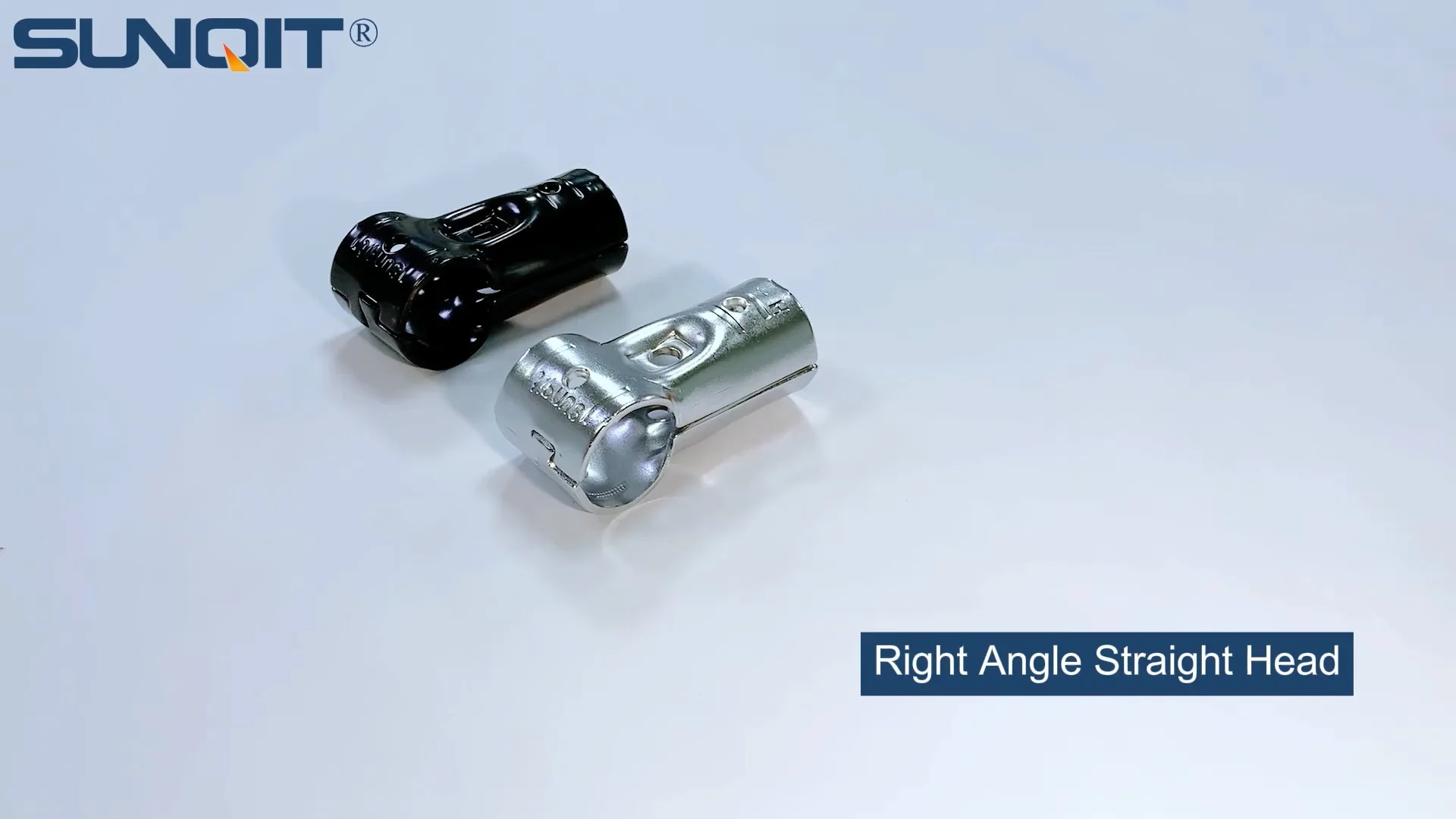
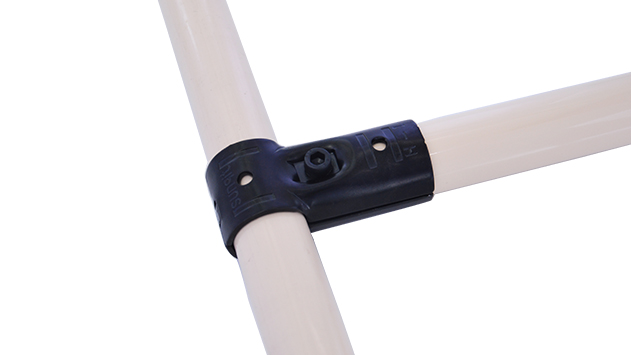
Two way lean pipe joint for 2 pcs 28MM lean pipe connection in straight angle, which used widely in workbench, flow rack, hand trolley frame connection.
In the fast-paced world of modern manufacturing and production, the ability to adapt quickly isn't just a luxury—it's a necessity. Whether you're running a small electronics assembly line, a automotive parts workshop, or a warehouse distribution center, the way your workspace is structured directly impacts efficiency, employee satisfaction, and bottom-line results. This is where flexible workstations step in, and at the heart of their adaptability lies a humble yet powerful component: the two way lean pipe joint. In this article, we'll explore how this unassuming connector transforms rigid, one-size-fits-all workspaces into dynamic, customizable environments that grow and change with your business needs. We'll dive into the world of lean systems, the versatility of lean pipes, and why the two way lean pipe joint has become a cornerstone for businesses aiming to stay agile in an ever-evolving market.
Understanding Lean Systems and the Foundation of Flexible Workstations
Before we zoom in on the two way lean pipe joint, let's first ground ourselves in the philosophy that drives this flexibility: lean manufacturing. Born from the Toyota Production System, lean systems focus on eliminating waste, streamlining processes, and maximizing value—principles that have since been adopted across industries. At the core of lean systems is the idea that nothing in a workspace should be fixed if it can be improved. This is where modular, adjustable tools and structures become critical, and lean pipes are the perfect embodiment of this ethos.
Lean pipes—often made from steel with a polyethylene (PE) coating, aluminum, or stainless steel—are lightweight yet surprisingly durable. They're designed to be strong enough to support tools, materials, and equipment, but flexible enough to be reconfigured without extensive construction or specialized tools. Unlike traditional fixed metal frames or wooden workbenches, lean pipes don't lock you into a single layout. They're the building blocks of a workspace that can shift, grow, or shrink as your production needs change. But even the most versatile pipes would be useless without a way to connect them—and that's where joints come into play.
Joints are the unsung heroes of modular systems. They're the connectors that turn individual pipes into workbenches, material racks, conveyor supports, or turnover trolleys. From simple two way connections to complex five way junctions, each type of joint serves a specific purpose. Today, we're focusing on one of the most fundamental yet versatile joints in the lean toolkit: the two way lean pipe joint. As the name suggests, it's designed to connect two lean pipes, but its impact on customization goes far beyond that simple function.
What is a Two Way Lean Pipe Joint? Breaking Down Its Design and Function
At first glance, a two way lean pipe joint might look like a small, unremarkable piece of hardware—but its design is deceptively clever. Typically made from durable materials like chrome-plated steel or high-strength plastic, it features two cylindrical openings (or "ports") that securely grip the ends of two lean pipes. The magic lies in how it holds those pipes together: most two way joints use a combination of friction and mechanical locking. Some models have set screws that tighten against the pipe, while others use a spring-loaded mechanism or a cam lever to create a snug fit. This design ensures that the joint can withstand the weight of tools, materials, and daily wear and tear, while still allowing for easy disassembly when needed.
Two way lean pipe joints come in various configurations to suit different needs. There's the straight two way joint, which connects two pipes in a straight line to extend a frame. Then there's the 90-degree two way joint, which forms a right angle—perfect for building the corners of a workbench or a shelf. Some joints even allow for limited rotation, letting you adjust the angle between the two pipes slightly to accommodate uneven surfaces or ergonomic preferences. Most are compatible with standard lean pipe diameters (often 28mm for PE-coated pipes or 30mm for aluminum), making them interchangeable across different brands and systems.
One of the key advantages of two way joints is their simplicity. Unlike welding or bolting, which require tools, skill, and time, assembling with two way joints is often a tool-free process. A worker with minimal training can connect two pipes in seconds, and disassembling is just as easy. This simplicity is what makes two way joints so powerful for customization—they put the ability to reconfigure the workspace directly into the hands of the people who use it every day.
The Critical Role of Two Way Lean Pipe Joints in Custom Configurations
Now that we understand what a two way lean pipe joint is, let's explore why it's so essential for building flexible workstations. Custom configurations aren't just about making a workspace "look nice"—they're about solving specific problems. Maybe your team needs a workbench that can adjust from standing to sitting height for ergonomic comfort. Or perhaps you need to add a shelf above a conveyor line to store frequently used tools. Or maybe you're launching a new product line and need to rearrange your entire assembly area in a weekend. In each case, the two way lean pipe joint is the key to making these changes possible—quickly, affordably, and without disrupting production.
1. Modularity: Building Blocks for Any Layout
Modularity is the backbone of flexible workstations, and two way joints are the ultimate modular component. Think of lean pipes as the "bones" of your workspace, and two way joints as the "joints" that let those bones move and connect. With a handful of pipes and two way joints, you can build almost anything: a basic workbench, a mobile cart, a material rack, or even a temporary partition. And because the joints are standardized, you can mix and match components from different projects. For example, if you need to expand a workbench, you can simply add two more pipes and a two way joint to extend the frame—no need to buy a whole new bench.
This modularity also makes it easy to scale. A small startup might begin with a single lean pipe workbench using two way joints. As the business grows, they can add more pipes and joints to create a second workbench, then connect them with a roller track (using, you guessed it, more two way joints) to form a continuous assembly line. When the team expands again, they can rearrange those same pipes and joints into a U-shaped layout to improve workflow. This kind of scalability would be impossible with fixed furniture, which often requires you to replace entire units as your needs change.
2. Adaptability: Changing on the Fly Without Downtime
In manufacturing, downtime is the enemy. Every minute your production line is idle because you're waiting for a new workbench to be delivered or a wall to be knocked down is a minute of lost revenue. Two way lean pipe joints eliminate this problem by allowing for on-the-fly adjustments. Let's say your team is assembling small circuit boards on a lean pipe workbench, but next week they'll switch to larger components that require more surface space. Instead of ordering a new bench, you can disassemble the existing one, add a few extra pipes and two way joints to widen the top, and have the new layout ready in an hour. No tools, no contractors, no waiting.
Adaptability also extends to ergonomics. Workers come in different heights, and repetitive strain injuries are a real risk in fixed work environments. With two way joints, you can adjust the height of a workbench by simply disconnecting the vertical pipes, cutting them to the desired length (or adding extension pipes), and reconnecting them with two way joints. Some joints even allow for (minor adjustments) without disassembly—just loosen the set screw, shift the pipe up or down, and retighten. This level of adaptability ensures that every worker can have a workspace tailored to their body, reducing fatigue and improving productivity.
3. Cost-Effectiveness: Reusing Components to Reduce Waste
Lean systems are all about eliminating waste, and two way lean pipe joints excel at this. Traditional fixed workstations are often "one and done"—once you no longer need them, they end up in a landfill or storage, collecting dust. Lean pipe systems, by contrast, are designed for reuse. When you're done with a workbench, you can take it apart, sort the pipes and two way joints, and use them to build something new. This not only reduces waste but also cuts down on costs. Instead of buying new furniture every time your layout changes, you're just reusing existing components. Over time, this can lead to significant savings—especially for small and medium-sized businesses with tight budgets.
Two way joints also reduce maintenance costs. If a joint gets damaged (which is rare, given their durability), you can replace just that single component instead of the entire workstation. Compare that to a wooden workbench with a cracked leg—you'd likely need to replace the whole bench. With lean pipes and two way joints, repairs are quick, cheap, and localized.

Two Way Lean Pipe Joint vs. Other Joint Types: A Quick Comparison
To truly appreciate the value of two way lean pipe joints, it helps to see how they stack up against other common joint types. While three way, four way, or five way joints have their place in complex structures, two way joints are often the workhorses of most configurations. Here's a quick breakdown:
| Joint Type | Primary Use Case | Flexibility | Cost | Best For |
|---|---|---|---|---|
| Two Way Lean Pipe Joint | Connecting 2 pipes (straight or 90° angles) | High—easily reconfigurable; minimal parts | Low—simplest design, mass-produced | Basic structures, workbenches, shelves, linear extensions |
| Three Way Lean Pipe Joint | Connecting 3 pipes (e.g., adding a shelf to a vertical frame) | Medium—more versatile but bulkier | Medium—additional port increases complexity | Multi-level racks, T-junctions, corner shelves |
| Four Way Lean Pipe Joint | Connecting 4 pipes (e.g., building a cube frame) | Medium—complex configurations but less adaptable | High—most complex design | Enclosed structures, heavy-duty racks, partition frames |
As the table shows, two way joints strike the perfect balance between simplicity, flexibility, and cost. They're not the most complex joint, but they're the most widely used because they solve 80% of the problems manufacturers face when building custom workspaces. Even when you need a three way or four way joint for a specific feature, you'll still rely on two way joints for the majority of the structure.
Case Study: How a Small Electronics Manufacturer Used Two Way Lean Pipe Joints to Triple Productivity
To put this into real-world context, let's look at a case study of a small electronics manufacturer we'll call "TechFlex." Before adopting lean systems, TechFlex's assembly line relied on fixed wooden workbenches. The team assembled circuit boards for smart home devices, but with new product launches every 6–8 months, the workbenches quickly became outdated. When they introduced a larger device, the old benches were too narrow, forcing workers to stretch for tools. When they shifted to a high-volume, low-mix product, the fixed layout made it hard to add more assembly stations. Downtime for reconfigurations cost them an average of 12 hours per month, and employee complaints about ergonomics were rising.
In 2023, TechFlex decided to switch to lean pipe workstations. They started with a basic kit: 28mm PE-coated lean pipes, chrome-plated two way lean pipe joints, aluminum honeycomb workbench tops, and a few casters for mobility. The first project was to build 10 modular workbenches. Using two way joints, the team assembled each bench in under an hour—no tools needed. The 90-degree two way joints formed the corners, while straight two way joints extended the legs and added lower shelves for storage.
The results were immediate. When the next product launch came (a smaller sensor device), TechFlex didn't need new benches. Instead, they disassembled the lower shelves (using two way joints) and shortened the legs to create shorter workstations better suited for the tiny components. The whole process took just 4 hours, compared to the 12 hours of downtime they'd experienced before. Ergonomics improved too: workers could adjust the height of their benches by adding or removing pipe segments (connected with two way joints), reducing complaints of back pain by 60%.
But the biggest win came 6 months later, when TechFlex landed a large order that required doubling their assembly capacity. Instead of buying 10 new workbenches, they used the pipes and two way joints from the original setup to build 10 more. They then connected the benches with roller tracks (using two way joints to attach the tracks to the bench frames), creating a continuous flow line. The total cost was 70% less than buying new furniture, and the line was up and running in a weekend. Today, TechFlex estimates that their lean pipe system, centered on two way joints, has saved them over $50,000 in furniture costs and reduced downtime by 90%.

Accessories That Complement Two Way Lean Pipe Joints: Enhancing Flexibility Further
Two way lean pipe joints are powerful on their own, but their versatility really shines when paired with the right accessories. These add-ons turn basic pipe frames into fully functional workstations that meet specific needs. Let's explore a few key accessories and how they work with two way joints:
- Casters and Wheels: Adding casters to a lean pipe frame (using two way joints to attach the caster mounts to the legs) transforms a stationary workbench into a mobile cart. This is perfect for moving materials between stations or repositioning workbenches during layout changes. Swivel casters with brakes let you lock the cart in place when needed, ensuring stability during use.
- Roller Tracks and Conveyors: Roller tracks (like the plastic roller track guide rail yellow or aluminum guide rail A) use two way joints to attach to the sides of workbenches or racks. They create a smooth surface for sliding materials, reducing the need for manual lifting. For example, a workbench with a roller track along its edge can feed components directly to the next station, streamlining workflow.
- Workbench Surfaces: Aluminum honeycomb panels or wooden tops can be mounted to lean pipe frames using two way joints and brackets. This turns a simple pipe structure into a sturdy work surface. The panels are lightweight but strong, and they're easy to replace if damaged—just disconnect the brackets (which are attached to the frame with two way joints) and swap in a new panel.
- Tool Hooks and Holders: Small accessories like tool hooks or bin holders can be attached to lean pipe frames using two way joints. This keeps frequently used tools within arm's reach, reducing clutter on the workbench surface. Since the hooks are connected with joints, you can rearrange them as your tool collection grows.
Each of these accessories leverages the modularity of two way joints, ensuring that your workstation can evolve as your needs change. A mobile cart today can become a stationary workbench tomorrow by removing the casters and adding longer legs (with two way joints). A simple shelf can become a conveyor line by adding roller tracks (again, with two way joints). It's this combination of joints and accessories that makes lean pipe systems so adaptable.
Conclusion: Why Two Way Lean Pipe Joints Are the Future of Workspace Design
In a world where change is constant, the ability to adapt is everything. Flexible workstations built with lean pipes and two way lean pipe joints offer a solution that's not just practical, but transformative. They turn rigid, static workspaces into dynamic environments that can keep up with new products, growing teams, and evolving ergonomic needs. The two way joint, in particular, is the glue that holds this system together—simple, affordable, and endlessly versatile.
Whether you're a small business just starting out or a large manufacturer looking to modernize, investing in lean pipe systems with two way joints makes sense. They reduce costs, improve efficiency, and put the power of customization in the hands of your team. As TechFlex's story shows, the right tools can turn downtime into uptime, frustration into productivity, and fixed limitations into endless possibilities.
So, the next time you walk through your workspace, take a look at your workbenches, racks, and carts. Are they holding you back, or are they built to grow with you? If it's the former, maybe it's time to consider the humble two way lean pipe joint. It might just be the smallest component in your workflow, but it could be the biggest key to your success.