- Company Articles
- Products and Technology
- Product knowledge
- Flexible Workstations: Three Way Lean Pipe Joint Adaptability

Flexible Workstations: Three Way Lean Pipe Joint Adaptability
Related Product
Three Way Lean Pipe Joint
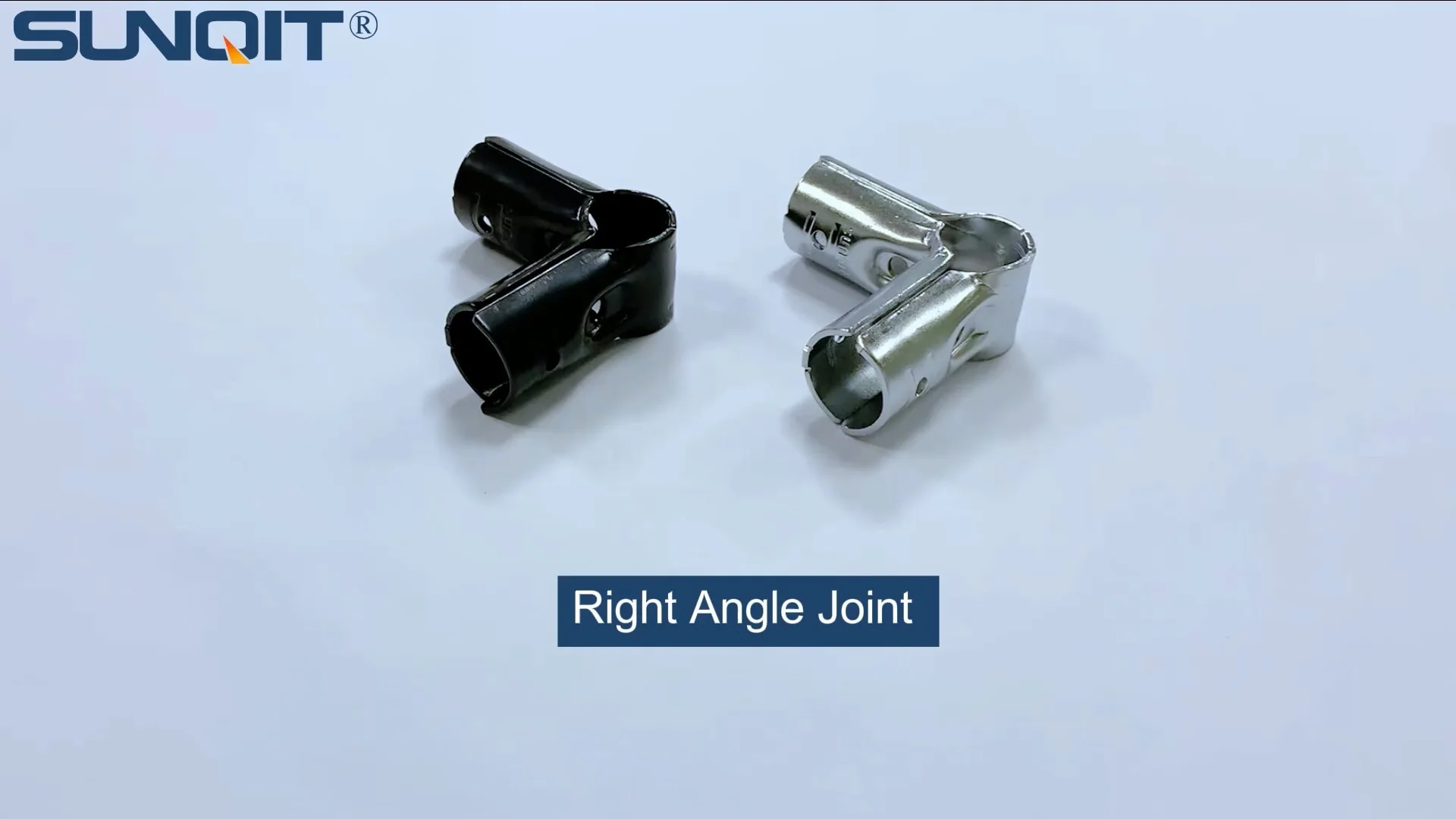
Three way lean pipe joint for 3 pcs 28MM lean pipe connection in straight angle, which used widely in workbench, flow rack, hand trolley frame connection.
It's a Tuesday morning on the factory floor, and Raj, the production manager at a mid-sized electronics assembly plant, is staring at a problem he's faced too many times before. A rush order for a new smartphone model has just come in, and the current workstations—bolted to the floor, with fixed shelves and rigid layouts—are nowhere near ready. The team needs to add two extra assembly stations, reconfigure the material flow racks to accommodate smaller component bins, and adjust the conveyor line to feed parts directly to the new workbenches. "We need this done by Thursday," his boss had said, and Raj winces. With traditional setups, this would take weeks of welding, drilling, and rerouting cables. But today, something's different. As he walks over to the storage area, he spots the solution: a bin of three-way lean pipe joints, aluminum profiles, and roller tracks. "Let's do this," he says, grabbing a wrench. In less than 48 hours, his team has a fully functional, reconfigured line. That's the power of adaptability—and it all starts with the humble three-way lean pipe joint.
What Are Three-Way Lean Pipe Joints, Anyway?
At first glance, a three-way lean pipe joint might not look like much—just a small, often metallic connector with three openings. But these unassuming components are the backbone of flexible manufacturing systems. Designed to connect lean pipes (hollow tubes made of steel, aluminum, or stainless steel) at multiple angles, they allow workers to build, modify, and rebuild structures with minimal effort. Unlike traditional welding or bolted connections, three-way joints lock pipes in place with a simple twist of a wrench, making them reusable, reconfigurable, and ready for whatever the day throws at them.
Most three-way lean pipe joints are made from durable materials like zinc-plated steel or aluminum, balancing strength with lightweight flexibility. They come in various designs: some fixed at 90-degree angles for stable frames, others swiveling to allow adjustable angles—perfect for sloped flow racks or ergonomic workbench heights. And because they're compatible with standard lean pipe sizes (often 28mm or 30mm in diameter), they play well with other components like caster wheels, roller tracks, and aluminum profile accessories. Think of them as the LEGO bricks of the manufacturing world: small, simple, and infinitely combinable.
The Secret to Adaptability: Design That Puts Workers First
What makes three-way lean pipe joints so adaptable? It's all in the details. Let's break down their key features:
No Welding, No Problem: Traditional workstations require skilled welders to cut and join metal, which is time-consuming and permanent. Three-way joints, by contrast, use clamping mechanisms or threaded bolts to secure pipes. A basic Allen wrench is all you need to tighten or loosen them, so even a new team member can assemble a shelf or adjust a workbench height in minutes.
Multi-Angle Magic: Unlike two-way joints that only connect pipes in a straight line or 90-degree angle, three-way joints add a third axis. This means you can build structures that branch out in three directions—ideal for adding side shelves to a workbench, creating multi-tiered flow racks, or building corner supports for conveyor systems. Some advanced models even swivel, letting you adjust angles on the fly (hello, sloped roller tracks for gravity-fed material flow).
Strength Without the Bulk: Don't let their small size fool you. A well-made three-way lean pipe joint can support hundreds of pounds. Take the stainless steel swivel roller balls 1 inch model, for example—when paired with sturdy aluminum profiles, it can easily hold heavy toolboxes or stacks of component bins without bending. This strength-to-weight ratio is crucial for mobile setups, like turnover trolleys with caster wheels that need to move smoothly while carrying loads.
Compatibility is King: Three-way joints aren't picky. They work with steel lean pipes, aluminum lean pipes, and even stainless steel pipe series. Need to add a plastic roller track guide rail (yellow for visibility, grey for low-key setups) to a workbench? Just slide it into the joint's groove. Want to attach a caster wheel for mobility? The joint's threaded base fits standard caster accessories. This compatibility turns a bin of parts into a toolkit for endless possibilities.

Workbenches: From Static to "Set It Your Way"
If there's one place where three-way lean pipe joints shine, it's the workbench. Think about a typical assembly line: workers spend hours at their stations, repeating the same motions. A poorly designed workbench can lead to fatigue, errors, and even injuries. But with three-way joints, workbenches become personalizable, ergonomic, and responsive to change.
Take Workbench E, a common model often sold as a single-deck setup without casters. Out of the box, it's functional—but basic. Add three-way joints, and suddenly it's a chameleon. Need a shelf for your tools? Attach two vertical lean pipes to the back, connect a horizontal pipe with a three-way joint, and slide on a wooden or aluminum top. Too short? Swap out the legs for longer pipes using the same joints. Want to roll it to the next station? Bolt on caster wheels (using caster accessories like mounting plates) via the base joints. Maria, a line worker at Raj's plant, recently adjusted her workbench height by 4 inches to reduce shoulder strain—"It took me 10 minutes," she says. "Now my back doesn't ache at the end of the day."
But it's not just about ergonomics. When a new product comes in with larger components, the team can the side shelves, widen the work surface by adding a crossbar with three-way joints, and even attach a roller track along the edge to slide parts directly into place. No more reaching across the table or juggling bins—everything's within arm's reach. And when the product run ends? Dismantle the extra parts, store the joints and pipes, and rebuild the original setup. It's manufacturing on demand.

Flow Racks: Keeping Materials Moving, No Matter the Change
Material handling is the unsung hero of efficient production. If parts get stuck in a corner, or bins are too high to reach, the whole line slows down. That's where flow racks come in—and three-way lean pipe joints make them smarter, faster, and more adaptable than ever.
A standard flow rack might have three rows and three floors (like Material Rack B, a popular model), but with three-way joints, "standard" goes out the window. Need to add a fourth row for seasonal inventory? Connect extra vertical pipes to the existing frame using three-way joints, then slot in roller tracks. The angle of those tracks? Adjustable, thanks to swiveling joints—tilt them steeper for heavy bins, gentler for delicate components. Raj's team once had to switch from large plastic bins to small cardboard boxes overnight; by adjusting the roller track angles with three-way joints, they kept the flow smooth without a single part getting jammed.
Swivel roller balls (1 inch or 0.5 inch, depending on the load) are another game-changer here. Embedded into flow rack shelves via three-way joint-mounted brackets, these small, rotating balls let workers slide bins in any direction—no more lifting or dragging. For example, a picking station at a warehouse might use 1-inch swivel roller balls on a shelf connected with three-way joints, allowing a worker to spin a bin 180 degrees to access parts from either side. It's small adjustments like these that add up to big gains in speed and reduced strain.

Conveyors: Building Lines That Bend (and Adapt) to Demand
Conveyors are the arteries of production, moving parts from A to B (and sometimes C, D, and E). But traditional conveyor systems are like inflexible highways—once built, they're hard to reroute. Three-way lean pipe joints turn them into scenic routes that can detour, split, and merge on a whim.
Consider a simple roller conveyor. Made from steel or aluminum roller tracks connected by three-way joints, it can be extended by adding more track segments, or curved by using angled joints. Need to send parts to two different assembly stations instead of one? Add a Y-shaped split using two three-way joints, each directing a portion of the track. The plastic roller track guide rails (yellow for high-visibility areas, grey for low-traffic zones) snap into the joints, keeping parts centered even as the conveyor bends. Raj's plant once had to add a 90-degree turn to their conveyor line to avoid a new equipment installation; with three-way joints, they had it up and running in an afternoon, using leftover aluminum profiles and roller track connectors.
Even better, these conveyor systems are mobile. Mount the entire setup on caster wheels (using caster accessories like fixed plates and brake levers attached via three-way joints), and you can roll the line out of the way for deep cleaning or reconfigure it for a special production run. A small bakery I visited last year uses this trick: during the week, their conveyor moves dough to ovens; on weekends, they roll it aside and use the space for packaging seasonal treats. No wasted square footage, no expensive custom builds—just adaptability.
Beyond the Line: Three-Way Joints and the Lean System Mindset
Three-way lean pipe joints aren't just tools—they're enablers of lean manufacturing. Lean systems are all about reducing waste, improving flow, and empowering workers, and these joints check every box. By making reconfiguration fast and cheap, they eliminate the waste of overbuilding (no more "just in case" permanent structures). By letting teams adjust workstations to fit tasks, they improve flow and cut down on unnecessary movement. And by putting the power to modify systems in the hands of the people who use them daily, they empower workers to take ownership of their space.
Lean system suppliers have caught on, too. Many now offer "lean pipe and accessories" kits built around three-way joints, knowing that adaptability is a top priority for manufacturers. These kits often include everything from basic aluminum tubes to internal rotary aluminum joints, making it easy for even small businesses to build custom setups. One supplier I spoke with mentioned a client—a startup making electric bikes—that started with a single workbench and, using three-way joints, expanded to a full assembly line in six months. "They didn't need to invest in new infrastructure every time they scaled," the supplier said. "They just added pipes and joints. That's lean."
The Proof is in the (Productivity) Pudding: Real-World Wins
Still skeptical? Let's look at some real (or realistic) examples of how three-way lean pipe joints have transformed operations:
Automotive Plant Reduces Changeover Time by 70%: A car parts manufacturer used to spend 8 hours reconfiguring their assembly line for new part models. By switching to three-way lean pipe joint-based workstations and flow racks, they cut that time to 2 hours. Workers now adjust heights, add/remove shelves, and reposition roller tracks using only wrenches—no welders needed. The result? They can now run 3 different part models in a single day, boosting output by 40%.
Electronics Workshop Scales from 100 to 500 Units/Day: A small startup building smart home devices started with a single aluminum workbench (Workbench E, without casters) and a few flow racks. As demand grew, they used three-way joints to add more workstations, extend conveyors, and build taller material racks. Because the joints and pipes were reusable, they avoided the cost of new furniture—investing the savings in hiring more workers instead. Today, they're shipping 500 units/day, all from the same 1,000 sq. ft. space.
Warehouse Cuts Picking Errors by 25%: A fulfillment center was struggling with errors in their order-picking process, partly because bins were hard to access. By retrofitting flow racks with 1-inch swivel roller balls and adjustable shelves (using three-way joints), workers could now easily rotate and reach bins from all angles. The result? Fewer mistakes, happier customers, and a 15% boost in daily picks.
Traditional vs. Lean Pipe Joint Setups: A Side-by-Side Look
| Feature | Traditional Fixed Setups | Three-Way Lean Pipe Joint Setups |
|---|---|---|
| Initial Setup Time | Weeks (welding, drilling, custom fabrication) | Hours (assembled with hand tools) |
| Reconfiguration Time | Weeks to months (requires dismantling and rebuilding) | Minutes to days (loosen joints, rearrange pipes) |
| Cost | High (custom parts, labor, waste from one-time use) | Lower (reusable parts, minimal labor, no waste) |
| Scalability | Limited (hard to expand without major overhauls) | Unlimited (add pipes/joints as needed) |
| Ergonomics | Static (one-size-fits-all, no adjustability) | Dynamic (adjust heights, angles for individual workers) |
| Durability | High (but permanent—damage means replacement) | High (durable materials, and damaged parts are easy to swap) |
Choosing the Right Three-Way Joints: Tips for Success
Not all three-way lean pipe joints are created equal. To get the most adaptability, keep these tips in mind:
Material Matters: For heavy loads or harsh environments (like food processing or automotive), stainless steel joints are best—they resist rust and corrosion. For lighter setups (electronics assembly, small workshops), aluminum joints are lighter and easier to maneuver. And if you're on a budget, zinc-plated steel joints offer a good balance of strength and cost.
Check Compatibility: Make sure the joints fit your existing lean pipes. Most use standard sizes (28mm, 30mm), but double-check the diameter and wall thickness. Also, confirm they work with accessories like roller track placon mounts (used to attach roller tracks to aluminum profiles) or caster installation bases—you don't want to buy joints that can't connect to your other parts.
Think About Adjustability: Fixed 90-degree joints are great for stable frames, but swiveling or rotating joints add flexibility. If you anticipate frequent reconfigurations, invest in joints with adjustable angles—they'll save time in the long run.
Don't Skimp on Quality: A cheap joint might save money upfront, but it could bend or slip under load, leading to downtime or safety risks. Look for suppliers with good reviews—many lean pipe suppliers offer samples, so test a joint with your pipes before buying in bulk.
The Future of Manufacturing: Adapt or Get Left Behind
In today's fast-paced market, adaptability isn't a nice-to-have—it's survival. Customers want customized products, markets shift overnight, and production lines need to keep up. Traditional, rigid setups can't handle that pressure. But with three-way lean pipe joints, businesses of all sizes can build systems that grow, change, and evolve with demand. They turn "we can't" into "we can—tomorrow."
Raj's story isn't an anomaly. It's the new normal for manufacturers who've embraced flexibility. As he stood back to admire his team's reconfigured line that Thursday morning, watching parts flow smoothly to the new workbenches, he thought about how far they'd come. No more stressing over rush orders, no more wasted time on reconfigurations. Just a line that adapts, workers who feel empowered, and a business that's ready for whatever comes next. And it all started with a simple question: "What if we could build something that bends, not breaks?"
So, the next time you walk into a factory, warehouse, or workshop, take a closer look at the workbenches, flow racks, and conveyors. Chances are, you'll spot those three-way lean pipe joints—small, unassuming, and quietly revolutionizing how things get made. Because in the end, it's not about the machines. It's about building systems that work for people—and adapt like they do.