- Company Articles
- Products and Technology
- Application Cases
- Flexible Workstations with Aluminum Guide Rail A: 3C Industry Implementation

Flexible Workstations with Aluminum Guide Rail A: 3C Industry Implementation
Related Product
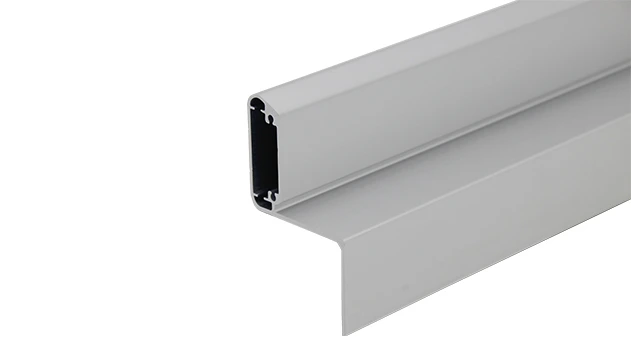
Aluminum Guide Rail A
The aluminum guide rails hold the transport goods securely on the roller track. For installation, the guide rails are simply pushed over the roller tracks.To protect sensitive products.
The 3C Industry: Where Speed Meets Precision
In the high-stakes world of 3C manufacturing—where "3C" stands for Computers, Communications, and Consumer Electronics—every second counts. Imagine a production line where a new smartwatch model needs to be assembled within weeks of its design finalization, or a smartphone factory that must switch between 6.7-inch and 7.2-inch screen assemblies overnight. This isn't just about meeting deadlines; it's about staying ahead in an industry where consumer demands shift faster than the latest tech trends.
Traditional workstations, with their fixed structures and rigid layouts, often become bottlenecks here. Welding, drilling, and permanent fixtures mean that reconfiguring a line for a new product can take days—even weeks—of downtime. And in 3C manufacturing, downtime isn't just lost time; it's lost market share. That's where flexible workstations, built around innovations like Aluminum Guide Rail A , are changing the game. They're not just tools; they're partners in adaptability, designed to keep pace with the industry's relentless need for speed and precision.
Aluminum Guide Rail A: The Unsung Hero of Flexible Workstations
At first glance, a guide rail might seem like a simple component. But in the context of 3C assembly, Aluminum Guide Rail A is the backbone that holds the entire workstation together—literally and figuratively. Let's break down why it's become indispensable:
Lightweight Yet Tough:
Made from high-grade aluminum alloy, Aluminum Guide Rail A weighs up to 40% less than traditional steel rails. This means workers can easily adjust or reposition sections without heavy machinery, reducing physical strain and speeding up line changes. But don't let its lightness fool you—it's built to handle the daily wear of 3C components, from tiny circuit boards to heavier battery modules.
Precision Engineered for Micro-Assembly:
3C products demand accuracy down to the micrometer. Aluminum Guide Rail A's smooth, anodized surface ensures that sliding components—like tool holders or part trays—move with zero friction, eliminating jitter that could throw off delicate tasks (think soldering a 0.5mm wire to a motherboard). Its T-slot design also allows for easy attachment of accessories, from ESD (Electrostatic Discharge) mats to LED task lights, without drilling new holes.
ESD Protection Built-In:
Static electricity is the silent enemy of 3C manufacturing, capable of frying sensitive semiconductors in an instant. Aluminum Guide Rail A can be integrated with ESD-safe coatings and grounding brackets, turning the entire workstation into a protective shield. This isn't just an add-on; it's a non-negotiable for assembling smartphones, laptops, or IoT devices where a single static spark could ruin a batch of products.
| Feature | Traditional Steel Rails | Aluminum Guide Rail A |
|---|---|---|
| Weight (per meter) | 8-10 kg | 4-5 kg |
| Surface Finish | Rough, prone to rust | Anodized, corrosion-resistant, smooth |
| ESD Compatibility | Requires external grounding kits | Integrated ESD coating options |
| Reconfiguration Time | 4-6 hours (requires tools/welding) | 30-60 minutes (tool-free adjustments) |

From Rails to Workstations: Building the Perfect 3C Assembly Line
Aluminum Guide Rail A doesn't work alone. When paired with lean pipe workbenches and other modular components, it transforms into a full-fledged flexible workstation tailored for 3C assembly. Let's walk through how these pieces come together:
The Foundation: Lean Pipe Workbenches
A typical 3C workstation starts with a lean pipe workbench—think of it as the stage where assembly magic happens. These workbenches use lightweight aluminum pipes (another star of the show) and internal rotary aluminum joints, which allow for tool-free adjustments. Need to raise the table height by 10cm to accommodate taller workers? Loosen the joints, adjust, and tighten—done in minutes. Unlike wooden or steel workbenches, they won't warp under the weight of precision tools or accumulate static charge.
Aluminum Guide Rail A in Action
Mounted along the edges of the workbench, Aluminum Guide Rail A becomes the "highway" for moving parts. Attach a plastic roller track (yellow or grey, depending on your workflow) to the rail, and suddenly, circuit boards glide from one assembly station to the next with minimal effort. For smaller components—like SIM card trays or camera lenses—swivel roller balls (1 inch or 0.5 inch) can be embedded into the rail, letting workers slide parts in any direction without lifting. It's like having a conveyor belt built directly into the workstation, but one that can be rearranged on the fly.
ESD Workstations: Protecting What Matters Most
In 3C assembly, even the smallest electrostatic discharge can cost thousands. That's why
ESD workstations
—equipped with Aluminum Guide Rail A—are non-negotiable. The rail acts as a grounding path, channeling static away from sensitive components. Pair it with an ESD-safe workbench top (made from conductive materials) and anti-slip adjustable leveling feet, and you've got a workstation that meets the strictest ESD standards (ANSI/ESD S20.20, IEC 61340). No more worrying about a stray spark ruining a batch of microchips.

Real Results: 3C Factories Thriving with Flexible Solutions
Numbers tell the story best. Let's look at how a mid-sized 3C manufacturer in Shenzhen transformed its production line using Aluminum Guide Rail A and lean pipe workbenches—a lean solution designed for their unique needs.
Case Study: XYZ Electronics (Smartphone Assembly Line)
Before: XYZ's old line used fixed steel workstations with welded rails. Switching between assembling their standard 6.1-inch phone and a new 5.4-inch budget model took 3 days of downtime. Workers often struggled with heavy tool carts, and static-related defects averaged 2.3% per batch.
After Implementing Aluminum Guide Rail A & Lean Pipe Workstations:
-
Downtime reduced to 4 hours:
By replacing fixed rails with Aluminum Guide Rail A and using internal rotary joints, the team could reposition the line in a single shift.
-
Defects dropped to 0.4%:
ESD-integrated rails and workbenches eliminated static damage, saving over $50,000 annually in scrap costs.
-
Worker productivity up 22%:
Lighter components and smoother part movement reduced fatigue, letting teams assemble 120 more phones per day.
As the plant manager put it: "We used to dread product launches because of the line changes. Now, we look forward to them—our flexible workstations keep us agile, even when the market throws us curveballs."
Another example comes from a tablet manufacturer in Dongguan, where space was at a premium. By using Aluminum Guide Rail A with vertical lean pipe joints, they built a "double-deck" workstation: the upper level for assembly, the lower for tool storage. This cut their floor space usage by 35%, allowing them to add two more production lines in the same facility. It's not just about flexibility—it's about doing more with less.
Beyond the Workbench: A Holistic Lean Solution
Aluminum Guide Rail A and lean pipe workbenches are just the start. For 3C manufacturers, true flexibility means integrating every part of the process—from material storage to final packaging. That's where a comprehensive lean solution comes in, combining:
Flow Racks & Roller Tracks:
Aluminum Guide Rail A pairs seamlessly with flow racks (like Material Rack B, with 3 rows and 3 floors) and roller tracks. In a 3C warehouse, this means components—from display screens to batteries—flow directly to the workstation, reducing pick-and-place time by up to 40%. The roller tracks, mounted on the guide rail, ensure parts move smoothly without jamming, even at an incline.
Turnover Trolleys:
Lightweight aluminum turnover trolleys, equipped with caster wheels and compatible with the guide rail system, let workers transport assembled sub-components (like camera modules) between stations with ease. No more heavy lifting or awkward maneuvering in tight spaces.
Custom Design for Unique Needs:
Every 3C product is different, and so are its assembly requirements. A lean solution provider can design workstations with Aluminum Guide Rail A that fit your exact needs—whether you're assembling smart home devices (small, delicate parts) or gaming laptops (heavier, heat-sensitive components). For example, a client assembling VR headsets needed a workstation with adjustable lighting and 360° swivel roller balls to handle curved lenses. The solution? Aluminum Guide Rail A with custom-mounted LED strips and mini aluminum roller tracks—built in 2 weeks, not months.
Why Aluminum? Sustainability Meets Long-Term Value
In today's manufacturing world, sustainability isn't a buzzword—it's a business imperative. 3C companies are under increasing pressure to reduce waste, and Aluminum Guide Rail A delivers here, too. Unlike steel rails, which often end up in landfills after a single use, aluminum is 100% recyclable. When a workstation is no longer needed, the guide rails can be melted down and repurposed, cutting down on raw material costs and environmental impact.
But it's not just about recycling. Aluminum Guide Rail A's durability means it lasts longer—up to 10 years in a typical 3C factory, compared to 3-5 years for steel. Its resistance to corrosion (thanks to the anodized finish) means it won't degrade in humid assembly environments, where moisture can be a problem. Over time, this translates to lower replacement costs and less downtime for repairs.
For manufacturers looking to go green, this is a win-win: reduce your carbon footprint while improving your bottom line. As one sustainability manager at a leading 3C brand put it: "Our flexible workstations with aluminum components have helped us cut waste by 28%—and that's a metric our customers care about as much as our product specs."
The Future of 3C Manufacturing: Flexible, Connected, Ready
As 3C products become smarter, smaller, and more complex, the workstations that build them need to evolve too. Aluminum Guide Rail A isn't just a tool for today—it's a foundation for tomorrow. Imagine workstations that connect to IoT sensors, tracking how often the rail is adjusted or which roller tracks are most used, then using that data to optimize workflows automatically. Or augmented reality (AR) glasses that guide workers through reconfiguring the rail system, overlaying step-by-step instructions onto the physical workstation.
These aren't distant dreams; they're already in the works. And at the center of it all? Aluminum Guide Rail A—lightweight, precise, and ready to adapt to whatever the future holds. Because in 3C manufacturing, the only constant is change. And with the right flexible workstation, change isn't a challenge—it's an opportunity.
So, whether you're assembling the next generation of smartphones, tablets, or wearables, remember this: your workstation shouldn't hold you back. It should propel you forward. With Aluminum Guide Rail A and lean pipe workbenches, you're not just building products—you're building a factory that can keep up with the future.