- Company Articles
- Products and Technology
- Product knowledge
- Floor Protection: Flat Swivel Castor Wheel with Brake for Concrete, Tile & Carpet Floors

Floor Protection: Flat Swivel Castor Wheel with Brake for Concrete, Tile & Carpet Floors
Related Product
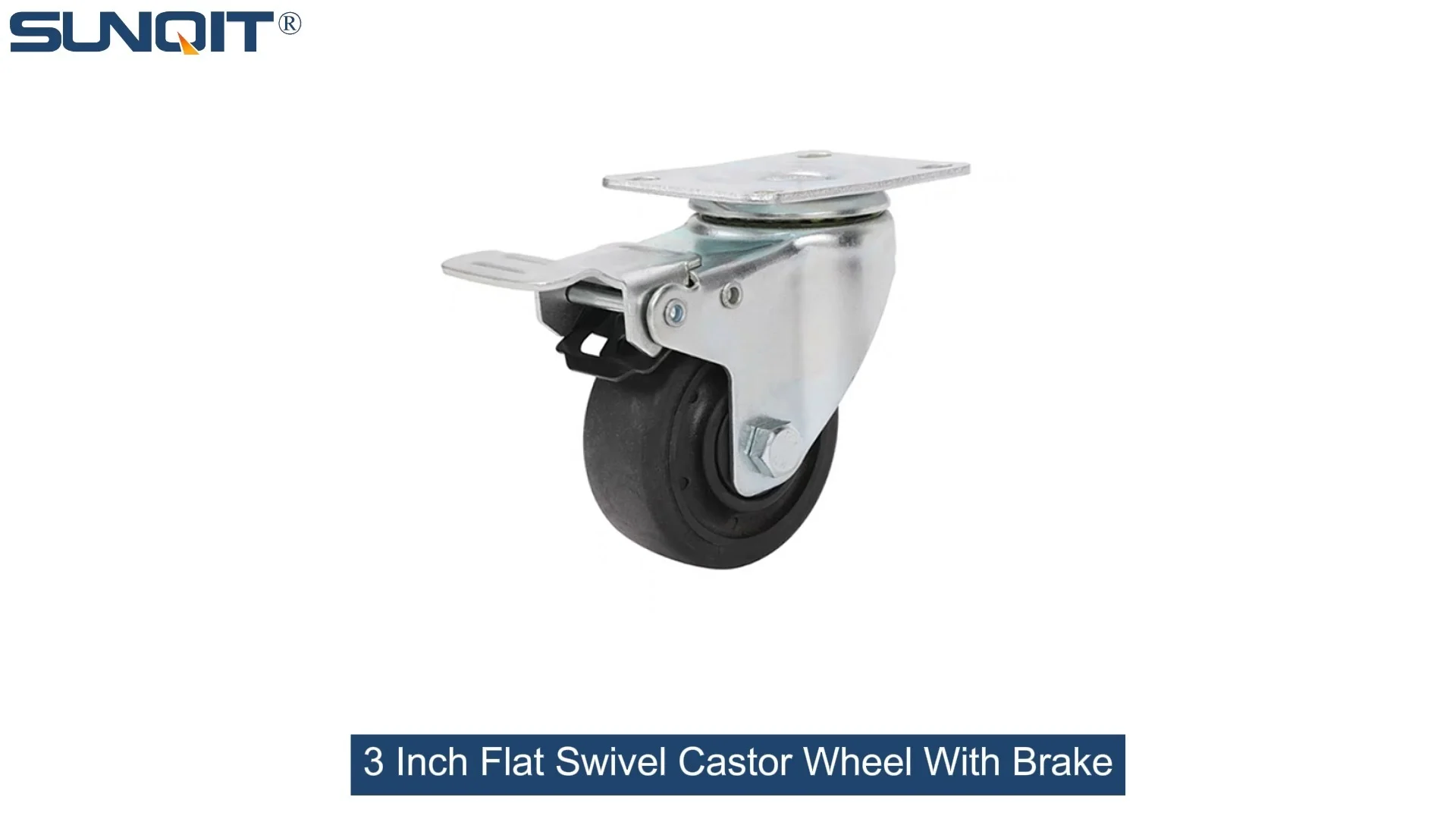
Flat Swivel Castor Wheel With Brake
Chair Casters Ball Bearing Wheels Rubber Base with brake design. Resistant to abrasion, impact and corrosion. Heavy payload can hold 70Kgs per pcs,which can make it works at a stable and smooth status.
The Hidden Cost of Ignoring Floor Protection
Let's start with a scenario many of us have faced—or fear facing. You've just invested in a beautiful new workspace: polished concrete floors in the warehouse, sleek tile in the office, or soft carpet in the break room. Everything looks perfect, until the day you roll a heavy workbench across the tile and hear that sickening "scrape." You stop, hold your breath, and look down to find a long, ugly scratch ruining the surface. Or maybe it's the concrete floor in your workshop, once smooth and even, now dotted with small cracks from years of metal casters grinding against it. Carpeted areas aren't safe either—wheels can snag fibers, leaving bald spots or causing trips when threads get tangled.
The truth is, floors take a beating. Whether you're running a manufacturing plant, a retail store, or a home garage, the constant movement of equipment, furniture, and carts wears them down. And replacing or repairing floors? It's expensive. A single cracked tile might cost $20 to fix, but a large section of damaged concrete could set you back thousands. Add in the downtime while repairs happen, and suddenly that "minor" scratch becomes a major headache.
But here's the good news: much of this damage is preventable. The secret lies in the small but mighty component that connects your equipment to the floor: the castor wheel. Specifically, choosing the right castor—like the flat swivel castor wheel with brake —can mean the difference between floors that last decades and floors that need constant repairs.
Why Castor Wheels Matter More Than You Think
Castor wheels are often an afterthought. When buying a workbench, cart, or rack, we focus on size, weight capacity, and features—but rarely stop to consider the wheels. That's a mistake. The wrong castor can turn even the sturdiest equipment into a floor-damaging machine.
Let's break it down. Hard, unyielding wheels (like metal ones) are brutal on soft floors. Roll them over carpet, and they'll crush fibers; over tile, they'll chip edges; over concrete, they'll grind away at the surface, especially if there's debris like gravel caught in the wheel. On the flip side, wheels that are too soft or sticky might not roll smoothly, requiring more force to move equipment. This extra pushing can lead to sudden jerks, which yank at the floor and cause damage anyway.
Then there's mobility vs. stability. A castor that swivels freely is great for maneuvering tight spaces, but if it doesn't lock properly, equipment can drift, scraping floors as it moves unexpectedly. That's where brakes come in—but not all brakes are created equal. A cheap brake might slip, leaving your cart rolling and your floors at risk.
So what makes the flat swivel castor wheel with brake stand out? It's designed to balance three critical needs: protection, mobility, and control. Let's dive into what sets it apart.
The Anatomy of a Floor-Friendly Castor: Features That Protect
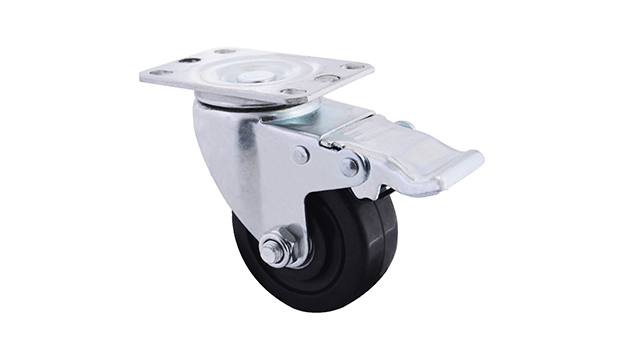
Not all flat swivel castor wheels with brakes are the same, but the best ones share key features that make them gentle on floors while still being tough on the job. Let's break down the components that matter most:
1. Non-Marking, Shock-Absorbing Wheels
The wheel itself is the first line of defense. Look for wheels made from high-quality rubber or polyurethane. These materials are soft enough to cushion impacts (say, when a loaded cart hits a small bump) but firm enough to roll smoothly. Unlike hard plastic or metal, they won't leave scuff marks on tile or concrete, and they're gentle on carpet fibers. Some wheels even have a tread pattern designed to grip without tearing—perfect for preventing slips on smooth floors like polished concrete.
2. Flat Base Design for Even Weight Distribution
The "flat" in flat swivel castor wheel with brake refers to the mounting plate—the part that attaches to your equipment. A flat base distributes the weight of the load evenly across the wheel and the floor below. This is crucial because concentrated weight (like from a small, pointed castor) can crack tiles or indent soft floors like carpet. A wider, flatter base spreads the pressure, reducing the risk of damage.
3. Reliable Braking System
A brake isn't just for keeping equipment in place—it's for protecting floors from accidental movement. The best brakes lock both the wheel and the swivel mechanism, so the castor can't roll OR turn when engaged. This prevents "creeping," where a cart slowly shifts position and scrapes the floor. Look for brakes that are easy to engage (no struggling with a stiff lever!) and release smoothly, so you're not yanking on the equipment to get it moving again.
4. Smooth Swivel Action
Swiveling is what makes these castors so maneuverable, but a jerky swivel can cause the wheel to catch on the floor. High-quality castors have precision bearings in the swivel joint, allowing for 360° rotation with minimal effort. This means you can turn corners or navigate tight spaces without sudden tugs that might scratch the floor.

Floor Type Matters: Tailoring Castors to Concrete, Tile, and Carpet
Your floors have different personalities—concrete is tough but can scratch, tile is brittle, and carpet is soft but prone to snags. The flat swivel castor wheel with brake works well across all three, but there are tweaks to ensure maximum protection for each. Let's break it down:
| Floor Type | Common Risks | Best Castor Features | Why Flat Swivel Castor with Brake Works |
|---|---|---|---|
| Concrete | Scratches from debris, cracks from heavy impacts, staining from oil/chemicals | Polyurethane wheels (resistant to chemicals), wide base (even weight), sealed bearings (keeps out debris) | Non-marking wheels prevent scratches; brake locks prevent drifting and grinding; smooth swivel avoids catching on cracks. |
| Tile | Chipping at edges, scratching, grout damage from shifting equipment | Soft rubber wheels (cushion impacts), shock-absorbing design, secure brake (prevents shifting) | Rubber wheels absorb shocks to avoid chipping; flat base reduces pressure on grout lines; brake holds position to prevent slow shifts that wear grout. |
| Carpet | Fiber snagging, matting, bald spots, tripping hazards from loose threads | Wider wheel diameter (reduces sinking), smooth tread (avoids snagging), easy-roll design (less force needed) | Wider wheels distribute weight to avoid sinking; smooth tread glides over fibers; brake keeps cart from rolling and tangling threads. |
The key takeaway? One castor doesn't fit all, but the flat swivel castor with brake is versatile enough to adapt. For example, if you have both concrete and carpet in your space, you won't need to swap out castors when moving equipment between areas—this one does double duty.

Beyond Protection: How These Castors Boost Efficiency in Lean Systems
Floor protection is a big win, but the benefits of flat swivel castor wheels with brakes go beyond keeping surfaces scratch-free. In lean systems —where efficiency, waste reduction, and workflow optimization are king—these castors are a game-changer.
Think about a typical manufacturing floor. In a lean setup, equipment and workbenches need to be mobile to adapt to changing production needs. You might reconfigure a line for a new product, move a workbench closer to a conveyor, or shift a cart to reduce walking time for employees. But if moving that equipment damages the floor, you're trading short-term efficiency for long-term costs (floor repairs, downtime).
With flat swivel castors with brakes, you get the best of both worlds: mobility and stability. Employees can easily reposition workbenches or material carts without straining (thanks to smooth swivel action), and the brake ensures everything stays put once in place. No more wasting time wrestling with stuck wheels or worrying about equipment drifting mid-production.
Take a workbench , for example. A workbench on fixed legs is stuck in one spot, limiting how you use your space. But a workbench with flat swivel castors? You can roll it to where it's needed, lock the brakes, and instantly create a temporary workstation. When the job's done, roll it back—no floor damage, no hassle. In a lean system, this flexibility reduces waste (no more building multiple fixed workbenches!) and keeps workflows flowing smoothly.
And let's not forget safety—a core pillar of lean systems. Damaged floors are trip hazards; unexpected moving equipment can cause collisions. By preventing floor damage and keeping equipment securely in place, these castors make your workspace safer, reducing accidents and keeping production on track.
Installation and Maintenance: Getting the Most Out of Your Castors
Even the best castors won't protect your floors if they're installed wrong or neglected. Here's how to ensure your flat swivel castor wheels with brakes perform at their best for years:
Installation Tips
- Check weight capacity: Don't overload! A castor rated for 500 lbs won't protect floors if you stick 800 lbs on it—the wheel will flatten, increasing friction and damage.
- Align properly: Install castors so they're evenly spaced. Uneven weight distribution causes some wheels to bear more pressure, scratching floors.
- Tighten securely: Loose castors wobble, leading to uneven rolling and floor scuffs. Use a torque wrench to ensure bolts are snug but not over-tightened (which can crack the mounting plate).
- Use the right caster accessories : If your equipment has uneven legs, add adjustable leveling feet alongside castors to balance the load. Leveling feet take pressure off castors when the equipment is stationary, reducing wear.
Maintenance 101
- Clean wheels regularly: Debris like dirt, gravel, or carpet fibers can get stuck in the wheel tread, turning your castor into a mini sandpaper machine. Wipe wheels with a damp cloth weekly, and use a brush to dislodge stubborn particles.
- Lubricate swivel joints: Over time, swivel joints can dry out, making rotation stiff. A few drops of lubricating oil every 3-6 months (check the manufacturer's recommendations) keeps them moving smoothly.
- Inspect brakes: Test brakes monthly to ensure they lock securely. If a brake feels loose or slips, replace it immediately—don't risk equipment movement.
- replace worn wheels: Even the best wheels wear out. If you notice cracks, flat spots, or reduced rolling smoothness, swap them out. Waiting until they're completely bald will only damage your floors.
Investing in Quality: Why Cheap Castors Cost More in the Long Run
It's tempting to cut costs with budget castors. After all, a basic castor might cost $5, while a high-quality flat swivel castor with brake could be $20 or more. But here's the reality: cheap castors are a false economy.
Budget castors often skip key features: thin, hard plastic wheels that scratch floors; flimsy brakes that don't hold; and poor swivel mechanisms that stick. Within months, you'll notice scratches, chipped tiles, or frayed carpet. Then you'll either replace the castors (spending more money) or pay for floor repairs (spending even more).
Quality castors, on the other hand, are built to last. They use durable materials, precision engineering, and rigorous testing to ensure they protect floors and perform reliably. Over time, they pay for themselves in reduced floor repairs, fewer replacements, and smoother operations.
Think of it this way: If a quality castor costs $20 and lasts 5 years, that's $4 per year. A $5 castor that lasts 6 months and causes $100 in floor damage? That's $105 for 6 months—way more expensive.
So when choosing castors, ask: What's the cost of doing nothing? The answer is almost always higher than investing in quality from the start.
Final Thoughts: Your Floors Deserve Protection
Floors are the unsung heroes of our workspaces. They support us, our equipment, and our businesses—but they rarely get the attention they deserve. By choosing the right castors—like the flat swivel castor wheel with brake —you're not just protecting your floors; you're protecting your budget, your efficiency, and your peace of mind.
Whether you're outfitting a lean system in a manufacturing plant, setting up a workbench in your garage, or upgrading carts in a retail store, remember: the right castor makes all the difference. It's a small investment that delivers big returns—smoother workflows, safer spaces, and floors that stay beautiful for years to come.
So the next time you roll a cart or reposition a workbench, take a moment to appreciate the castors doing the hard work. And if you're still using old, worn-out castors? Now's the time to make the switch. Your floors (and your wallet) will thank you.