- Company Articles
- Products and Technology
- Product knowledge
- Flow Racks & Three Way Lean Pipe Joint: Optimizing Material Handling

Flow Racks & Three Way Lean Pipe Joint: Optimizing Material Handling
Related Product
Three Way Lean Pipe Joint
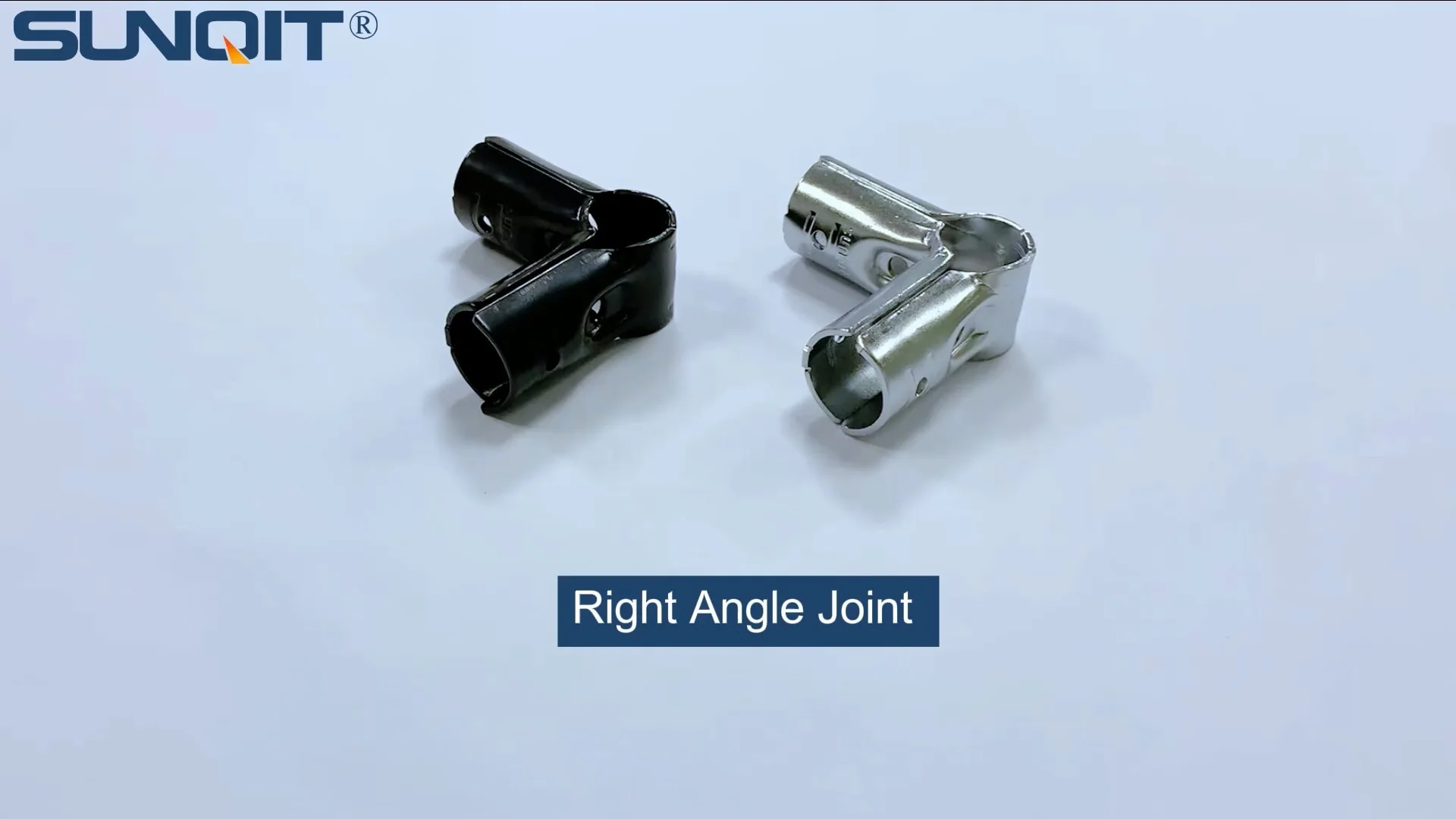
Three way lean pipe joint for 3 pcs 28MM lean pipe connection in straight angle, which used widely in workbench, flow rack, hand trolley frame connection.
Walk into any manufacturing facility, and you'll quickly realize the unsung hero of productivity isn't just the fancy machinery or the latest software—it's how smoothly materials move from point A to point B. Material handling is the silent backbone of operations: too slow, and deadlines slip; too disorganized, and errors pile up; too rigid, and adapting to new products becomes a nightmare. Yet for many teams, it's the last piece of the efficiency puzzle to get attention. Today, we're diving into two tools that are quietly revolutionizing this space: flow racks and three way lean pipe joints . Together, they're not just improving how parts and products are stored—they're redefining what's possible in flexibility, speed, and worker satisfaction.
The Hidden Cost of "Good Enough" Material Handling
Before we talk solutions, let's talk about the problem. Most manufacturing and warehouse teams operate with material handling setups that are… fine . They work, sort of. But "fine" in this context is a silent budget drain and a productivity killer. Let's break down the hidden costs:
Time wasted hunting for parts: Ever watched a worker spend 10 minutes digging through a disorganized shelf for a single component? Multiply that by 20 workers a day, and you're losing over 30 hours of productive time weekly—nearly a full workweek. Traditional static shelving or bulky racks force teams to memorize (or guess) where items are, leading to delays and frustration.
Ergonomic strain (and its domino effect): Bending, reaching, and lifting heavy items from awkwardly placed shelves isn't just uncomfortable—it's dangerous. Repetitive strain injuries (RSIs) from poor ergonomics cost U.S. businesses over $50 billion annually in workers' comp and downtime, according to the Bureau of Labor Statistics. When a key operator is out with a back injury, the ripple effect hits deadlines, morale, and even product quality.
Inflexible setups that can't keep up: Markets change fast. A manufacturer might shift from producing 100 units of Product A to 500 units of Product B overnight. Traditional fixed racks or welded steel structures can't adapt—they're built for one layout, and reconfiguring them means calling in contractors, shutting down lines, and spending thousands. By the time the setup is ready, the demand might have shifted again.
Downtime from "good enough" equipment: Racks that wobble under heavy loads, shelves that sag, or manual carts that jam—these aren't just annoyances. A stuck cart in a busy aisle can block an entire workflow. A shelf collapse (even a minor one) can take hours to clean up and replace, not to mention the risk of damaged inventory.
The worst part? Most teams accept these issues as "just part of the job." But they don't have to be. Flow racks and three way lean pipe joints address every single one of these pain points—and they do it without requiring a complete facility overhaul.
Flow Racks: More Than Shelving—A Material Flow Revolution
Let's start with flow racks. If traditional shelving is a static storage unit, a flow rack is a dynamic material conveyor system disguised as shelving. At its core, a flow rack uses gravity (or gentle mechanical assistance, like roller track ) to move materials forward as items are removed. Think of it like a vending machine for parts: when you take the front item, the next one slides into place automatically. Simple? Yes. Transformative? Absolutely.
How Flow Racks Work: The Science of "Good Flow"
Most flow racks are inclined slightly (usually 5-10 degrees) to use gravity, with roller track or skate wheels along the shelves. When a worker picks the front item, the items behind it glide forward, ensuring the next part is always at the front. No more reaching to the back of a shelf, no more "Did we already use that batch?" confusion. This design enforces First-In-First-Out (FIFO) inventory management, critical for perishable goods or time-sensitive components (like electronics with expiration dates on solder paste).
But flow racks aren't one-size-fits-all. They're customizable based on the items they'll hold. Lightweight components (like small plastic parts) might use plastic roller tracks with low-friction wheels, while heavy metal parts need sturdier steel roller tracks. For ESD-sensitive environments (think circuit boards), there are even ESD workstation -compatible flow racks with conductive materials to prevent static damage.
The Benefits That Hit the Bottom Line
So why are manufacturers swapping static shelves for flow racks? Let's count the wins:
50-70% faster picking times: When parts are always at the front of the shelf, workers don't waste time searching. A study by the Material Handling Institute found that flow racks reduced picking errors by 35% and cut time per pick by over half in assembly line settings. For a facility with 100 daily picks, that's hours of reclaimed productivity.
Space efficiency that doubles storage capacity: Flow racks are dense. By eliminating the need for wide aisles between static shelves (since you only need access from the picking side), they can fit 2-3 times more inventory in the same footprint. A 10x20ft area that once held 50 boxes can now hold 120+ with flow racks—critical for facilities squeezed for space.
Ergonomic wins that reduce injuries: With items at waist height (no more bending or stretching), workers report less fatigue and fewer strains. One automotive parts supplier in Michigan saw a 40% drop in RSI claims within six months of installing flow racks—saving over $120,000 in workers' comp costs alone.
But here's the catch: To unlock all these benefits, flow racks need to be flexible . They need to adapt when your product mix changes, when your workflow shifts, or when you expand. That's where three way lean pipe joints come in.

Three Way Lean Pipe Joints: The "Swiss Army Knife" of Lean Manufacturing
If flow racks are the muscles of material handling, three way lean pipe joints are the connective tissue. These small but mighty components are the reason lean manufacturing setups can be built, reconfigured, and expanded with minimal tools and zero welding. Let's demystify them.
What Even Is a Lean Pipe Joint?
Lean pipe systems (also called "flexible pipe systems") are built from lightweight metal pipes (often aluminum or steel coated in plastic) and modular joints that connect them. The joints are the secret sauce: they let you attach pipes at various angles without drilling or welding. A three way lean pipe joint, as the name suggests, connects three pipes at once—say, a vertical support, a horizontal shelf beam, and a diagonal brace. They come in fixed angles (like 90° or 45°) or swivel designs that let pipes rotate, making them ideal for dynamic setups.
Most three way joints are made from die-cast metal (like zinc alloy) with a chrome plating for durability and corrosion resistance. They clamp onto pipes with set screws or bolts, creating a sturdy connection that's still easy to disassemble. Need to move a shelf up by 6 inches? Loosen the joint, adjust the pipe, retighten. Done in 2 minutes—no contractors, no downtime.
Why Three Way Joints Are a Game-Changer for Flow Racks
Flow racks, by nature, need to be adjustable. Product sizes change, workflows evolve, and what worked for last month's order might not work for this month's. Three way lean pipe joints make flow racks adaptable in ways traditional welded steel racks never could:
Custom heights and widths on the fly: Want to add a middle shelf to a flow rack to hold smaller parts? Use three way joints to connect vertical pipes at the exact height you need. Need to widen the rack to fit larger boxes? Extend the horizontal pipes and secure them with joints—no cutting or welding required.
Easy integration with other tools: Flow racks rarely exist in isolation. They might need to connect to a workbench where assembly happens, or to a conveyor system that feeds parts in. Three way joints let you build bridges between these tools. For example, you could attach a flow rack directly to a workbench using a three way joint, so parts slide right onto the assembly surface—eliminating the need for workers to carry items.
Cost-effective scaling: When you grow, you don't need to buy a whole new flow rack. Just add more pipes and three way joints to extend the existing one. A small electronics manufacturer I worked with started with a 4-foot flow rack; six months later, they'd expanded it to 12 feet using the same base pipes and adding new joints—saving over $3,000 vs. buying a new rack.

Flow Racks + Three Way Joints: A Synergy That Transforms Workflows
Individually, flow racks and three way lean pipe joints are powerful. Together? They're a productivity multiplier. Let's walk through how they work in harmony, using a real-world example: an automotive component assembly line.
Example: Building a Flexible Assembly Station
Imagine an assembly line where workers build door handles for cars. The station needs to hold: (1) small screws and clips, (2) plastic housing parts, (3) metal levers, and (4) finished handles waiting for inspection. A traditional setup might use four separate static shelves, each requiring the worker to turn, reach, and bend. Here's how flow racks and three way joints fix this:
Step 1: Build the frame with three way joints. Using aluminum lean pipes and three way joints, the team constructs a frame around the workbench. Vertical pipes provide support, while horizontal pipes form the "backbone" for the flow racks. Since three way joints allow 360° rotation, the frame can be adjusted to fit the exact size of the workbench—no wasted space.
Step 2: Add flow racks with roller track. Attached to the frame (using, you guessed it, more three way joints) are four flow racks, each angled slightly toward the worker. Each rack uses roller track with wheels matched to the item weight: plastic wheels for lightweight screws, steel wheels for metal levers. The racks are height-adjustable, so the top of each rack lines up with the workbench surface—no reaching up or bending down.
Step 3: Integrate FIFO and visual management. Since flow racks enforce FIFO, the oldest parts are always at the front, reducing waste from expired or obsolete components. Labels on the roller tracks (e.g., "Screws – 5mm") make it impossible to mix up parts, cutting errors.
The result? The worker never has to move more than 12 inches from their seat. Parts glide to them as they work, and when production shifts to a new handle design (with larger housing parts), the team simply adjusts the flow rack width using the three way joints—done in 15 minutes. No more waiting for maintenance to reconfigure shelves; the assembly team can do it themselves during a break.
Beyond Assembly Lines: Where Else Do They Shine?
Flow racks and three way lean pipe joints aren't just for manufacturing. They're transforming:
Warehousing and order fulfillment: Pick-and-pack stations use flow racks to store small items (like e-commerce products), with three way joints allowing racks to be adjusted as seasonal inventory changes (e.g., wider racks for holiday gift boxes).
Healthcare facilities: Hospitals use them to organize medical supplies, with ESD-safe flow racks (to protect sensitive equipment) and easy-to-clean aluminum profiles that meet sterility standards.
Food and beverage production: Flow racks with stainless steel roller tracks (resistant to moisture and corrosion) keep ingredients moving smoothly in packaging lines, with three way joints allowing quick reconfiguration for new bottle sizes or packaging types.

Traditional vs. Optimized: A Side-by-Side Comparison
Still on the fence? Let's put traditional material handling setups head-to-head with a flow rack + three way joint system. The table below compares key metrics for a mid-sized assembly line handling 500 parts daily:
| Metric | Traditional Setup (Static Shelving + Welded Racks) | Optimized Setup (Flow Racks + Three Way Lean Pipe Joints) |
|---|---|---|
| Time per part pick | 45 seconds (avg.) | 12 seconds (avg.) |
| Pick errors per day | 8-10 errors | 1-2 errors |
| Worker movement (steps/day) | 5,000+ steps | 1,200+ steps |
| Setup time for new product | 4-6 hours (contractors needed) | 30-45 minutes (in-house team) |
| Annual ergonomic injury claims | 5-7 claims | 0-1 claims |
| 5-year total cost (purchase + maintenance + downtime) | $45,000 | $22,000 (51% savings) |
Getting Started: Building Your Own Optimized System
Ready to ditch the "good enough" setup and build something that grows with you? Here's how to start:
Step 1: Map Your Current Pain Points
Walk your facility and note where material handling is breaking down. Is it picking time? Ergonomics? Lack of space? For example: "Workers at Station 3 spend 15 minutes/hour walking to the back shelf" or "Shelf 5 is always disorganized because parts fall off the back." These specific pain points will guide your design.
Step 2: Choose Your Flow Rack Design
Decide what you'll store and how much space you have. Light items (under 10 lbs) can use plastic roller tracks; heavy items need steel. Will you need ESD protection? Do you need multiple levels? A simple two-level flow rack might be enough for small parts, while a multi-tiered system works for larger facilities. Don't overcomplicate—start small and expand later.
Step 3: Pick Your Pipes and Joints
Aluminum pipes are lightweight and corrosion-resistant (great for clean rooms or food environments), while steel pipes are sturdier for heavy loads. For joints, three way lean pipe joints are a must for flexibility, but you'll also need two-way joints (for straight lines) and swivel joints (for dynamic angles). Most suppliers sell starter kits with pipes, joints, and basic roller track—perfect for testing a small setup before scaling.
Step 4: Involve the People Who'll Use It
The best material handling system is one your team actually wants to use. Ask the workers who'll pick from the flow rack: "Where would you want this shelf to be?" "What's the most frustrating part of your current setup?" Their input will save you from designing something that looks good on paper but fails in real life.
Step 5: Test, Tweak, Repeat
Build a small prototype (e.g., a single flow rack at one workstation) and run it for a week. Take notes: Are parts flowing smoothly? Is the height right? Do workers need more space between racks? Adjust as needed—remember, the beauty of three way joints is that tweaking takes minutes, not days.
Conclusion: Material Handling as a Competitive Advantage
Flow racks and three way lean pipe joints aren't just tools—they're a mindset shift. They turn material handling from a necessary evil into a strategic advantage. When your team isn't wasting time searching for parts, when they're not struggling with ergonomic strain, when your setup can adapt to new products overnight—you're not just more efficient. You're more agile, more innovative, and more attractive to top talent who want to work in a place that values their time and well-being.
The best part? You don't need a massive budget or a facility overhaul to start. A single flow rack with three way joints at a bottleneck workstation can deliver measurable results in days. And as you expand, the system grows with you—no wasted investment, no regrets. So why settle for "good enough" when "game-changing" is within reach?
Your next level of productivity isn't in the next big machine or software upgrade. It's in the quiet, daily flow of materials—the parts that become products, the shelves that hold the future, and the joints that make it all possible.