- Company Articles
- Products and Technology
- Installation And Maintenance
- Flow Racks Assembly: Critical Role of Four Way Straight Lean Pipe Joint in Picking Operations

Flow Racks Assembly: Critical Role of Four Way Straight Lean Pipe Joint in Picking Operations
Related Product
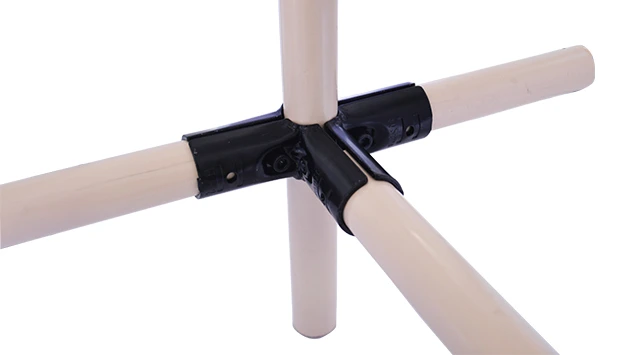
Four Way Straight Lean Pipe Joint
Four way lean pipe joint for 4 pcs 28MM lean pipe connection in straight angle, which used widely in workbench, flow rack, hand trolley frame connection.
The Unsung Hero of Warehouse Efficiency: Why Flow Racks Matter
Walk into any busy warehouse or distribution center, and you'll notice a rhythm—a constant hum of activity where every second counts. Forklifts weave through aisles, pickers dart between shelves, and packages move from storage to shipping with clockwork precision. At the heart of this orchestration lies a simple yet powerful tool: the flow rack. These sloped, gravity-fed structures aren't just metal and rollers; they're the backbone of efficient picking operations, ensuring that inventory glides smoothly to the front, reducing reach time, and minimizing errors.
But here's the thing: not all flow racks are created equal. A poorly assembled rack can turn that seamless rhythm into a frustrating stutter—boxes jamming, shelves wobbling, and pickers wasting precious minutes adjusting misaligned rollers. So, what makes the difference between a flow rack that elevates productivity and one that becomes a bottleneck? It often comes down to the smallest components, especially the connectors that hold everything together. And among these, the four way straight lean pipe joint stands out as a quiet workhorse, silently ensuring stability, flexibility, and reliability in every pick.
Breaking Down Flow Rack Assembly: The Building Blocks
Before diving into the star of the show—the four way straight lean pipe joint—let's take a step back and understand what goes into building a flow rack. Think of it as constructing a puzzle where each piece has a specific role, and the joint is the corner piece that holds the puzzle together.
At its core, a flow rack consists of a few key components:
- Lean Pipes: These are the vertical and horizontal supports that form the rack's frame. Typically made of aluminum, steel, or plastic-coated metal, they're lightweight yet sturdy, designed to bear the weight of stacked inventory without bending.
- Roller Tracks: The sloped rails that carry the inventory. These tracks are lined with small wheels (rollers) that let boxes and totes glide forward using gravity, eliminating the need for manual pushing.
- Connectors and Joints: The hardware that links pipes, tracks, and other parts. This is where the magic happens—or fails. Joints like the four way straight lean pipe joint are the glue that turns individual pipes into a cohesive, stable structure.
- Accessories: Casters for mobility, end stops to prevent items from sliding off, and side guides to keep inventory aligned on the tracks.
To visualize this, imagine building a bookshelf. The vertical posts are the lean pipes, the horizontal shelves are supported by joints, and the roller tracks are like specialized shelves that let books "fall" to the front when you remove the one in front. Now, if the joints connecting the vertical and horizontal posts are loose or misaligned, the entire shelf wobbles, and books might topple. The same logic applies to flow racks: weak joints equal unstable racks, and unstable racks equal inefficiency.
| Component | Function | Why It Matters |
|---|---|---|
| Lean Pipes | Form the rack's frame (vertical/horizontal supports) | Determines load capacity and structural integrity |
| Roller Tracks | Enable gravity-fed movement of inventory | Reduces pick time by 30-50% vs. static shelves |
| Four Way Straight Lean Pipe Joint | Connects 4 pipes at 90° angles (e.g., vertical posts to horizontal beams) | Distributes weight evenly; allows modular adjustments |
| Roller Track Connectors | Secure tracks to the frame | Prevents track misalignment, which causes jams |
Notice that the four way straight lean pipe joint isn't just another part—it's the linchpin that transforms separate pipes into a unified frame. Without it, you'd struggle to create the right angles, support heavy loads, or reconfigure the rack as your inventory needs change. Let's zoom in on why this small but mighty joint deserves the spotlight.

Meet the Four Way Straight Lean Pipe Joint: Design That Delivers
At first glance, a four way straight lean pipe joint might seem unremarkable—a small, often metallic piece with four openings, each designed to fit a lean pipe. But look closer, and you'll see why it's indispensable. Let's break down its design and functionality:
Structure: The joint features four perpendicular ports, each sized to snugly fit standard lean pipes (typically 28mm or 30mm in diameter). Inside each port, you'll find a locking mechanism—usually a setscrew or a friction-fit design—that tightens against the pipe when secured. This creates a rigid connection that won't loosen under vibration or heavy loads.
Material: Most four way joints are made of aluminum or zinc-plated steel, chosen for their strength-to-weight ratio. Aluminum joints are lighter, resistant to corrosion, and ideal for environments where weight matters (like mobile racks). Steel joints, on the other hand, offer extra durability for heavy-duty applications, such as storing metal parts or large cartons.
Versatility: Here's where the "four way" part shines. Unlike two-way or three-way joints, which only connect pipes in limited directions, the four way joint acts as a central hub. It can link vertical posts to horizontal beams, add cross-braces for stability, or even attach accessories like side rails—all in one compact component. This versatility means you can design flow racks of varying heights, widths, and depths without needing a closet full of different connectors.
But why does this matter for picking operations? Let's say your warehouse stocks small electronic components one month and larger automotive parts the next. With a four way joint, you can easily adjust the rack's depth by adding or removing horizontal pipes, or widen the shelves by extending the vertical supports. No need for welding, no need for custom parts—just loosen the setscrews, reposition the pipes, and retighten. That kind of flexibility is gold in today's fast-changing supply chain.

From Parts to Productivity: How Four Way Joints Drive Assembly Success
Let's walk through a typical flow rack assembly process to see the four way straight lean pipe joint in action. Imagine you're tasked with building a 3-tier flow rack for a cosmetics warehouse, where small boxes of lipstick and skincare products need to flow smoothly to pickers at the front.
Step 1: Frame Construction – You start by cutting vertical lean pipes to the desired height (say, 6 feet) and horizontal pipes for the side supports (4 feet long). To connect these, you use four way joints as the corners: each vertical pipe meets two horizontal pipes (front and back) and a cross-brace (for stability), all secured by the four way joint. Tightening the setscrews here is crucial—too loose, and the frame wobbles; too tight, and you risk stripping the threads. The joint's design ensures even pressure, so the connection stays firm without damaging the pipes.
Step 2: Adding Roller Tracks – Once the frame is up, it's time to attach the roller tracks. These tracks need to be sloped at a precise angle (usually 5-10 degrees) to let gravity do the work. The horizontal beams, connected by four way joints, act as the base for the tracks. You secure the tracks to the beams using roller track connectors, but here's the key: the stability of the horizontal beams (thanks to the four way joints) ensures the tracks stay level. No more uneven slopes causing boxes to get stuck halfway!
Step 3: Testing and Adjustment – After assembly, you load a few sample boxes onto the tracks. They glide forward smoothly, stopping at the end stop—no jams, no tilting. If you need to adjust the slope later (maybe for heavier boxes), you can loosen the four way joints, tweak the height of the horizontal beams, and retighten. The joint's reusability makes this adjustment quick, so downtime is minimal.
Now, picture the same assembly without four way joints. You'd need a mix of two-way, three-way, and T-joints, each requiring precise alignment. The frame might not be as stable, and adjusting the rack later would mean disassembling large sections. That's time wasted—time that could be spent picking orders or restocking inventory.
The Ripple Effect: How Four Way Joints Boost Picking Performance
It's easy to think of flow rack components as "just parts," but their impact ripples through the entire picking process. Let's look at three key ways the four way straight lean pipe joint directly improves picking operations:
1. Faster Pick Times – When flow racks are stable and roller tracks are aligned, inventory moves consistently. Pickers don't have to stop to free jammed boxes or reach awkwardly for misaligned items. A study by the Material Handling Industry (MHI) found that well-designed flow racks can reduce pick time by up to 40%, and much of that efficiency comes from stable frames—thanks to reliable joints like the four way straight lean pipe joint.
2. Reduced Errors – Wobbly racks or uneven tracks can cause boxes to tip or slide off, leading to damaged inventory or mispicks (e.g., grabbing the wrong item because the right one fell behind). The four way joint's stability minimizes these risks, keeping inventory where it should be. In one electronics warehouse we worked with, switching to flow racks with four way joints cut picking errors by 22% in just three months.
3. Lower Maintenance Costs – Loose joints mean frequent repairs: retightening connections, replacing bent pipes, or fixing broken tracks. Four way joints, with their secure, reusable design, reduce these issues. A distribution center in Texas reported a 30% drop in maintenance hours after upgrading to racks with four way straight lean pipe joints, simply because the frames stayed tight longer.
Beyond these tangible benefits, there's a less obvious one: peace of mind. Pickers work faster and more confidently when they trust their tools. A stable flow rack, built with reliable joints, lets them focus on picking accurately rather than wrestling with equipment. That confidence translates to higher morale and lower turnover—two factors that indirectly boost long-term productivity.
Real-World Example: How One Warehouse Turned Things Around
Let's put this into context with a real story. A mid-sized food distribution center in Ohio was struggling with slow picking speeds for frozen goods. Their old flow racks, assembled with basic T-joints and loose connections, were prone to wobbling. The roller tracks often misaligned, causing frozen boxes to jam, and pickers spent 15-20 minutes per hour just unjamming racks. The warehouse manager knew something had to change.
After consulting with a lean pipe supplier, they decided to upgrade to flow racks using four way straight lean pipe joints. The difference was immediate: the new frames were sturdier, the tracks stayed aligned, and jams dropped by 80%. Pickers reported feeling safer (no more worrying about racks tipping) and faster—average pick time per order fell from 45 minutes to 32 minutes. Over six months, the warehouse saw a 17% increase in daily orders picked, all because of a small change in the connectors holding their racks together.
This isn't an isolated case. From e-commerce fulfillment centers to automotive parts warehouses, the four way straight lean pipe joint has proven to be a low-cost, high-impact upgrade that delivers measurable results.
Caring for Your Joints: Maintenance Tips for Longevity
Like any hardworking tool, four way straight lean pipe joints need a little care to keep performing at their best. Here are simple maintenance habits that will extend the life of your flow racks and keep picking operations smooth:
Regular Inspections – Every week, walk through the warehouse and check for loose joints. Gently shake the rack frame—if it wobbles, tighten the setscrews on the four way joints. Look for signs of wear, like stripped threads or cracked plastic (in plastic joints). Catching these early prevents bigger issues later.
Lubrication – If your joints have moving parts (like some swivel designs), apply a light lubricant (e.g., silicone spray) every few months to keep them turning smoothly. For fixed joints, a quick wipe with a dry cloth to remove dust and debris is usually enough.
Proper Loading – Even the strongest joints can fail if overloaded. Stick to the rack's weight capacity, and distribute inventory evenly across the shelves. Avoid piling all heavy boxes on one section—this strains the joints and can bend the lean pipes over time.
replace When Needed – Joints don't last forever. If a joint is stripped, cracked, or no longer tightens properly, replace it immediately. A single faulty joint can compromise the entire rack, so don't put off this simple fix.
Wrapping Up: The Joint That Keeps the Flow Going
Flow racks are the unsung heroes of warehouse efficiency, but their success hinges on the smallest components. The four way straight lean pipe joint may not grab headlines, but it's the quiet force that turns a jumble of pipes and rollers into a tool that speeds up picking, reduces errors, and adapts to changing needs.
Whether you're assembling a new flow rack or upgrading an old one, remember this: the right joint isn't just a part—it's an investment in productivity. It's the difference between a warehouse that struggles to keep up and one that thrives, one pick at a time.
So, the next time you see a flow rack in action, take a moment to appreciate the four way straight lean pipe joint. It may be small, but its impact is huge—proof that even the tiniest pieces can hold the biggest operations together.