- Company Articles
- Products and Technology
- Product knowledge
- Flow Racks Built with T-Groove Aluminum Pipe: Improving Material Handling Efficiency

Flow Racks Built with T-Groove Aluminum Pipe: Improving Material Handling Efficiency
Related Product
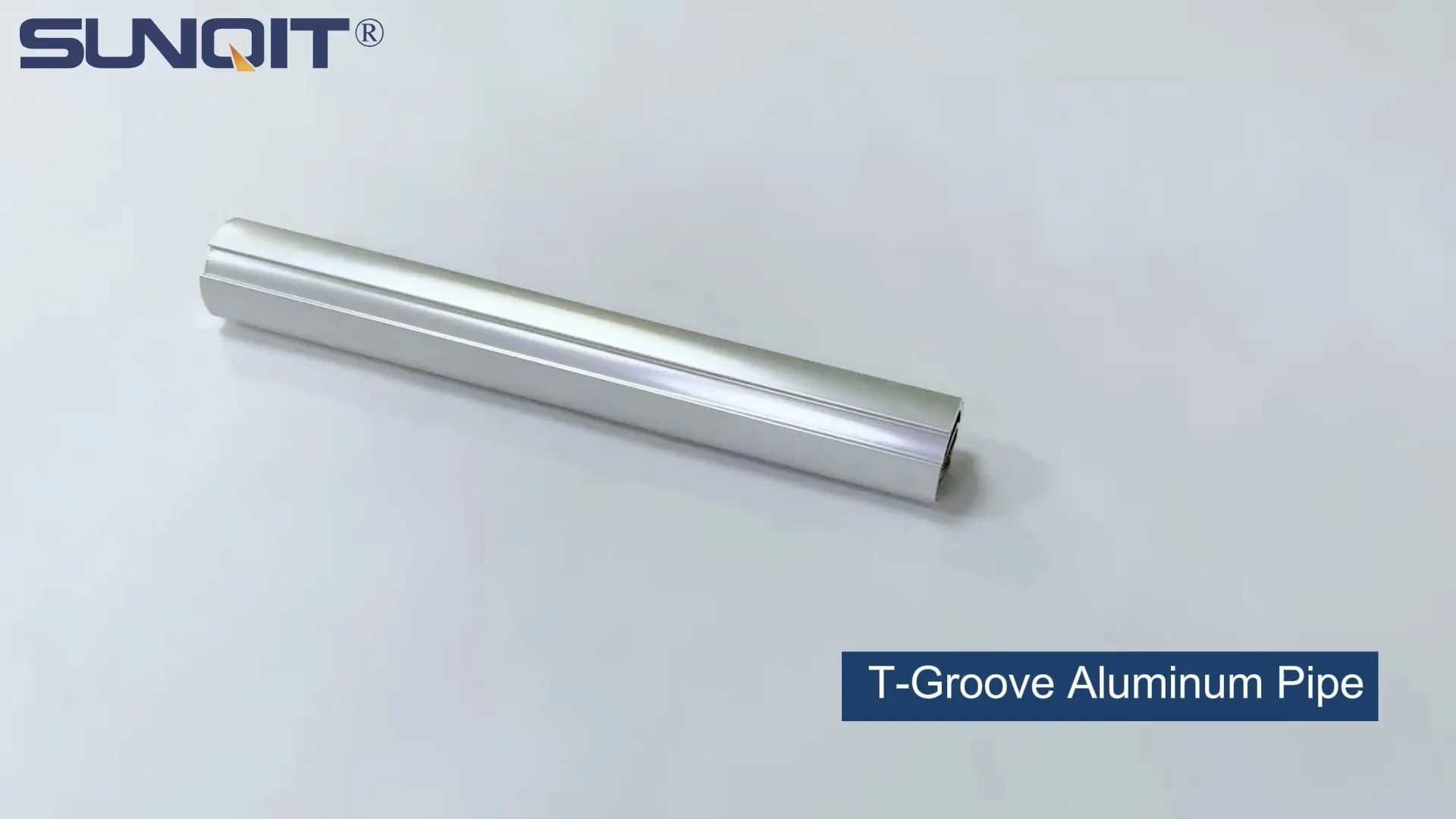
T-Groove Aluminum Pipe
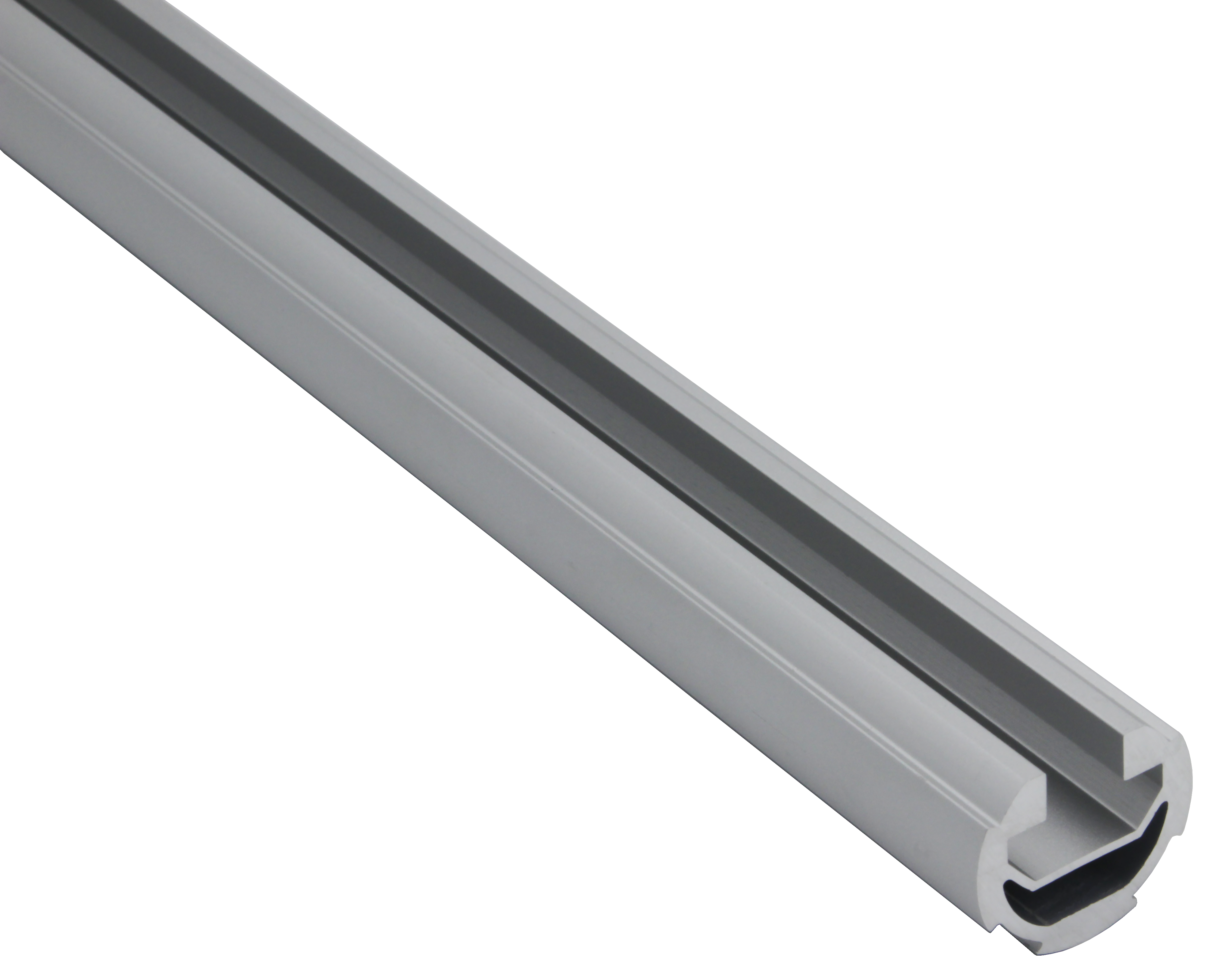
The aluminum pipe opening 10mm is installed into the T-shaped slider, which can be installed with casters or other matching functional parts. The groove can be used for positioning and is used for the track of the roller.
In the fast-paced world of manufacturing, warehousing, and distribution, every second counts. Imagine a scenario where workers spend hours navigating cluttered aisles, bending to reach misplaced parts, or waiting for materials to arrive at their workstations. These are not just minor inconveniences—they're productivity killers. Material handling inefficiencies can drain resources, slow down production lines, and even lead to workplace injuries. That's where flow racks come in. Designed to streamline the movement of goods, flow racks use gravity to feed materials directly to pickers or assembly stations, reducing manual labor and cutting down on wasted time. But not all flow racks are created equal. Today, more and more operations are turning to a game-changing material: t-groove aluminum pipe. In this article, we'll explore how flow racks built with t-groove aluminum pipe are revolutionizing material handling, why they outperform traditional options, and how they can transform your workflow from chaotic to seamless.
What Are Flow Racks, and Why Do They Matter?
Before diving into the specifics of t-groove aluminum pipe, let's start with the basics: What exactly is a flow rack? At its core, a flow rack is a storage system designed to optimize the picking and replenishment of goods using gravity. Typically sloped at a slight angle, flow racks feature roller tracks or skate wheels that allow items to "flow" forward as the front items are removed. This first-in, first-out (FIFO) design ensures that older inventory is used first, reducing waste and keeping stock fresh—a critical feature for industries like food and beverage, pharmaceuticals, or electronics manufacturing where product turnover is high.
Flow racks are versatile, too. They're used in warehouses for order picking, on assembly lines to supply components to workers, and in distribution centers to stage products for shipping. Traditional flow racks are often made from wood, steel, or generic metal piping, but these materials come with trade-offs: wood is prone to warping and damage from moisture; steel is heavy and hard to reconfigure; and basic metal pipes lack the flexibility to adapt to changing needs. Enter t-groove aluminum pipe—a material that combines strength, lightweight design, and modularity to solve these pain points.
The Rise of T-Groove Aluminum Pipe: A Material Built for Modern Workflows
Aluminum has long been valued in industrial settings for its strength-to-weight ratio, but t-groove aluminum pipe takes this a step further. Unlike smooth metal pipes, t-groove aluminum pipe features longitudinal slots (or "t-grooves") along its length, which allow for easy attachment of accessories like brackets, joints, roller tracks, and shelves. This design turns the pipe into a modular building block—one that can be quickly assembled, disassembled, and reconfigured without welding, drilling, or specialized tools. It's like industrial Erector Set for grown-ups, but with the durability to handle real-world demands.
Why does this matter for flow racks? Let's break it down. Traditional flow racks are often custom-built for specific products or spaces. If your operation changes—say, you start handling larger boxes or need to adjust the height of the rack to accommodate taller workers—you're stuck. You either live with the inefficiency or invest in a brand-new rack. T-groove aluminum pipe eliminates this problem. With its modular design, you can add or remove shelves, adjust roller track angles, or even repurpose the entire rack for a different part of your facility—all in a matter of hours, not days. This flexibility is a game-changer for businesses that need to adapt quickly to market shifts, seasonal demand, or new product lines.
Key Components: Building a Flow Rack with T-Groove Aluminum Pipe
A flow rack built with t-groove aluminum pipe is more than just a collection of pipes—it's a system. Let's take a closer look at the key components that make these racks tick, including the star of the show: t-groove aluminum pipe itself, along with essential aluminum profile accessories and roller tracks.
1. T-Groove Aluminum Pipe: The Backbone of the System
T-groove aluminum pipe (sometimes called "aluminum extrusion profile") is the foundation of the flow rack. These pipes come in various sizes, typically denoted by their cross-sectional dimensions (e.g., 20x20mm, 30x30mm, 40x40mm). The size you choose depends on the weight of the materials you'll be storing—heavier loads call for larger, thicker-walled pipes. For most flow rack applications, 30x30mm or 40x40mm pipes are standard, offering a balance of strength and lightweight handling.
What sets t-groove pipe apart is, of course, the t-grooves. These slots run the length of the pipe and are designed to accept specialized fasteners, brackets, and accessories. Unlike traditional pipes, which require drilling holes or welding to attach components, t-groove pipes let you slide accessories into the grooves and secure them with bolts or clips. This not only speeds up assembly but also allows for infinite adjustability—no more being locked into fixed positions.
2. Aluminum Profile Accessories: The Glue That Holds It All Together
A pipe is just a pipe without the right accessories. Aluminum profile accessories are the unsung heroes of t-groove systems, enabling you to build stable, functional structures. For flow racks, some of the most essential accessories include:
- Joints and Connectors: These come in all angles—90°, 45°, 135°—to connect pipes at corners or intersections. Internal and external rotary joints allow for flexibility, while fixed joints provide rigidity where needed.
- Brackets: Used to mount shelves, roller tracks, or side guides to the main frame. Adjustable brackets let you tweak the height or angle of components, ensuring the rack works for your specific materials.
- End Caps: Simple but important, these cover the ends of pipes to prevent sharp edges (a safety must) and keep out dust and debris.
- Leveling Feet: To stabilize the rack on uneven floors, ensuring the slope of the roller tracks is consistent for smooth material flow.
3. Roller Track: The Flow in Flow Rack
No flow rack is complete without roller track—the component that allows materials to glide forward under gravity. Roller tracks for t-groove aluminum systems are typically made of plastic or steel, with wheels (or "rollers") spaced evenly along a rail. The choice between plastic and steel depends on your needs: plastic rollers are quieter and gentler on delicate items (like electronics), while steel rollers are better for heavy loads or rough handling.
Roller tracks attach to the t-groove aluminum frame using specialized brackets (often called "placon mounts"), which slide into the grooves and lock in place. The angle of the track is critical—too steep, and materials might slide too quickly, risking damage; too shallow, and they might get stuck. Most flow racks use a slope of 3-5 degrees, but this can be adjusted by raising or lowering one end of the track using adjustable brackets.

5 Ways T-Groove Aluminum Flow Racks Boost Material Handling Efficiency
Now that we understand the components, let's get to the heart of the matter: how do these racks actually improve efficiency? Here are five key benefits that make t-groove aluminum flow racks a smart investment for any operation.
1. Faster Picking and Replenishment
In traditional shelving systems, workers often have to reach deep into bins or lift heavy boxes from high shelves—time-consuming and physically demanding tasks. Flow racks eliminate this by bringing materials to the front of the rack automatically. As soon as a worker removes a box from the picking end, the next box slides forward, ready to be grabbed. This "just-in-time" feeding cuts down on picking time by up to 30%, according to industry studies. Replenishment is faster, too: stock is loaded from the back of the rack (the "replenishment end"), so workers don't interfere with picking operations. It's a win-win for both frontline staff and stockroom teams.
2. Reduced Labor Costs
Time saved on picking and replenishment translates directly to lower labor costs. With flow racks, workers spend less time walking, bending, and searching for items—they can focus on higher-value tasks, like quality control or assembly. In one case study, a small electronics manufacturer reported cutting assembly line labor hours by 15% after installing t-groove aluminum flow racks, simply because components were always within arm's reach of workers. Over a year, that added up to tens of thousands of dollars in savings.
3. Improved Ergonomics and Safety
Workplace injuries are a major cost for businesses, both in terms of medical bills and lost productivity. Flow racks built with t-groove aluminum pipe help mitigate this risk by promoting better ergonomics. Since materials are presented at waist height (thanks to adjustable rack heights), workers avoid bending, stooping, or overreaching—common causes of back strain and repetitive motion injuries. Additionally, the smooth, rounded edges of aluminum pipe reduce the risk of cuts or scrapes, unlike sharp steel or splintered wood. It's a small change that makes a big difference in worker satisfaction and retention.
4. Space Optimization
Warehouse and factory space is expensive, so making the most of every square foot is crucial. T-groove aluminum flow racks are designed to be compact yet high-capacity. Their vertical design lets you stack multiple levels of roller tracks, maximizing vertical space without sacrificing accessibility. Unlike traditional shelving, which often leaves gaps between items, flow racks use gravity to keep products tightly packed, reducing wasted space. One distribution center we worked with reported increasing storage density by 25% after switching to aluminum flow racks, allowing them to delay a costly facility expansion.
5. Unmatched Flexibility for Changing Needs
Perhaps the biggest advantage of t-groove aluminum flow racks is their flexibility. As your business grows or your product line changes, your material handling needs will evolve. With traditional racks, this often means starting from scratch. With aluminum systems, you can simply reconfigure the existing components. Need to add a new level to the rack? Swap out a few brackets. Switching from small parts to larger boxes? replace the roller track with a wider model. Even better, if you move to a new facility, you can disassemble the racks, transport them, and rebuild them—no waste, no new materials. This adaptability future-proofs your investment, ensuring your flow racks grow with your business.

Comparing Flow Rack Materials: Why T-Groove Aluminum Beats Steel and Wood
Still not convinced that t-groove aluminum pipe is the right choice for your flow racks? Let's put it head-to-head with two common alternatives: steel and wood. The table below breaks down key factors like cost, durability, and flexibility to help you make an informed decision.
| Factor | T-Groove Aluminum Pipe | Steel | Wood |
|---|---|---|---|
| Weight | Lightweight (easy to handle and install) | Heavy (requires equipment for installation/moving) | Moderate (but prone to warping, increasing weight over time) |
| Durability | Corrosion-resistant, scratch-resistant, long lifespan (10+ years) | Strong but prone to rust without coating; dents easily | Prone to warping, rotting, and splintering; short lifespan (2-5 years) |
| Installation Time | Fast (no welding/drilling; modular assembly in hours) | Slow (requires welding, drilling, and specialized labor) | Moderate (cutting and nailing, but limited adjustability) |
| Customization/Reconfiguration | Highly customizable; easy to reconfigure with basic tools | Difficult to reconfigure; often requires cutting/welding | Low; modifications often damage the structure |
| Long-Term Cost | Higher upfront cost, but lower maintenance and longer lifespan (best ROI) | Lower upfront cost, but high maintenance (painting, rust repair) and replacement costs | Lowest upfront cost, but frequent replacement needed (poor ROI) |
As the table shows, t-groove aluminum pipe offers a compelling mix of durability, flexibility, and long-term value that steel and wood simply can't match. While aluminum may have a higher upfront cost, the savings in labor, maintenance, and replacement over time make it the smarter choice for most businesses.
Designing Your Own T-Groove Aluminum Flow Rack: A Step-by-Step Guide
Ready to build your own flow rack with t-groove aluminum pipe? It's easier than you might think. Follow these steps to design a rack that fits your space, materials, and workflow like a glove.
Step 1: Assess Your Needs
Start by answering a few key questions:
- What materials will you store? Measure the size, weight, and quantity of the items (e.g., boxes, bins, components). This determines the pipe size, roller track type, and load capacity.
- Where will the rack go? Measure the available space (width, height, depth) and note any obstacles (columns, doors, electrical outlets).
- How will materials flow? Will the rack feed into a workbench, assembly line, or picking station? This determines the slope angle of the roller track and the height of the rack.
Step 2: Choose Your T-Groove Aluminum Pipe Size
Based on your load requirements, select a pipe size. As a general rule:
- 20x20mm or 30x30mm pipes: For lightweight items (up to 50 lbs per shelf).
- 40x40mm or 40x80mm pipes: For medium to heavy loads (50-200 lbs per shelf).
- 60x60mm or larger: For very heavy loads (over 200 lbs per shelf).
Step 3: select Roller Track and Accessories
Choose roller track based on your material type: plastic rollers for delicate items, steel for heavy loads. Decide on the roller spacing—closer spacing for small items, wider spacing for larger boxes. Don't forget accessories like end stops (to prevent items from sliding off the end), side guides (to keep items centered), and placon mounts (to attach the track to the frame).
Step 4: Assemble and Test
Once you have your components, assembly is straightforward: build the frame using joints and connectors, attach the roller track at the desired slope, and add accessories. Test the rack with actual materials to ensure smooth flow—adjust the slope angle if items move too slowly or too quickly. Tighten all connections and check for stability before full deployment.
Integrating Flow Racks with Workbenches: Creating a Seamless Workflow
Flow racks don't exist in isolation—they're most powerful when integrated with other work tools, like workbenches. Imagine a manufacturing cell where a flow rack feeds components directly to a workbench, where an operator assembles products. This setup minimizes movement: the operator never has to leave the bench to fetch parts, drastically reducing cycle time.
T-groove aluminum pipe makes this integration seamless. Since workbenches can also be built with the same t-groove aluminum system, you can connect the flow rack directly to the bench frame, creating a unified workstation. Add accessories like tool holders, bins, or monitor mounts (all attached via the t-grooves), and you've got a custom workspace tailored to your process. One automotive parts manufacturer we worked with reported a 20% increase in assembly speed after integrating flow racks with their aluminum workbenches—all because workers spent less time moving and more time building.
Maintenance Tips to Keep Your Flow Rack Running Smoothly
T-groove aluminum flow racks are low-maintenance, but a little care goes a long way in extending their lifespan. Here are some simple tips:
- Clean Regularly: Wipe down the aluminum frame with a damp cloth to remove dust and debris. For stubborn grime, use mild soap and water—avoid abrasive cleaners that can scratch the surface.
- Inspect Roller Tracks: Check roller tracks weekly for debris (like loose screws or packaging material) that could jam the rollers. Lubricate steel rollers annually with a light machine oil to keep them rolling smoothly.
- Tighten Connections: Over time, joints and brackets may loosen with vibration. Tighten them with an Allen wrench every few months to ensure stability.
- replace Worn Parts: If a roller breaks or a bracket bends, replace it immediately. Most aluminum profile accessories are inexpensive and easy to swap out, so there's no need to replace the entire rack.
Conclusion: Transform Your Material Handling with T-Groove Aluminum Flow Racks
In a world where efficiency and adaptability are key to success, t-groove aluminum flow racks stand out as a smart, future-proof solution for material handling. They combine the strength of metal with the flexibility of modular design, making them ideal for businesses of all sizes—from small workshops to large warehouses. Whether you're looking to speed up picking, reduce labor costs, improve safety, or simply make better use of your space, these racks deliver. And when paired with other t-groove aluminum systems like workbenches and conveyors, they create a seamless workflow that transforms how you do business.
So, if you're tired of dealing with clunky, rigid storage systems that slow you down, it's time to consider the difference t-groove aluminum can make. Invest in a flow rack that grows with you, adapts to your needs, and keeps your materials moving—because in the end, efficiency isn't just about saving time. It's about creating a workplace where your team can thrive, your products get made faster, and your business can compete in today's fast-moving market. The future of material handling is here, and it's built on t-groove aluminum pipe.