- Company Articles
- Products and Technology
- Product knowledge
- Flow Racks Reinforced by Gusset ALP 4040: Smooth Material Handling in Warehouses

Flow Racks Reinforced by Gusset ALP 4040: Smooth Material Handling in Warehouses
Related Product
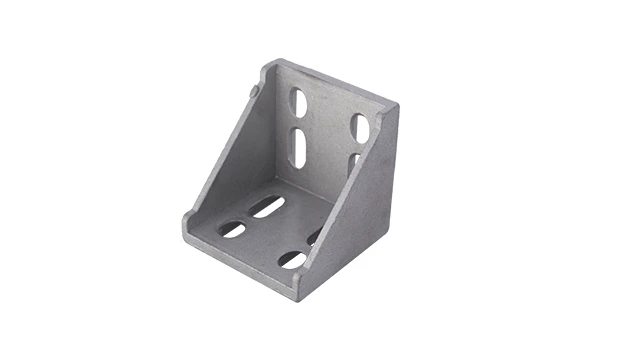
Gusset ALP 4040
The 4040 bracket/Gusset is an external fastening method that creates a 90 degree connection. 4040 means this size is used for 40 series aluminum profile with a quick connection by bolt and nut. It is a lightweight bracket that requires no machining servic
Walk into any busy warehouse, and you'll quickly realize it's more than just a storage space—it's a symphony of movement. Pallets glide, workers pick, conveyor belts hum, and at the center of this orchestration? Material flow. When materials move smoothly, orders ship on time, assembly lines stay fed, and the entire operation hums with efficiency. But when the flow stutters—whether from a jammed roller, a sagging rack, or a misaligned shelf—the whole rhythm falters. That's where flow racks come in: the unsung heroes of gravity-fed material handling. Yet even heroes need a little reinforcement. Enter the Gusset ALP 4040, a small but mighty component that transforms good flow racks into great ones, ensuring your warehouse's heartbeat never skips a beat.
The Backbone of Warehouse Flow: What Are Flow Racks?
Before we dive into the magic of Gusset ALP 4040, let's get to know the star of the show: flow racks. If you've ever wandered through a distribution center or manufacturing plant, you've probably seen them without realizing it. They're the inclined racks lined with roller tracks, where boxes, bins, or parts slide forward as the front item is removed—no motors, no buttons, just good old gravity doing the work. Think of them as the "self-service" of material handling: products are loaded from the back (the higher end) and picked from the front (the lower end), creating a continuous, first-in-first-out (FIFO) flow that keeps inventory fresh and accessible.
Flow racks shine in scenarios where speed and accuracy matter most. In e-commerce warehouses, they're used for picking small to medium-sized items, reducing the time workers spend walking between shelves. On assembly lines, they feed components to workers exactly when needed, cutting down on wait times. In retail backrooms, they organize stock so restocking shelves is a breeze. Their simplicity is their strength: fewer moving parts mean less maintenance, and their modular design makes them easy to customize for different products—from tiny electronics to bulky automotive parts.
But here's the catch: standard flow racks, while reliable, have their limits. Imagine loading a flow rack with heavy metal parts day in and day out. Over time, the weight can take a toll. The vertical supports might start to bow, the horizontal beams could sag, and the roller tracks—critical for smooth sliding—might misalign. Suddenly, that "self-service" flow becomes a hassle: items get stuck, workers have to manually push products forward, and worst-case, a rack could even collapse under the strain. These issues aren't just annoying; they're costly. Downtime, product damage, and worker injuries are all on the line when flow racks fail to keep up.
The Weak Link: Why Standard Flow Racks Struggle
To understand why reinforcement matters, let's peek under the hood of a typical flow rack. Most modern flow racks are built using aluminum profiles—lightweight, corrosion-resistant, and easy to assemble. These profiles form the vertical uprights and horizontal beams that make up the rack's frame. Roller tracks, often made of plastic or steel, are then mounted across the horizontal beams, creating the downward slope for materials to slide. The problem? The connection points between these aluminum profiles are often the weakest spots.
Think about it: every time you load a heavy bin onto the back of the rack, that weight transfers through the horizontal beam to the vertical upright. Over months (or years) of repeated loading, the bolts or brackets holding the beam to the upright can loosen. The aluminum profile itself, while strong, might flex under constant stress, causing the beam to tilt slightly. When that happens, the roller track—mounted to the beam—tilts too. Suddenly, instead of a smooth, even slope, you've got a roller track that dips or rises in the middle, turning a gravity-fed glide into a frustrating struggle. Items get stuck, workers waste time troubleshooting, and the rack's lifespan shrinks.
Another common issue? Overloading. Warehouses are dynamic places, and what starts as a rack for lightweight boxes might later be repurposed for heavier parts. Standard flow racks are rated for specific weight capacities, but without proper reinforcement, even staying within that rating can lead to wear and tear. The result? A rack that "works" but never quite works well —a silent drain on productivity that's easy to overlook until a bigger problem arises.
Enter Gusset ALP 4040: The Reinforcement Your Flow Racks Deserve
If flow racks are the backbone of material handling, then Gusset ALP 4040 is the spine strengthener. But what exactly is it? Let's break it down. "Gusset" refers to a triangular bracket used to reinforce joints—think of it as a supportive "corner brace" for structural connections. "ALP 4040" points to its design: it's made for 4040 aluminum profiles, one of the most common sizes in industrial racking (the numbers refer to the profile's width and height in millimeters: 40mm x 40mm). So, Gusset ALP 4040 is a specialized aluminum gusset plate engineered to beef up the connections between 4040 aluminum profiles in flow racks (and other structures, like workbenches or material racks).
At first glance, it might seem like just another bracket, but its design is cleverly tailored to the needs of flow racks. Made from high-grade aluminum, it's lightweight (so it doesn't add unnecessary bulk to the rack) but incredibly strong—resistant to bending and corrosion, even in humid warehouse environments. Its triangular shape is no accident, either: triangles are the most stable geometric shape, distributing weight evenly across the joint and preventing the kind of flexing that leads to sagging beams or tilted roller tracks.
Here's how it works: When building a flow rack, the horizontal beams (which hold the roller tracks) are attached to the vertical uprights using bolts or connectors. Without reinforcement, the force of the loaded materials pulls downward on the beam, creating stress at the connection point. The Gusset ALP 4040 is installed at this joint, bolted securely to both the vertical upright and the horizontal beam. Suddenly, that stress is spread across the gusset's surface area, rather than on a few bolts. It's like adding an extra layer of muscle to the rack's joints, turning a "weak link" into a "strong point."
How Gusset ALP 4040 Transforms Flow Rack Performance
Now that we know what Gusset ALP 4040 is, let's talk about the real-world difference it makes. We worked with a mid-sized electronics manufacturer in Ohio last year that was struggling with their flow racks. Their assembly line relied on a row of flow racks to feed circuit boards and small components to workers. Over time, the racks had started to sag in the middle, causing components to get stuck. Workers were spending 10-15 minutes per shift just pushing bins forward—a small delay, but multiplied across 8-hour shifts and 20 workers, it added up to hours of lost productivity each week. Worse, a few bins had fallen off the tilted roller tracks, damaging expensive components.
We suggested retrofitting their existing flow racks with Gusset ALP 4040 brackets at the beam-upright joints. The installation was quick—their maintenance team did it over a weekend—and the results were immediate. Within the first week, the workers reported zero stuck bins. The roller tracks stayed perfectly aligned, and the racks felt noticeably sturdier, even when loaded to capacity. Six months later, the plant manager told us they'd cut unplanned downtime by 40% and reduced component damage by nearly 70%. "It's like we got brand-new racks without replacing them," he said. That's the power of targeted reinforcement.
So, what exactly makes Gusset ALP 4040 so effective? Let's break down the benefits:
1. Enhanced Load Capacity
Standard flow racks with 4040 aluminum profiles can typically handle around 50-75 kg per linear meter of beam. With Gusset ALP 4040, that capacity jumps by 30-40%. Why? Because the gusset prevents the beam from bending at the joint, allowing it to carry more weight without stress. For warehouses dealing with heavy parts—like automotive or machinery components—this is a game-changer. You can load more per rack, reducing the number of racks needed and freeing up floor space.
2. Uninterrupted Roller Track Alignment
The roller track is the flow rack's "highway" for materials. If the track is misaligned, traffic jams happen. Gusset ALP 4040 keeps the horizontal beam rigid, so the roller track stays perfectly sloped. No more dips, no more tilts—just a smooth, consistent glide from back to front. This isn't just about speed; it's about predictability. Workers know exactly where items will be, reducing errors and frustration.
3. Longer Rack Lifespan
Aluminum profiles are durable, but repeated stress can fatigue the material over time, leading to cracks or permanent bending. By distributing weight evenly, Gusset ALP 4040 reduces that stress, extending the rack's lifespan by 2-3 times. For warehouses, this means lower replacement costs and less downtime for repairs. It's an investment that pays for itself in the long run.
4. Safety First
A sagging or unstable rack isn't just inefficient—it's dangerous. Loose beams or misaligned tracks can lead to falling items, which risk worker injuries or product damage. Gusset ALP 4040 adds a critical layer of stability, giving workers confidence that the rack can handle the load. In fact, OSHA (Occupational Safety and Health Administration) guidelines emphasize the importance of reinforced joints in material handling equipment, and Gusset ALP 4040 helps warehouses meet those standards with ease.
Beyond the Gusset: How Roller Tracks and Aluminum Profiles Play a Role
While Gusset ALP 4040 is the star reinforcement, it doesn't work alone. Flow racks are a team effort, and two other key players deserve a shoutout: roller tracks and aluminum profiles. Let's start with roller tracks. These are the "runways" that materials slide along, and their design matters just as much as the rack's frame. Most modern roller tracks use plastic or steel rollers mounted on a rail, with spacing optimized to prevent small items from getting stuck. When paired with a reinforced frame (thanks to Gusset ALP 4040), roller tracks perform at their best—no more wobbling or misalignment, just consistent, friction-free movement.
Then there's the aluminum profile itself. 4040 aluminum profiles are popular for a reason: they're lightweight, easy to cut and drill, and compatible with a wide range of accessories (like brackets, shelves, and roller track mounts). They're also corrosion-resistant, which is a big plus in warehouses with temperature or humidity fluctuations. When combined with Gusset ALP 4040, the aluminum profile's natural strength is amplified. The gusset ensures the profile isn't just holding weight—it's distributing it, turning a simple extrusion into a robust structural element.
Together, these three components—Gusset ALP 4040, roller tracks, and aluminum profiles—form a "dream team" for flow rack performance. It's like building a house: the aluminum profiles are the walls, the roller tracks are the floors, and the gusset is the foundation that keeps everything stable, even when the going gets heavy.
Traditional vs. Reinforced Flow Racks: A Side-by-Side Comparison
Curious how much of a difference Gusset ALP 4040 really makes? Let's put standard flow racks and reinforced ones head-to-head:
| Feature | Standard Flow Racks (Without Gusset ALP 4040) | Reinforced Flow Racks (With Gusset ALP 4040) |
|---|---|---|
| Weight Capacity (per linear meter) | 50-75 kg | 70-105 kg (30-40% increase) |
| Roller Track Alignment | Prone to tilting/sagging over time | Maintains alignment for years |
| Maintenance Frequency | Quarterly tightening of bolts; annual roller adjustments | Bi-annual inspections; minimal adjustments needed |
| Lifespan | 3-5 years (with heavy use) | 7-10 years (with heavy use) |
| Worker Productivity | 10-15% time lost to stuck items/downtime | 2-5% time lost (mostly planned maintenance) |
| Safety Risk | Higher risk of beam flexing or bolt failure | Significantly reduced risk; OSHA-compliant reinforcement |
The numbers speak for themselves: reinforced flow racks aren't just "better"—they're a smarter investment. The upfront cost of adding Gusset ALP 4040 is quickly offset by reduced downtime, lower maintenance costs, and longer rack lifespan. For warehouses looking to scale or improve efficiency, it's a no-brainer.
Real-World Impact: How Lean Systems Benefit from Reinforced Flow Racks
In the world of warehouse management, "lean" is more than just a buzzword—it's a philosophy focused on eliminating waste, streamlining processes, and maximizing value. Lean systems thrive on efficiency, and nothing derails efficiency like a bottleneck in material flow. That's why reinforced flow racks with Gusset ALP 4040 are a perfect fit for lean operations.
Consider a lean manufacturing plant that uses just-in-time (JIT) production. In JIT, materials arrive exactly when they're needed—no excess inventory, no wasted space. If a flow rack feeding the assembly line jams, the line stops. With reinforced flow racks, that risk is minimized. The consistent, reliable flow ensures workers always have what they need, when they need it, cutting down on "wait time" waste. It's lean in action: small investments in reinforcement lead to big gains in process stability.
Another example: a third-party logistics (3PL) provider handling e-commerce orders. During peak seasons (think Black Friday or holiday rushes), their warehouses are a flurry of activity. Every second counts, and a stuck bin on a flow rack can mean the difference between meeting a delivery deadline and disappointing a customer. By reinforcing their flow racks with Gusset ALP 4040, they've turned a potential weak spot into a strength, ensuring even during the busiest times, the flow never stops.
Installation and Maintenance: Keeping Your Reinforced Flow Racks in Top Shape
So, you're sold on Gusset ALP 4040—now what? Installing it is easier than you might think. Most flow rack manufacturers design their products to be compatible with standard gusset brackets, and Gusset ALP 4040 is no exception. If you're building a new rack, simply bolt the gusset to the 4040 aluminum profile joints during assembly. If you're retrofitting existing racks, you'll need to remove the existing bolts, position the gusset, and re-bolt everything securely. A basic wrench set and a level are all you need—no special tools required.
Pro tip: When installing, make sure the gusset is flush against both the vertical and horizontal profiles. A small gap can reduce its effectiveness, so take the time to align it properly. Also, use the right bolts—most aluminum profiles use M6 or M8 bolts, and using high-strength steel bolts (rated for at least 8.8 tensile strength) ensures a secure fit.
As for maintenance? Reinforced flow racks are low-maintenance, but they're not "no-maintenance." Here's a quick checklist to keep them running smoothly:
- Monthly inspections: Check that gusset bolts are tight (no wobbling or looseness). Tighten any that have come loose with a wrench.
- Quarterly roller checks: Ensure roller tracks are clean (no debris blocking rollers) and that rollers spin freely. Lubricate with a dry lubricant (like silicone spray) if needed.
- Semi-annual load tests: Periodically load the rack to its maximum capacity and check for sagging or misalignment. If you notice any issues, re-tighten gusset bolts or adjust roller track mounts.
- Annual deep clean: Wipe down aluminum profiles and gussets to remove dust or grime, which can hide signs of wear. Inspect for corrosion (unlikely with aluminum, but better safe than sorry).
By following these steps, your reinforced flow racks will stay in top shape for years, keeping your material flow smooth and your warehouse efficient.
The Future of Flow Racks: Why Reinforcement is Here to Stay
Warehouses are evolving. With the rise of e-commerce, automation, and AI-driven inventory management, the demand for faster, more reliable material handling is only growing. Flow racks, once a "nice-to-have," are now a "must-have" for operations looking to keep up. And as loads get heavier, racks get taller, and expectations get higher, reinforcement will become standard—not optional.
Gusset ALP 4040 is just the beginning. As manufacturers innovate, we'll see even smarter reinforcement solutions—maybe gussets with built-in sensors to alert managers when bolts loosen, or lightweight carbon fiber options for ultra-heavy loads. But for now, Gusset ALP 4040 stands out as a simple, cost-effective way to future-proof your flow racks. It's not just about fixing problems—it's about preventing them, ensuring your warehouse is ready for whatever the future throws its way.
Final Thoughts: Smooth Flow, Stronger Results
At the end of the day, a warehouse's success hinges on its ability to move materials efficiently. Flow racks are the workhorses of this process, but they can't do it alone. Gusset ALP 4040 is the quiet partner that ensures these workhorses stay strong, reliable, and ready for action. It's a small component with a big impact—reducing downtime, boosting productivity, and keeping workers safe.
So, whether you're building a new warehouse, upgrading existing racks, or just looking to squeeze more efficiency out of your operation, don't overlook the power of reinforcement. Invest in Gusset ALP 4040, pair it with quality roller tracks and aluminum profiles, and watch as your material flow transforms from "good enough" to "great." After all, in the world of warehouses, smooth flow isn't just a goal—it's the key to success.