- Company Articles
- Products and Technology
- Product knowledge
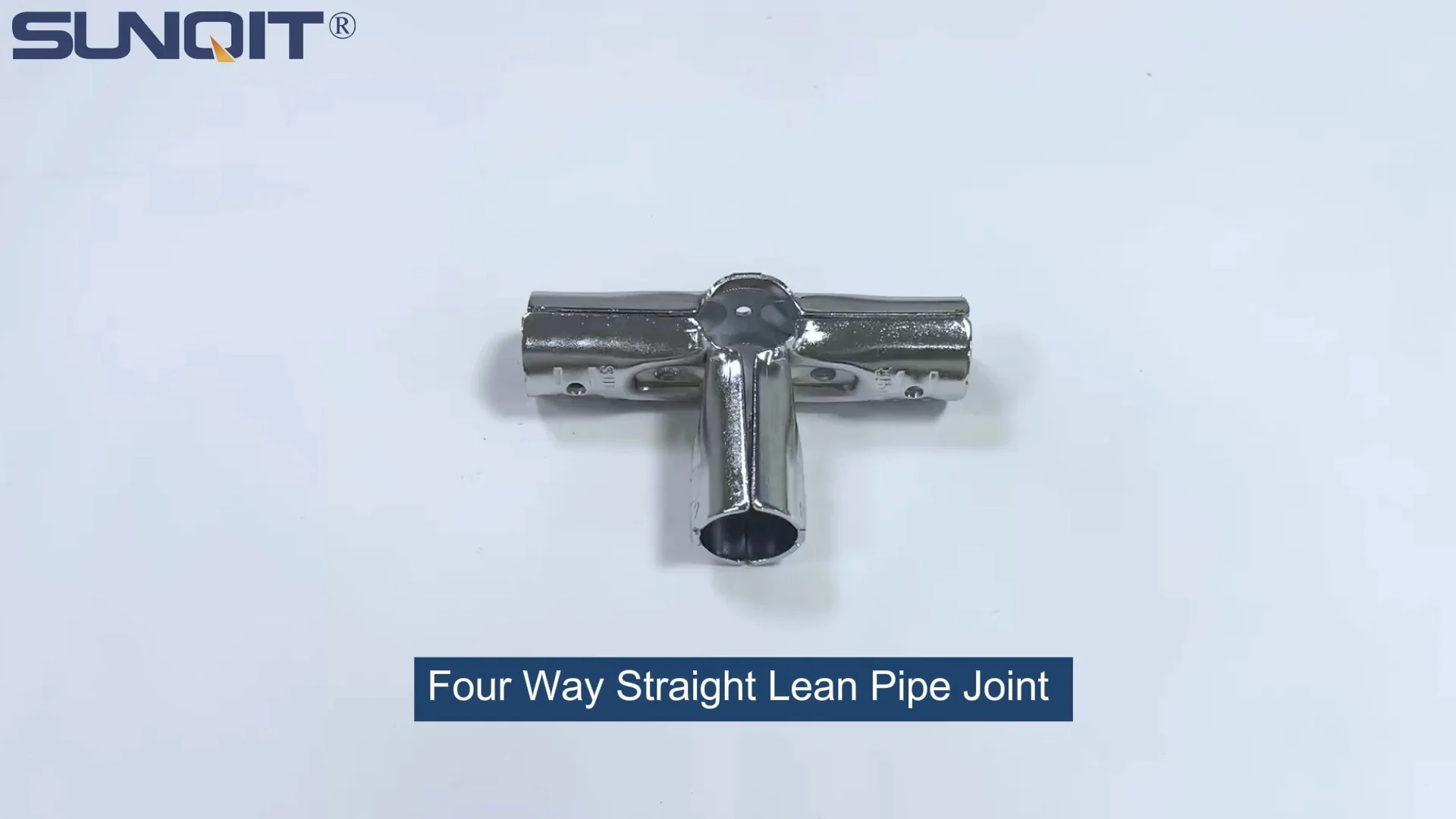
- Four Way Straight Lean Pipe Joint Chrome for Home Appliance Assembly Lines

Four Way Straight Lean Pipe Joint Chrome for Home Appliance Assembly Lines
Related Product
Four Way Straight Lean Pipe Joint Chrome
Four way lean pipe joint for 4 pcs 28MM lean pipe connection in straight angle, which used widely in workbench, flow rack, hand trolley frame connection.
Walk into any home appliance factory, and you'll hear the hum of progress: the whir of conveyor belts, the clink of metal parts, and the steady rhythm of workers assembling everything from sleek refrigerators to compact microwaves. But behind that harmony lies a hidden challenge: keeping up with the demands of modern manufacturing. Product cycles get shorter, customization requests pile up, and assembly lines must adapt—fast. That's where the unsung hero of the factory floor comes in: the four way straight lean pipe joint chrome . It's a small component, but its impact? Monumental. Let's dive into how this unassuming joint keeps home appliance assembly lines running smoother, smarter, and more human-centered than ever before.
What Is the Four Way Straight Lean Pipe Joint Chrome, Anyway?
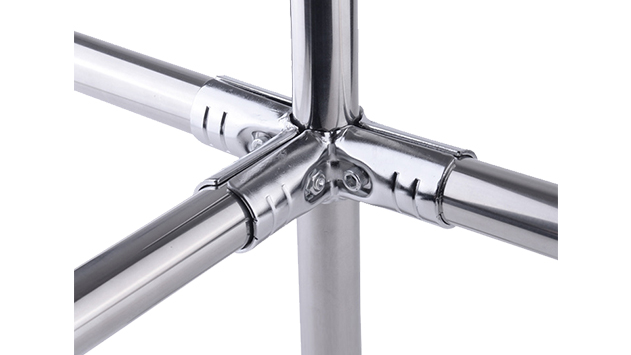
At first glance, it might look like just another metal piece in a sea of factory hardware. But the four way straight lean pipe joint chrome is engineered for a specific, critical purpose: connecting lean pipes (or aluminum profiles, or roller tracks) in four directions—up, down, left, right—with zero fuss. Picture a central hub with four openings, each designed to grip a pipe snugly, no welding or complex tools required. The "chrome" in its name isn't just for aesthetics; that shiny finish is a tough, corrosion-resistant coating that stands up to the daily chaos of the factory floor—think oil spills, humidity, and the occasional bump from a turnover trolley.
But why does direction matter? In home appliance assembly, no two workstations are the same. A line assembling washing machine drums needs sturdy, vertical supports; a station packing small parts might require horizontal shelves; a conveyor junction might need pipes branching off at odd angles. The four-way joint eliminates the need for multiple adapters or custom-fabricated parts. It's the Swiss Army knife of pipe connections, letting teams build, adjust, and rebuild structures in hours instead of days.
The Lean Manufacturing Dream: Flexibility Without Compromise
Lean manufacturing isn't just a buzzword—it's a promise to workers and customers alike: do more with less waste, and adapt faster than the competition. The four way straight lean pipe joint chrome lives and breathes this promise. Let's break down how it transforms assembly lines into lean, mean, problem-solving machines.
1. From Rigid to Rapid: Reconfiguring Workstations in a Snap
Maria, a line supervisor at a mid-sized appliance factory, remembers the old days. "When we launched our new line of energy-efficient refrigerators, we had to shut down the assembly floor for three days. The old steel frames were welded in place, so we had to cut them apart and weld new ones. It was chaos—workers were idled, deadlines loomed, and the fumes from the torches made the air thick." Then her team switched to lean pipe systems, anchored by four-way joints. "Last month, we retooled the same line for a new fridge model in four hours. No welding, no fumes, just a few wrenches and some elbow grease. The workers even helped—they know the joint inside out now. They'll say, 'Hey, let's move this shelf up six inches to make room for the new compressor.' And we do it on the spot."
That's the magic of modularity. With the four-way joint, a lean pipe workbench that once held microwave control panels can, by swapping a few pipes, become a station for testing dishwasher valves. The joint's grip is tight enough to support heavy loads (we're talking hundreds of pounds) but loose enough to adjust when needed. It turns static workspaces into living, breathing systems that evolve with the product.
2. Flow Racks That Keep Up with Demand
Ever wonder how parts move from the warehouse to the assembly line without getting stuck? Enter flow racks —slanted shelves with roller tracks that let bins of screws, gaskets, and circuit boards glide right to workers' fingertips. But flow racks are only as good as their connections. A wobbly joint can slow the flow, causing jams and delays. The four-way joint, paired with roller track connectors , ensures every section of the rack aligns perfectly. "We used to have a problem with bins getting stuck halfway down the roller track," says Raj, a material handler. "The old plastic joints would warp under the weight, making the track uneven. Now, with the chrome four-way joints, the track stays level, even when we stack three rows of heavy motor parts. The bins glide like they're on ice—no more bending over to free stuck parts. My back thanks me every day."
3. Conveyors That Connect, Not Confine
Conveyor systems are the arteries of the assembly line, carrying everything from raw metal sheets to nearly finished ovens. But when a conveyor needs to turn, split, or rise to a different level, traditional fixed joints create bottlenecks. The four-way joint changes that. By connecting conveyor sections at precise angles, teams can route parts exactly where they're needed—even around corners or up to mezzanine levels. And if a new product is taller or wider? Just adjust the joint, add a few more aluminum profile supports, and the conveyor adapts. No need for expensive custom conveyor belts; just good old-fashioned modularity.
Built to Last: Durability That Saves More Than Time
Let's talk about the "chrome" in the joint's name. Chrome plating isn't just for show—it's a armor. Factories are tough places: oils from machinery, moisture from steam cleaning, and even accidental scrapes from turnover trolleys can corrode unprotected metal. The four-way joint's chrome layer acts as a barrier, preventing rust and extending the joint's life by years. Compare that to plastic joints, which crack under heavy loads, or uncoated steel joints, which rust and seize up. "We used to replace plastic joints every six months," says Tom, a maintenance technician. "Now, the chrome ones? I've had some in service for three years, and they still spin smoothly. We just wipe them down with a rag during weekly checks—no special treatments needed."
But durability isn't just about saving money on replacements. It's about safety. A failed joint can send a shelf crashing down, risking injury to workers or damage to expensive parts. The four-way joint's steel core (chromed for extra strength) is rated to handle up to 500 pounds per connection—more than enough for even the heaviest appliance parts. And because it's tightened with a simple hex key, there's no guesswork: "righty-tighty" until it's snug, and you're good to go. No over-tightening, no stripped threads—just reliable, consistent performance.

Beyond the Joint: Building a System That Works Together
The four way straight lean pipe joint chrome is a star, but even stars need a supporting cast. Here's how it plays nice with other factory essentials, creating a seamless system:
| Component | How It Works with the Four-Way Joint | Real-World Benefit |
|---|---|---|
| Lean Pipe / Aluminum Profile | Snaps into the joint's openings, secured by a set screw. | Build custom workbenches, racks, or trolleys in any shape. |
| Roller Track & Connectors | Attaches to the joint via specialized brackets, creating smooth material flow. | Bins glide from storage to workstation without manual lifting. |
| Casters & Wheels | Mounted to the joint via a caster adapter, adding mobility to workbenches. | Move entire workstations to new locations in minutes. |
| ESD Workstation Panels | Supported by aluminum profile frames built with four-way joints, grounding static electricity. | Protects sensitive electronics (like oven control boards) from static damage. |
Take the aluminum profile , for example. Lightweight but strong, aluminum profiles are perfect for building overhead shelves or side guards on workstations. The four-way joint connects them to lean pipes effortlessly, creating hybrid structures that combine the best of both materials. Or consider roller track: by attaching roller track sections to the joint, teams can build flow racks that tilt at just the right angle, letting gravity do the work of moving parts. No more lifting heavy bins—just a gentle push, and the parts glide to the worker.
The Human Touch: Making Workstations Work for People
At the end of the day, assembly lines are about people. Workers spend hours at their stations, and small discomforts add up—an awkwardly placed shelf, a workstation that's too low, a bin that's hard to reach. The four way straight lean pipe joint chrome doesn't just make lines more efficient; it makes them more human. "I used to have to hunch over my workstation because the shelf was too low," says Priya, an assembler who works on blender motors. "My back hurt so bad I'd go home exhausted. Then we used the four-way joints to raise the shelf by eight inches. Now I stand straight, and my back feels great. I can focus on my work instead of the pain."
Supervisors love it too. When workers can adjust their own stations, morale skyrockets. "It gives them ownership," Maria says. "They're not just following orders—they're designing their workspace to be better. That pride translates to better quality work. Defects on my line dropped 15% after we switched to these joints. Coincidence? I don't think so."
Why Choose the Four Way Straight Lean Pipe Joint Chrome? (Spoiler: It's Not Even Close)
There are other pipe joints out there—two-way, three-way, plastic, uncoated steel. So why is the four-way chrome joint the go-to for home appliance factories? Let's stack them up:
- Two-way joints: Only connect two pipes. Great for straight lines, useless for branching structures.
- Three-way joints: Better than two-way, but still limited. No vertical/horizontal flexibility.
- Plastic joints: Cheap upfront, but crack under heavy loads and warp in heat. Not factory-tough.
- Uncoated steel joints: Strong, but rust quickly in humid environments. Require frequent maintenance.
The four-way chrome joint? It's the only one that offers four-directional connectivity, chrome durability, and tool-free adjustment. It's an investment that pays off in less downtime, fewer replacements, and happier workers. As Raj puts it: "Why buy three different joints when one four-way can do the job? It's common sense."
The Future of Assembly Lines: Small Parts, Big Impact
Home appliance factories aren't slowing down. Customers want smarter, more customizable products, and manufacturers need to deliver. The four way straight lean pipe joint chrome isn't just keeping up—it's leading the charge. As factories adopt "agile manufacturing" (think: building small batches of custom appliances quickly), modular systems built with these joints will become even more critical. And with sustainability on everyone's mind, the joint's reusability is a win: instead of scrapping old welded frames, teams can disassemble, reconfigure, and reuse the joints and pipes for new projects. Less waste, more value.
So the next time you unbox a new oven or plug in a dishwasher, take a moment to appreciate the little things—the components that don't make it into the product specs but make the product possible. The four way straight lean pipe joint chrome is one of those things: a small, shiny, hardworking hero keeping the assembly line moving, the workers smiling, and the appliances coming off the line better than ever.
In the end, it's not just about pipes and joints. It's about building systems that respect the people who use them—systems that adapt, endure, and make every day on the factory floor a little easier. And that's the real power of the four way straight lean pipe joint chrome.