- Company Articles
- Products and Technology
- Product knowledge
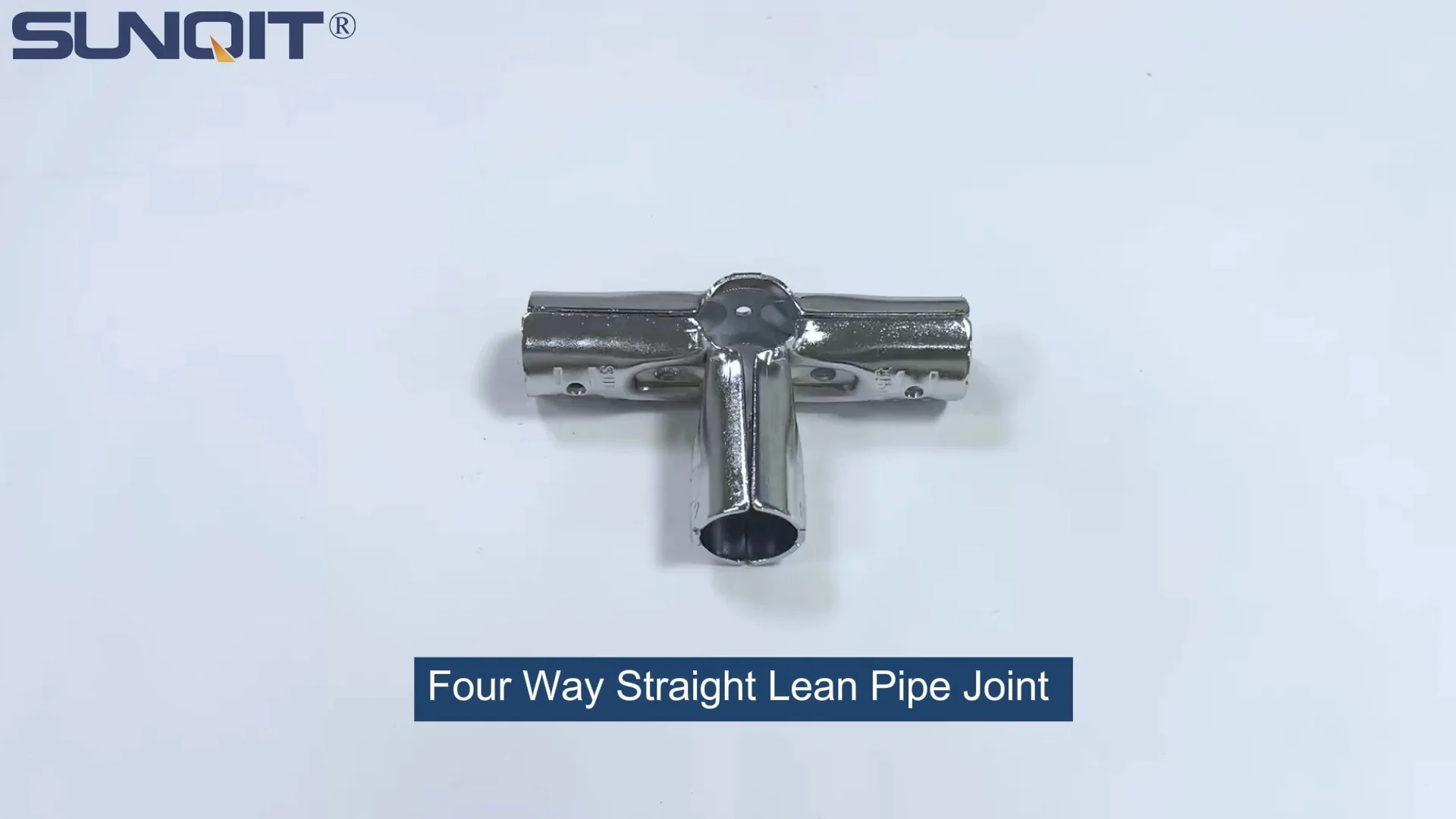
- Four Way Straight Lean Pipe Joint Chrome for Mechanical Manufacturing Assembly Lines

Four Way Straight Lean Pipe Joint Chrome for Mechanical Manufacturing Assembly Lines
Related Product
Four Way Straight Lean Pipe Joint Chrome
Four way lean pipe joint for 4 pcs 28MM lean pipe connection in straight angle, which used widely in workbench, flow rack, hand trolley frame connection.
Imagine walking through the heart of a bustling mechanical manufacturing plant. The air hums with the rhythmic clink of metal, the steady whir of conveyor belts, and the focused chatter of workers piecing together components that will eventually become part of a car, a refrigerator, or a high-tech gadget. Every second counts here. A delay in one workstation can ripple through the entire line, disrupting deadlines and eating into profits. In this world of precision and pace, the difference between a smooth, efficient operation and a chaotic, error-prone one often comes down to the smallest details—like the joints that hold the assembly line's infrastructure together.
Today, we're shining a spotlight on one such unsung hero: the Four Way Straight Lean Pipe Joint Chrome . It might not have the flash of a robotic arm or the complexity of a computerized control system, but this unassuming component plays a pivotal role in keeping assembly lines flexible, durable, and ready to adapt to the ever-changing demands of modern manufacturing. Whether you're building a lean pipe workbench for intricate electronics assembly, a flow rack to streamline material handling, or a roller track to move products seamlessly between stations, this joint is the quiet workhorse that ensures everything stays connected—literally and figuratively.
What Exactly Is the Four Way Straight Lean Pipe Joint Chrome?
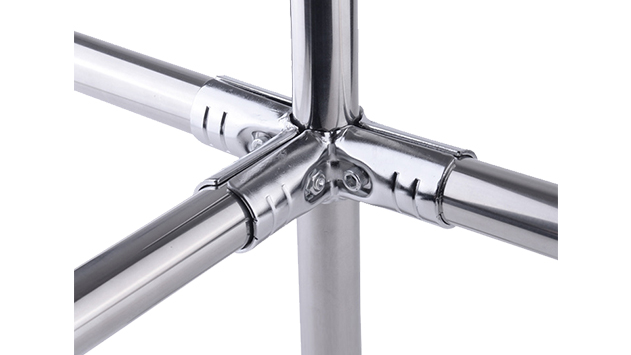
Let's start with the basics. At its core, the Four Way Straight Lean Pipe Joint Chrome is a specialized connector designed to join lean pipes (also known as or "lean tubes") in four directions—up, down, left, and right. Picture a small, sturdy cube with threaded holes or clamping mechanisms on four sides, each engineered to grip a lean pipe securely. What sets this joint apart, though, is its chrome plating—a finish that adds both functionality and longevity to an already essential tool.
Most lean pipe joints are made from steel, and the chrome coating takes that durability a step further. Chrome isn't just for shine (though it does give the joint a clean, professional look); it's a barrier against corrosion, rust, and wear. In manufacturing environments where spills, humidity, or exposure to oils and chemicals are common, this protective layer ensures the joint maintains its grip and structural integrity over time. That means less frequent replacements, fewer unexpected breakdowns, and more consistent performance from the structures it supports.
But the real genius of the four-way straight design lies in its versatility. Unlike fixed-angle joints (like a 90-degree elbow) or two-way straight joints, which limit you to linear or right-angle connections, the four-way straight joint lets you branch out in multiple directions from a single point. Think of it as a central hub: attach a pipe going north, another south, east, and west, and suddenly you've got the framework for a multi-level workbench, a multi-tiered flow rack, or a complex roller track system that can route products in different directions without requiring additional support structures.
Breaking Down the Design: More Than Just a "Connector"
To truly appreciate this joint, let's dive into its design details. Most four-way straight lean pipe joints are engineered with a few key features in mind: grip strength, ease of assembly, and reusability—all hallmarks of lean manufacturing principles.
First, the grip. A loose joint is a dangerous joint, especially in environments where heavy tools, materials, or products are being moved around. These joints typically use a clamping mechanism—often a setscrew or a bolt that tightens against the lean pipe—to create a friction fit. When properly installed, the chrome-plated steel jaws bite into the pipe's surface (whether it's a standard PE-coated lean pipe, aluminum lean pipe, or stainless steel pipe), ensuring zero slippage even under load. Some models even include rubberized or textured inner surfaces to enhance grip further, making them ideal for applications where vibration (from nearby machinery, for example) might otherwise loosen connections over time.
Second, ease of assembly. In lean manufacturing, time is money, and no one has the luxury of fumbling with complicated tools or spending hours setting up a single workstation. The four-way straight joint is designed for quick, tool-based installation—usually requiring nothing more than a hex key or a wrench to tighten the clamping screws. This means workers on the factory floor can assemble, disassemble, or reconfigure structures in minutes, not hours. Need to adjust the height of a workbench? Swap out a pipe. Want to add a new shelf to a flow rack? Attach a new pipe to the four-way joint. It's that simple.
Third, reusability. Lean manufacturing isn't just about efficiency—it's about sustainability, too. Unlike welded joints or glued connections, which are permanent and often damaged when taken apart, the four-way straight lean pipe joint is reusable. If a project is completed, or a workstation needs to be repurposed, you can simply loosen the screws, remove the pipes, and reuse the joint in another structure. This reduces waste, cuts down on material costs, and aligns with the "reduce, reuse, recycle" ethos that modern manufacturers strive for.
Why Chrome? The Benefits of a Chrome-Plated Finish
We've mentioned the chrome plating a few times, but it's worth exploring why this finish is such a critical feature for manufacturing environments. Let's face it: factories are tough places for metal components. Between moisture, chemicals, physical abrasion, and even human error (like accidental bumps with a forklift or tool), unprotected steel joints would quickly show signs of wear. Chrome plating addresses these challenges head-on.
Corrosion resistance is the biggest advantage. Chrome forms a thin, hard oxide layer on the surface of the steel, which acts as a shield against water, humidity, and corrosive substances like oils, coolants, or cleaning agents. In a plant where a spill of hydraulic fluid or a damp morning could spell disaster for uncoated metal, this layer ensures the joint remains structurally sound for years. That's a big deal for manufacturers looking to extend the lifespan of their equipment and avoid the cost of frequent replacements.
Then there's durability. Chrome is one of the hardest metal finishes available, ranking high on the Mohs scale of hardness. This means the joint can withstand scratches, dents, and impacts better than unplated steel or even painted alternatives. If a worker accidentally drops a tool on the joint, or a pallet rubs against it during material handling, the chrome finish is far less likely to chip or peel, maintaining its protective properties and aesthetic appeal.
And let's not overlook the practicality of a smooth, easy-to-clean surface. Manufacturing plants prioritize cleanliness—especially in industries like food processing, pharmaceuticals, or electronics assembly, where contamination risks are high. Chrome's non-porous surface doesn't trap dirt, grime, or bacteria, making it simple to wipe down with a cloth or disinfectant. This not only keeps the workplace hygienic but also prevents buildup that could eventually compromise the joint's performance (like debris getting stuck in the clamping mechanism).
The Role of the Four Way Joint in Lean Manufacturing Systems
Lean manufacturing is all about eliminating waste—whether that's wasted time, wasted materials, or wasted space. Modular, flexible infrastructure is the backbone of this philosophy, and the Four Way Straight Lean Pipe Joint Chrome is a poster child for how small components enable big efficiency gains. Let's explore how it fits into key lean systems and why manufacturers (and lean system suppliers) swear by it.
1. Building Adaptable Lean Pipe Workbenches
A lean pipe workbench is more than just a table—it's a command center for workers. It needs to hold tools, parts bins, computers, and sometimes even small machinery, all while keeping everything within arm's reach to minimize movement (a major source of waste in lean terms). The four-way straight joint is instrumental in creating these workbenches because it allows for customization that fixed furniture simply can't match.
Consider a scenario: A manufacturer shifts from assembling small circuit boards to larger automotive components. The old workbench, with its single shelf and fixed height, is suddenly too small and too low. With a four-way joint-based workbench, though, the solution is straightforward. Loosen the joints, add taller pipes to raise the surface, attach new horizontal pipes to create upper shelves for larger tools, and maybe even add a side extension using the fourth connection point to hold a parts bin. An hour later, the workbench is ready for the new task—no need to buy a brand-new bench, no downtime waiting for delivery, and no waste from discarding the old one.
What's more, these workbenches can evolve with the workers using them. Left-handed assemblers might need tools on the right side; right-handed ones on the left. With four-way joints, shelves, tool hooks, or monitor mounts can be repositioned in minutes, ensuring ergonomic comfort and reducing the risk of repetitive strain injuries. Over time, this adaptability translates to happier, more productive workers—and a workforce that feels valued, since their needs are being met.
2. Streamlining Material Flow with Flow Racks
In just-in-time (JIT) manufacturing, getting the right materials to the right workstation at the right time is critical. Flow racks (also known as gravity-fed racks) are designed to do exactly that: they use inclined roller tracks to let materials slide forward as items are removed, ensuring the next part is always at the front, ready to be used. The four-way straight joint is the unsung hero here, providing the structural support needed to build multi-lane, multi-level flow racks that maximize vertical space and keep materials organized.
Imagine a flow rack for automotive parts: brake pads, rotors, and calipers all need separate lanes to avoid mixing. With a four-way joint, you can build a rack with vertical pipes spaced evenly apart, then attach horizontal roller tracks (using the joint's side connections) to create individual lanes. Need to add a third level for smaller components? Use the top connection point of the four-way joint to stack another set of tracks. The chrome finish ensures that even if oil from the parts drips onto the joints, they won't rust, keeping the rack stable and safe for years.
Flow rack suppliers often recommend four-way joints for high-density storage because they reduce the need for extra support columns. Instead of building a separate frame for each level, you can connect all levels through a central set of four-way joints, saving space and cutting down on material costs. It's a win-win: more storage in less square footage, and a structure that can be reconfigured if production needs change (like adding a new part number that requires its own lane).
3. Routing Products with Precision Using Roller Tracks
Roller tracks are the highways of the assembly line, moving products from one station to the next with minimal effort. But not all routes are straight—sometimes products need to split into different lines, merge from multiple stations, or move up and down between levels. The four-way straight joint makes these complex routing systems possible by acting as a junction point where tracks can diverge or converge.
For example, in a electronics manufacturing plant, a main roller track might carry circuit boards to a testing station. From there, passing boards go straight to packaging, while failed ones need to be routed to a repair station. Using a four-way joint, you can split the main track: one straight path continues to packaging, another (connected via the joint's side port) angles off to repair. The joint's rigidity ensures the tracks stay aligned, so boards don't get stuck or jam—a common issue with poorly supported roller tracks. And if the repair station moves to a new location? Simply reposition the joint and reattach the track—no need to replace the entire system.

Comparing Lean Pipe Joints: Why Four-Way Straight Stands Out
Not all lean pipe joints are created equal. From two-way straight to three-way, 90-degree, and swivel joints, each has its niche. To understand why the four-way straight joint is so valuable, let's compare it to other common types. The table below breaks down key factors like load capacity, flexibility, and best-use scenarios:
| Joint Type | Number of Connections | Typical Load Capacity (Per Joint) | Flexibility (Reconfiguration Ease) | Best For |
|---|---|---|---|---|
| Four Way Straight Lean Pipe Joint Chrome | 4 (up, down, left, right) | 200-300 kg (depending on pipe size) | High – supports multi-directional reconfigurations | Multi-level workbenches, flow racks, complex roller track junctions |
| Three Way Lean Pipe Joint | 3 (e.g., up, left, right) | 150-250 kg | Medium – limited to three directions | Simple shelves, two-tier workbenches |
| 90-Degree Fixed Lean Pipe Joint | 2 (perpendicular directions) | 100-200 kg | Low – fixed angle, no branching | Right-angle corners in frames, simple tables |
| 180-Degree Swivel Lean Pipe Joint | 2 (straight line, swivels 180°) | 100-150 kg (lower due to swivel mechanism) | Medium – good for adjustable angles, but limited directions | Tilting work surfaces, adjustable shelving angles |
As the table shows, the four-way straight joint excels in scenarios where flexibility and load capacity matter most. Its ability to support four connections without sacrificing strength makes it ideal for complex, multi-functional structures—exactly the kind modern manufacturers need to stay competitive.
Integration with Other Lean Components: A System, Not Just a Joint
No component exists in a vacuum, and the Four Way Straight Lean Pipe Joint Chrome is no exception. Its true power shines when paired with other lean pipe accessories and components, creating a cohesive system that can tackle almost any manufacturing challenge. Let's take a look at some key pairings and how they enhance the joint's functionality.
Lean Pipes: The Foundation of the System
The joint is only as strong as the pipes it connects. Most manufacturers use either PE-coated steel lean pipes (1.2mm, 1.5mm, or 2.0mm thick), aluminum lean pipes, or stainless steel pipes, depending on the application. PE-coated pipes are cost-effective and resistant to scratches, making them great for general use. Aluminum pipes are lighter, which is ideal for structures that need to be moved (like mobile workbenches with casters). Stainless steel pipes, on the other hand, are perfect for cleanrooms or food processing, where hygiene is critical.
The four-way joint works seamlessly with all these pipe types, thanks to its adjustable clamping mechanism. Whether you're using a 28mm diameter PE pipe or a 30mm aluminum pipe, the joint's screws can be tightened to grip securely, ensuring a stable connection. Lean pipe suppliers often bundle joints with compatible pipes and accessories, making it easy for manufacturers to get everything they need in one order.
Roller Tracks and Accessories: Keeping Products Moving
Earlier, we mentioned roller tracks as a key application for four-way joints, but it's worth diving deeper into how these two components work together. Roller tracks (like the 40 steel roller track or 38 aluminum roller track) consist of a series of wheels mounted on a rail, allowing products to glide smoothly with minimal friction. To attach these tracks to a frame, you need a stable connection point—and that's where the four-way joint comes in.
For example, to build a flow rack with three levels of roller tracks, you'd use vertical pipes connected by four-way joints at each level. The horizontal roller tracks then bolt or clamp onto the side ports of the four-way joints, creating a sturdy, inclined surface for materials to slide down. Accessories like roller track placon mounts (which secure the track to the joint) and end supports (to prevent the track from sagging under load) further enhance this setup, ensuring the track stays aligned and functional even with heavy use.
Casters and Accessories: Mobility When You Need It
Not all structures need to be stationary. Mobile workbenches, turnover trolleys, and portable material racks rely on casters (wheels) to move freely around the factory floor. The four-way joint plays a role here, too, by providing a stable base to attach caster mounting plates or caster install bases. By using the bottom connection port of the joint, you can securely fasten casters to the legs of a workbench or trolley, ensuring the structure moves smoothly without wobbling—even when loaded with tools or materials.
Caster accessories like brakes (to lock the trolley in place during use) or swivel locks (to keep it moving in a straight line) can also be integrated, with the four-way joint providing the necessary support to handle the added stress of frequent movement and stopping.
Choosing the Right Lean System Supplier: Why Quality Matters
A four-way straight lean pipe joint might seem simple, but not all joints are created equal. The difference between a high-quality joint and a cheap knockoff can be the difference between a structure that lasts 10 years and one that fails after six months. That's why choosing a reputable lean system supplier is just as important as choosing the right joint design.
So, what should you look for in a supplier? First, material quality. The best joints are made from high-grade steel with a thick, uniform chrome plating (at least 0.0005 inches thick) to ensure corrosion resistance and durability. Avoid suppliers that use thin steel or skip the chrome plating, as these joints will bend, rust, or fail under load.
Second, testing and certification. Reputable suppliers test their joints for load capacity, grip strength, and wear resistance, often publishing the results. Look for suppliers that meet industry standards (like ISO 9001) for quality management—this is a sign they take consistency seriously.
Third, range of accessories. A good supplier won't just sell you a joint; they'll offer the full ecosystem of pipes, casters, roller tracks, and other components you need to build a complete system. This saves you time and ensures all parts are compatible, reducing the risk of mismatched components that could weaken your structure.
Finally, technical support. Even the best components can be tricky to assemble correctly. A supplier with knowledgeable staff who can answer questions, provide assembly guides, or even send a technician for on-site help can make a big difference in how quickly and effectively you can implement your lean system.
The Bottom Line: Small Joint, Big Impact
In the grand scheme of manufacturing, the Four Way Straight Lean Pipe Joint Chrome might seem like a minor detail. But as we've explored, it's a detail that ripples through the entire operation—enabling flexible workstations, streamlining material flow, reducing waste, and keeping assembly lines running smoothly. It's a testament to the lean manufacturing philosophy that even the smallest components can drive big improvements in efficiency, productivity, and profitability.
Whether you're a small factory just starting to adopt lean principles or a large manufacturer looking to upgrade your existing infrastructure, investing in high-quality four-way joints (and the right supporting components) is a decision that pays off in the long run. So the next time you walk through a manufacturing plant, take a moment to look at the workbenches, flow racks, and roller tracks around you—chances are, there's a four-way straight lean pipe joint chrome holding it all together, quietly doing its job to keep the world of manufacturing moving forward.