- Company Articles
- Products and Technology
- Product knowledge
- Four Way Straight Lean Pipe Joint Chrome: Heat Resistance and Temperature Limits

Four Way Straight Lean Pipe Joint Chrome: Heat Resistance and Temperature Limits
Related Product
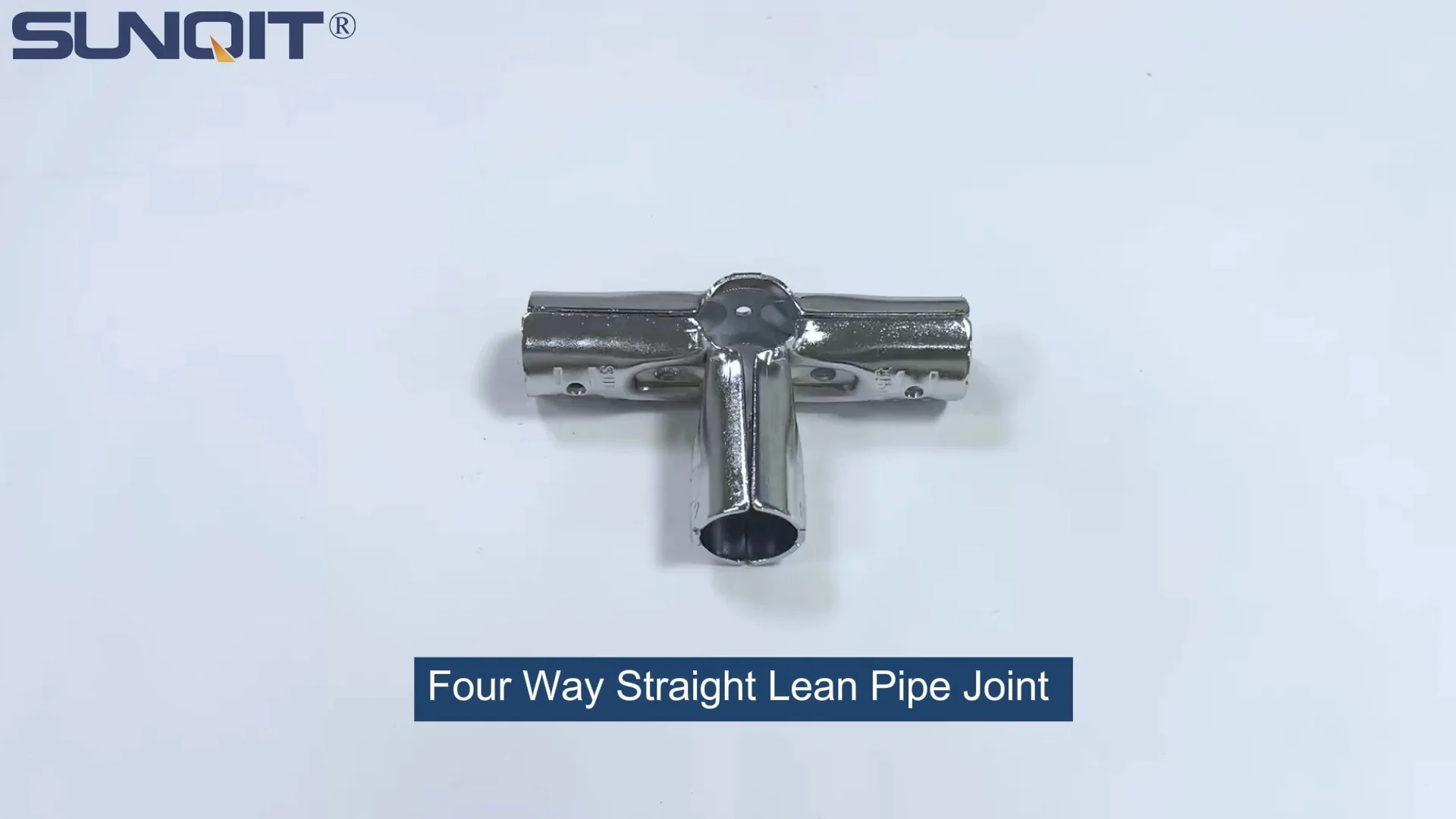
Four Way Straight Lean Pipe Joint Chrome
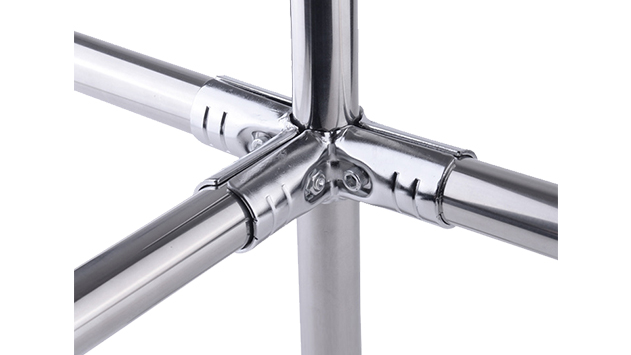
Four way lean pipe joint for 4 pcs 28MM lean pipe connection in straight angle, which used widely in workbench, flow rack, hand trolley frame connection.
The Backbone of Modern Manufacturing: Lean Pipe Systems
Walk into any well-run factory today, and you'll notice a quiet revolution happening on the shop floor. Gone are the days of rigid, one-size-fits-all workstations and clunky material racks that take weeks to reconfigure. Instead, you'll find sleek, modular structures—workbenches that adjust in hours, roller tracks that guide parts seamlessly, and racks that grow with production demands. This transformation is powered by lean pipe systems , the unsung heroes of efficient manufacturing. At the heart of these systems lie the connectors that hold everything together, and few are as critical as the four way straight lean pipe joint chrome.
Lean manufacturing isn't just a buzzword; it's a philosophy built on eliminating waste, streamlining workflows, and empowering teams to adapt quickly. And lean pipe systems embody this philosophy perfectly. Made from lightweight yet durable materials like steel, aluminum, or plastic-coated pipes, these systems use joints to connect pipes into custom structures—think workstations for assembling circuit boards, roller tracks for moving car parts, or racks for storing inventory. The magic is in their modularity: if a production line changes, you don't tear down the entire setup—you just reconfigure the pipes and joints.
But here's the thing: not all joints are created equal. In high-stakes environments where temperatures fluctuate, corrosive substances are present, or heavy loads are constant, a flimsy joint can mean the difference between a smooth shift and a costly breakdown. That's why manufacturers and facility managers are turning to the four way straight lean pipe joint chrome. Its chrome-plated finish, robust design, and impressive heat resistance make it a cornerstone of reliable lean systems. Let's dive into what makes this joint so essential, starting with the basics: what exactly is a four way straight lean pipe joint chrome, and why does its heat resistance matter?
Anatomy of a Workhorse: What Is the Four Way Straight Lean Pipe Joint Chrome?
At first glance, the four way straight lean pipe joint chrome might seem simple—a small, metallic connector with threads and holes for pipes. But looks can be deceiving. This unassuming component is engineered to do something remarkable: connect four pipes in a straight line, creating stable, load-bearing intersections that form the skeleton of lean structures. Let's break down its design.
The "four way" in its name refers to its ability to join four pipes: two along a central axis (the "straight" part) and two perpendicular to that axis. This versatility is a game-changer. Imagine building a workbench : you need vertical legs, horizontal supports for the tabletop, and maybe side rails for tools. A four way joint lets you connect all these in one spot, eliminating the need for multiple smaller joints and reducing weak points. It's like a manufacturing multitool—one joint, endless possibilities.
Then there's the "chrome" plating. Chrome isn't just for shine; it's a protective shield. The base material of the joint is typically high-grade carbon steel, chosen for its strength and affordability. But steel alone is vulnerable to rust and corrosion, especially in humid factories or areas where oils, coolants, or cleaning agents are used. Chrome plating solves this. By electroplating a thin layer of chromium onto the steel, manufacturers add a barrier that resists moisture, chemicals, and wear. It's why your kitchen faucet (often chrome-plated) stays shiny for years, even with daily use—and why this joint holds up in tough industrial settings.
But the real star feature, and the focus of this article, is its heat resistance. Manufacturing environments are rarely temperature-controlled utopias. In automotive plants, welding stations emit intense localized heat. In electronics factories, soldering irons and ovens raise ambient temperatures. Even in warehouses, summer heat can push indoor temps into the 90s (Fahrenheit) for weeks. A joint that warps, weakens, or loses grip under heat isn't just a nuisance—it's a safety hazard. Parts could slip, workstations could collapse, and production could grind to a halt. The four way straight lean pipe joint chrome is designed to stand firm where other joints fail, thanks to its material science and engineering.
Heat Resistance 101: Why It Matters for Lean Pipe Joints
To understand why heat resistance is non-negotiable for lean pipe joints, let's consider a real-world scenario. Picture an electronics assembly line where workers solder components onto circuit boards. The soldering irons reach temperatures of 700°F, and while they're focused on the boards, the nearby workbench—built with a lean pipe system—absorbs some of that heat. Over time, if the joints holding the workbench together can't handle the heat, they might start to soften. A soft joint loses its grip on the pipes, the workbench wobbles, and suddenly, a worker's hand slips. The result? A damaged board, a delayed order, or worse, an injury.
Heat affects metal in two key ways: it can cause thermal expansion (where the metal grows) and loss of tensile strength (where it becomes weaker). For a joint, thermal expansion can mean pipes loosen as the metal expands and contracts with temperature swings. Loss of tensile strength means the joint can't hold as much weight, increasing the risk of collapse. Add in other factors like humidity (which accelerates corrosion when combined with heat) or chemical exposure (oils and solvents that break down weaker materials), and you've got a perfect storm for joint failure.
This is where the four way straight lean pipe joint chrome shines. Its chrome plating isn't just corrosion-resistant—it's also a poor conductor of heat, meaning it doesn't absorb and transfer heat as readily as bare steel. The underlying carbon steel, too, is selected for its high melting point (around 2,500°F) and ability to maintain strength at elevated temperatures. Together, these properties let the joint handle sustained heat exposure without degrading. But just how much heat can it take? Let's get into the numbers.

Testing the Limits: Temperature Ranges for the Four Way Straight Lean Pipe Joint Chrome
Manufacturers don't just claim their joints are heat-resistant—they put them through rigorous testing to prove it. For the four way straight lean pipe joint chrome, these tests typically involve exposing the joint to controlled temperatures and measuring its performance. The results? Most high-quality chrome-plated four way joints can reliably operate in temperatures ranging from -40°F to 300°F (-40°C to 149°C). Let's unpack what that means for different industries.
Low-Temperature Performance: While heat resistance gets more attention, cold matters too. In refrigerated warehouses or outdoor manufacturing facilities in cold climates, temperatures can drop well below freezing. The four way joint's steel core and chrome plating remain ductile (bendable without breaking) even at -40°F, so it won't become brittle and crack under load. This is crucial for facilities that store perishable goods or operate in winter conditions.
High-Temperature Performance: The upper limit of 300°F is where this joint truly excels. To put that in perspective: a hot summer day in a non-air-conditioned factory might reach 95°F. A welding station nearby could push ambient temps to 120°F. Even in these conditions, the joint stays well within its safe range. Short-term exposure to higher temps (like a brief spike from a nearby oven) is usually manageable, but sustained heat above 300°F could start to compromise the chrome plating or weaken the steel. That's why manufacturers recommend avoiding direct contact with open flames or continuous exposure to temps over 300°F.
To put this in context, let's compare it to a non-chrome-plated steel joint. A standard steel joint without plating might start to show signs of weakness at 250°F, and its corrosion resistance plummets in humid, high-heat environments. An aluminum joint, while lightweight, has a lower melting point (around 1,220°F) but loses strength much earlier—around 200°F—making it unsuitable for high-heat areas. The four way straight lean pipe joint chrome, with its 300°F upper limit, bridges the gap between durability and versatility.
Beyond Heat: Other Key Benefits of the Four Way Straight Lean Pipe Joint Chrome
Heat resistance is a standout feature, but the four way straight lean pipe joint chrome offers more than just temperature tolerance. Let's explore why it's become a favorite among facility managers and lean manufacturing experts.
Corrosion Resistance: Chrome plating is a champion here. Unlike bare steel, which rusts when exposed to moisture, chrome forms a passive oxide layer that repels water and chemicals. This makes the joint ideal for food processing plants (where washdowns are frequent), pharmaceutical facilities (where cleanliness is critical), or outdoor applications (where rain and humidity would corrode lesser joints).
High Load Capacity: Don't let its small size fool you. A well-made four way straight lean pipe joint chrome can support hundreds of pounds. This is thanks to its robust design—thick steel walls, precision-machined threads, and a symmetrical shape that distributes weight evenly across all four connected pipes. Whether you're building a heavy-duty material rack or a workbench loaded with tools, this joint has the strength to handle it.
Easy Installation and Reconfiguration: Lean manufacturing thrives on adaptability, and this joint delivers. It typically uses set screws or bolts to secure pipes, meaning no welding or special tools are needed. A worker with a wrench can assemble or disassemble a structure in hours, not days. This flexibility is a lifesaver when production lines change or new products are introduced.
Longevity: Chrome plating isn't just for protection—it's for longevity. A chrome-plated joint can last 5–10 years in harsh environments, compared to 2–3 years for non-plated steel joints. Over time, this reduces replacement costs and downtime, making it a smart investment for any facility.
How It Stacks Up: Comparing the Four Way Chrome Joint to Other Connectors
To truly appreciate the four way straight lean pipe joint chrome, it helps to compare it to other common joints. Let's look at three alternatives and see how they measure up in key areas like heat resistance, durability, and cost.
| Joint Type | Max Heat Resistance | Corrosion Resistance | Load Capacity | Best For |
|---|---|---|---|---|
| Four Way Straight Lean Pipe Joint Chrome | 300°F | Excellent (chrome plating) | High (500+ lbs per joint) | High-heat, corrosive, or heavy-load environments |
| Standard Steel Joint (Non-Chrome) | 250°F | Poor (rusts in moisture) | High (similar to chrome) | Dry, low-heat indoor use (e.g., office storage racks) |
| Aluminum Joint | 200°F | Good (natural oxide layer) | Medium (300–400 lbs per joint) | Lightweight, low-heat applications (e.g., lab workstations) |
| Plastic-Coated Joint | 150°F (melts above) | Excellent (plastic resists chemicals) | Low (100–200 lbs per joint) | Light-duty, clean environments (e.g., retail displays) |
As the table shows, the four way straight lean pipe joint chrome outperforms alternatives in heat resistance and corrosion resistance, while matching standard steel joints in load capacity. It's a jack-of-all-trades that doesn't compromise on key metrics—making it worth the slightly higher cost than non-chrome steel joints (though still more affordable than specialized high-heat alloys).
Real-World Applications: Where the Four Way Chrome Joint Shines
The best way to understand the value of the four way straight lean pipe joint chrome is to see it in action. Let's explore three industries where it's making a tangible difference.
Automotive Manufacturing: Car plants are a masterclass in lean manufacturing, with assembly lines that never stop. Here, the four way joint is used to build everything from roller tracks (which move car doors and panels between stations) to workbenches for installing dashboards. The welding and painting areas generate significant heat, and oil/coolant spills are common—perfect conditions for the chrome joint's heat and corrosion resistance. One automotive supplier in Ohio reported a 40% reduction in joint replacements after switching to chrome-plated four way joints, citing fewer rust-related failures and better performance near welding stations.
Food and Beverage Processing: In facilities that produce snacks, beverages, or frozen foods, cleanliness and temperature control are critical. Workstations and material racks must withstand daily washdowns with hot water and sanitizers. The four way chrome joint's corrosion resistance ensures it doesn't rust, even with constant exposure to moisture. A snack food manufacturer in Texas uses these joints to build adjustable conveyor supports that hold up to 800 lbs of product—all while enduring 180°F washdowns twice daily. "We used to replace plastic joints every six months," says the plant manager. "With the chrome joints, we haven't replaced one in three years."
Aerospace Assembly: Building airplane parts requires precision and reliability. Aerospace factories use lean pipe systems to create custom workstations for assembling delicate components like wiring harnesses. These workstations often house heat-generating equipment (e.g., soldering stations, heat guns), making heat resistance a must. The four way chrome joint's ability to maintain grip under heat ensures the workstations stay stable, reducing errors and rework. A California aerospace company notes that since switching to these joints, their rework rate on wiring assemblies dropped by 15%—a direct result of more stable work surfaces.
Installation and Maintenance: Getting the Most Out of Your Chrome Joints
Even the best joint won't perform well if installed incorrectly. To maximize the lifespan and heat resistance of your four way straight lean pipe joint chrome, follow these tips:
Installation Best Practices:
1.
Clean the Pipes:
Before assembling, wipe down the pipes with a dry cloth to remove dirt, oil, or debris. This ensures the joint grips tightly and prevents corrosion under the chrome.
2.
Use the Right Tools:
Tighten set screws or bolts with a torque wrench (not a pipe wrench, which can damage the chrome plating). Follow the manufacturer's torque specifications—usually 25–30 ft-lbs for steel pipes.
3.
Align Pipes Properly:
Misaligned pipes put extra stress on the joint. Use a level to ensure pipes are straight and perpendicular before tightening.
4.
Avoid Overloading:
Even strong joints have limits. Check the load capacity and never exceed it—distribute weight evenly across multiple joints when possible.
Maintenance Tips:
1.
Inspect Regularly:
Every month, check joints for signs of loosening, corrosion, or damage. Tighten any loose screws and replace joints with cracked plating or bent threads.
2.
Clean Gently:
For routine cleaning, wipe the joint with a damp cloth. Avoid abrasive cleaners (like steel wool) that can scratch the chrome plating.
3.
Lubricate Threads:
If you need to disassemble and reassemble joints, apply a small amount of anti-seize lubricant to the threads. This prevents galling (wear from metal-on-metal friction) and makes future adjustments easier.
4.
Protect from Extreme Heat:
While the joint handles 300°F, avoid direct contact with open flames or heating elements. Use heat shields if joints are near welding stations or ovens.
Conclusion: The Small Joint That Drives Big Results
In the world of manufacturing, success often hinges on the smallest details. The four way straight lean pipe joint chrome may be a tiny component, but its impact is enormous. By combining heat resistance, corrosion protection, and robust design, it ensures that lean pipe systems—workbenches, roller tracks, material racks—remain reliable, adaptable, and safe, even in the toughest environments.
Whether you're running an automotive plant with welding stations, a food processing facility with daily washdowns, or an aerospace factory with precision assembly needs, this joint delivers where it counts: reducing downtime, lowering replacement costs, and keeping production lines moving. It's a testament to the power of thoughtful engineering—taking a basic connector and elevating it into a tool that empowers teams to work smarter, not harder.
So the next time you walk through a factory and admire the efficiency of the lean pipe systems, take a moment to appreciate the joints holding it all together. The four way straight lean pipe joint chrome may not grab headlines, but it's the quiet force driving the future of manufacturing—one sturdy, heat-resistant connection at a time.