- Company Articles
- Products and Technology
- Application Cases
- Four Way Straight Lean Pipe Joint Chrome in Automotive Manufacturing: Applications & Case Studies

Four Way Straight Lean Pipe Joint Chrome in Automotive Manufacturing: Applications & Case Studies
Related Product
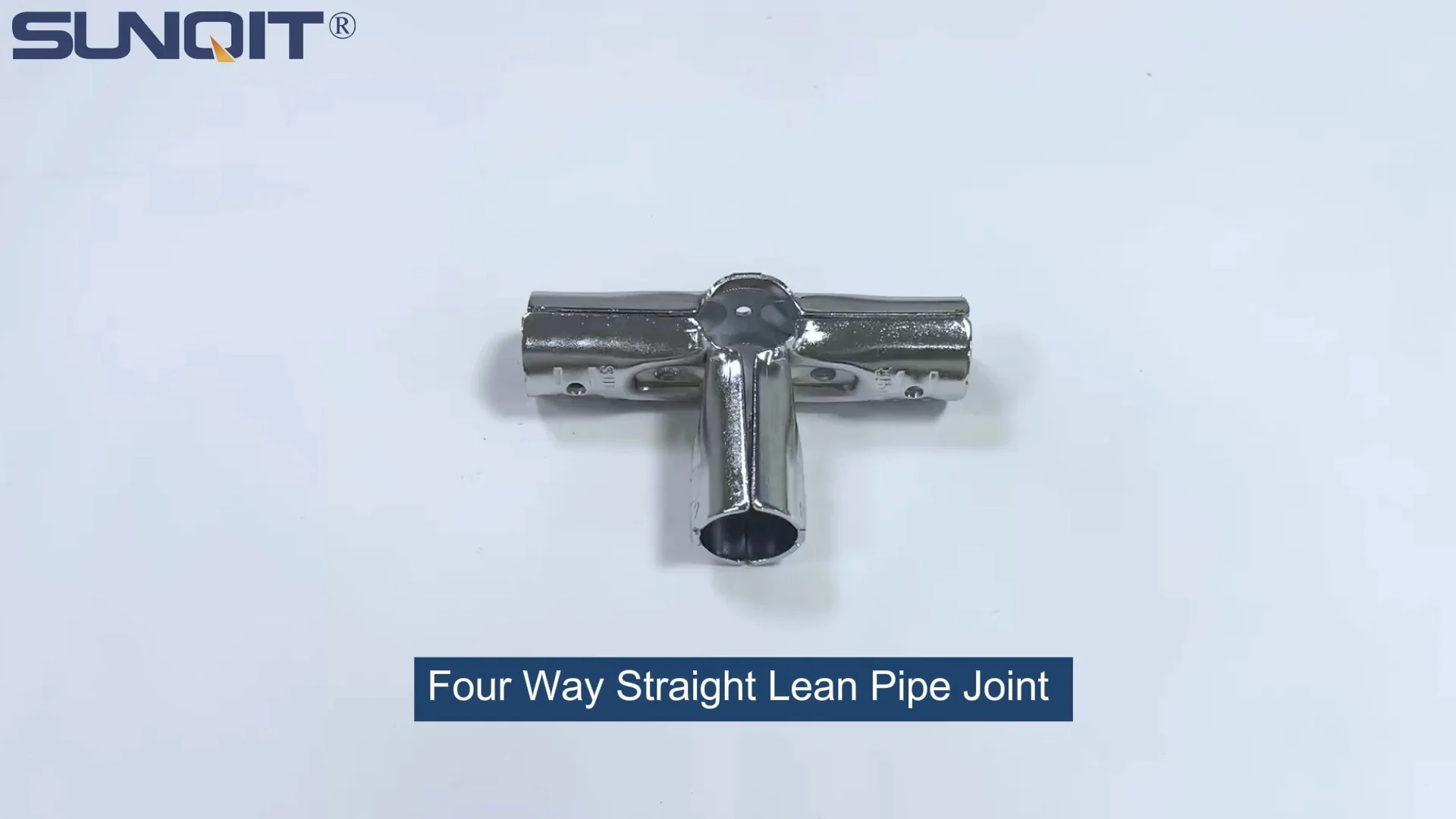
Four Way Straight Lean Pipe Joint Chrome
Four way lean pipe joint for 4 pcs 28MM lean pipe connection in straight angle, which used widely in workbench, flow rack, hand trolley frame connection.
In the high-stakes world of automotive manufacturing, where every second counts and precision is non-negotiable, the difference between a smooth production line and a bottleneck often comes down to the smallest components. Lean manufacturing principles have long been the backbone of efficiency in this industry, but even the best lean strategies rely on tools that can keep up with constant change. Enter the four way straight lean pipe joint chrome—an unassuming yet powerful piece of hardware that's quietly revolutionizing how automotive plants build, adapt, and optimize their workspaces. Let's dive into how this simple joint is making a big impact, from the assembly line to the warehouse floor.
Understanding the Four Way Straight Lean Pipe Joint Chrome: More Than Just a Connector
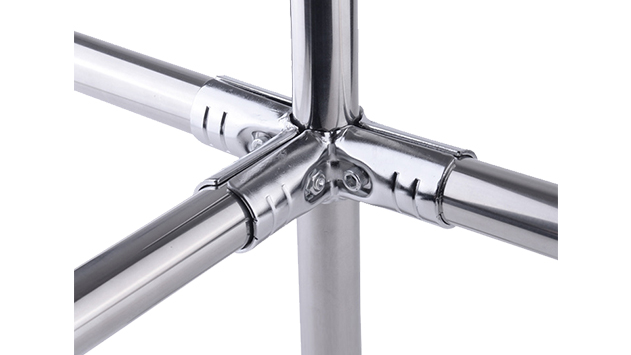
Before we jump into its applications, let's take a moment to get to know this component. At first glance, the four way straight lean pipe joint chrome might look like just another metal connector, but its design is a masterclass in functionality. Made from high-quality steel with a chrome-plated finish, it's built to withstand the rigors of a busy automotive plant—think constant vibrations, occasional spills, and heavy loads. The "four way straight" design means it has four ports (one on each end of a cross shape), allowing it to connect lean pipes, aluminum profiles, or roller tracks in multiple directions without the need for complex adapters.
What really sets it apart, though, is its modularity. Unlike traditional welded joints or fixed brackets, this chrome joint can be assembled and disassembled in minutes with basic tools. Tighten a few bolts, and it holds firm; loosen them, and you can reconfigure your setup to fit a new production line, a different part size, or a updated workflow. For automotive manufacturers juggling multiple models, frequent design changes, and shifting demand, that flexibility isn't just convenient—it's critical.
Key Features That Matter in Automotive Settings
Let's break down why automotive plants are swapping out old connectors for this chrome-plated workhorse:
- Durability That Stands Up to the Plant Floor: The chrome plating isn't just for shine—it's a protective barrier against corrosion, rust, and wear. In environments where oil, coolant, and cleaning agents are part of daily life, this means the joint lasts years longer than uncoated alternatives, reducing replacement costs and downtime.
- Multi-Directional Versatility: With four ports, it can connect pipes or profiles in up to four directions (horizontal, vertical, and diagonal, depending on setup). This eliminates the need for multiple joint types, simplifying inventory and making on-the-fly adjustments a breeze.
- Tool-Free (or Minimal-Tool) Assembly: No welding, no drilling, no specialized equipment. A standard hex key is all you need to tighten or loosen the joint, which cuts down on installation time and empowers line workers to make quick changes without waiting for maintenance teams.
- Compatibility Across Systems: It plays well with others. Whether you're using traditional lean pipes, aluminum lean pipes, or even aluminum extrusion profiles, this joint integrates seamlessly. That's a big plus for plants that might have legacy systems mixed with newer aluminum profile setups.
- Load-Bearing Strength: Don't let its simplicity fool you—this joint can handle heavy loads, from stacks of engine parts on a flow rack to the weight of a fully loaded turnover trolley. Automotive plants deal with everything from small fasteners to bulky components like door panels, and this joint doesn't flinch under pressure.
Applications in Automotive Manufacturing: Where the Joint Shines
Now, let's put this joint to work. From the moment raw materials arrive at the plant to the final inspection of a finished vehicle, the four way straight lean pipe joint chrome pops up in some unexpected (and essential) places. Here are the key areas where it's making a difference:
1. Lean Pipe Workbenches: The Heart of Assembly Line Productivity
Walk into any automotive assembly area, and you'll see workbenches everywhere—stations where technicians bolt together components, install wiring, or inspect parts. These workbenches need to be sturdy enough to support tools and materials, but also adjustable to fit different tasks and worker heights. That's where the four way straight lean pipe joint chrome comes in.
By connecting lean pipes or aluminum profiles with these joints, plants can build custom workbenches tailored to specific jobs. For example, a workstation assembling dashboard components might need a lower shelf for tools, a raised back panel for part bins, and side rails to keep small screws from rolling off. With the four way joint, all those elements can be added or removed without rebuilding the entire bench. When the next model year rolls around and the dashboard design changes, the bench can be reconfigured in an hour instead of replaced—saving time and money.
One plant manager I spoke with recently mentioned they'd cut workbench setup time by 60% after switching to these joints. "Before, if we needed a new bench for a special project, we'd order a custom one and wait weeks," they said. "Now, we grab some pipes, a handful of these chrome joints, and have it built by lunch. And if we don't need it anymore? Disassemble it and use the parts for something else."
2. Flow Racks: Keeping Parts Moving (and Organized)
In automotive manufacturing, "just-in-time" isn't just a buzzword—it's how plants avoid overstocking and keep inventory costs low. That means parts need to flow smoothly from the warehouse to the assembly line, right when they're needed. Flow racks—those inclined shelves with roller tracks that let parts slide down as they're used—are the unsung heroes of this process. And the four way straight lean pipe joint chrome is what holds them together.
Imagine a flow rack storing door handles for a sedan model. Each shelf has a roller track, and the rack needs to be tall enough to hold three levels of parts, wide enough for 10 bins per level, and stable enough to withstand workers grabbing bins multiple times per minute. The four way joint connects the vertical support pipes to the horizontal rails that hold the roller tracks, ensuring the rack doesn't wobble or sag under the weight. If the next model's door handles come in taller bins? Add an extra horizontal rail using the joint's unused port, and the shelf height adjusts in minutes.
What's more, the chrome finish resists the minor scrapes and dents that come with loading/unloading bins, so the racks stay functional (and looking professional) for years. For plants that deal with corrosive materials or strict cleanliness standards (like those building electric vehicle batteries), the rust-resistant chrome is a must-have feature that traditional painted joints just can't match.
3. Roller Tracks: From Warehouse to Assembly Line, Without the Lift Truck
Roller tracks are the arteries of material flow in automotive plants. They carry everything from engine blocks to small plastic clips, reducing the need for workers to carry heavy loads or for lift trucks to constantly shuttle parts. But roller tracks only work if they're perfectly aligned—even a slight kink can jam a part or slow down the flow. The four way straight lean pipe joint chrome ensures that alignment, connecting roller track sections and supporting them securely.
Take a typical scenario: A roller track running from the warehouse to the chassis assembly line, carrying pallets of suspension components. The track needs to turn a corner, climb a small incline, and connect to a secondary track that splits off to two workstations. With traditional joints, each of these transitions would require custom brackets or complicated angles. With the four way chrome joint, it's simple: use the joint to connect the straight track to a curved section, add a support pipe below using another port, and secure the whole setup to the floor or a nearby rack. No custom parts, no guesswork—just a smooth, continuous flow.
And when production needs change? Maybe that secondary track now needs to split to three workstations instead of two. Loosen the joints, add a new roller track section, and tighten them back up. Done. For plants running multiple shifts or ramping up for a new model launch, that kind of adaptability means less downtime and more parts getting where they need to go.
3. Assembly Line Carts and Trolleys: Mobility with Stability
Not all parts stay on the rack or track—some need to be moved directly to the worker, especially heavy or bulky items like transmissions or seat frames. That's where turnover trolleys and assembly carts come in. These mobile workstations need to be strong enough to carry heavy loads, but also lightweight enough to push around the plant. The four way straight lean pipe joint chrome is the secret to building carts that balance strength and mobility.
By connecting lean pipes or aluminum tubes with these joints, plants can build custom trolleys with shelves, bins, or even tool holders. For example, a trolley used to transport brake calipers might have a lower shelf for the calipers, an upper shelf for bolts and washers, and a side rail to hang a torque wrench. The four way joints ensure the frame stays rigid, even when loaded with 200+ pounds of parts. And because the joints are removable, if a cart gets damaged (say, a wheel bends), you can replace just the damaged section instead of the entire cart.
I visited a plant last year that had built a fleet of these carts for their night shift. "We used to have generic metal carts that were either too big or too small," the shift supervisor told me. "Now, we build carts that fit the exact parts we're moving that night. If tomorrow we're running a different model, we take apart the carts and rebuild them. It's like having a toolkit for mobility."
Traditional Joints vs. Four Way Straight Lean Pipe Joint Chrome: A Real-World Comparison
| Feature | Traditional Welded/Fixed Joints | Four Way Straight Lean Pipe Joint Chrome |
|---|---|---|
| Installation Time | Hours (requires welding, drilling, or specialized tools) | Minutes (basic hex key, no special skills needed) |
| Reusability | Low (welded joints are permanent; fixed brackets often break when disassembled) | High (can be disassembled and reused indefinitely with no loss of strength) |
| Corrosion Resistance | Low (uncoated steel or cheap paint chips easily) | High (chrome plating resists rust, oil, and chemicals) |
| Flexibility | Very Low (fixed angles; cannot be adjusted without cutting/welding) | High (four ports allow multi-directional connections; easy to reconfigure) |
| Long-Term Cost | High (frequent replacements, downtime for repairs, custom orders) | Low (durable, reusable, reduces need for new equipment) |
As the table shows, the four way straight lean pipe joint chrome isn't just a "nice-to-have"—it's a cost-saver and efficiency booster, especially in dynamic environments like automotive manufacturing.

Case Studies: How Automotive Plants Are Winning with This Joint
Case Study 1: Major OEM Cuts Assembly Line Changeover Time by 70%
A leading automotive OEM with a production line that builds both electric and gas-powered SUVs was struggling with changeover time. Every time they switched from one model to the other, they had to rebuild workstations, adjust flow racks, and reposition roller tracks—processes that took nearly 8 hours, eating into production capacity.
Their solution? They replaced all fixed joints and welded frames with lean pipe systems using four way straight lean pipe joint chrome. Now, instead of rebuilding workstations from scratch, workers loosen the joints, adjust the pipes to the new dimensions, and retighten. Flow racks are reconfigured by moving roller tracks to different levels, and roller tracks are extended or shortened by adding/removing sections connected with the chrome joints.
The result? Changeover time dropped from 8 hours to just 2.5 hours. "We used to schedule model changes over weekends to avoid disrupting production," the plant's operations manager said. "Now we can do it between shifts. That alone added 120+ production hours per month—enough to build 500 more vehicles a year."
Case Study 2: Tier 1 Supplier Reduces Inventory Waste by 40%
A tier 1 supplier supplying door panels to a major automaker was drowning in inventory costs. They had dozens of custom racks and bins to store different panel sizes, but with frequent design updates, many of these racks became obsolete within months. Warehousing unused equipment was costing them $15,000 a year in storage fees alone.
They turned to a lean system supplier specializing in modular solutions, who recommended using aluminum profiles, roller tracks, and four way straight lean pipe joint chrome to build adjustable storage systems. Now, instead of buying a new rack for each panel size, they adjust existing racks by moving the chrome joints to change shelf heights or add/remove roller tracks. Old racks are disassembled, and parts are reused to build new ones for updated designs.
In the first year, they reduced storage costs by 40% and eliminated $80,000 in new rack purchases. "We used to see a new panel design and think, 'Great, another rack to buy,'" the warehouse manager noted. "Now we think, 'How can we tweak what we already have?' The chrome joints make it possible."
Choosing the Right Supplier: Why Quality Matters
Of course, not all four way straight lean pipe joints are created equal. To get the durability and flexibility we've discussed, you need to source from a reputable lean system supplier—one that prioritizes quality materials and precision manufacturing. Here's what to look for:
- Material Thickness: Avoid "lightweight" joints with thin steel—they'll bend under heavy loads. Look for joints made from 2mm+ steel for automotive-grade strength.
- Chrome Plating Quality: A good chrome finish should be smooth, even, and at least 0.01mm thick. Ask suppliers about their plating process—electroplating is more durable than spray-on coatings.
- Compatibility: Make sure the joint fits standard lean pipe sizes (typically 28mm or 30mm) and works with aluminum profiles, roller tracks, and other accessories you already use.
- Testing: Reputable suppliers will test joints for load capacity, corrosion resistance, and repeated assembly/disassembly cycles. Ask for test reports if you're unsure.
Remember, a cheap joint might save you a few dollars upfront, but it'll cost you more in downtime, replacements, and inefficiency down the line. Investing in quality now pays off in the long run—especially in a high-pressure environment like automotive manufacturing.
Conclusion: The Small Joint Making a Big Difference
In the grand scheme of automotive manufacturing, with its robots, assembly lines, and cutting-edge technology, it's easy to overlook components like the four way straight lean pipe joint chrome. But as we've seen, these small connectors are the glue that holds lean systems together—enabling the flexibility, durability, and efficiency that modern plants need to stay competitive.
Whether it's building a custom workbench for a new model, reconfiguring a flow rack to cut inventory waste, or keeping roller tracks aligned for smooth part flow, this joint does the heavy lifting (literally) so your team can focus on what they do best: building quality vehicles. And in an industry where every minute and every dollar counts, that's not just an advantage—it's a game-changer.
So the next time you walk through a automotive plant, take a closer look at those workbenches, racks, and carts. Chances are, you'll spot the four way straight lean pipe joint chrome hard at work—quietly proving that great things really do come in small packages.