- Company Articles
- Products and Technology
- Product knowledge
- Four Way Straight Lean Pipe Joint Chrome: Key Features and Structural Design Explained

Four Way Straight Lean Pipe Joint Chrome: Key Features and Structural Design Explained
Related Product
Four Way Straight Lean Pipe Joint Chrome
Four way lean pipe joint for 4 pcs 28MM lean pipe connection in straight angle, which used widely in workbench, flow rack, hand trolley frame connection.
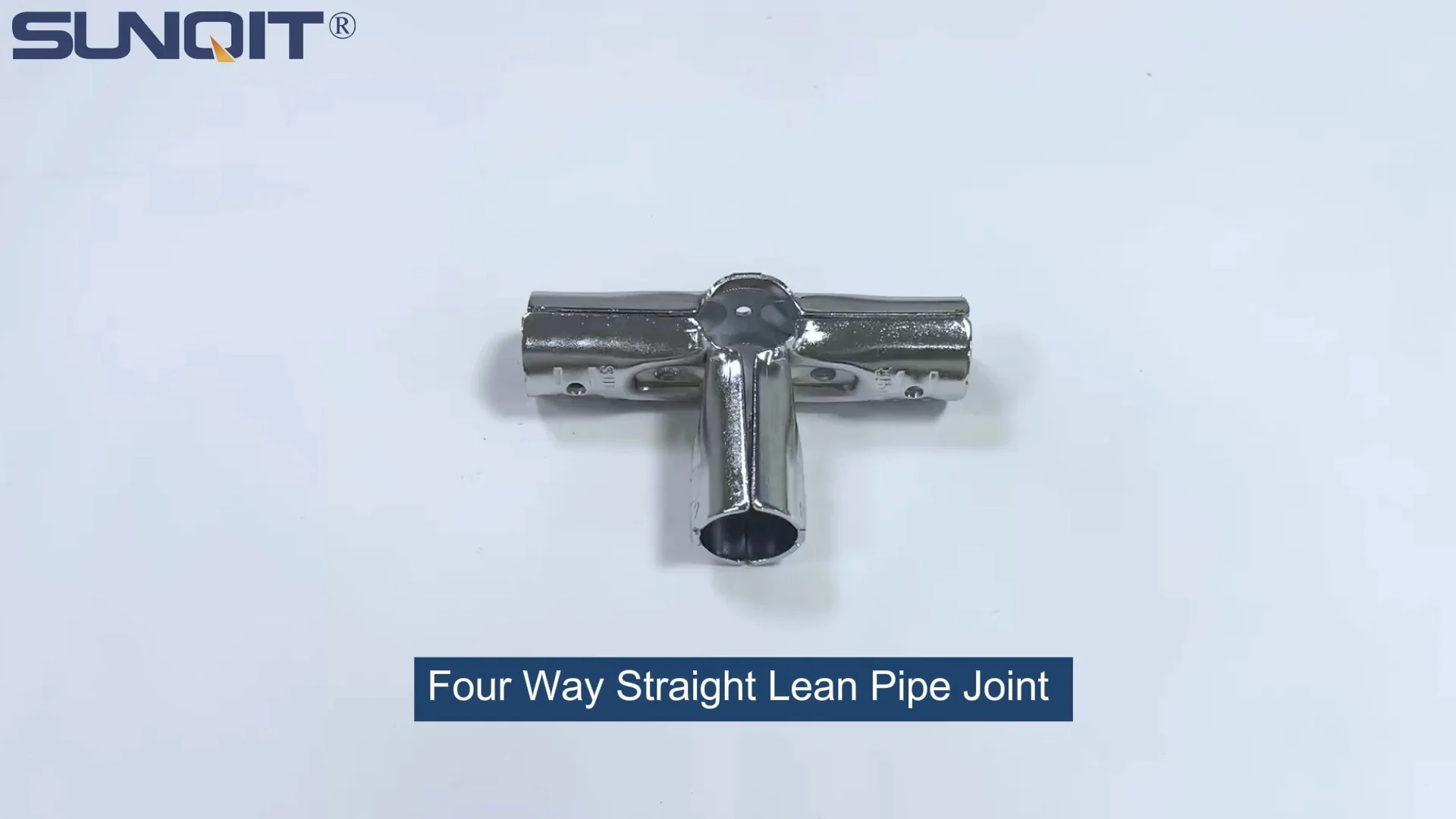
In the fast-paced world of manufacturing and production, efficiency isn't just a buzzword—it's the backbone of success. Every tool, every component, and every connection plays a role in keeping operations running smoothly, reducing waste, and maximizing output. This is where lean systems shine. At the heart of these systems lies a network of unassuming yet critical components: lean pipes and their connectors. Today, we're diving deep into one such component that often flies under the radar but holds everything together: the Four Way Straight Lean Pipe Joint Chrome. Whether you're setting up a new assembly line, optimizing a workbench, or building a custom flow rack, understanding this joint's design and features can make all the difference between a wobbly, inefficient structure and one that stands the test of time.
What Exactly Is a Four Way Straight Lean Pipe Joint Chrome?
Let's start with the basics. A lean pipe system is built on the idea of modularity—using lightweight, durable pipes and joints to create customizable structures like workbenches, material racks, conveyors, and trolleys. These systems are beloved in industries from automotive to electronics for their flexibility; they can be easily reconfigured as production needs change, eliminating the need for costly, permanent fixtures.
At the core of this modularity are the joints. Think of them as the "building blocks" that connect lean pipes at various angles. The Four Way Straight Lean Pipe Joint Chrome is a specialized type of connector designed for a specific purpose: joining four lean pipes in a straight, linear configuration. Unlike three-way joints (which connect pipes at 90-degree angles) or two-way joints (which form straight lines), this four-way variant adds an extra layer of versatility by allowing connections in four directions along a single axis. And yes, that "chrome" in the name matters—it's not just for show. The chrome plating adds a protective layer, enhancing durability and resistance to corrosion, a must in busy factory environments where moisture, oil, or chemicals might be present.
Fun fact: Lean pipe systems, also known as "Kanban racks" or "flexible pipe systems," trace their roots back to Toyota's legendary lean manufacturing principles. The goal? To create structures that adapt to workflow, not the other way around. The Four Way Straight Lean Pipe Joint Chrome is a modern evolution of that original vision, blending old reliability with new materials.
Key Features: Why This Joint Stands Out
Not all lean pipe joints are created equal. Let's break down the features that make the Four Way Straight Lean Pipe Joint Chrome a standout choice for manufacturers and facility managers.
1. Material Quality: Built to Last
First and foremost, this joint is constructed from high-grade steel. Why steel? Because when you're supporting heavy loads—think stacks of components on a flow rack or a fully loaded workbench—strength is non-negotiable. Steel provides the rigidity needed to prevent bending or warping over time, even under constant use. But steel alone isn't enough; without protection, it's prone to rust. That's where the chrome plating comes in. The plating process involves electroplating a thin layer of chromium onto the steel surface, creating a barrier that repels moisture and chemicals. This means the joint can withstand the daily grind of a factory floor, from accidental spills to humidity, without corroding. In contrast, unplated or plastic joints might start showing signs of wear within months; a chrome-plated steel joint? It can last years, even in harsh conditions.
2. Multi-Directional Connectivity: Versatility in a Small Package
The "four-way straight" design is where this joint truly shines. Imagine you're building a material rack with multiple levels. You need vertical pipes for support, horizontal pipes for shelves, and maybe additional cross-bracing for stability. A four-way joint lets you connect two vertical pipes and two horizontal pipes (or any combination of four pipes) along a straight line, eliminating the need for multiple smaller joints. For example, if you're constructing a flow rack with three rows of roller tracks, this joint can connect the vertical support pipes, the horizontal rails for the tracks, and even additional pipes for side guards—all in one compact component. This not only reduces the number of parts you need to order and store but also simplifies assembly. Less time fumbling with multiple joints means more time focusing on building a sturdy structure.
3. Compatibility: Works with Standard Lean Pipes (and More)
What good is a joint if it doesn't fit your existing pipes? The Four Way Straight Lean Pipe Joint Chrome is designed to work seamlessly with standard lean pipes, which typically have an outer diameter of 28mm (about 1.1 inches). This is the most common size used in lean systems worldwide, so you won't have to worry about hunting down specialty pipes. But here's the kicker: it's also compatible with other materials, like aluminum profiles. Many manufacturers today mix steel lean pipes with aluminum components for lighter structures, and this joint plays well with both. Whether you're using traditional steel lean pipes, aluminum lean pipes, or even stainless steel pipes (for ESD-sensitive environments), this joint's precision-machined ports ensure a snug, secure fit. No wobbling, no slipping—just a tight connection that holds up under pressure.
4. Tool-Free Assembly (or Minimal Tools, at Least)
Anyone who's ever built furniture knows the frustration of hunting for the right tool. Lean pipe systems are supposed to be user-friendly, and this joint delivers. Most models feature a clamping mechanism that uses set screws or Allen bolts. Simply slide the lean pipe into the joint's port, tighten the screw with a hex key (Allen wrench), and you're done. No welding, no drilling, no complicated measurements. This is a game-changer for teams that need to reconfigure structures on the fly. Need to add a shelf to a workbench? Swap out a two-way joint for a four-way, tighten the screws, and you're ready to go. Even someone with minimal technical experience can assemble or disassemble these joints in minutes, reducing downtime and labor costs.
5. Load-Bearing Capacity: It's Stronger Than It Looks
Let's talk numbers. A typical Four Way Straight Lean Pipe Joint Chrome can handle a static load of up to 200 kg (about 440 pounds) when properly installed. That's more than enough to support heavy tools, boxes of components, or even small machinery on a workbench. How does it achieve this? The secret is in the design: the joint's body is thick-walled steel, and the internal clamping mechanism distributes pressure evenly around the pipe, preventing stress points. For example, if you're using this joint to support a shelf on a material rack, it can easily hold stacks of cardboard boxes or metal parts without bending. Of course, load capacity depends on the pipe material too—steel pipes will carry more weight than aluminum—but the joint itself is more than capable of keeping up.
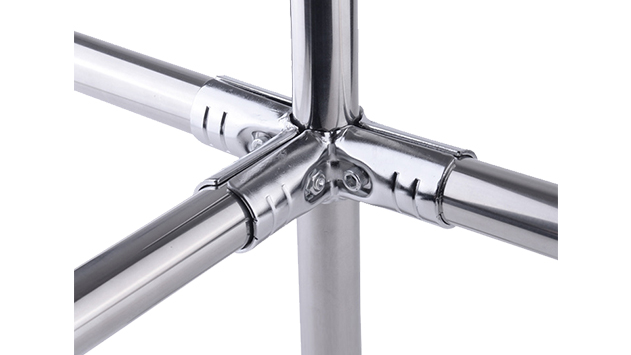
Structural Design: The Engineering Behind the Strength
Now that we've covered the features, let's get into the nitty-gritty: the structural design. What makes this joint tick? Let's break it down, part by part.
Anatomical Breakdown: What's Inside?
At first glance, the Four Way Straight Lean Pipe Joint Chrome looks like a small, cubic or cylindrical block with four holes (ports) drilled into it. But there's more to it than meets the eye. Let's dissect it:
- The Body: The outer shell is made of high-carbon steel, chosen for its strength-to-weight ratio. It's precision-cast or machined to ensure uniform thickness, so there are no weak spots. The chrome plating is applied via electroplating, a process where a thin layer of chromium is deposited onto the steel surface using an electric current. This layer is typically 5-10 microns thick—thin enough to not affect the joint's dimensions but thick enough to resist scratches and corrosion.
- The Ports: Each of the four ports (one on each end of the straight axis) is machined to a precise diameter—exactly 28mm to match standard lean pipes. The inner walls of the ports are often textured or grooved to create friction, ensuring the pipe doesn't slip once clamped. Some models also have rubber or plastic inserts to protect the pipe's surface from scratches.
- The Clamping Mechanism: Inside each port, you'll find a set screw or a cam lever. Set screws are the most common: they're threaded bolts that, when tightened, press against the pipe, securing it in place. Many joints use hex-head set screws (Allen screws), which require only a simple Allen wrench for tightening. Some premium models feature quick-release levers, allowing for tool-free adjustments—perfect for structures that need frequent reconfiguration.
Dimensional Specifications: Size Matters
To understand how this joint fits into your structure, let's talk numbers. While exact dimensions can vary slightly by manufacturer, most Four Way Straight Lean Pipe Joint Chrome models share these key specs:
| Dimension | Typical Measurement | Why It Matters |
|---|---|---|
| Overall Length (end-to-end) | 80-100mm (3.1-3.9 inches) | Determines how much space the joint takes up in your structure; shorter joints are better for tight spaces. |
| Port Diameter | 28mm (1.1 inches) | Must match your lean pipe's outer diameter for a secure fit. |
| Body Diameter/Width | 40-50mm (1.6-2 inches) | Affects stability; wider bodies distribute weight more evenly. |
| Set Screw Size | M6 or M8 (metric threads) | Determines how much clamping force the joint can apply. |
| Weight | 150-200 grams (5.3-7 ounces) | Adds to the overall weight of your structure; important for mobile trolleys. |
These dimensions are carefully engineered to balance strength and practicality. For example, the 28mm port diameter isn't arbitrary—it's the standard size for lean pipes, ensuring compatibility across brands. The body width is wide enough to prevent bending but narrow enough to avoid adding unnecessary bulk to your structure.
Load-Bearing Capacity: How Much Weight Can It Handle?
We touched on this earlier, but it's worth diving deeper. The Four Way Straight Lean Pipe Joint Chrome's load capacity depends on a few factors: the material of the joint (steel vs. plastic), the thickness of the steel, the quality of the clamping mechanism, and the type of pipes it's connected to. On average, a single joint can support a static load of 150-200 kg when used with 1.5mm-thick steel lean pipes. That's equivalent to stacking about 30 car batteries (or 100 kg of electronic components) on a shelf supported by these joints. For dynamic loads (like materials moving along a conveyor), the capacity is slightly lower—around 100-150 kg—since movement adds stress.
But here's the good news: when used in groups, these joints can handle even more. For example, a workbench with four legs, each connected by multiple four-way joints, can easily support a 500 kg load (that's over half a ton!). Manufacturers often provide load charts for their specific models, so it's always a good idea to check those before building heavy-duty structures.

Real-World Applications: Where Does This Joint Shine?
Enough theory—let's talk about how the Four Way Straight Lean Pipe Joint Chrome is used in the real world. From assembly lines to warehouses, this joint pops up in some unexpected places, making structures more efficient and adaptable.
1. Workbenches: The Backbone of Assembly Lines
Walk into any electronics or automotive assembly plant, and you'll see rows of workbenches. These aren't your average desks—they're customized to hold tools, parts bins, monitors, and even ESD mats (for static-sensitive components). The Four Way Straight Lean Pipe Joint Chrome is a star here. For example, a typical ESD workbench might have a frame built from lean pipes, with shelves above and below the main work surface. The four-way joints connect the vertical support pipes to the horizontal shelf rails, allowing for multiple shelves at different heights. Since assembly tasks change (one day you're building smartphones, the next day tablets), the joint's modularity lets workers add or remove shelves in minutes. No need to buy a new workbench—just reconfigure the existing one.
2. Flow Racks: Keeping Materials Moving
Flow racks are essential for "first in, first out" (FIFO) inventory management. They use gravity to slide materials from the back to the front, ensuring older stock is used first. These racks are built with inclined roller tracks, and the frame that supports those tracks often relies on four-way joints. Imagine a flow rack with three levels, each holding three rows of parts. The vertical support pipes need to connect to the horizontal rails that hold the roller tracks, and the horizontal rails need to connect to cross-braces for stability. The four-way joint simplifies this by connecting the vertical pipe, two horizontal rails (one for the roller track, one for bracing), and an additional pipe for the next level—all in one spot. This reduces the number of joints needed, making the rack lighter and easier to assemble.
3. Conveyor Systems: Moving Materials Efficiently
Conveyors are the lifelines of many factories, moving parts from one station to the next. While large conveyors use heavy-duty metal frames, smaller, flexible conveyors (like those used in packaging or light assembly) often rely on lean pipe systems. The Four Way Straight Lean Pipe Joint Chrome is used here to build the conveyor's frame, connecting the side rails that support the roller tracks or belt. Since conveyors need to be straight (or slightly inclined), the four-way joint's straight-line design ensures the rails stay aligned, preventing jams or misaligned materials. And if you need to extend the conveyor later? Just add more pipes and joints—no welding required.
4. Turnover Trolleys: Mobile Material Handling
Turnover trolleys are used to transport materials between workstations, and they need to be both sturdy and lightweight. The Four Way Straight Lean Pipe Joint Chrome helps here by connecting the trolley's frame, handle, and shelves. For example, a trolley might have a base frame with four wheels, vertical support pipes, and a top shelf. The four-way joints connect the vertical pipes to the horizontal base rails and the top shelf rails, creating a rigid structure that doesn't flex when loaded. Since the joint is lightweight (around 200 grams), it doesn't add unnecessary weight to the trolley, making it easier for workers to push around.
How Does It Compare to Other Lean Pipe Joints?
Not all joints are created equal, and choosing the right one depends on your needs. Let's stack the Four Way Straight Lean Pipe Joint Chrome against two common alternatives: the Three Way Lean Pipe Joint and the Plastic Lean Pipe Joint.
Four Way Straight vs. Three Way Joints
Three way joints are the workhorses of lean systems, connecting pipes at 90-degree angles (e.g., vertical and horizontal pipes). They're great for building frames, shelves, and corners. But they lack the four-way joint's ability to connect multiple pipes along a straight line. For example, if you need to add two horizontal pipes to a vertical support (one on the left, one on the right), a three-way joint can only handle one. You'd need two three-way joints, spaced apart, to connect both. The four-way joint does it in one, saving space and reducing the number of parts. On the flip side, three-way joints are better for angular connections—if you're building a corner shelf, a three-way joint is the way to go. The four-way joint? Stick to straight lines.
Four Way Straight vs. Plastic Joints
Plastic joints are cheaper and lighter than their steel counterparts, making them popular for lightweight structures (like small parts bins). But they lack the durability of steel. Plastic can warp under heat, crack under heavy loads, or degrade over time when exposed to chemicals. The Four Way Straight Lean Pipe Joint Chrome, with its steel body and chrome plating, is built for heavy use. It won't warp, crack, or corrode, making it ideal for industrial environments. Yes, it's more expensive upfront, but the longer lifespan means it's often cheaper in the long run. Think of it as investing in a tool that pays for itself over time.
Maintenance Tips: Keeping Your Joints in Top Shape
Even the toughest components need a little TLC. Here's how to keep your Four Way Straight Lean Pipe Joint Chrome working like new for years:
- Clean the chrome plating regularly: Wipe down the joints with a damp cloth to remove dust, oil, or grime. For stubborn stains, use a mild detergent (avoid abrasive cleaners, which can scratch the chrome). Dry thoroughly to prevent water spots.
- Check set screws for tightness: Over time, vibrations from machinery or material movement can loosen set screws. Give them a quick tighten with an Allen wrench every few months to ensure pipes stay secure.
- Lubricate moving parts (if applicable): If your joint has quick-release levers or rotating components, apply a drop of machine oil to the hinges. This prevents rust and keeps the mechanism smooth.
- replace worn parts: If a set screw strips or the chrome plating chips (exposing bare steel), replace the joint immediately. A damaged joint compromises the entire structure's stability.
With these simple steps, your four-way joints should last 5-10 years in a typical factory setting—longer if you're gentle with them!
Conclusion: Why This Joint Deserves a Spot in Your Lean System
The Four Way Straight Lean Pipe Joint Chrome might not be the flashiest component in your lean system, but it's undoubtedly one of the most important. Its combination of durability (chrome-plated steel), versatility (four-way connectivity), compatibility (works with standard pipes and aluminum profiles), and ease of use (tool-free assembly) makes it a must-have for anyone building or maintaining modular structures. Whether you're a seasoned plant manager or a small business owner setting up your first assembly line, this joint simplifies the process, reduces waste, and ensures your structures can adapt as your needs change.
At the end of the day, lean manufacturing is about more than just efficiency—it's about empowerment. It puts the power to design, build, and reconfigure in the hands of the people who use the equipment every day. The Four Way Straight Lean Pipe Joint Chrome is a tool that embodies that spirit: simple, reliable, and ready to help you build a better workflow, one connection at a time.