- Company Articles
- Products and Technology
- Product knowledge
- Four Way Straight Lean Pipe Joint Chrome: Reusability in Sustainable Lean Systems

Four Way Straight Lean Pipe Joint Chrome: Reusability in Sustainable Lean Systems
Related Product
Four Way Straight Lean Pipe Joint Chrome
Four way lean pipe joint for 4 pcs 28MM lean pipe connection in straight angle, which used widely in workbench, flow rack, hand trolley frame connection.
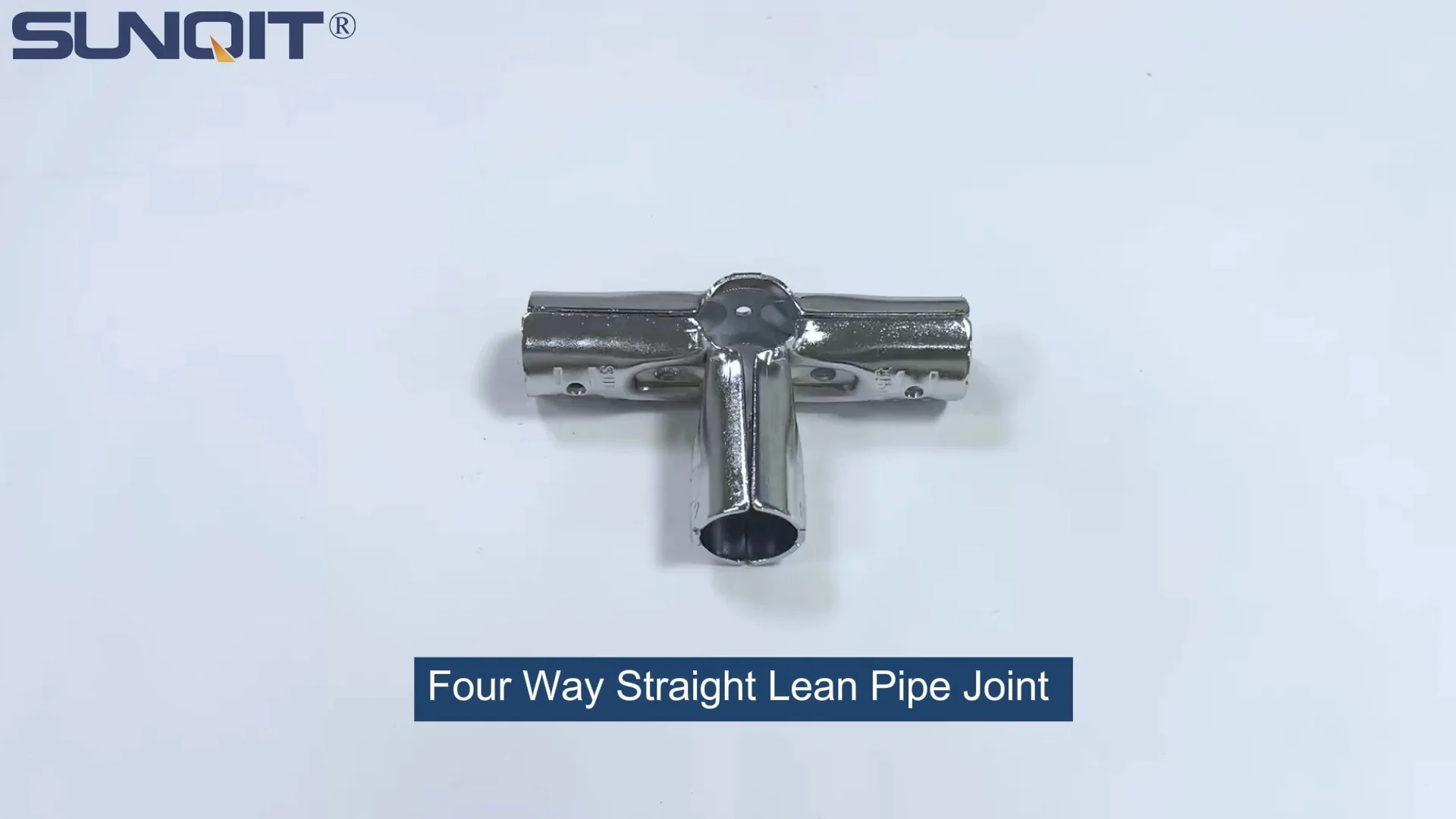
In today's fast-paced manufacturing landscape, businesses are caught in a delicate balancing act: they must boost productivity and cut costs while simultaneously reducing their environmental footprint. This dual pressure has turned "lean manufacturing" from a buzzword into a critical operational strategy. At the heart of any effective lean system lies adaptability—the ability to evolve with changing production needs without generating excessive waste. Enter the unsung hero of flexible manufacturing: the four way straight lean pipe joint chrome. This unassuming component is more than just a connector; it's a cornerstone of sustainable lean systems, enabling businesses to build, reconfigure, and reuse workspaces and workflows with minimal environmental impact. Let's dive into how this small but mighty joint is reshaping the future of manufacturing.
Lean Systems: Beyond Efficiency—A Commitment to Sustainability
Before we explore the specifics of the four way straight lean pipe joint chrome, it's essential to ground ourselves in what a "lean system" truly entails. Lean manufacturing, born from the Toyota Production System (TPS) in the mid-20th century, was originally focused on eliminating seven types of waste (or "muda"): overproduction, waiting, transportation, defects, inventory, motion, and overprocessing. Over time, however, the definition has expanded to include sustainability as a core pillar. Today's lean systems don't just aim to cut costs—they strive to create closed-loop processes where resources are used efficiently, waste is minimized, and long-term environmental health is prioritized.
Central to this evolution is the concept of "adaptable infrastructure." Traditional manufacturing setups often rely on fixed, welded structures: think heavy steel workbenches bolted to the floor, rigid assembly lines that can't be reconfigured, or custom racks designed for a single product. When production needs change—whether due to a new product launch, shifting demand, or process improvements—these structures become obsolete. They're either scrapped (adding to landfill waste) or require expensive modifications, undermining both cost-efficiency and sustainability goals.
Lean systems, by contrast, thrive on flexibility. They use modular components that can be easily assembled, disassembled, and reassembled to fit new needs. This is where lean pipe systems—composed of pipes, joints, and accessories—shine. And among these components, the four way straight lean pipe joint chrome stands out as a linchpin, enabling the creation of complex, sturdy structures that don't sacrifice adaptability.
The Four Way Straight Lean Pipe Joint Chrome: A Closer Look
At first glance, a four way straight lean pipe joint chrome might seem like a simple piece of hardware. But its design is a masterclass in functional engineering. Let's break down what makes it unique:
Design and Functionality
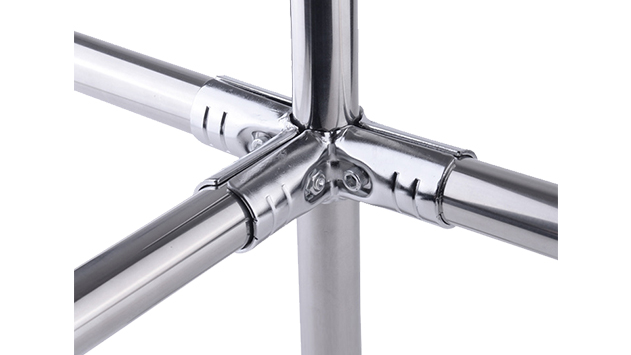
As the name suggests, this joint is designed to connect four lean pipes in a straight, linear configuration. Picture a central hub with four threaded ports, each aligned at 180-degree angles (two along one axis, two along the perpendicular axis), allowing pipes to extend in four directions. This design is incredibly versatile: it can form the backbone of a workbench frame, the vertical supports of a material rack, or the crossbars of a conveyor system. Unlike fixed joints, which lock pipes into a single position, the chrome-plated four way joint uses set screws or clamping mechanisms to secure pipes, making disassembly as easy as loosening a few bolts.
Material: Chrome Plating for Durability
The "chrome" in its name isn't just for aesthetics. Chrome plating adds a protective layer to the underlying metal (typically steel or aluminum), enhancing corrosion resistance. In manufacturing environments—where spills, humidity, or chemical exposure are common—this durability is critical. A chrome-plated joint can withstand years of heavy use without rusting or degrading, ensuring that the structures built with it remain stable and safe over time. This longevity directly contributes to reusability: a joint that lasts 10 years (instead of 2-3 years for unplated alternatives) can be repurposed dozens of times across multiple projects.
Compatibility with Lean Pipes
One of the key advantages of this joint is its compatibility with standard lean pipes. Most lean pipe systems use pipes with diameters ranging from 28mm to 32mm (common in PE-coated lean pipes) or 40mm (for aluminum or stainless steel pipes). The four way straight joint is engineered to fit these standard sizes, meaning it can be used with existing lean pipe inventory. This interoperability is crucial for businesses transitioning to lean systems: they don't need to replace all their pipes—just add joints to create new configurations.
Reusability: The Green Heart of the Chrome Joint
Sustainability in manufacturing isn't just about using recycled materials (though that helps). It's about extending the lifecycle of products and components. The four way straight lean pipe joint chrome excels here, thanks to three key attributes:
1. Tool-Free Disassembly and Reassembly
Traditional welded joints require cutting torches or grinders to disassemble—processes that damage both the joint and the pipe, making reuse impossible. The chrome four way joint, however, uses mechanical fasteners (set screws, hex bolts, or cam levers) to secure pipes. A worker with a basic wrench or Allen key can disassemble a structure in minutes, removing the joint intact and reusing it in a new setup. This simplicity reduces downtime when reconfiguring workspaces and eliminates the need for specialized labor.
2. Resistance to Wear and Tear
Every time a component is disassembled and reassembled, there's a risk of wear: threads can strip, clamping surfaces can warp, or plating can chip. The chrome plating on these joints minimizes this risk. Chrome is a hard, low-friction material, so repeated tightening and loosening of screws doesn't degrade the joint's integrity. Even after a dozen reconfigurations, the joint maintains its grip on pipes, ensuring structural stability. This resilience means fewer joints end up in the trash, reducing waste and lowering replacement costs.
3. Compatibility Across Generations of Lean Systems
Lean pipe technology has evolved over the years, with new materials (like aluminum lean pipes) and accessories (like casters or roller tracks) entering the market. The four way straight lean pipe joint chrome has kept pace. Most manufacturers design these joints to be compatible with both older steel pipes and newer aluminum or stainless steel options. This backward compatibility ensures that even as a business upgrades its lean system, its existing joints remain useful. For example, a joint used in a steel workbench in 2015 can today be repurposed to build an aluminum material rack, extending its lifecycle by decades.
| Metric | Traditional Welded Joints | Four Way Straight Lean Pipe Joint Chrome |
|---|---|---|
| Reusability | Low: Welded joints damage pipes; cannot be disassembled without destruction. | High: Can be disassembled and reused >10 times without performance loss. |
| Waste Generation | High: Obsolete structures are scrapped, contributing to metal waste. | Low: Joints and pipes are repurposed; only minimal wear parts (e.g., screws) need replacement. |
| Carbon Footprint | High: Requires energy-intensive welding; frequent replacement means more manufacturing emissions. | Low: One joint replaces multiple welded structures over time; reduces manufacturing demand. |
| Cost Over Time | High: Frequent replacement of fixed structures increases long-term costs. | Low: Initial investment pays off via reuse; reduces need for new hardware. |

Real-World Impact: How Manufacturers Are Using the Chrome Joint
To understand the value of the four way straight lean pipe joint chrome, let's look at how it's being used in actual manufacturing settings. These examples highlight its role in driving sustainability and efficiency.
Case Study 1: Automotive Parts Manufacturer
A mid-sized automotive parts supplier in Michigan faced a common challenge: its production lines were optimized for SUV components, but shifting consumer demand required a pivot to electric vehicle (EV) parts. The company's existing assembly workbenches were fixed steel structures, custom-built for SUV part dimensions. Redesigning them would mean scrapping 12 workbenches, generating 2 tons of steel waste, and spending $45,000 on new workbenches.
Instead, the manufacturer turned to a lean pipe supplier specializing in modular systems. Using four way straight lean pipe joint chrome, they disassembled the old workbenches (salvaging 90% of the pipes and joints) and reassembled them into new, taller workbenches designed for EV battery components. The process took two weeks (vs. 6 weeks for custom workbenches) and cost $12,000—73% less than the alternative. Over the next three years, as EV production scaled, they reconfigured the same workbenches twice more, using the same chrome joints. By 2024, the company estimates it has saved $120,000 in hardware costs and diverted 8 tons of metal from landfills.
Case Study 2: Electronics Assembly Plant
An electronics plant in Malaysia produces smartphones and tablets, where product cycles are notoriously short (6–12 months). For each new model, the plant needs to reconfigure its material flow racks to accommodate different component sizes. Historically, it used wooden pallets and fixed plastic racks, which were discarded after each product launch, creating massive waste.
Switching to lean pipe systems with four way straight lean pipe joint chrome transformed their operations. The plant now builds modular material racks using chrome joints, aluminum lean pipes, and roller tracks. When a new product launches, workers disassemble the old racks and reassemble them using the same joints. For example, a 3-row, 3-floor material rack (a common setup in their facility) can be reconfigured into a 2-row, 4-floor rack in under a day. In 2023 alone, the plant reused 200+ chrome joints across 15 rack reconfigurations, reducing waste by 85% and cutting material costs by $60,000 annually.
The Role of the Lean Pipe Supplier: Ensuring Quality and Support
While the four way straight lean pipe joint chrome is a powerful tool, its effectiveness depends on partnering with a reliable lean pipe supplier. A quality supplier does more than sell hardware—they provide expertise, consistency, and support that maximize the joint's reusability and longevity.
What should manufacturers look for in a supplier? First, material quality: the joint's base metal should be high-grade steel or aluminum, and the chrome plating should meet industry standards (at least 0.0005 inches thick for corrosion resistance). Second, compatibility: the supplier should offer joints that work with a range of pipe sizes and materials (PE-coated, aluminum, stainless steel). Third, technical support: look for suppliers that provide assembly guides, load capacity charts, and on-site training to ensure workers can disassemble and reassemble structures safely.
Many leading lean pipe suppliers also offer take-back programs, where old joints are refurbished (re-plated, new screws added) and resold at a discount. This closes the loop on sustainability, turning "used" joints into like-new components for smaller manufacturers or startups.
Looking Ahead: The Future of Lean Pipe Joints in Sustainable Manufacturing
As manufacturers embrace circular economy principles and Industry 4.0, the role of the four way straight lean pipe joint chrome is evolving. Here are two trends to watch:
1. Smart Joints for Smart Factories
Emerging technologies are integrating IoT sensors into lean pipe joints. Imagine a chrome joint with a built-in RFID tag that tracks its lifecycle (how many times it's been reused, load capacity remaining) or a pressure sensor that alerts workers if a pipe is loose. These "smart joints" would enable predictive maintenance, ensuring structures stay safe while maximizing reusability. While still in prototype stages, early adopters (like automotive giants) are already testing these innovations.
2. Bio-Based and Recycled Materials
Suppliers are exploring more sustainable base materials for joints. One promising development is using recycled steel for the joint core, reducing reliance on virgin metal. Another is plant-based lubricants for the set screws, replacing petroleum-based options. These tweaks, while small, add up: a lean pipe supplier using 100% recycled steel could reduce a joint's carbon footprint by 30%.
Why the Four Way Straight Lean Pipe Joint Chrome Matters
In the grand scheme of manufacturing, a single joint might seem insignificant. But when multiplied across thousands of factories, the four way straight lean pipe joint chrome becomes a catalyst for change. It embodies the lean philosophy: do more with less, eliminate waste, and build systems that adapt to human needs—not the other way around.
For manufacturers, the message is clear: sustainability and efficiency aren't competing goals. By investing in reusable components like the chrome joint, businesses can cut costs, reduce waste, and future-proof their operations. And for the planet, every reused joint is a step toward a manufacturing sector that respects resource limits and prioritizes circularity.
So the next time you walk through a factory, take a closer look at the workbenches, racks, and assembly lines. Chances are, you'll spot the unassuming four way straight lean pipe joint chrome—quietly doing its part to build a more sustainable future, one connection at a time.