- Company Articles
- Products and Technology
- Product knowledge
- Four Way Straight Lean Pipe Joint Chrome: Surface Finish and Texture Analysis

Four Way Straight Lean Pipe Joint Chrome: Surface Finish and Texture Analysis
Related Product
Four Way Straight Lean Pipe Joint Chrome
Four way lean pipe joint for 4 pcs 28MM lean pipe connection in straight angle, which used widely in workbench, flow rack, hand trolley frame connection.
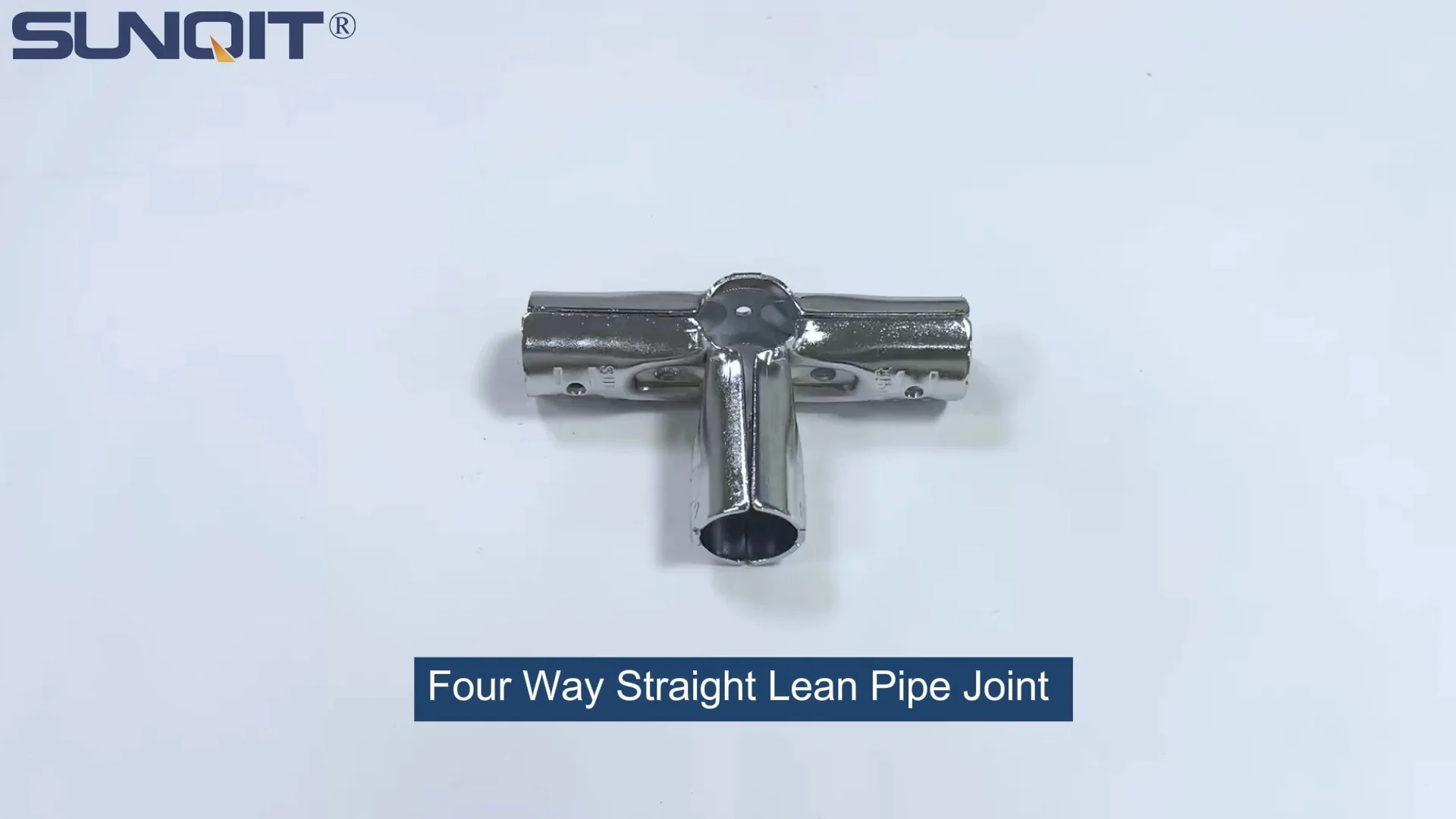
The Backbone of Lean Systems: Unpacking the Four Way Straight Lean Pipe Joint Chrome
In the fast-paced world of manufacturing, where efficiency and adaptability can make or break a production line, lean systems have become the gold standard. At the heart of these systems lies a network of modular components—flexible, durable, and designed to work in harmony. Among these unsung heroes are lean pipe joints, the quiet connectors that hold everything together. Today, we're zeroing in on a standout in this category: the four way straight lean pipe joint chrome. More than just a metal piece, this joint is a testament to how thoughtful engineering can elevate an entire workflow. Let's dive into its surface finish, texture, and why it matters for your lean system.
First Things First: What Are Lean Pipe Joints, Anyway?
Before we zoom into the specifics of the four way straight chrome joint, let's ground ourselves in the basics. Lean pipe joints are the connectors that link lean pipes (also called "lean tubes")—hollow tubes typically made of steel, aluminum, or stainless steel—into structures like workbenches, flow racks, conveyors, and turnover trolleys. Think of them as the "Lego blocks" of manufacturing: simple on their own, but when combined, they create customized, scalable systems that adapt to changing production needs.
Joints come in various shapes to enable different configurations: T-joints for branching, L-joints for corners, and four way joints for connecting pipes in four straight directions (up, down, left, right). The four way straight lean pipe joint is particularly useful for building symmetrical structures, like multi-tiered material racks or wide workbenches, where equal weight distribution and stability are key. And when that joint is coated in chrome? It's not just about looks—it's about performance, longevity, and precision.
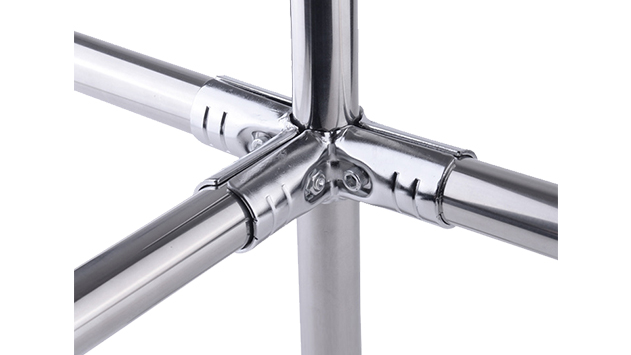
The Star of the Show: Four Way Straight Lean Pipe Joint Chrome
Let's get up close with the four way straight lean pipe joint chrome. At first glance, it's a compact, robust component, usually made of a steel alloy base. Its defining feature? The chrome plating that covers its surface, giving it a sleek, reflective finish. But this isn't just chrome for show. Chrome plating is a deliberate choice, offering a unique blend of durability and functionality that makes it ideal for industrial settings.
The "four way straight" design means the joint has four connection points aligned along a single axis, allowing pipes to extend in four perpendicular directions. This symmetry is critical for building balanced structures—imagine a material rack with three rows and three floors (a common setup in warehouses). The four way joints at the corners ensure each shelf supports weight evenly, preventing sagging or instability over time. Without a reliable joint here, the entire rack could wobble, risking damage to materials or even workplace injuries.

Chrome Plating: More Than Just Shiny—A Process of Precision
To understand why chrome matters, we need to peek into how it's applied. Chrome plating (technically "electroplating") is a multi-step process where a thin layer of chromium is deposited onto the joint's steel surface using an electric current. Here's a simplified breakdown:
1. Preparation: The steel joint starts with a thorough cleaning to remove oil, rust, or debris. Any impurities would ruin the plating adhesion, so this step is non-negotiable. Next, the joint is "etched" with acid to create a slightly rough surface—think of it as tiny hooks for the chromium to cling to.
2. Plating Bath: The cleaned joint is submerged in a bath of chromium trioxide and sulfuric acid, with an electric current passing through. The current causes chromium ions in the bath to bond to the steel, forming a thin, even layer. Plating thickness can vary, but industrial joints typically have a layer between 5-20 microns—thick enough for durability, thin enough to maintain the joint's precise dimensions.
3. Post-Treatment: After plating, the joint is rinsed and dried. Some manufacturers add a final passivation step to enhance corrosion resistance, ensuring the chrome layer stands up to oils, coolants, and humidity in factory environments.
The result? A surface that's not just shiny, but hard, smooth, and resistant to wear. Chrome has a hardness of around 800-1000 HV (Vickers hardness), far harder than the steel beneath it. This means the joint can withstand repeated tightening, loosening, and contact with tools without scratching or deforming—essential for lean systems that are often reconfigured as production needs change.
Surface Finish Analysis: Why Smoothness Matters in Manufacturing
Now, let's talk about "surface finish"—the texture, smoothness, and uniformity of the chrome layer. In manufacturing, surface finish isn't just about aesthetics; it directly impacts performance. For the four way straight lean pipe joint chrome, two metrics matter most: Ra value (roughness average) and adhesion (how well the chrome bonds to the steel base).
Ra value measures the average height of surface irregularities. A lower Ra means a smoother surface. Chrome-plated joints typically have an Ra value between 0.05 and 0.2 micrometers—extremely smooth, especially compared to unplated steel (which might have an Ra of 1.6 micrometers or higher). Why does this matter? A smooth surface reduces friction, making it easier to slide pipes into the joint during assembly (no more struggling with rough edges that catch on the pipe). It also resists dirt, oil, and grime buildup. In a busy factory, where spills and dust are common, a smooth chrome joint is easier to wipe clean, maintaining hygiene and preventing corrosion from trapped debris.
Adhesion is equally critical. If the chrome layer peels or chips, the steel beneath is exposed to moisture and chemicals, leading to rust. High-quality chrome plating uses a "copper-nickel-chrome" triple layer: a thin copper layer for adhesion, a nickel layer for corrosion resistance, and a final chrome layer for hardness. This trio ensures the chrome stays put, even under heavy use—like when a caster wheel jolts a mobile workstation over a uneven floor, or when a workbench supports the weight of heavy tools day in and day out.
Texture: The Tactile and Visual Story of Chrome
Texture isn't just about how something feels—it's about how it interacts with its environment. The texture of a chrome-plated joint has two key dimensions: tactile (how it feels to touch) and visual (how it looks to the eye).
Tactile Texture: Run your finger along a well-plated chrome joint, and you'll notice it's cool and smooth, with no rough spots or burrs. This smoothness is intentional. When workers assemble or reconfigure a lean system, they handle joints repeatedly. A rough texture could cause blisters or scrapes over time—a small annoyance that adds up to lost productivity. Smooth chrome minimizes this risk, making the joint user-friendly even during long shifts.
Visual Texture: Chrome's mirror-like reflectivity isn't just for aesthetics (though it does give workspaces a clean, professional look). It also serves a practical purpose: it makes defects easy to spot. A dull patch, scratch, or discoloration on the chrome surface is immediately visible, alerting quality control teams to potential issues like poor plating adhesion or damage during shipping. In a lean system, where every component matters, this visual feedback loop helps maintain high standards.
Chrome vs. Other Finishes: Why Chrome Stands Out
Chrome isn't the only finish available for lean pipe joints. You might also encounter PE-coated (plastic-coated) joints, stainless steel joints, or even painted joints. So why choose chrome? Let's break down the pros and cons with a quick comparison:
| Finish Type | Durability | Corrosion Resistance | Ease of Cleaning | Aesthetics | Best For |
|---|---|---|---|---|---|
| Chrome-Plated | High (hard, scratch-resistant) | High (triple-layer protection) | Very Easy (smooth surface resists grime) | Sleek, reflective, professional | Heavy-use workbenches, flow racks, cleanrooms |
| PE-Coated | Medium (prone to scratches over time) | Medium (plastic layer blocks moisture, but can chip) | Easy (non-porous, but scratches trap dirt) | Matte, available in colors (yellow, grey) | Light-duty applications, low-cost setups |
| Stainless Steel | Very High (naturally hard, rust-resistant) | Very High (no plating needed; alloy resists corrosion) | Easy (smooth, but less reflective than chrome) | Industrial, matte silver | Food processing, pharmaceutical (hygiene-critical) |
Chrome strikes a sweet spot: it's more durable than PE-coated joints, more affordable than stainless steel, and easier to clean than both. For most general manufacturing environments—automotive, electronics, packaging—chrome-plated four way joints offer the best balance of performance and value.
Real-World Impact: Where Four Way Chrome Joints Shine
To see why these joints matter, let's step into a hypothetical (but realistic) scenario: a mid-sized electronics factory that assembles smartphones. The factory uses a lean system with workbenches, flow racks, and conveyors to move components from one station to the next.
At the heart of their material rack B (a 3-row, 3-floor setup holding circuit boards and small parts) are four way straight chrome joints. Each joint connects the vertical and horizontal aluminum pipes that form the rack's frame. Because the joints are chrome-plated, they resist the oils and coolants used in nearby assembly machines, preventing rust that could weaken the structure. Their smooth surface makes it easy for workers to adjust shelf heights when new components (like larger batteries) arrive—no need for brute force to twist pipes into place.
On the assembly line, the factory uses a roller track conveyor to move phone casings. The roller track is mounted on a frame built with four way chrome joints. The joints' symmetry ensures the track stays level, so casings glide smoothly without jamming—a critical detail for preventing scratches on the casings. And when the factory reconfigures the line to produce a new phone model, the joints disassemble quickly, with no stuck pipes or stripped threads, saving hours of downtime.
In this scenario, the four way chrome joints aren't just "parts"—they're enablers of efficiency. They reduce maintenance costs (no rust to repair), minimize assembly time, and ensure the system adapts as needs change. That's the power of a well-designed lean component.
Choosing the Right Lean Pipe Supplier: Why Quality Matters
Not all four way straight lean pipe joint chrome products are created equal. The quality of the chrome plating, the precision of the joint's dimensions, and the reliability of the steel base depend heavily on the lean pipe supplier. A subpar supplier might cut corners—using thinner chrome layers, skipping the nickel undercoat, or using low-grade steel—resulting in joints that rust, bend, or fail prematurely.
So what should you look for in a supplier? Start by asking about their plating process: do they use the copper-nickel-chrome triple layer? Can they provide test reports for salt spray resistance (a common test for corrosion, where joints are exposed to salt mist for 500+ hours to check for rust)? Reputable suppliers will also have strict quality control checks, like measuring Ra values for surface smoothness and inspecting for plating uniformity under magnification.
Compatibility is another key factor. Your four way joints need to work seamlessly with other components: aluminum pipes, roller track connectors, caster wheels, and workbench accessories. A good supplier will offer a full range of lean pipe and accessories, ensuring everything fits together perfectly. For example, if you're building a workbench E (single deck, without casters), the supplier should guarantee that their four way chrome joints align with the workbench's aluminum profiles and roller track placon mounts.
Maintenance 101: Keeping Chrome Joints in Top Shape
Even the best chrome joints need a little care to last. Here are simple tips to extend their lifespan:
Clean Regularly: Wipe joints with a soft, damp cloth to remove dust and oil. For stubborn grime, use a mild detergent (avoid abrasive cleaners that scratch the chrome).
Inspect for Damage: Check joints monthly for chips, cracks, or peeling chrome. If you spot damage, replace the joint promptly—exposed steel will rust quickly.
Lubricate Threads: If your joints use threaded connections, apply a small amount of anti-seize lubricant to threads before assembly. This prevents galling (seizing due to friction) and makes disassembly easier later.
Avoid Over-Tightening: Use a torque wrench to tighten joints to the supplier's recommended specs. Over-tightening can warp the joint or strip threads, weakening the connection.
Conclusion: The Quiet Power of a Well-Made Joint
The four way straight lean pipe joint chrome might not be the most glamorous component in a lean system, but it's undeniably one of the most critical. Its chrome plating isn't just about shine—it's a shield against corrosion, a tool for easy assembly, and a marker of quality. Its smooth texture and symmetrical design ensure stability, adaptability, and longevity in even the busiest factories.
Whether you're building a workbench for precision electronics, a flow rack for warehouse storage, or a conveyor for automotive parts, the right joints make all the difference. And when those joints are chrome-plated, supplied by a trusted partner, and maintained with care, they become more than parts—they become the foundation of a lean system that grows with your business.
So the next time you walk through a factory, take a moment to look at the structures around you. Chances are, there's a four way straight lean pipe joint chrome holding it all together—quietly, reliably, and with a little help from that iconic, reflective finish.