- Company Articles
- Products and Technology
- Product knowledge
- Four Way Straight Lean Pipe Joint Chrome: Vibration Resistance in Conveyor Systems

Four Way Straight Lean Pipe Joint Chrome: Vibration Resistance in Conveyor Systems
Related Product
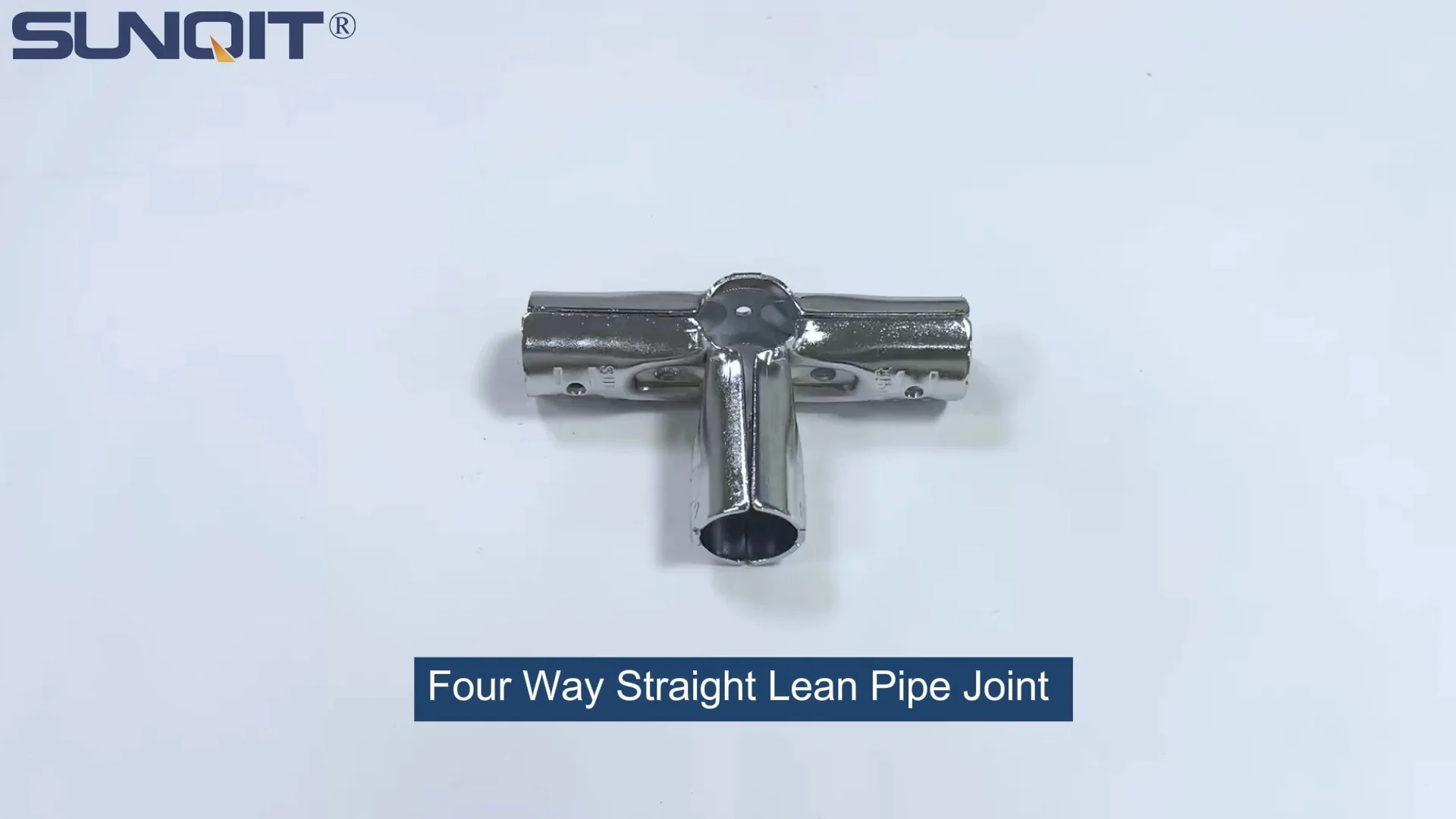
Four Way Straight Lean Pipe Joint Chrome
Four way lean pipe joint for 4 pcs 28MM lean pipe connection in straight angle, which used widely in workbench, flow rack, hand trolley frame connection.
Imagine standing on a factory floor: the hum of machinery, the rhythmic clatter of parts moving, and the steady flow of materials gliding along conveyor belts. This isn't just noise and motion—it's the heartbeat of production. Every second, every component, and every connection matters. At the center of this orchestration? Conveyor systems. They're the arteries that keep production alive, moving everything from tiny circuit boards to heavy engine parts with precision. But what happens when those arteries start to "tremble"? Vibration, the silent disruptor, can turn a smooth operation into a chaotic mess. Today, we're diving into how one unsung hero—the four way straight lean pipe joint chrome—quiets the chaos and keeps your production line steady.
The Hidden Enemy: Vibration in Conveyor Systems
Vibration might seem like a minor annoyance, but in manufacturing, it's a wolf in sheep's clothing. Let's break it down: when a conveyor runs, motors spin, belts move, and parts shift. All that activity creates tiny (and not-so-tiny) shakes. At first glance, they're easy to ignore. But over time, these vibrations add up—like a dripping faucet wearing down stone. Loose bolts, misaligned tracks, damaged products, even worker fatigue—vibration is the root cause of more production headaches than you might think.
Consider this: in an electronics plant, a conveyor moving delicate microchips. A small vibration could jostle a chip out of place, leading to a defective product. In an automotive factory, a vibrating conveyor might loosen a joint on a line carrying engine blocks, slowing down the entire assembly process while workers fix the issue. And let's not forget safety—excessive vibration can weaken structures over time, turning a stable workbench into a hazard. Vibration doesn't just hurt efficiency; it hurts the bottom line, too. Repairs, rework, and downtime add up fast. So, how do we fight back?
Meet the Hero: Four Way Straight Lean Pipe Joint Chrome
Enter the four way straight lean pipe joint chrome—a small component with a big job. If conveyor systems are the arteries, then lean pipe joints are the valves that keep everything connected and flowing. But not all joints are created equal. This one? It's built to stand up to vibration like a seasoned bouncer at a crowded club—firm, reliable, and unyielding.
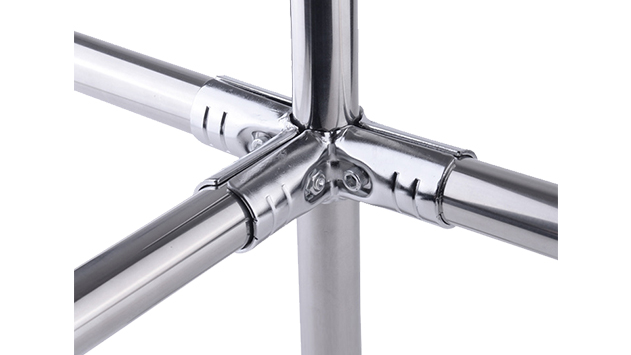
Let's start with the basics. A "four way straight" joint does exactly what it sounds like: it connects four lean pipes in a straight line (think of a cross shape, but linear). That means it can anchor pipes going up, down, left, and right, creating a sturdy frame for conveyor rails, workbenches, or material racks. Now, the "chrome" part? That's not just for shine. Chrome plating adds a layer of protection, making the joint resistant to rust, corrosion, and wear—critical in busy factories where oil, grease, and humidity are part of the daily grind.
But the real magic is in the design. Unlike flimsy plastic joints or basic metal connectors, this one is engineered with precision. It's typically made from high-grade steel, then chrome-plated for durability. The internal mechanism—often a combination of set screws and compression fittings—grips lean pipes tight, leaving no room for wiggling. And because it's a four way joint, it distributes weight and stress evenly across all connected pipes, preventing any single point from bearing too much load. That even distribution? That's key to taming vibration.
How It Tames Vibration: The Engineering Behind the Resistance
So, what makes this joint so good at fighting vibration? Let's get technical (but don't worry—we'll keep it simple). Vibration thrives on weak points: loose connections, flexible materials, uneven weight distribution. The four way straight lean pipe joint chrome attacks all three.
Material Matters:
Steel is tough, but chrome-plated steel? Even tougher. Steel's high tensile strength means it doesn't flex under pressure. When a conveyor vibrates, the joint absorbs the shock instead of bending or twisting. The chrome plating adds a smooth, hard surface that reduces friction between the joint and the lean pipe, so there's less movement (and thus less vibration) at the connection point.
Structural Smarts:
The four way design isn't just about connecting more pipes—it's about balance. Imagine a table with one leg versus four legs. Which is more stable? The four-legged table, of course. This joint works the same way. By spreading the load across four directions, it creates a rigid frame that resists shaking. Even if one pipe vibrates a little, the others act as anchors, keeping the whole structure steady.
Lock It In:
Ever tried to build a bookshelf with loose screws? It wobbles, right? This joint avoids that with a secure locking system. Most models use hex screws or cam levers that tighten down on the lean pipe, creating a friction fit that's almost impossible to shake loose. No more "just a little loose" connections—this joint stays tight, even when the conveyor is running at full speed.

Beyond Vibration: Additional Benefits You'll Love
Vibration resistance is the star feature, but this joint brings more to the table. Let's talk versatility. Lean pipe systems are all about flexibility—being able to reconfigure your production line on the fly. This joint plays well with others: it works with standard lean pipes, aluminum pipes, and even stainless steel pipes. Need to adjust your conveyor's height? Swap out a short pipe for a long one, tighten the joint, and you're good to go. No special tools, no complicated setup—just quick, easy changes.
Durability is another win. Factories are tough environments, but this joint laughs in the face of tough. The chrome plating resists scratches, rust, and corrosion, so it looks (and works) like new for years. And because it's made from steel, it can handle heavy loads—perfect for conveyors moving bulky items like car parts or large machinery components.
Let's not forget compatibility with other components. Pair this joint with roller track, and you've got a smooth, vibration-free conveyor surface. Add a workbench at the end of the line, connected via the same joint, and you've created a seamless workflow—materials glide off the conveyor, onto the workbench, and into production without a hitch. Even caster wheels, which add mobility to carts and workbenches, work well with this joint. The stability it provides means you can move a cart loaded with parts without worrying about it shaking apart mid-roll.
Real-World Applications: Where It Shines
Let's paint a picture. Imagine a busy automotive assembly line. Conveyors snake through the factory, carrying door panels, dashboards, and engine parts. At one station, a conveyor moves transmission housings—heavy, expensive, and critical to the car's performance. In the past, this line had issues: the conveyor vibrated so much that the housings would shift, leading to misalignment during installation. Workers spent extra time adjusting the parts, and occasionally, a housing would get scratched, becoming scrap.
Then, the plant switched to using four way straight lean pipe joint chrome to rebuild the conveyor frame. The result? The vibrations dropped dramatically. The housings stayed in place, alignment issues decreased by 80%, and scrap rates plummeted. Workers reported less fatigue (no more fighting with shifting parts), and the line ran smoother than ever. All because of a better joint.
Or take a smaller example: a electronics workshop assembling smartphones. The conveyor here moves tiny circuit boards, each with delicate components. Even a small vibration could knock a resistor or capacitor loose. By using this joint to build the conveyor's support structure, the workshop eliminated those micro-vibrations. Defect rates dropped, and the team could trust that each board arriving at the workbench was in perfect condition.
Comparing the Competition: Why Four Way Chrome Stands Out
Not all lean pipe joints are created equal. Let's see how the four way straight chrome joint stacks up against some common alternatives:
| Joint Type | Number of Connections | Vibration Resistance | Best For |
|---|---|---|---|
| Two Way Lean Pipe Joint | 2 (straight line) | Low-Medium (only two points of support) | Simple, lightweight structures (e.g., small shelving) |
| Three Way Lean Pipe Joint | 3 (T-shape or Y-shape) | Medium (better than two way, but uneven weight distribution) | Branching conveyor lines with light to medium loads |
| Four Way Straight Lean Pipe Joint Chrome | 4 (cross or straight line) | High (even weight distribution, steel + chrome durability) | Heavy-duty conveyors, workbenches, and high-vibration environments |
| 90° Crossing Lean Pipe Joint | 2 (perpendicular) | Medium-Low (crossing design can create stress points) | Right-angle turns in light conveyor systems |
As the table shows, the four way straight chrome joint outperforms others in vibration resistance, thanks to its multiple connection points and robust design. It's the go-to choice when stability and durability are non-negotiable.
Building a Resilient System: Pairing with the Right Accessories
A great joint is just one piece of the puzzle. To create a truly vibration-resistant conveyor system, you need to pair it with the right accessories. Let's start with lean pipe itself. Opt for high-quality steel or aluminum lean pipe—strong, straight, and free of defects. A bent or weak pipe will vibrate no matter how good the joint is. Next, roller track. Choose heavy-duty roller track with smooth, well-spaced rollers to minimize friction (less friction = less vibration). And don't skimp on caster wheels if mobility is needed—look for ones with locking brakes and shock-absorbing features to complement the joint's stability.
Workbenches are another key component. When building a workbench at the end of a conveyor, use the same four way joint to connect the legs and frame. This ensures the workbench and conveyor are aligned and stable, so materials can move from one to the other without jostling. Add a non-slip surface to the workbench, and you've got a setup that's both vibration-resistant and worker-friendly.
Conclusion: Small Component, Big Impact
In the world of manufacturing, it's easy to focus on the big stuff—high-tech robots, fancy software, state-of-the-art machinery. But the truth is, the small components often make the biggest difference. The four way straight lean pipe joint chrome might not have flashy lights or a cool name, but it's the unsung hero keeping your conveyor systems steady, your products intact, and your production line running smoothly.
Vibration is a silent enemy, but it's no match for a well-engineered joint. By choosing components that prioritize stability, durability, and precision, you're not just building a conveyor system—you're building a foundation for success. So, the next time you walk through your factory, take a moment to appreciate the little things. That chrome joint holding your conveyor together? It's not just a piece of metal. It's the reason your line keeps moving, your products stay perfect, and your team stays productive. And in manufacturing, that's everything.