- Company Articles
- Products and Technology
- Product knowledge
- Four Way Straight Lean Pipe Joint Chrome vs. Three Way Joints: When to Choose Which?

Four Way Straight Lean Pipe Joint Chrome vs. Three Way Joints: When to Choose Which?
Related Product
Four Way Straight Lean Pipe Joint Chrome
Four way lean pipe joint for 4 pcs 28MM lean pipe connection in straight angle, which used widely in workbench, flow rack, hand trolley frame connection.
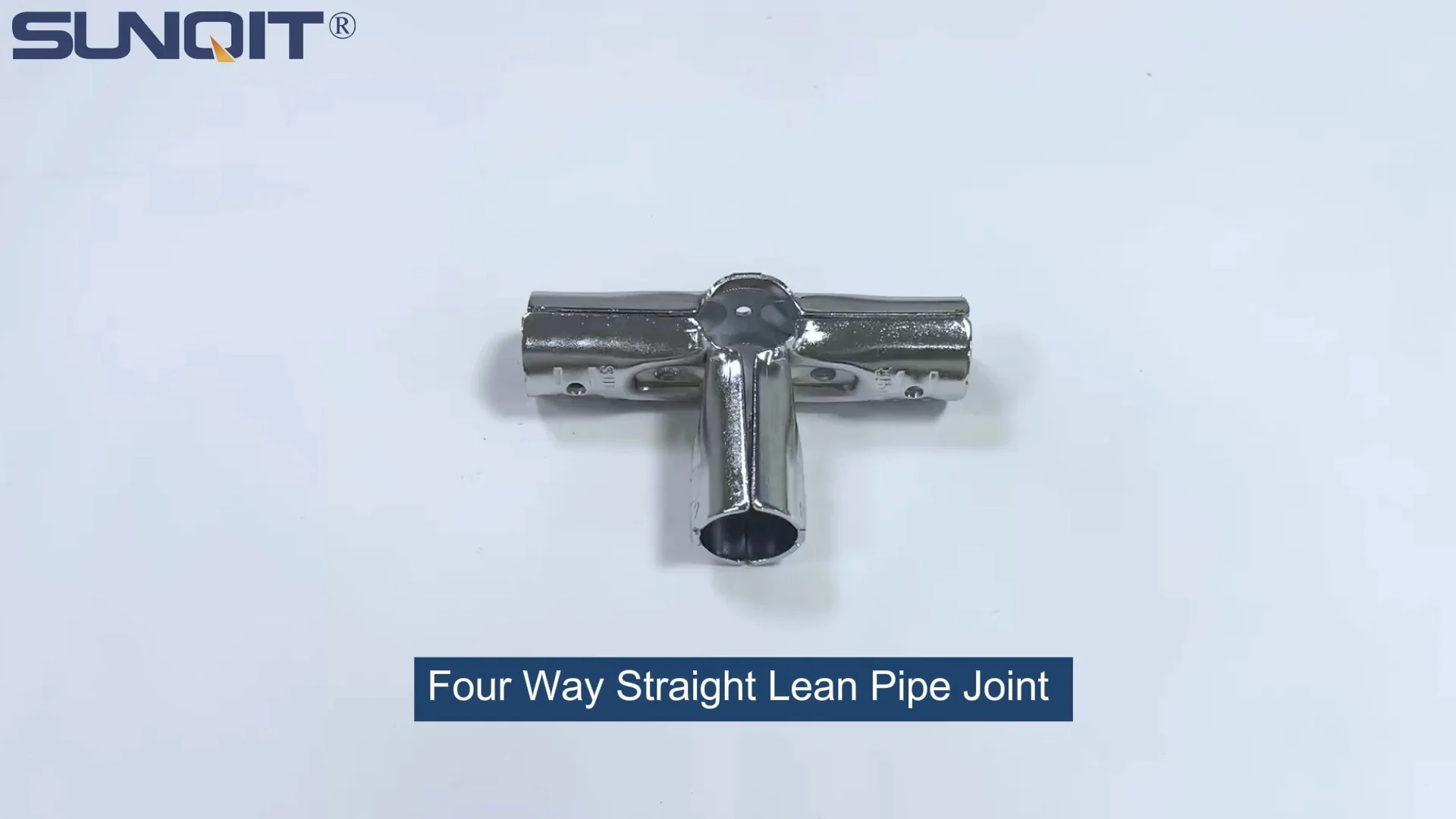
In the world of lean manufacturing and workshop organization, it's often the smallest components that make the biggest difference. You've probably heard about lean pipes, flow racks, and workbenches—but have you ever stopped to think about the joints that hold them all together? Those unassuming metal connectors are the backbone of any lean system, dictating how flexible, sturdy, and efficient your setup can be. Today, we're diving deep into two of the most common players in this space: the four way straight lean pipe joint chrome and the three way lean pipe joint chrome. By the end, you'll know exactly which one deserves a spot in your next project.
First Things First: What Are Lean Pipe Joints, Anyway?
Before we pit these two joints against each other, let's make sure we're on the same page. Lean pipe systems—often built with aluminum or steel pipes—are all about creating customizable, modular structures. Think workbenches, material racks, flow racks, and even turnover trolleys. These systems thrive on adaptability: if your production line changes next month, you don't want to tear everything down and start over. That's where joints come in. They're the pieces that let you connect pipes at different angles, build up or out, and reconfigure on the fly.
Most lean pipe joints are made from durable materials like chrome-plated steel, which resists rust and stands up to the wear and tear of a busy workshop. They come in various designs, each tailored to specific structural needs. Some let you connect pipes in a straight line, others at 90-degree angles, and some—like the ones we're discussing today—let you branch out in multiple directions. The key is choosing the right joint for how you actually use your space.
Quick Tip: When shopping for joints, always check the material thickness and plating quality. Chrome plating isn't just for looks—it adds a layer of protection against scratches and corrosion, which matters if your workshop deals with moisture or heavy use.
Meet the Four Way Straight Lean Pipe Joint Chrome: The Multi-Tasker
Let's start with the four way straight lean pipe joint chrome. As the name suggests, this joint is designed to connect four pipes in a straight, linear configuration. Picture a cross shape: one pipe runs through the center, and three more branch off at 90-degree angles (up, down, left, right—depending on how you orient it). This might sound simple, but that extra connection point opens up a world of possibilities.
What makes this joint stand out is its versatility in complex structures. Imagine you're building a flow rack for small electronic components. You need shelves on both sides, plus a vertical support in the middle to keep things stable. A four way joint lets you connect the horizontal shelf pipes, the vertical support, and maybe even a side rail for labels—all in one spot. No need for extra brackets or messy overlapping pipes. It's like having a built-in junction box for your lean system.
Another perk? Strength. With four connection points, the load is distributed more evenly across the joint. This is a big deal if you're storing heavy items, like metal parts or toolboxes. I once worked with a automotive parts supplier who switched to four way joints in their material racks, and they noticed a significant reduction in sagging shelves—even when fully loaded with engine components. The chrome plating also meant they didn't have to worry about oil or grease from the parts corroding the joints over time.
When to Reach for the Four Way Joint
Four way straight lean pipe joint chrome truly shines in scenarios where you need multi-directional support or complex, layered structures . Here are a few common use cases:
- Flow Racks with Multiple Levels: If your flow rack has shelves on both sides and needs vertical supports every few feet, four way joints simplify the intersections where shelves, supports, and side rails meet.
- Workbenches with Attachments: A workbench isn't just a flat surface—you might add tool hooks, overhead lighting, or side bins. Four way joints let you connect the bench legs, the tabletop frame, and those extra attachments without cluttering the structure.
- Modular Material Racks: When you need to build racks that can expand in width, height, and depth (think: a rack that starts with 3 rows and 3 floors but might grow to 4 rows next year), four way joints make it easy to add new pipes without disrupting the existing setup.
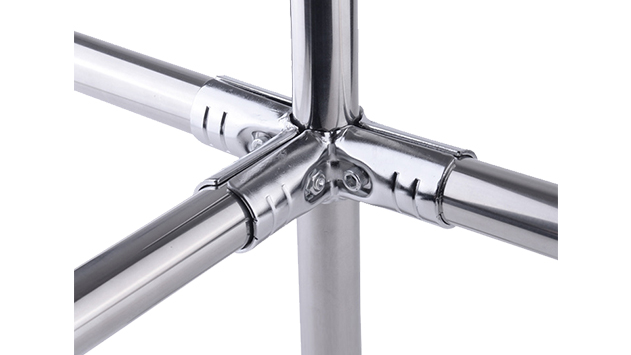
Now, the Three Way Lean Pipe Joint Chrome: The Simplifier
If the four way joint is the multi-tasker, the three way lean pipe joint chrome is the minimalist's best friend. This joint connects three pipes, typically at 90-degree angles—like a "T" shape or an "L" with an extra arm. It's simpler, more compact, and often the go-to for straightforward, no-fuss structures.
Don't let the "simpler" label fool you, though. Three way joints excel in situations where you need clean, uncluttered connections. Let's say you're building a basic workbench: four legs, a frame around the top, and maybe a lower shelf for storage. A three way joint is perfect for the corners, where the vertical leg meets the horizontal frame pieces. It's low-profile, so it doesn't add unnecessary bulk, and it's quick to assemble—even if you're new to lean pipe systems.
I remember helping a small machine shop set up their first lean workbench. They were on a tight budget and short on time, so we went with three way joints. The whole frame went up in under an hour, and because the joints were so straightforward, the team felt confident taking it apart and reconfiguring it later when they added a vice to one end. Sometimes, less really is more.
Cost is another factor here. Three way joints are generally less expensive than four way ones, since they use less material and simpler machining. If you're building a large number of basic structures—like a row of identical workbenches or simple shelving—those savings can add up fast. A lean pipe supplier I with ( with = work with) once told me that customers building 10+ workbenches often opt for three way joints to keep costs down, especially if the structures don't require complex branching.
When to Stick with the Three Way Joint
Three way lean pipe joint chrome is your best bet for simple, linear structures or projects where budget and speed matter most . Here are some scenarios where it outperforms the four way:
- Basic Workbenches: A standard workbench with a flat top, legs, and maybe a lower shelf? Three way joints handle the corners and vertical supports with ease, no extra frills needed.
- Straight-Line Flow Tracks: If you're setting up a roller track for moving boxes from one station to another, three way joints can connect the track rails to the side supports without adding unnecessary bulk that might catch on the boxes.
- Mobile Trolleys: Turnover trolleys need to be lightweight but sturdy. Three way joints keep the frame simple and easy to maneuver, while still supporting the weight of the trolley and its contents.

Head-to-Head: Four Way vs. Three Way Joints
To really see how these joints stack up, let's break down their key differences. The table below compares everything from design to ideal use cases—so you can pick the right one for your next project.
| Feature | Four Way Straight Lean Pipe Joint Chrome | Three Way Lean Pipe Joint Chrome |
|---|---|---|
| Connection Points | 4 (straight line, 90-degree angles) | 3 (typically "T" or "L" shape) |
| Best For | Complex structures, multi-directional support, heavy loads | Simple structures, linear setups, budget projects |
| Load Capacity | Higher (even weight distribution across 4 points) | Moderate (good for standard loads) |
| Installation Time | Slightly longer (more connection points to align) | Faster (fewer points, simpler alignment) |
| Cost | Higher (more material, complex design) | Lower (simpler design, less material) |
| Common Applications | Flow racks with multiple levels, heavy-duty material racks, layered workbenches | Basic workbenches, straight roller tracks, mobile trolleys |
Real-World Example: Choosing Between the Two
Let's walk through a hypothetical (but very common) scenario to see how this decision plays out. Say you run a small electronics assembly workshop and need to build two structures:
- A flow rack for storing circuit boards and small components (needs 3 rows and 3 floors, with shelves on both sides).
- A simple workbench for assembling the boards (just a flat top, legs, and a lower shelf for tools).
For the flow rack, the four way joint is a no-brainer. With 3 rows and 3 floors, you'll have vertical supports every few feet to keep the shelves from bowing. Each vertical support will need to connect to the horizontal shelf pipes on both the left and right sides, plus the vertical pipe itself. A four way joint lets you do all three connections in one spot, ensuring the shelves stay level and the structure stays stable—even when you're sliding heavy component trays in and out.
For the workbench, though? A three way joint is more than enough. The corners of the bench frame can use three way joints to connect the front, side, and leg pipes. The lower shelf? Same thing—three way joints at the corners to attach the shelf to the legs. No need for the extra connection point here, and you'll save a few dollars per joint, which adds up if you're building multiple workbenches.
Pro Move: You don't have to pick one joint for your entire workshop! Mix and match based on the structure. Use four way joints in high-stress areas (like heavy racks) and three way joints in simpler setups (like workbenches). Most lean pipe suppliers sell both, so you can stock a few of each to cover all your bases.
What About Adjustability? A Quick Note
One thing to keep in mind with both joints is adjustability. Most lean pipe joints use set screws or bolts to lock the pipes in place, which means you can loosen them and reposition the pipes if needed. However, four way joints can be a bit trickier to adjust once all four pipes are connected—there's more tension pulling in different directions. If you anticipate needing to reconfigure your structure often (say, for seasonal product changes), you might want to test how easy it is to loosen and re-tighten the four way joints. Some manufacturers make them with ergonomic, easy-grip screws that help here—definitely worth asking your lean pipe supplier about.
Three way joints, on the other hand, are generally easier to adjust since there are fewer pipes pulling against each other. I've seen small businesses use three way joints in temporary setups, like pop-up assembly stations for holiday orders, because they can be taken apart and reassembled in minutes.
Final Thoughts: It All Comes Down to Your Needs
At the end of the day, there's no "better" joint—only the right joint for the job. The four way straight lean pipe joint chrome is the heavy lifter, perfect for complex, multi-directional structures that need to handle heavy loads. It's an investment, but one that pays off in stability and versatility.
The three way lean pipe joint chrome, meanwhile, is the reliable workhorse for simple, linear setups where speed, cost, and ease of use are priorities. It won't overcomplicate your structure, and it's gentle on both your budget and your assembly time.
So, before you place your order, take a step back and ask: What am I building? How heavy will the load be? Will I need to reconfigure it later? Answering these questions will point you to the joint that will make your lean system work for you—not against you.
And remember: The best lean systems are built with intention. Whether you choose four way, three way, or a mix, those joints are the quiet heroes keeping your workshop efficient, organized, and ready to adapt. Here's to building something that works as hard as you do.