- Company Articles
- Products and Technology
- Product knowledge
- Four Way Straight Lean Pipe Joint Chrome: Warranty and After-Sales Support Comparison

Four Way Straight Lean Pipe Joint Chrome: Warranty and After-Sales Support Comparison
Related Product
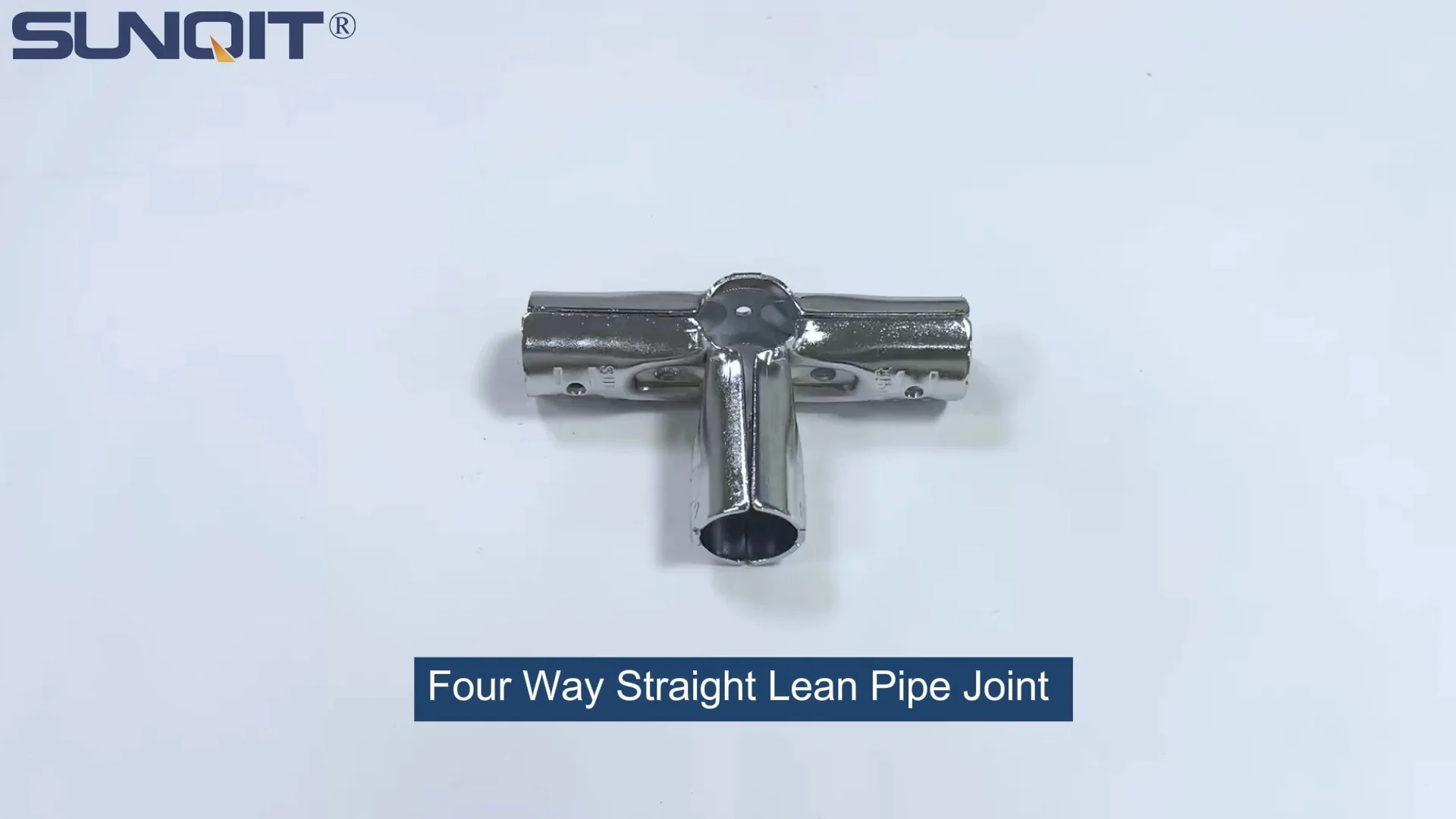
Four Way Straight Lean Pipe Joint Chrome
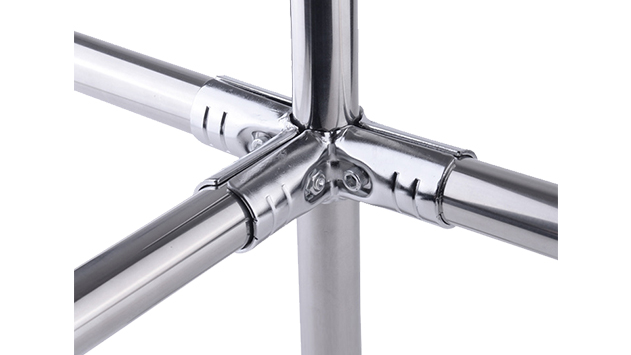
Four way lean pipe joint for 4 pcs 28MM lean pipe connection in straight angle, which used widely in workbench, flow rack, hand trolley frame connection.
It's 8:30 AM on a Tuesday, and Maria, the production manager at a mid-sized electronics manufacturer, is staring at her watch. The morning shift started 30 minutes ago, but the third assembly line is still silent. A quick walk over reveals the issue: a critical joint connecting the roller track to the workbench has failed, bending under the weight of circuit board trays. The line can't run without it, and the supplier's support line? It's been on hold for 20 minutes. "We should've checked their after-sales reviews," she mutters, as the clock ticks toward a missed order deadline.
Moments like these underscore a truth often overlooked in manufacturing: the strength of a lean system depends not just on the quality of its components, but on the reliability of the supplier standing behind them. And when it comes to building flexible, durable workbenches, flow racks, and roller tracks, few components are as essential as the lean pipe joint . Today, we're zeroing in on a workhorse of the industry: the four way straight lean pipe joint chrome. We'll break down why it matters, what to look for in a warranty, and how after-sales support can make or break your production line—because in lean manufacturing, downtime isn't just a delay; it's a drain on every ounce of efficiency you've worked to build.
The Backbone of Lean Systems: What Is the Four Way Straight Lean Pipe Joint Chrome?
Before diving into warranties and support, let's get clear on what this component is and why it's non-negotiable in modern lean system setups. The four way straight lean pipe joint chrome is a connecting piece designed to link multiple lean pipes at 90-degree angles, creating stable, customizable structures. Picture it as the "cornerstone" of your workbench, flow rack, or material trolley—every time you need to branch a pipe horizontally or vertically, this joint is what keeps the whole setup from wobbling, bending, or collapsing under load.
What sets the chrome version apart? Chrome plating adds a layer of durability, resisting corrosion and wear even in high-moisture or dusty environments—common in automotive, electronics, and food processing plants. Unlike unplated steel joints, which might rust after months of use, a quality chrome finish ensures the joint maintains its strength and precision, keeping your workbench level and your roller track gliding smoothly for years.
But its value goes beyond longevity. Lean manufacturing thrives on flexibility—reconfiguring a production line to adapt to new products, scaling up a workbench to accommodate larger components, or repurposing a flow rack for a different department. The four way joint makes this possible. Its modular design lets teams disassemble and rebuild structures without specialized tools, cutting down on retooling time and costs. In short, it's not just a part; it's the enabler of the "lean" in your lean system .
Why Warranty Coverage Matters More Than You Think
When shopping for lean pipe joints, it's easy to fixate on price or delivery time. But ask any production manager who's dealt with a mid-shift failure: a strong warranty isn't a "nice-to-have"—it's a safety net. Let's break down what to look for (and what to avoid) when evaluating warranty terms from a lean pipe supplier .
1. Length: Not All "1-Year Warranties" Are Created Equal
Most suppliers offer a standard 1-year warranty, but dig deeper, and you'll find stark differences. Some cover only manufacturing defects—like a cracked joint straight out of the box—while others extend coverage to premature wear. For example, Supplier X might promise "1 year on defects," but if your joint rusts through in 11 months because the chrome plating was too thin, they could argue it's "normal wear and tear." Supplier Y, by contrast, might explicitly cover "corrosion-related failure for 2 years, provided proper maintenance." That extra year could save you from replacing 50 joints mid-project.
Pro tip: Look for warranties that specify material defects and workmanship separately. A joint that snaps because of a casting flaw (workmanship) should be covered, but one that bends because it was overloaded beyond its weight rating (user error) might not. The best suppliers spell out these terms in plain language, not legalese.
2. Exclusions: The Fine Print That Costs You
Warranty exclusions are where suppliers hide the gotchas. Common red flags include: "Not valid if used with non-branded lean pipes," "Excludes damage from environmental factors," or "Void if installed without a certified technician." For small to mid-sized manufacturers, these can be deal-breakers. If your team uses a mix of aluminum and steel pipes (common for cost savings), a "branded pipes only" clause means your warranty is already null and void. Similarly, if your factory is in a humid region, an "environmental damage" exclusion could leave you footing the bill for rusted joints—even if the plating was subpar.
Case in point: A furniture manufacturer in Florida once bought 200 four way joints with a 1-year warranty, only to have 30% of them corrode within 8 months. The supplier blamed "high humidity," citing the exclusion. The manufacturer, stuck with $2,000 in replacement costs, learned the hard way: always ask, "What isn't covered?"
3. Claims Process: How Easy Is It to Get a Replacement?
A warranty is only as good as the process to claim it. Imagine discovering a cracked joint on a Friday afternoon—your line is down, and you need a replacement by Monday. Supplier A requires you to fill out a 5-page form, email photos, and wait 3-5 business days for approval. Supplier B lets you submit a claim via a mobile app, with a 24-hour response time and next-day shipping on replacements. Which one do you think keeps production on track?
Look for suppliers that prioritize speed: online claim portals, dedicated support reps, and clear timelines. Some even offer "advance replacement"—shipping a new joint before you send back the faulty one—so you're never without a backup. For high-volume operations, this alone can justify paying a few cents more per joint.
After-Sales Support: Beyond the Warranty Card
Warranties cover the "what if it breaks." After-sales support covers the "what now?"—and in manufacturing, "what now?" can mean the difference between a 2-hour delay and a 2-day shutdown. Here's what to demand from your lean pipe supplier .
1. Response Time: Minutes, Not Hours
When a joint fails, every minute counts. A supplier with a 24/7 support line and a 1-hour response time (via phone, email, or chat) can diagnose the issue quickly. Did the joint fail because of a defect, or was it installed incorrectly? A tech rep who can walk your team through troubleshooting over the phone might save you from ordering unnecessary replacements. For example, a quick check: "Is the joint tightened to 35 Nm torque?" could reveal a simple fix, not a faulty part.
Avoid suppliers with "business hours only" support. If your night shift discovers a problem at 2 AM, waiting 8 hours for help could cost you an entire shift's output.
2. Replacement Parts: In Stock When You Need Them
Even the best warranty is useless if the supplier can't ship a replacement joint quickly. Ask: "What's your stock level for four way straight chrome joints?" and "What's your average lead time for out-of-stock items?" A supplier with regional warehouses (e.g., one in California and one in Pennsylvania) can get a replacement to you in 1-2 days. A supplier based overseas with no local stock might take 2-3 weeks—time you can't afford to lose.
Some suppliers go a step further, offering "just-in-time" inventory management for regular customers. They track your usage and automatically ship replacement joints before you run low, so you never hit a stockout. For high-volume lines, this is a game-changer.
3. Technical Expertise: More Than Just "How-To" Guides
Lean systems are rarely "one-size-fits-all." Maybe you need to build a custom workbench with a roller track extension, or you're upgrading from steel to aluminum pipes and aren't sure if the joints are compatible. A great supplier doesn't just sell parts—they act as a partner. Look for those that offer:
- Free design consultations (e.g., "Our engineers can help you calculate the load capacity for your flow rack setup").
- Video tutorials on joint installation and maintenance (e.g., "How to properly torque chrome joints for maximum durability").
- On-site training for your team (especially valuable if you're new to lean manufacturing).
Case study: A medical device manufacturer in Texas was struggling to reduce bottlenecks on their assembly line. Their supplier didn't just send joints—they sent a lean consultant who redesigned the workbench layout, using four way joints to create a U-shaped flow that cut assembly time by 20%. That's the kind of support that turns a vendor into a strategic partner.

Supplier Showdown: Comparing Warranty and Support in Action
To make this tangible, let's compare three hypothetical suppliers—each with different approaches to warranty and after-sales support. We'll call them Supplier A (Budget-Friendly), Supplier B (Mid-Range), and Supplier C (Premium). Which one would you trust with your production line?
| Feature | Supplier A (Budget) | Supplier B (Mid-Range) | Supplier C (Premium) |
|---|---|---|---|
| Warranty Length | 6 months (defects only) | 2 years (defects + corrosion) | 3 years (defects, corrosion, premature wear) |
| Coverage Exclusions | Excludes rust, improper use, non-branded pipes | Excludes overloading (>200kg), user modification | Excludes intentional damage, extreme chemical exposure |
| Support Hours | 9 AM – 5 PM, Mon-Fri (email only) | 24/7 phone/chat support | 24/7 phone/chat + on-site tech support (within 500 miles) |
| Replacement Lead Time | 5-7 business days (standard shipping) | 1-2 days (express shipping included in warranty) | Same-day shipping for critical parts (in-stock items) |
| Technical Resources | PDF manual (on request) | Online video library, live chat troubleshooting | Custom design consultations, on-site training |
At first glance, Supplier A might seem appealing for its low cost, but the 6-month warranty and email-only support could backfire fast. Supplier B offers a solid balance—2 years of coverage, 24/7 support, and quick replacements. Supplier C, while pricier, eliminates risk with a 3-year warranty and on-site help. For a factory running 24/7, the premium might be worth it to avoid downtime.
Real-World Impact: How Support Shapes Your Bottom Line
Let's put this in dollar terms. Suppose your production line generates $5,000 per hour in revenue. A joint failure shuts down the line for 8 hours. With Supplier A: You wait 5 days for a replacement, losing 40 hours of production ($200,000). With Supplier B: You get a replacement in 2 days, losing 16 hours ($80,000). With Supplier C: Same-day shipping gets you back up in 4 hours ($20,000). The "cheap" joint from Supplier A ends up costing you 10x more than the premium option.
Then there's the human cost. Workers grow frustrated with frequent breakdowns, morale drops, and turnover rises. A study by the Manufacturing Institute found that poor equipment reliability and support are top drivers of employee dissatisfaction in production roles. When your team trusts that the tools (and the supplier behind them) won't let them down, they focus on what they do best: building quality products.
Choosing Your Partner: Questions to Ask Before You Buy
Armed with this knowledge, you're ready to vet suppliers. Here's a checklist of questions to ask before placing your order:
- "What exactly does your warranty cover, and for how long?" (Get it in writing.)
- "Can you give examples of claims you've denied, and why?" (Tests their transparency.)
- "What's your average response time for support inquiries?" (Demand a specific number: "1 hour" vs. "promptly.")
- "How do you handle emergency replacements outside business hours?"
- "Do you offer any technical resources or training for installing/maintaining joints?"
- "Can I speak to a current customer who uses your four way chrome joints?" (References are gold.)
Final Thoughts: It's About Partnership, Not Just Parts
The four way straight lean pipe joint chrome might seem like a small component, but it's a linchpin of your lean system . Choosing the right one means balancing quality, cost, warranty, and support. Remember: A supplier that cuts corners on after-sales support is telling you they don't care about your success—only your initial order. Invest in a partner that stands behind their parts, responds when you need them, and treats your downtime as their priority.
As Maria, the production manager from our opening story, later learned: "We switched suppliers after that Monday meltdown. The new one has a 2-year warranty and a tech rep who answers the phone on the first ring. Last month, a joint failed, and they had a replacement to us by noon. We haven't missed a deadline since."
Your production line deserves the same peace of mind. Don't just buy a joint—buy a partnership. Your team, your deadlines, and your bottom line will thank you.