- Company Articles
- Products and Technology
- Application Cases
- Four Way Straight Lean Pipe Joint in 3C Assembly: Optimizing Smartphone Production Lines

Four Way Straight Lean Pipe Joint in 3C Assembly: Optimizing Smartphone Production Lines
Related Product
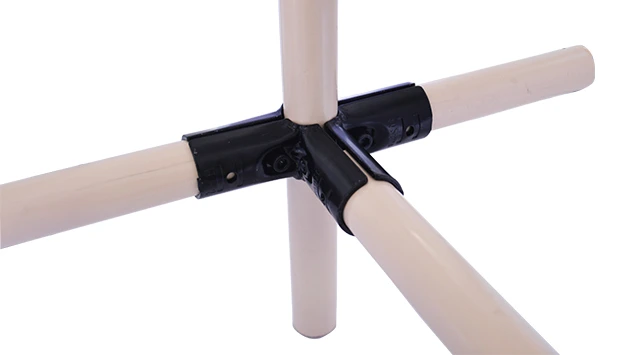
Four Way Straight Lean Pipe Joint
Four way lean pipe joint for 4 pcs 28MM lean pipe connection in straight angle, which used widely in workbench, flow rack, hand trolley frame connection.
In the fast-paced world of 3C manufacturing—where smartphones, tablets, and wearables roll off production lines by the millions—every second, every inch of space, and every component matters. Imagine a factory floor where a single bottleneck in the assembly line can delay the launch of a new smartphone model, costing millions in lost revenue. Or a workspace where reconfiguring a production station to accommodate a new component takes days instead of hours, leaving teams scrambling to meet tight deadlines. These aren't just hypothetical scenarios; they're daily realities for manufacturers in an industry where innovation cycles shrink by the quarter and consumer demand shifts overnight.
This is where the unsung heroes of lean manufacturing step in: the modular, adaptable tools that turn chaotic workflows into streamlined, efficient systems. Among these tools, one component stands out for its quiet versatility: the four way straight lean pipe joint. It's not flashy, it doesn't grab headlines, but in the hands of a skilled production team, it becomes the linchpin of a responsive, agile assembly line. In this article, we'll dive into how this small but mighty joint is transforming smartphone production, why it's become indispensable in lean systems, and how it integrates with flow racks, conveyors, and other lean pipe components to keep 3C manufacturing floors running like well-oiled machines.
The Pressure Cooker of 3C Manufacturing: Why Flexibility Isn't Optional
To understand the role of the four way straight lean pipe joint, we first need to grasp the unique challenges of 3C assembly. Unlike automotive or heavy machinery production, where models change yearly, smartphone manufacturers often release new devices multiple times a year—each with updated components, slimmer designs, or entirely new features. A single production line might need to switch from assembling a 6.7-inch flagship model to a 5.4-inch budget phone in a matter of days. Add to that the need for precision: modern smartphones contain over 300 individual parts, many smaller than a grain of rice, and even a minor misalignment in the assembly process can render a device defective.
Traditional manufacturing setups, with rigid, welded steel workbenches and fixed conveyor systems, simply can't keep up. Welding a new workstation takes time, and modifying a conveyor line requires shutting down production—luxuries 3C manufacturers can't afford. This is where lean manufacturing principles come into play, emphasizing waste reduction, continuous improvement, and, above all, flexibility. And at the heart of lean manufacturing in 3C assembly? Lean pipe systems.
Lean Pipe: The Building Block of Agile Production Lines
Lean pipe—sometimes called "flexible pipe" or "modular pipe"—is exactly what it sounds like: lightweight, durable tubes (often steel or aluminum, coated in plastic for protection) that can be connected with joints to build everything from workbenches and material racks to flow racks and conveyor supports. What makes lean pipe revolutionary is its modularity. Unlike fixed steel structures, lean pipe systems are designed to be taken apart, reconfigured, and reassembled in minutes, without welding, drilling, or specialized tools. It's like playing with industrial-grade building blocks, but with the strength to support heavy components like circuit boards, batteries, and display panels.
But lean pipe alone is just a tube. Its true power lies in the joints that connect it. Joints are the glue that holds lean systems together, determining how easily a workstation can be adjusted, how much weight it can bear, and how quickly teams can adapt to new production needs. And among the dozens of joint types available—two-way, three-way, swivel, and more—the four way straight lean pipe joint has emerged as a favorite for 3C assembly lines. Why? Because it does more than just connect pipes; it creates possibilities.

Meet the Four Way Straight Lean Pipe Joint: A Connector with a Purpose
At first glance, the four way straight lean pipe joint looks simple: a small, often chrome-plated metal piece with four openings, each designed to slide over the end of a lean pipe. But don't let its simplicity fool you. This joint is engineered to solve a specific problem in 3C assembly: the need to create multi-directional workspaces that maximize vertical and horizontal space. Let's break down its design:
- Four-Way Connectivity: As the name suggests, it connects four lean pipes at 90-degree angles—one in each cardinal direction (up, down, left, right). This means a single joint can anchor a workbench leg, a side shelf for tools, a overhead rack for component bins, and a crossbar for cable management—all at once.
- Tool-Free Assembly: Most four way straight joints use a set-screw or clamp mechanism. Slide the lean pipe into the joint, tighten the screw with a hex key, and you're done. No welding, no bolts, no mess. Disassembling is just as easy: loosen the screw, pull out the pipe, and reconfigure.
- Load-Bearing Strength: Despite its lightweight design, a high-quality four way joint (often made from zinc-plated steel or aluminum) can support hundreds of pounds. This is critical for 3C workbenches, which might hold heavy testing equipment or stacks of component trays.
- Corrosion Resistance: Many joints are chrome-plated or coated in anti-rust materials, protecting them from the oils, coolants, and cleaning agents common on 3C factory floors.
But why does this matter for smartphone production? Let's take a typical scenario: A manufacturer receives a last-minute request to add a new step to the assembly line—testing a waterproof seal on the latest model. With a traditional welded workbench, this would require cutting into the existing structure, adding brackets, and rerouting the conveyor line. With a lean pipe system built using four way straight joints? The team can detach the side shelf, add a new section of lean pipe to extend the workbench, mount the waterproof testing tool, and reattach the conveyor support—all in under an hour. No shutdown, no lost production, no panic.

From Joints to Systems: How Four Way Straight Lean Pipe Joints Power Lean Ecosystems
The four way straight lean pipe joint doesn't work in isolation. It's part of a larger ecosystem of lean components, including flow racks, conveyors, and workbenches, all working together to create a seamless production flow. Let's explore how it integrates with two key players in 3C assembly: flow racks and conveyors.
Flow Racks: Keeping Components at Workers' Fingertips
Flow racks—also called "dynamic storage racks"—are a staple in 3C assembly. They use gravity to feed components (like screws, connectors, or small circuit boards) from the back of the rack to the front, ensuring workers always have easy access to parts without wasting time reaching or bending. Flow racks are typically built with lean pipe frames, and here's where the four way straight joint shines: it allows for adjustable shelving heights and widths. For example, a flow rack holding battery packs (which are thicker) might need 12-inch spacing between shelves, while one holding SIM card trays (thinner) needs only 6 inches. With four way joints, adjusting the shelf height is as simple as loosening the screws, sliding the lean pipe up or down, and retightening. No need to buy a new rack—just reconfigure the existing one.
Even better, four way joints let manufacturers add "extensions" to flow racks. If a production line needs more space for component bins, the team can attach a new section of lean pipe to the side of the rack using a four way joint, creating extra shelving without disrupting the existing flow. This adaptability is crucial in 3C manufacturing, where component sizes and quantities vary drastically between models.
Conveyors: Moving Devices Smoothly Through the Line
Conveyors are the arteries of the assembly line, moving partially assembled smartphones from one station to the next. But conveyors need stable supports, and those supports need to be adjustable to accommodate different device sizes (a foldable phone, for example, is wider than a standard model). Four way straight lean pipe joints make conveyor supports infinitely customizable. By connecting lean pipe vertically and horizontally, teams can build conveyor frames that adjust in height, width, and angle. If a new model requires the conveyor to tilt slightly to prevent component shifting, the joints allow for easy repositioning of the support legs—no welding, no heavy machinery.
In one case study, a major Chinese smartphone manufacturer reported reducing conveyor reconfiguration time by 75% after switching to lean pipe supports with four way joints. Previously, modifying a 50-foot conveyor line took 8 hours and required a maintenance crew; with lean pipe, two production workers could do it in 2 hours, using only hex keys and a level. The result? Faster changeovers, fewer production delays, and a workforce empowered to solve problems on the fly.
The Numbers Speak: Quantifying the Impact of Four Way Straight Lean Pipe Joints
It's easy to talk about "flexibility" and "efficiency," but in manufacturing, numbers matter. Let's look at real-world data from 3C factories that have adopted four way straight lean pipe joints in their lean systems:
- Reduced Downtime: A study by the Lean Manufacturing Institute found that 3C manufacturers using modular lean pipe systems with four way joints reported 40% less downtime during line reconfigurations compared to those using fixed steel setups.
- Lower Labor Costs: Reconfiguring a workstation with traditional tools requires skilled labor (e.g., welders, electricians). With four way joints, production line workers—who know the workflow best—can make adjustments themselves, reducing reliance on specialized crews. One factory in Vietnam reported a 25% drop in maintenance labor costs after switching to lean pipe.
- Faster Time-to-Market: When a new smartphone model requires changes to the assembly line, every day saved in setup time is a day closer to launch. A Korean electronics manufacturer credited lean pipe joints with cutting their new model setup time from 5 days to 1.5 days, helping them beat competitors to market.
To put this in perspective, let's compare traditional fixed joints with four way straight lean pipe joints in a side-by-side table:
| Feature | Traditional Fixed Joints (Welded/Bolted) | Four Way Straight Lean Pipe Joints |
|---|---|---|
| Assembly Time per Joint | 30–60 minutes (requires welding/drilling) | 2–5 minutes (tool-free, hex key only) |
| Reconfiguration Ease | Requires cutting/destroying the joint; not reusable | Reusable; can be disassembled and reassembled in minutes |
| Max Load Capacity | High (but fixed; cannot be easily reinforced) | High (200–500 lbs per joint, depending on material; can add additional joints for reinforcement) |
| Compatibility with Other Components | Limited (only works with specific pipe sizes/designs) | Universal (fits standard lean pipe diameters; works with flow racks, conveyors, and workbench accessories) |
| Cost Over Time | High (initial welding costs + replacement costs for reconfigurations) | Low (one-time purchase; reusable across multiple projects) |
Choosing the Right Four Way Straight Lean Pipe Joint: Not All Joints Are Created Equal
Not every four way straight lean pipe joint is built to handle the demands of 3C manufacturing. With so many suppliers on the market, it's critical to look for key features that ensure durability and reliability:
- Material Quality: Opt for joints made from high-grade steel or aluminum with a chrome or zinc plating to resist corrosion. Avoid plastic joints—they may save money upfront but will crack under the weight of heavy 3C components.
- Clamping Mechanism: Look for joints with a "double-lock" design, where the set-screw bites into the lean pipe to prevent slipping. Cheap joints often use single screws that loosen over time, leading to wobbly workbenches.
- Tolerance for Pipe Sizes: Most 3C factories use 28mm or 30mm lean pipe. Ensure the joint is compatible with your existing pipe diameter to avoid costly replacements.
- Supplier Support: Choose a lean pipe supplier that offers technical support and replacement parts. A good supplier will help you design custom configurations and troubleshoot issues like load-bearing limits or corrosion.
One manufacturer in Shenzhen learned this lesson the hard way. They opted for budget-friendly plastic joints to save costs, only to find that after three months of use, the joints began to crack under the weight of battery packs. The result? A workbench collapse that damaged 200 partially assembled devices and shut down production for half a day. Investing in quality four way straight lean pipe joints isn't an expense—it's insurance against costly disruptions.
The Future of 3C Manufacturing: Small Joints, Big Impact
As 3C manufacturers race to keep up with AI-integrated devices, foldable screens, and eco-friendly materials, the need for agile production lines will only grow. The four way straight lean pipe joint, as it may seem, is poised to play a starring role in this future. Its ability to turn static workspaces into dynamic, adaptable systems aligns perfectly with the industry's need for speed, precision, and flexibility.
Think about it: In five years, smartphones may have entirely new form factors—rollable displays, embedded sensors, or even self-assembling components. The factories that will thrive are those that can pivot quickly, reconfiguring lines in hours, not days. And at the center of that pivot? A simple joint that connects lean pipes, flow racks, and conveyors into whatever shape the future demands.
Final Thoughts: It's the Little Things That Make the Big Difference
In the grand scheme of smartphone production, the four way straight lean pipe joint is easy to overlook. It doesn't have the cachet of a robotic assembly arm or the precision of a laser cutter. But ask any production manager on the factory floor, and they'll tell you: it's the little things—the tools that make their jobs easier, the components that adapt when plans change—that keep the line moving. The four way straight lean pipe joint is more than a connector; it's a problem-solver, a time-saver, and a quiet revolution in how we build the devices that power our lives.
So the next time you unbox a new smartphone, take a moment to appreciate the invisible infrastructure that brought it to life. Behind that sleek design, that powerful chip, and that stunning display, there's a lean pipe system—held together by four way straight joints—working tirelessly to keep up with the pace of innovation. And in 3C manufacturing, that's not just important. It's everything.