- Company Articles
- Products and Technology
- Solution
- Four Way Straight Lean Pipe Joint in Continuous Improvement: Kaizen Applications

Four Way Straight Lean Pipe Joint in Continuous Improvement: Kaizen Applications
Related Product
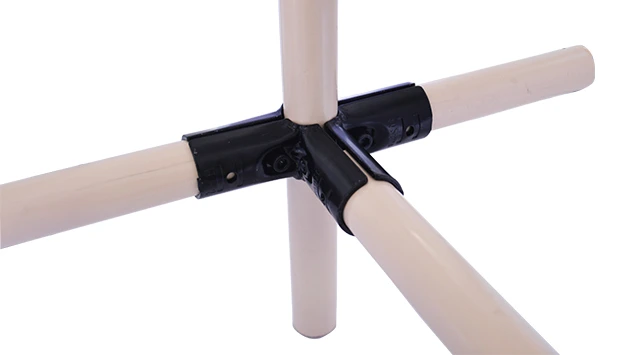
Four Way Straight Lean Pipe Joint
Four way lean pipe joint for 4 pcs 28MM lean pipe connection in straight angle, which used widely in workbench, flow rack, hand trolley frame connection.
Introduction: The Heartbeat of Kaizen in Modern Manufacturing
In the bustling world of manufacturing, where every second counts and efficiency is the name of the game, there's a quiet revolution happening on factory floors around the globe. It's not driven by flashy robots or high-tech software alone—though those play a part. Instead, it's rooted in a philosophy that believes small, consistent changes can lead to extraordinary results. That philosophy is Kaizen, a Japanese term meaning "continuous improvement." At its core, Kaizen is about empowering teams to take ownership of their workspaces, question the status quo, and tweak processes bit by bit until everything runs smoother, safer, and smarter.
But here's the thing: Kaizen isn't just a mindset—it needs tools to bring it to life. Imagine trying to build a house with only a hammer and no nails; you might have the vision, but you lack the means to hold it all together. In manufacturing, one of those critical "nails" is the humble yet mighty lean pipe system. And within that system, there's a component that often flies under the radar but deserves a spotlight: the Four Way Straight Lean Pipe Joint. This unassuming connector is more than just a piece of hardware; it's a catalyst for the flexibility and adaptability that make Kaizen possible. Let's dive into how this small but powerful tool is reshaping production lines, workbenches, and even the way teams think about improvement.
Lean Manufacturing and the Role of Lean Pipe Systems
Before we zoom in on the Four Way Straight Joint, let's take a step back to understand the bigger picture: lean manufacturing. Born from the Toyota Production System in the mid-20th century, lean manufacturing is all about eliminating waste—whether that's wasted time, materials, or effort—and creating value for the customer. It's a philosophy that aligns perfectly with Kaizen, as both thrive on the idea that there's always room to get better.
Lean pipe systems (also known as "KitKat" systems, named after their resemblance to the candy bar's interlocking pieces) are the physical embodiment of lean principles. These systems use lightweight, modular pipes and joints to build everything from workbenches and flow racks to turnover trolleys and assembly lines. Unlike traditional fixed steel structures, lean pipe setups are designed to be reconfigured, adjusted, and repurposed with minimal effort. Need a taller shelf? Swap out a short pipe for a longer one. Want to add wheels to a workstation? Attach casters to the base. It's like building with industrial-grade Legos, and it's a game-changer for teams practicing Kaizen.
At the heart of these systems are the joints—the connectors that hold the pipes together. Without reliable, versatile joints, the modularity of lean pipe systems would fall apart. And among the many types of joints available (two-way, three-way, swivel, and more), the Four Way Straight Lean Pipe Joint stands out for its unique ability to create stable, multi-directional structures. Let's unpack why that matters.

The Four Way Straight Lean Pipe Joint: A Closer Look
Picture this: You're trying to build a workbench with a shelf above and a tool rack to the side. With a standard two-way joint, you'd need multiple connectors to attach each pipe, leading to a clunky, unstable structure. With a Four Way Straight Joint, though, you can connect four pipes in a straight line—say, two horizontal and two vertical—with a single, sturdy joint. It's like having a Swiss Army knife in your lean pipe toolkit: one tool, multiple uses.
Most Four Way Straight Joints are made from durable materials like zinc-plated steel or aluminum, designed to withstand the wear and tear of daily manufacturing life. They typically feature a central hub with four threaded or press-fit ports, allowing pipes to slide in and lock securely with set screws or bolts. This design eliminates the need for welding or drilling, which not only saves time but also means workers can make adjustments without specialized tools. For Kaizen, this is a big deal: if a team member notices a workflow bottleneck, they don't have to wait for maintenance to modify the setup—they can do it themselves, right then and there.
Another key advantage is compatibility. These joints work seamlessly with standard lean pipe sizes (often 28mm or 30mm in diameter) and pair well with other components like aluminum lean pipe for lightweight applications or stainless steel pipe series for corrosive environments. Whether you're building a simple assembly line or a complex material handling system, the Four Way Straight Joint provides the flexibility to design structures that fit your unique needs—today, tomorrow, and as your processes evolve.

Practical Applications in Kaizen: From Workbenches to Turnover Trolleys
Talk is cheap, so let's look at real-world examples of how the Four Way Straight Lean Pipe Joint drives Kaizen in action. These aren't just hypothetical scenarios—they're stories from factories where small, joint-powered changes have led to big improvements in efficiency, safety, and morale.
Case Study 1: Automotive Parts Manufacturer Streamlines Assembly Lines
A mid-sized automotive parts plant in Michigan used to rely on fixed steel workbenches for assembling brake components. When a new part model was introduced, the team would spend 2-3 days modifying the workbenches—cutting steel, welding shelves, and repainting. This downtime disrupted production and discouraged small, frequent improvements (a core Kaizen principle). Then, they switched to lean pipe workbenches built with Four Way Straight Joints.
The difference was night and day. Now, when a new brake design comes in, workers use the Four Way Joints to adjust the workbench height, add tool hooks, or reposition the parts bin in under an hour. For example, one team noticed that operators were reaching too far for a critical tool, leading to fatigue and slowdowns. Using the Four Way Joint, they added a side shelf at waist height, cutting reach time by 50%. Over six months, these small adjustments added up to a 22% increase in line efficiency and a 30% reduction in workplace injuries—all because the joint made it easy to act on Kaizen ideas quickly.
Case Study 2: Electronics Plant Transforms Turnover Trolleys
An electronics assembly plant in California struggled with turnover trolleys that were "one-size-fits-nobody." Traditional trolleys had fixed shelves, so workers often had to stack small components on top of each other, leading to lost parts and wasted time. The team wanted to customize trolleys for different product lines but couldn't justify the cost of custom fabrication.
Enter lean pipe and the Four Way Straight Joint. Using these tools, the plant built modular turnover trolleys with adjustable shelves. By connecting vertical pipes with Four Way Joints, workers could raise or lower shelves in 5cm increments, creating trolleys that fit everything from tiny circuit boards to larger battery packs. One line even added a roller track (another lean pipe accessory) to the trolley using the joint, allowing components to glide smoothly to the front during assembly. The result? A 15% reduction in material handling time and a 40% drop in misplaced parts—all driven by a joint that let the team adapt on the fly.
Case Study 3: Medical Device Maker Improves Ergonomics with Adjustable Workstations
Ergonomics is a cornerstone of Kaizen, and a medical device manufacturer in Minnesota learned this the hard way. Workers on their catheter assembly line frequently reported back pain from hunching over fixed-height workbenches. The HR team recommended expensive, motorized adjustable tables, but budget constraints made that impossible.
Instead, the team turned to lean pipe workbenches with Four Way Straight Joints. By using the joint to connect vertical support pipes of varying lengths, they built workstations that could be adjusted manually to fit each worker's height. A quick twist of the set screws, and the bench height changed—no motors, no cost, no hassle. Within weeks, reports of back pain dropped by 65%, and employee surveys showed a 25% increase in job satisfaction. As one worker put it: "I don't have to fight the workstation anymore. I can make it work for me." That's Kaizen in action—and it all started with a joint.
Key Benefits of the Four Way Straight Lean Pipe Joint in Kaizen Initiatives
To summarize, the Four Way Straight Lean Pipe Joint isn't just a component—it's a Kaizen enabler. Here's a breakdown of its most impactful benefits:
| Benefit | Description | Impact on Continuous Improvement |
|---|---|---|
| Flexibility | Connects four pipes in a single joint, enabling multi-directional structures without extra components. | Teams can reconfigure workspaces in hours, not days, allowing for frequent, small adjustments. |
| Durability | Made from zinc-plated steel or aluminum, withstanding frequent reconfigurations and heavy loads. | Long-lasting performance ensures Kaizen improvements remain effective over time, reducing waste from replacements. |
| Ease of Use | No welding or specialized tools required; workers can assemble and adjust with basic hand tools. | Empowers frontline employees to drive change, aligning with Kaizen's "everyone is a problem-solver" ethos. |
| Cost-Efficiency | Eliminates need for custom fabrication; modular design reduces scrap from permanent modifications. | Frees up budget for other Kaizen initiatives, maximizing ROI on improvement efforts. |
| Compatibility | Works with standard lean pipe, aluminum profile, and stainless steel pipe series. | Integrates seamlessly with existing systems, making it easy to scale improvements across the facility. |
Overcoming Challenges: From Skepticism to Adoption
Of course, no tool is without its challenges. When first introducing lean pipe systems and Four Way Joints, some teams may push back. "Why fix what isn't broken?" they might ask. "Won't these lightweight pipes be less sturdy than steel?" These are valid concerns, but they're manageable with the right approach.
First, start small. Instead of overhauling an entire production line, build a single workbench or trolley using the Four Way Joint and let teams test it. When workers see firsthand that the joint creates a stable structure that's easy to adjust, skepticism fades. Second, provide training. Even though the joints are simple to use, a quick demo on proper assembly (tightening set screws evenly, aligning pipes correctly) ensures everyone feels confident making changes. Finally, celebrate wins—no matter how small. Did a team save 10 minutes per shift by reconfiguring a shelf with the Four Way Joint? Highlight that success in a team meeting. Positive reinforcement goes a long way in building a Kaizen culture.
Future Trends: Where Lean Pipe Joints and Kaizen Meet Industry 4.0
As manufacturing evolves, so too will the tools that drive Kaizen. Industry 4.0—with its focus on smart factories, IoT, and data-driven decision-making—presents new opportunities for lean pipe systems. Imagine a workbench built with Four Way Straight Joints that has embedded sensors tracking usage patterns: "This shelf is adjusted twice a week—maybe we need a permanent second shelf?" Or QR codes on joints that link to digital assembly guides, making reconfigurations even easier for new team members.
Material innovations are also on the horizon. Lightweight aluminum lean pipe and advanced composites could make structures even more portable, while 3D-printed joint prototypes might allow for custom designs in niche applications. But even as technology advances, the core value of the Four Way Straight Joint—simplicity, flexibility, and empowerment—will remain. Because at the end of the day, Kaizen is about people, not just tools. And anything that helps people work smarter, adapt faster, and own their improvements will always have a place on the factory floor.
Conclusion: The Joint That Powers Progress
Kaizen isn't about grand gestures or overnight transformations. It's about the daily, incremental changes that add up to something extraordinary. And in that journey, the Four Way Straight Lean Pipe Joint is more than a component—it's a partner. It's the quiet enabler that turns "what if" into "why not?" and "someday" into "today."
Whether you're building a workbench, a turnover trolley, or a full production assemble line, this joint gives you the freedom to design, test, and refine your processes—exactly what Kaizen demands. So the next time you walk through a factory and see a lean pipe structure, take a closer look. Chances are, there's a Four Way Straight Joint holding it all together, quietly powering the continuous improvement that makes great manufacturing possible.
In the end, Kaizen is about progress, not perfection. And with tools like the Four Way Straight Lean Pipe Joint, progress has never been easier to build—one joint, one pipe, one small change at a time.