- Company Articles
- Products and Technology
- Product knowledge
- Four Way Straight Lean Pipe Joint in Workbench E: Building Stable & Adjustable Workstations

Four Way Straight Lean Pipe Joint in Workbench E: Building Stable & Adjustable Workstations
Related Product
Four Way Straight Lean Pipe Joint
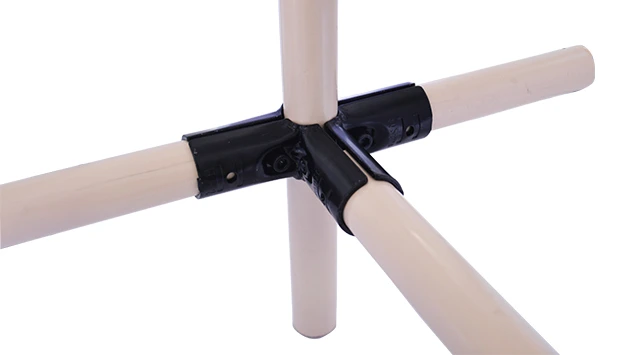
Four way lean pipe joint for 4 pcs 28MM lean pipe connection in straight angle, which used widely in workbench, flow rack, hand trolley frame connection.
Walk into any factory, workshop, or assembly line, and you'll notice something that ties everything together: the workstation. It's not just a table or a bench—it's the heartbeat of productivity. A good workstation keeps tools within reach, materials organized, and workers comfortable. But a bad one? It wobbles mid-task, sags under weight, or can't adapt when production needs change. If you've ever dealt with a workstation that feels more like a liability than an asset, you know the frustration. That's where Workbench E and its unsung hero, the four way straight lean pipe joint, come into play. Let's dive into how these simple yet powerful components are transforming workspaces from chaotic afterthoughts into streamlined hubs of efficiency.
The Workstation Dilemma: Why "Good Enough" Never Is
Before we talk about solutions, let's talk about the problems. Traditional workstations often fall into one of two traps: they're either overly rigid or frustratingly flimsy. The rigid ones—think heavy wooden benches or welded steel frames—might stay stable, but try moving a shelf or adding a tool rack, and you're looking at a DIY project with a saw and drill. On the flip side, the flimsy ones, often made from cheap plastic or thin metal, might be easy to assemble, but they wobble when you lean on them, scratch easily, and can't handle the daily grind of a busy shop.
Then there's the issue of adjustability. Factory floors are rarely perfectly level. A workstation that rocks back and forth because one leg is shorter than the others isn't just annoying—it's dangerous. Small parts roll off, precision tasks get derailed, and over time, that instability can even lead to repetitive strain injuries for workers. And let's not forget customization: every team has unique needs. A electronics assembler needs tiny bins for screws; a mechanic needs space for heavy tools; a warehouse packer needs a surface that feeds materials smoothly. A one-size-fits-all workstation just doesn't cut it.
Meet Workbench E: The Quiet Game-Changer
Enter Workbench E—a single-deck workstation without casters, designed with one goal in mind: to be the backbone of adaptable, stable productivity. At first glance, it might seem basic. No fancy wheels, no built-in gadgets, just a flat surface supported by a frame. But that simplicity is intentional. By stripping away unnecessary features, Workbench E focuses on what matters most: strength, flexibility, and reliability. It's a blank canvas, ready to be customized to fit your workflow, not the other way around.
What makes Workbench E stand out? It starts with the frame. Instead of being welded or bolted into a fixed shape, it's built using lean pipes connected by joints. This modular design means you can tweak the height, add shelves, or reconfigure the layout whenever your needs change. And because it doesn't have casters, it stays firmly planted during tasks that demand precision—no more chasing a rolling workbench across the floor while trying to solder a circuit or assemble a part.

The Unsung Hero: Four Way Straight Lean Pipe Joint
If Workbench E is the backbone, then the four way straight lean pipe joint is the spine that holds it all together. You've probably seen lean pipe joints before—small, metal connectors that link those cylindrical pipes you find in factory racks and trolleys. But the four way straight joint is special. As the name suggests, it has four ports, allowing you to connect lean pipes in four directions (up, down, left, right) along a straight axis. Think of it as a traffic intersection for your workstation's frame, directing weight and stress evenly in all directions.
Why does this matter? Stability. When you're building a workstation, every connection point is a potential weak spot. A two-way joint can only handle stress along two axes; a three-way joint adds a third, but the four way straight joint takes it further. It distributes the weight of the workbench surface, tools, and materials across multiple pipes, preventing any single joint or pipe from bearing too much load. I once visited a small automotive parts shop where they'd upgraded from a basic three-way joint setup to four way straight joints on their Workbench E. The foreman told me, "We used to have to replace pipes every few months because they'd bend under the weight of our torque wrenches. Now? That bench hasn't budged in over a year."
But it's not just about strength—it's about flexibility, too. Let's say you start with a simple Workbench E: a flat surface on four legs. A month later, you realize you need a shelf halfway up to store frequently used tools. With a four way straight joint, you can add a horizontal pipe across two legs, then attach vertical pipes for the shelf—no cutting, no welding, just sliding the joint into place and tightening a screw. It's like building with oversized Tinkertoys, but for grown-ups who mean business.

Materials That Make the Difference: Aluminum Profile and Lean Pipe
A joint is only as good as the pipes it connects. That's why Workbench E relies on a winning combo: lean pipe and aluminum profile. Let's start with lean pipe. Traditionally made of steel with a plastic coating, modern lean pipes are lightweight yet strong, resistant to scratches, and easy to clean. They're the "bones" of your workstation, providing the structure without adding unnecessary bulk.
Then there's aluminum profile. Unlike heavy steel, aluminum profile brings a sleek, lightweight alternative that's perfect for workstations. It's corrosion-resistant, so you don't have to worry about rust in humid workshops or messy environments. It's also incredibly versatile—extruded into shapes with T-slots, which let you slide in accessories like tool hooks, bins, or even the four way straight joints themselves. Imagine assembling a shelf: instead of drilling holes to attach brackets, you just slide a nut into the T-slot, line up your bracket, and tighten a bolt. Done. No guesswork, no damage to the profile, and if you want to move the shelf later? Just loosen the bolt and slide it to a new spot.
Together, lean pipe and aluminum profile create a workstation that's both tough and adaptable. The lean pipe handles the heavy lifting, while the aluminum profile adds finesse—think of it as a partnership between a weightlifter and a ballet dancer. And when paired with the four way straight lean pipe joint, they turn Workbench E from a static table into a dynamic tool that grows with your business.
No Wobble, No Problem: Adjustable Leveling Feet
Even the sturdiest frame can falter on uneven ground. I once worked in a workshop where the concrete floor had more cracks than a dried-up lakebed. Our old workbench would rock back and forth like a seesaw, making it impossible to do detailed assembly work. That's where adjustable leveling feet come in—and they're a game-changer for Workbench E.
Adjustable leveling feet are exactly what they sound like: small, threaded feet that screw into the bottom of your workstation's legs. Twist them clockwise, and they extend; twist counterclockwise, and they retract. It's like giving your workbench a set of tiny stilts that you can adjust individually. Suddenly, that cracked workshop floor? No problem. Sloped concrete in the garage? Fixed. Even if your Workbench E is loaded unevenly—say, with a heavy toolbox on one corner—the leveling feet let you compensate, keeping the surface perfectly flat.
But it's not just about stability during use. Adjustable leveling feet also protect your floors. The rubber or plastic tips on the feet prevent scratches and dents, which is a big deal if you're working in a space with polished concrete or hardwood (yes, some workshops are fancy like that). And if you ever need to move the workbench (casters or not), you can retract the feet to slide it more easily, then extend them again once it's in place.
Building Your Workstation: A (Hypothetical) Step-by-Step
Let's say you've decided to build your own Workbench E. Here's how the four way straight lean pipe joint, aluminum profile, and adjustable leveling feet might come together:
- Start with the legs: Cut four lean pipes to your desired height (standard is around 36 inches, but adjust for your comfort). Attach an adjustable leveling foot to the bottom of each pipe.
- Add the frame: Take two horizontal lean pipes and connect them to the top of two leg pipes using four way straight joints. Do the same for the other two legs, creating a rectangular frame.
- Reinforce the frame: Add diagonal cross-braces using three-way joints to prevent the frame from wobbling side-to-side. This is optional but recommended for heavier loads.
- Attach the surface: Lay your work surface (plywood, aluminum sheet, or a pre-cut tabletop) on top of the frame. Use clamps or brackets (attached via the T-slots in aluminum profile) to secure it in place.
- Customize: Want a shelf? Add vertical pipes to the four way joints, then connect horizontal pipes for the shelf surface. Need tool hooks? Slide them into the T-slots of the aluminum profile legs.
- Level it out: Place the workbench where you want it, then twist the adjustable leveling feet until the surface is stable and flat. Test it by pressing down on each corner—no wobble means you're good to go.
The best part? If you need to change things later—say, you switch from assembling small parts to larger components and need more height—just loosen the joints, adjust the pipes, and retighten. It's that simple.
Real-World Impact: From Wobbly to Rock-Solid
I talked to a friend, Raj, who runs a small electronics assembly business, about his experience with Workbench E and four way straight lean pipe joints. "Before, we were using old wooden workbenches we found at a yard sale," he told me. "They were uneven, the legs kept splitting, and we could never add shelves because the wood was too brittle. We'd spend 10 minutes just rearranging tools every morning because there was no good place to put them."
Raj's team switched to Workbench E with four way joints and aluminum profile. "The first thing we noticed was how stable it was. No more wobbling when we're soldering. Then, we added a shelf using the same joints—now all our tools are at eye level. And when we got a bigger order and needed to expand, we just bought more pipes and joints and built a second workstation in an hour. It used to take us a day to set up a new bench; now it's lunch break."
Another example: a local auto repair shop that upgraded their parts sorting station. They replaced a rickety metal shelf with a Workbench E frame, using four way joints to add multiple levels of roller track (for sliding bins) and aluminum profile sides to prevent parts from falling off. "We used to lose small screws and washers all the time because the old shelf was sloped," the shop manager said. "Now, everything stays put, and we can adjust the roller tracks to fit different bin sizes. It's saved us hours of cleanup and frustration."
Beyond Workbench E: The Four Way Joint's Other Roles
The four way straight lean pipe joint isn't just for workbenches. Its versatility makes it a star in other parts of the production line, too. For example:
- Material racks: Build multi-level racks for storing raw materials or finished products. The four way joints let you add vertical dividers to separate different items.
- Turnover trolleys: Even with casters, a trolley built with four way joints is more stable, making it safer to transport heavy loads across the factory floor.
- Assembly lines: Create custom workstations along the line, each tailored to a specific task, using the same modular components.
One factory I visited was using four way joints to build a U-shaped assembly line, with workstations on three sides and a conveyor belt down the middle. If a new product required a longer line, they just added more sections using the same joints—no need to buy a whole new setup.
Choosing the Right Components: Quality Matters
Not all lean pipe joints or aluminum profiles are created equal. When building your Workbench E, opt for high-quality components. Look for joints with durable, corrosion-resistant finishes (like chrome plating) and tight tolerances—you don't want pipes slipping or joints loosening over time. For aluminum profile, check the thickness of the walls; thicker walls mean more strength, especially for heavy-duty use.
Adjustable leveling feet should have rubber or non-slip tips to prevent sliding, and the threads should be smooth to make adjustment easy. And don't skimp on the lean pipes themselves—look for ones with a strong, scratch-resistant coating (like PE coating) to stand up to daily wear and tear.
Conclusion: Workstations That Grow With You
At the end of the day, a workstation is more than just a piece of furniture. It's where ideas become products, where teams collaborate, and where productivity happens. Workbench E, with its modular design, aluminum profile, adjustable leveling feet, and the unsung hero—the four way straight lean pipe joint—isn't just a workstation. It's an investment in efficiency, adaptability, and stability.
Whether you're running a small workshop or a large factory, the right tools make all the difference. And when those tools can grow and change with you? That's when magic happens. So the next time you're struggling with a wobbly, outdated workbench, remember: there's a better way. Build it with lean pipes, four way joints, and a little bit of imagination. Your back (and your bottom line) will thank you.
| Feature | Benefit | Key Component |
|---|---|---|
| Stability | Even weight distribution, no wobbling during precision tasks | Four way straight lean pipe joint |
| Adjustability | Custom height, added shelves, and reconfigurable layouts | Modular lean pipe and aluminum profile design |
| Durability | Resistant to rust, scratches, and daily wear | Aluminum profile and PE-coated lean pipe |
| Adaptability to Floors | Stands steady on uneven or sloped surfaces | Adjustable leveling feet |