- Company Articles
- Products and Technology
- Product knowledge
- Four Way Straight Lean Pipe Joint Sizing Guide: Matching Pipe Diameter & Load Requirements

Four Way Straight Lean Pipe Joint Sizing Guide: Matching Pipe Diameter & Load Requirements
Related Product
Four Way Straight Lean Pipe Joint
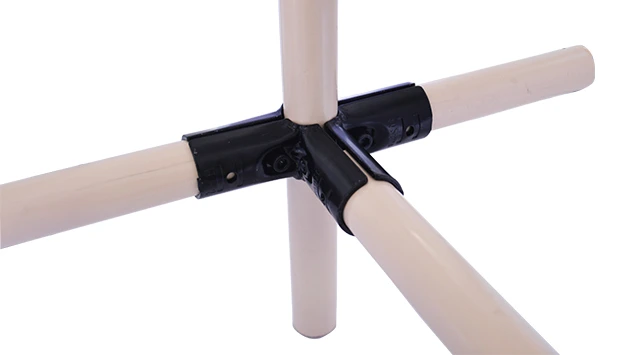
Four way lean pipe joint for 4 pcs 28MM lean pipe connection in straight angle, which used widely in workbench, flow rack, hand trolley frame connection.
When it comes to building efficient, flexible workspaces and production lines, few components are as critical as the four way straight lean pipe joint . These unassuming connectors are the backbone of lean systems, holding together everything from workbenches and flow racks to turnover trolleys and conveyor supports. But here's the thing: if you get the sizing wrong—mismatching pipe diameter, underestimating load, or overlooking material compatibility—you're not just looking at wobbly structures. You're risking downtime, safety hazards, and wasted resources. In this guide, we'll walk through everything you need to know to size your four way straight lean pipe joints correctly, ensuring your lean system runs smoothly, safely, and efficiently for years to come.
What Is a Four Way Straight Lean Pipe Joint, Anyway?
Let's start with the basics. A four way straight lean pipe joint is a specialized connector designed to join four lean pipes at 90-degree angles, creating a stable, multi-directional framework. Think of it as the "cornerstone" of modular lean systems—whether you're building a workbench with shelves, a flow rack with multiple levels, or a material handling trolley with side rails. Unlike simpler two-way or three-way joints, the four way straight joint adds versatility by allowing connections along both the X and Y axes, making it ideal for complex structures that need to maximize space and functionality.
These joints come in various materials, but the most common are chrome-plated steel (for traditional lean pipe systems) and aluminum (for lighter, corrosion-resistant setups using aluminum lean pipe ). They typically feature threaded holes or clamping mechanisms that secure pipes in place, with some designs allowing for (minor adjustments) to ensure perfect alignment. And while they might look simple, their design is engineered to distribute weight evenly across all connected pipes—a feature that becomes critical when we start talking about load requirements.
Key Sizing Factors: It's Not Just About Pipe Diameter
When sizing a four way straight lean pipe joint, most people fixate on pipe diameter—and while that's important, it's just one piece of the puzzle. Let's break down the three critical factors that determine the right joint for your project: pipe diameter, material type, and load requirements.
1. Pipe Diameter: The Foundation of Fit
Pipe diameter is the first thing to check because, quite simply, a joint designed for 1-inch pipe won't work with 0.5-inch pipe (and vice versa). Most lean pipe systems use standard diameters, but it's worth noting the differences between traditional lean pipe and aluminum lean pipe:
- Traditional Lean Pipe (PE-Coated Steel): Common diameters here are 0.8mm, 1.0mm, 1.2mm, 1.5mm, and 2.0mm (referring to wall thickness, but outer diameter is typically 28mm or 30mm for standard sizes). These are heavy-duty and often used in industrial settings where durability is key.
- Aluminum Lean Pipe: Aluminum pipes are lighter and often come in slightly different outer diameters, such as 20mm, 30mm, or 40mm, to match aluminum extrusion profiles. They're popular in cleanrooms, food processing, or environments where corrosion resistance matters.
The four way straight joint's inner diameter must match the outer diameter of your pipe. For example, a joint labeled "for 30mm aluminum lean pipe" will have a clamping mechanism or bore that fits 30mm pipes snugly. Using a joint with a smaller inner diameter than your pipe will damage both the joint and the pipe; using a larger one will result in a loose, unstable connection.
2. Material: Steel vs. Aluminum Joints
The material of your four way straight joint should align with the material of your pipes. Mixing materials can lead to issues like corrosion (e.g., steel joints with aluminum pipes in humid environments) or mismatched strength (e.g., aluminum joints with heavy steel pipes that exceed their load capacity). Here's a quick guide:
- Steel Joints: Best paired with traditional PE-coated lean pipe. They're strong, cost-effective, and can handle higher loads, making them ideal for manufacturing workbenches or material racks that hold heavy components.
- Aluminum Joints: Designed for aluminum lean pipe systems. They're lightweight, rust-resistant, and often feature smoother finishes—great for applications like electronics assembly lines or medical device manufacturing where cleanliness and weight matter.
Pro tip: If you're unsure, check the manufacturer's specs. Most reputable lean pipe supplier will clearly label which joints are compatible with which pipe materials.
3. Load Requirements: How Much Weight Will It Actually Hold?
Arguably the most critical factor is load requirements . Even if your joint fits the pipe diameter and material, if it can't support the weight you're putting on it, your entire structure could fail. Load requirements break down into two categories: static load and dynamic load.
- Static Load: The weight of stationary objects on the structure—e.g., tools on a workbench, boxes on a flow rack, or components on a shelf. This is the "base" load your joint needs to handle.
- Dynamic Load: Additional stress from movement, such as vibrations from nearby machinery, items being placed or removed from the structure, or trolleys rolling over roller tracks connected to the framework. Dynamic loads can increase stress on joints by 20-50%, so they're not to be ignored.
To calculate your total load, start with the static load (sum of all items that will rest on the structure) and add a 30% buffer for dynamic loads. For example, if your workbench will hold 150kg of tools and parts (static load), your joints should be rated for at least 195kg (150kg + 30% dynamic buffer). This ensures safety even during peak usage.

Matching Joints to Pipes: A Practical Table
To make things easier, we've put together a table comparing common pipe diameters, materials, and their compatible four way straight lean pipe joints, along with typical load capacities. Use this as a starting point, but always verify with your lean pipe supplier for project-specific needs.
| Pipe Type | Outer Diameter (mm) | Compatible Joint Material | Max Static Load per Joint (kg) | Best For |
|---|---|---|---|---|
| 1.2mm PE-Coated Lean Pipe | 28mm | Chrome-Plated Steel | 150-200kg | Light workbenches, small turnover trolleys |
| 1.5mm PE-Coated Lean Pipe | 28mm | Chrome-Plated Steel | 200-300kg | Medium-duty flow racks, assembly line workstations |
| 2.0mm Aluminum Lean Pipe | 30mm | Aluminum | 180-250kg | Cleanrooms, electronics manufacturing, lightweight material racks |
| 3.0mm Stainless Steel Lean Pipe | 32mm | Stainless Steel | 300-400kg | Food processing, chemical plants, heavy-duty material handling |
Note: These are general guidelines. Always check the specific load ratings provided by your joint manufacturer, as they can vary based on design (e.g., reinforced joints vs. standard designs) and manufacturing quality.

Real-World Examples: Sizing Joints for Common Lean System Setups
Let's put this into practice with a few scenarios you might encounter. These examples will show you how to apply the above factors to real projects.
Scenario 1: Building a Workbench for Automotive Parts Assembly
Suppose you're setting up a workbench in an automotive factory where technicians will assemble engine components. The workbench needs a flat top, two shelves below, and side rails to prevent parts from falling off. The top will hold tools (20kg), a torque wrench (5kg), and a bin of small parts (15kg)—total static load on the top shelf: 40kg. The lower shelves will hold heavier components: 100kg on the middle shelf and 80kg on the bottom shelf. Plus, technicians will be placing and removing parts throughout the day, adding dynamic load.
First, calculate total load per joint. The workbench frame will use four vertical legs, with four way straight joints connecting the legs to the horizontal rails (top, middle, bottom). Each joint at the top rail will support ~10kg (40kg divided by 4 joints), but the middle and bottom joints will handle more: ~25kg (100kg/4) and ~20kg (80kg/4), respectively. Adding a 30% dynamic buffer, the middle joints need to support ~32.5kg. Looking at our table, a 1.5mm PE-coated lean pipe with chrome-plated steel four way joints (max static load 200-300kg) is more than sufficient. Even with the dynamic load, we're well below the joint's capacity, so this setup is safe and stable.
Scenario 2: Designing a Flow Rack for Electronics Components
Now, imagine you're building a flow rack for an electronics assembly line. The rack has three levels, each with roller track to allow bins of components to slide toward the assembly station. Each level is 1.2m long and will hold 5 bins, each weighing 12kg (total static load per level: 60kg). The rack will be made with aluminum lean pipe to keep it lightweight and corrosion-resistant (important in the air-conditioned, slightly humid electronics factory).
Each level's frame will use four way straight aluminum joints to connect the vertical supports to the horizontal rails. With 60kg per level and 4 joints per level, each joint supports 15kg static load. Adding 30% dynamic load (bins sliding on roller track), that's 19.5kg per joint. From the table, 2.0mm aluminum lean pipe with aluminum four way joints (max static load 180-250kg) is perfect. The aluminum material resists corrosion, and the joint's load capacity is more than enough to handle the load—even if someone accidentally slams a bin onto the roller track.
Scenario 3: Material Handling Trolley for Heavy Machinery Parts
Finally, consider a turnover trolley that needs to transport heavy machinery parts (up to 200kg total) around a factory. The trolley has a flat base, four wheels, and side rails to secure the parts. The base frame will use four way straight joints to connect the perimeter rails and cross-braces for stability.
Total static load: 200kg. The trolley has 8 four way joints (4 at the corners, 4 along the cross-braces). Each joint supports ~25kg static load, plus 30% dynamic load (~32.5kg) from moving the trolley over uneven factory floors. Here, a 2.0mm PE-coated lean pipe with chrome-plated steel joints (max load 300kg) is ideal. The steel joints add strength, and the higher pipe thickness ensures the frame doesn't bend under the weight.
Common Mistakes to Avoid When Sizing Four Way Straight Lean Pipe Joints
Even with the right information, it's easy to make mistakes. Here are the most common pitfalls and how to steer clear of them:
Mistake 1: Underestimating Load (or Overlooking Dynamic Load)
This is the biggest culprit. Many people only calculate static load and forget about dynamic load—vibrations, impacts, or movement that increase stress on joints. For example, a material rack that holds 100kg of static load might see peaks of 130kg when someone drops a box onto it. Always add that 30% buffer to avoid joint failure.
Mistake 2: Mixing Pipe and Joint Materials
Using aluminum joints with steel pipes in a humid warehouse? Expect rust at the connection points, which weakens the joint over time. Similarly, steel joints with aluminum pipes can cause galvanic corrosion (a chemical reaction between dissimilar metals). Stick to matching materials unless your supplier explicitly recommends otherwise.
Mistake 3: Assuming "Bigger Is Better"
It's tempting to oversize joints to "play it safe," but this wastes money and adds unnecessary weight. A 2.0mm steel joint might be overkill for a small workbench holding 20kg—stick to the smallest joint that meets your load requirements to keep costs and weight down.
Mistake 4: Ignoring Pipe Wall Thickness
A 28mm pipe with 1.0mm wall thickness isn't as strong as a 28mm pipe with 1.5mm wall thickness. Even if the outer diameter matches, a thinner pipe can bend under load, putting extra stress on the joint. Always check both pipe diameter and wall thickness when selecting joints.
Final Tips: Working with Your Lean Pipe Supplier
Your lean pipe supplier is your best resource when sizing four way straight joints. They can provide detailed load charts, material compatibility guides, and even custom recommendations for complex projects. Before placing an order, share your project specs: total load, pipe material, environment (humidity, temperature), and intended use. A good supplier will help you select the right joints and pipes, ensuring your lean system is built to last.
Also, don't forget to test! If you're unsure about a joint's capacity, build a small prototype and load-test it. Add weight gradually until you reach your projected load (plus buffer) and check for bending, loosening, or instability. It's better to catch issues in the prototype phase than after the entire system is installed.
Wrapping Up: Sizing Joints = Sizing Success
Sizing your four way straight lean pipe joints correctly might seem like a small detail, but it's the difference between a lean system that boosts productivity and one that causes headaches. By matching pipe diameter, material, and load requirements, you'll create a structure that's safe, efficient, and adaptable to future changes. Remember: lean systems are all about minimizing waste—don't waste time, money, or safety on poorly sized joints. With the right planning and the help of a trusted lean pipe supplier , you'll build a system that supports your team and your goals for years to come.