- Company Articles
- Products and Technology
- Product knowledge
- Four Way Straight Lean Pipe Joint: The Backbone of Reusable Lean Manufacturing Systems

Four Way Straight Lean Pipe Joint: The Backbone of Reusable Lean Manufacturing Systems
Related Product
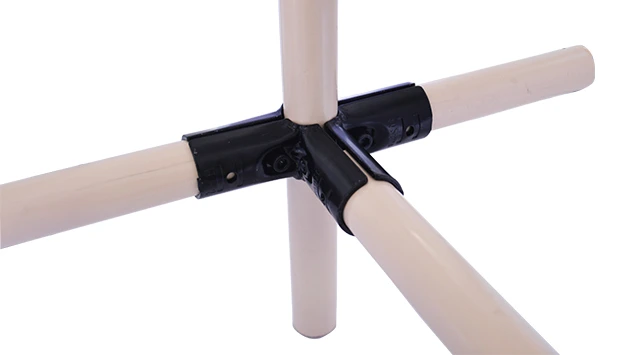
Four Way Straight Lean Pipe Joint
Four way lean pipe joint for 4 pcs 28MM lean pipe connection in straight angle, which used widely in workbench, flow rack, hand trolley frame connection.
Walk into any modern manufacturing facility that's embraced lean principles, and you'll notice something different: the floor feels alive. Workstations shift and adapt as production needs change, tools glide smoothly along roller tracks, and materials flow seamlessly from one stage to the next. This isn't magic—it's the result of intentional design, where flexibility and reusability aren't just buzzwords, but the foundation of daily operations. At the heart of this adaptability lies a humble yet powerful component: the lean pipe joint. And among these, the four way straight lean pipe joint stands out as a quiet workhorse, enabling the kind of modularity that makes lean systems truly transformative.
For decades, manufacturers struggled with rigid, one-size-fits-all setups. A workstation built for one product would become obsolete when the next model rolled out, leaving piles of discarded metal frames and wasted resources in its wake. Then lean manufacturing arrived, championing the elimination of waste and the pursuit of continuous improvement. But lean's promise of flexibility couldn't be fulfilled without the right building blocks. Enter lean pipe systems—combinations of pipes, joints, and accessories that let teams build, disassemble, and rebuild workbenches, flow racks, and trolleys in hours, not weeks. And if lean pipes are the bones of these systems, the four way straight lean pipe joint is the backbone that holds everything together, enabling connections that turn simple pipes into powerful, adaptable structures.
What Is a Four Way Straight Lean Pipe Joint, Anyway?
Let's start with the basics. A four way straight lean pipe joint is exactly what it sounds like: a connector designed to join four lean pipes at once, typically in a straight or cross-shaped configuration. Unlike fixed welding or permanent fasteners, these joints let you snap pipes into place, tighten a bolt, and have a stable connection—no special tools, no messy adhesives, no irreversible commitments. Think of it as the LEGO brick of the manufacturing world, but built to withstand the rigors of a factory floor.
Design That Puts Flexibility First
At first glance, a four way straight joint might seem simple, but its design is cleverly engineered for versatility. Most models feature a central hub with four openings (or "ports"), each sized to fit standard lean pipes—usually 28mm or 30mm in diameter, though variations exist for aluminum or stainless steel pipes. The ports are spaced evenly, allowing pipes to extend in four directions: up, down, left, right, or a mix of horizontal and vertical. Some joints even include rotating components, letting pipes pivot slightly to adjust angles without losing stability—a game-changer when fine-tuning a workstation's height or slope.
Materials matter here, too. While traditional lean pipe joints were often made of steel (durable but heavy), modern options include lightweight aluminum (ideal for applications where mobility is key) and plastic-coated steel (which adds a layer of protection against scratches and corrosion). For environments that demand cleanliness—like electronics assembly or food processing—stainless steel joints are popular, resisting rust and standing up to frequent sanitization. No matter the material, the goal is the same: a joint that's strong enough to support tools, materials, and even heavy workbenches, but flexible enough to reconfigure when your needs change.
More Than Just a Connector: A Problem-Solver
What makes the four way straight joint special isn't just that it connects pipes—it's how it connects them. In a typical lean system, you might use a two way joint to extend a straight line of pipe, or a three way joint to build a T-shape. But when you need to create a multi-level structure—say, a flow rack with shelves on both sides, or a workbench with tool holders extending in four directions—the four way joint becomes indispensable. It's the difference between building a simple shelf and building a fully functional material handling station that can grow with your operation.
Take, for example, a small electronics manufacturer ramping up production of a new device. Their old workbench had a single shelf, and tools were always scattered. Using four way straight joints, they can add two vertical pipes to the back of the bench, connect horizontal pipes on both sides with four way joints, and suddenly they have space for tool hooks, a small flow rack for components, and a roller track to slide finished parts to the next station. A month later, when they need to switch to a larger circuit board, they loosen the joints, adjust the pipe lengths, and the same bench now fits the new product. No new materials, no wasted time—just a quick reconfiguration, thanks to the joint's ability to adapt.
Why the Four Way Straight Joint Is Critical for Lean Systems
Lean manufacturing isn't just about cutting costs—it's about creating systems that empower people to work smarter. And in that mission, the four way straight lean pipe joint plays three critical roles: it reduces waste, speeds up changeovers, and unlocks creativity on the factory floor. Let's break that down.
1. Eliminating Waste (The Core of Lean)
Waste is the enemy of lean, and nothing wastes more resources than rigid, disposable equipment. A fixed workstation that can't be reused ends up in a landfill, contributing to "waste of overproduction" (making more than needed) and "waste of inventory" (storing unused equipment). The four way joint attacks this problem head-on by making reusability possible. When a project ends, you don't throw away the joint—you take it apart, pack up the pipes, and use them to build something new. A study by the Lean Enterprise Institute found that manufacturers using modular lean systems reduce equipment waste by up to 40% compared to those with fixed setups, and much of that savings comes from joints that keep pipes in circulation.
Even better, the four way joint reduces "waste of motion," too. When workstations are custom-built with these joints, tools and materials are placed exactly where workers need them—no stretching, bending, or walking to retrieve items. A welder in a automotive plant, for example, might have a four way joint-based tool cart with holders extending in four directions: torches on one side, grinders on another, spare parts on the third, and a waste bin on the fourth. Everything is within arm's reach, cutting down on unnecessary movement and boosting productivity by 15-20%—all because the joint allowed for a tailored design.
2. Speeding Up Changeovers (Because Time Is Money)
In manufacturing, downtime is the silent profit killer. When a production line stops to retool for a new product, every minute costs money. Fixed workstations can take days to modify; with four way joints, changeovers happen in hours. Imagine a consumer goods plant switching from packaging small bottles to large jugs. Their old packaging line had fixed conveyors and rigid workbenches, requiring a team of contractors to cut and weld new frames. Now, with lean pipe systems, they use four way joints to adjust the conveyor height, add wider shelves to the workbench, and reposition roller tracks—all in a single shift. The line is back up and running by the next morning, and the old components? They're stored in a closet, ready to be reassembled for the next product run.
This speed isn't just about saving time—it's about agility. In today's market, customers demand more customization than ever, and manufacturers need to pivot quickly. A four way joint lets you test new layouts on the fly: want to see if a U-shaped assembly line works better than a straight one? Disassemble the joints, rearrange the pipes, and try it. If it doesn't work, change it back. No risk, no hassle, no waiting for approval. As one plant manager put it: "With these joints, we don't just build workstations—we experiment with them. And that's how we find better ways to work."

How It Stacks Up: Comparing Lean Pipe Joints
Of course, the four way straight joint isn't the only player in the lean pipe game. Two way joints connect pipes in a straight line, three way joints form T-shapes, and swivel joints allow for angled connections. So when should you reach for a four way joint over the others? Let's break it down with a quick comparison:
| Joint Type | Key Design Features | Typical Load Capacity | Best For | Limitations |
|---|---|---|---|---|
| Four Way Straight Lean Pipe Joint | 4 ports for pipe connection; central hub design; available in steel, aluminum, or stainless steel | 150-300kg (depending on material) | Multi-level flow racks, workbenches with shelves on all sides, cross-shaped material handling structures | Bulkier than two/three way joints; may be overkill for simple setups |
| Three Way Lean Pipe Joint | 3 ports (T-shaped or Y-shaped); compact design | 100-200kg | Simple workbenches, single-sided flow racks, trolley handles | Limited to three directions; not ideal for complex, multi-sided structures |
| Two Way Lean Pipe Joint | 2 ports (straight line); smallest and lightest joint type | 80-150kg | Extending conveyor tracks, simple frames, lightweight trolleys | Only connects two pipes; no branching capability |
As the table shows, the four way joint shines when you need complexity without sacrificing strength. Take flow racks, for example—a staple in warehouses and manufacturing facilities for moving materials from receiving to production. A typical flow rack has multiple levels, with roller tracks (another key lean accessory) that let boxes or bins glide down by gravity. To build these levels, you need joints that can support vertical pipes (for the frame), horizontal pipes (for the shelves), and cross-braces (for stability). A four way joint does all three: connect a vertical pipe to the floor, a horizontal pipe to the vertical one, another horizontal pipe perpendicular to that, and a cross-brace to reinforce the structure—all with a single joint. Without it, you'd need multiple three way joints, adding bulk and weakening the connection.
Workbenches are another sweet spot. A basic workbench might use three way joints for the frame, but a high-performance workstation—with tool hooks, a monitor arm, a parts bin, and a wastebasket—needs connections in four directions. The four way joint lets you mount all these accessories without cluttering the bench, keeping the workspace clean and efficient. It's the difference between a "good enough" workbench and one that feels like it was designed specifically for the person using it.

Real-World Impact: How Four Way Joints Transform Operations
To understand the four way joint's value, let's look at a real example: a mid-sized electronics manufacturer we'll call "TechFlow." A few years ago, TechFlow was struggling with outdated, fixed workstations. Their assembly line for smartphones was rigid, and when they introduced a new model with a larger screen, the old benches were too narrow. Workers had to set parts on the floor, leading to scratches and delays. Retooling would take six weeks and cost $50,000—money they didn't have.
Then they discovered lean pipe systems. Working with a lean pipe supplier, they invested in aluminum lean pipes, four way joints, and roller track accessories. Within a week, they'd built new workbenches with adjustable heights, wider surfaces, and integrated roller tracks to slide screens into place. The four way joints were key: they connected the bench legs (vertical pipes), the tabletop frame (horizontal pipes), and side shelves for tools (cross pipes). Best of all, when the next phone model comes out, they can loosen the joints, add longer pipes, and the benches will fit the new screens—no new investment needed.
The results? Scratched parts dropped by 75%, assembly time per unit fell by 12%, and employee satisfaction scores jumped—all because the workstations finally fit the job. As TechFlow's operations manager put it: "These joints didn't just save us money—they gave us control. We no longer wait for someone else to build our workstations; we build them ourselves, exactly how we need them."
Choosing the Right Four Way Joint: What to Look For
Not all four way straight lean pipe joints are created equal. To get the most out of your lean system, you'll want to consider a few key factors before buying:
Material Matters: Steel vs. Aluminum vs. Stainless Steel
Start with the material. Steel joints are the workhorses—strong, durable, and affordable, with load capacities up to 300kg. They're great for heavy-duty applications, like workbenches that hold welding equipment or flow racks storing metal parts. Aluminum joints are lighter (about 40% less than steel) and resistant to corrosion, making them ideal for cleanrooms or outdoor use (think loading docks). Stainless steel joints are the premium option, built for environments where hygiene is critical—pharmaceutical labs, food processing plants, or electronics assembly, where even a tiny rust spot could ruin a product.
Load Capacity: Don't Skimp on Strength
Always check the joint's load capacity—the maximum weight it can support without bending or breaking. A joint rated for 150kg might work for a light tool shelf, but a workbench holding a 200kg machine needs a higher-rated option. Most suppliers list load capacities on their product pages, but if you're unsure, ask for test data. Reputable lean pipe suppliers will happily share certificates or lab results proving their joints can handle the weight.
Compatibility: Make Sure It Fits Your Pipes
Lean pipes come in different diameters, and joints are sized to match. A joint for 28mm steel pipes won't fit a 30mm aluminum pipe, so double-check the measurements before ordering. If you're mixing pipe types (e.g., steel and aluminum), look for universal joints—some manufacturers make adjustable models with rubber gaskets that grip different pipe sizes. This flexibility is a lifesaver if you're upgrading from old steel pipes to newer aluminum ones and want to reuse some components.
The Future of Lean Systems: Where Four Way Joints Are Headed
As manufacturing evolves, so do the tools that power it. The four way straight lean pipe joint is no exception. Today's innovations are making these joints even more versatile: think joints with built-in sensors that monitor load capacity (alerting you if a shelf is overloaded), or magnetic versions that snap together without bolts (great for quick, temporary setups). Some suppliers are even experimenting with 3D-printed joints, allowing custom shapes for ultra-specific applications—like a joint curved to fit around a machine's unique contour.
Aluminum lean pipe systems are also on the rise, driven by demand for lighter, more sustainable solutions. Aluminum is 100% recyclable, and its natural corrosion resistance reduces maintenance costs. Pair an aluminum four way joint with aluminum pipes and accessories, and you've got a system that's not just flexible, but eco-friendly—aligning with the growing focus on sustainability in manufacturing.
At the end of the day, though, the four way joint's greatest strength will always be its simplicity. In a world of overcomplicated technology, there's beauty in a tool that does one job—connecting pipes—and does it so well that it transforms how we work. It's not flashy, it's not expensive, but it's essential. And for the manufacturers who rely on it, that's more than enough.
Final Thoughts: The Joint That Builds Better Work
Lean manufacturing isn't just about efficiency—it's about respect for the people who do the work. When you give a team the tools to design their own workspaces, to adjust and adapt as they learn, you empower them to take ownership. The four way straight lean pipe joint is a tool of empowerment. It says, "Your ideas matter. Build what works for you."
So the next time you walk through a lean facility, take a closer look at the structures around you. The workbench where an assembler builds circuit boards, the flow rack that feeds materials to the line, the trolley that carries tools to the production floor—chances are, a four way joint is holding it all together. It's not the star of the show, but it's the reason the show can go on, day after day, adapting and improving, one connection at a time.
In the end, that's the power of lean: not just better systems, but better ways to work. And it all starts with a joint.