- Company Articles
- Products and Technology
- Product knowledge
- Four Way Straight Lean Pipe Joint vs. Plastic Modular Joints: Durability & Cost Analysis

Four Way Straight Lean Pipe Joint vs. Plastic Modular Joints: Durability & Cost Analysis
Related Product
Four Way Straight Lean Pipe Joint
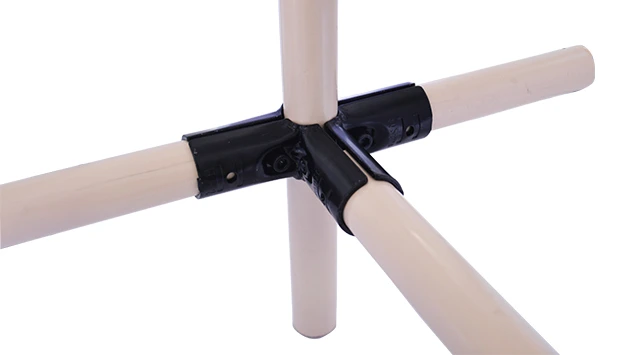
Four way lean pipe joint for 4 pcs 28MM lean pipe connection in straight angle, which used widely in workbench, flow rack, hand trolley frame connection.
Walk into any modern factory, warehouse, or manufacturing plant, and you'll likely spot something common: modular workbenches, flow racks, or material handling trolleys that seem to adapt and evolve with the needs of the space. These setups are the backbone of lean systems—environments designed to minimize waste, maximize efficiency, and keep operations running like well-oiled machines. But what holds these modular structures together? More often than not, it's the unsung heroes: joints. Today, we're zeroing in on two popular contenders in the world of lean pipe and accessories: the Four Way Straight Lean Pipe Joint and Plastic Modular Joints. Which one offers better durability? Which is kinder to your budget? Let's dive in.
Understanding the Contenders: What Are These Joints, Anyway?
Before we start comparing, let's make sure we're on the same page. Both of these joints are part of the broader family of components that make lean systems tick, but they're built for different needs and environments. Let's break them down.
Four Way Straight Lean Pipe Joints: The Heavy-Duty Workhorses
First up: the Four Way Straight Lean Pipe Joint. If you've ever seen a sturdy workbench or a multi-tiered flow rack in a busy production line, chances are it's held together with these. As the name suggests, these joints are designed to connect four pipes (or tubes) in a straight, rigid configuration—think of them as the central hub that ties horizontal and vertical pipes into a stable frame. They're typically made from metal, often steel or aluminum lean pipe, which gives them that robust, industrial feel.
What makes them stand out? Their versatility. A single Four Way Straight Lean Pipe Joint can anchor a workbench's legs, support a shelf, and even connect to a conveyor system—all without breaking a sweat. They're the kind of joint you'd trust with heavy loads: think stacks of raw materials, toolkits, or even semi-assembled products. And because they're metal, they're built to handle the bumps, scrapes, and constant use that come with a 24/7 production environment. You'll find them in settings where durability isn't just a nice-to-have; it's a requirement—automotive plants, electronics manufacturing facilities, and large-scale distribution centers, to name a few.
Plastic Modular Joints: The Lightweight Contenders
On the other side of the ring, we have Plastic Modular Joints. These are the lighter, more flexible cousins in the lean pipe joint family. Made from materials like nylon, polypropylene, or high-density polyethylene (HDPE), they're designed for quick assembly, easy reconfiguration, and lower upfront costs. Unlike their metal counterparts, plastic joints often snap or clip into place, making them a favorite for setups that need to change frequently—like temporary workstations for a short-term project or a small business testing out a new workflow.
Plastic Modular Joints come in all shapes and sizes, but they share a common trait: they're built for light to medium-duty use. You might see them in a startup's warehouse holding lightweight boxes, a retail backroom organizing inventory, or a workshop where tools are swapped in and out daily. They're not meant for the heaviest loads, but for teams on a tight budget or those who need to tweak their layout every few months, they seem like an attractive option. After all, why pay more for metal if you don't need the extra strength, right? Well, that's exactly the question we're here to answer.
Durability: Which Joint Will Outlast the Other?
Let's get to the heart of the matter: durability. In a lean system, downtime is the enemy. A broken joint can bring a production line to a halt, costing time, money, and frustration. So, which joint is more likely to keep going when the going gets tough?
Material Matters: Metal vs. Plastic
The first clue is in the materials. Four Way Straight Lean Pipe Joints, being metal (usually steel or aluminum), have a built-in advantage when it comes to strength. Steel, for example, has a tensile strength (that's how much pulling force it can handle before breaking) of around 400-500 MPa (megapascals), while plastic like nylon maxes out at around 70-90 MPa. What does that mean in real terms? A steel joint can support a much heavier load without bending or snapping. Imagine stacking 50kg boxes on a shelf held by plastic joints—over time, you might start to see the joints warp or crack. Do the same with metal joints, and they'll likely stay rigid for years.
But it's not just about weight. Metal joints also handle wear and tear better. In a busy factory, pipes and joints get bumped by forklifts, scraped by tools, and even exposed to oils, coolants, or cleaning chemicals. Steel and aluminum are resistant to most of these; plastic, not so much. Ever left a plastic container out in the sun for too long? It gets brittle and cracks. The same can happen to plastic joints in a hot warehouse or near machinery that generates heat. Cold temperatures can also make plastic more rigid and prone to breaking—something metal joints shrug off.
The Test of Time: Lifespan in Real-World Use
To put this into perspective, let's look at real-world examples. A lean pipe supplier I spoke with recently shared a story: a automotive parts manufacturer had been using Four Way Straight Lean Pipe Joints on their assembly line workbenches for over 8 years. When they finally decided to upgrade their layout, the joints were still in good shape—they just needed a quick wipe-down and were reused in the new setup. Compare that to a small electronics shop that used plastic modular joints for a lightweight material rack. Within 18 months, several joints had cracked from the constant sliding of component trays, and they had to replace nearly half of them. The plastic joints just couldn't keep up with the daily grind.
Another factor? Corrosion. If you're working in a humid environment (like a food processing plant) or near saltwater (a coastal warehouse), steel joints might rust unless they're coated (like galvanized steel or aluminum lean pipe, which resists rust naturally). Plastic joints don't rust, but they can degrade from UV light or chemical exposure. A warehouse in Florida using uncoated plastic joints outdoors reported that the joints became brittle after just a year of sun exposure—hardly ideal for a long-term setup.

Cost Analysis: Beyond the Initial Price Tag
Okay, so metal joints are tougher—but they're also probably more expensive, right? Let's talk money. When most people compare costs, they only look at the upfront price: "This plastic joint costs $2, and the metal one costs $8. Plastic is cheaper!" But in lean systems, like in life, the cheapest upfront option isn't always the best deal. Let's break down the costs step by step.
Initial Cost: Plastic Wins… At First
Let's start with the obvious: plastic modular joints are cheaper to buy upfront. A quick check with a lean pipe supplier shows that a basic plastic modular joint might cost $1.50-$3 per unit, while a Four Way Straight Lean Pipe Joint (metal) could run $5-$10. If you're building a small workbench with 10 joints, that's a difference of $20-$70 upfront—nothing to sneeze at, especially for a small business or startup.
But here's the catch: that's just the cost of the joint itself. You also need to factor in installation. Plastic joints are often designed to "snap" onto pipes, which sounds easy, but they can be finicky. If the pipe is slightly bent or the joint isn't clipped on perfectly, it might loosen over time, leading to wobbly shelves or unstable frames. Metal joints, on the other hand, usually require a wrench to tighten (they have screws or bolts that clamp onto the pipe), which takes a bit more time upfront but results in a tighter, more secure fit. So while plastic might save you a few dollars on the joint, you might spend more in labor if you have to redo loose connections.
Maintenance and Replacement: The Hidden Costs of Plastic
The real budget killer with plastic joints is maintenance and replacement. Remember that electronics shop we mentioned earlier? They bought 100 plastic joints for $200 to build a flow rack. Six months later, 20 of them had cracked from the weight of components, so they had to buy 20 more for $40. A year after that, another 30 were warped, costing $60. Over two years, they'd spent $300 on joints—more than they would have spent on metal joints upfront ($10 x 100 = $1000 initially, but zero replacements). And that doesn't include the downtime: every time a joint broke, they had to shut down the flow rack to fix it, costing them production time.
Metal joints, by contrast, rarely need replacing. A well-made steel or aluminum joint can last 5-10 years with minimal maintenance—maybe a quick tighten with a wrench every few months if a pipe starts to wiggle. Even if you factor in the occasional replacement (say, one joint every 3 years), the long-term cost is far lower than replacing plastic joints every 6-12 months.
Total Cost of Ownership: Metal Wins the Long Game
To really see the difference, let's calculate the total cost of ownership (TCO) over 5 years for a typical setup: 100 joints, used daily in a medium-duty environment (think a workbench holding 30-40kg of tools and materials).
| Cost Factor | Four Way Straight Lean Pipe Joints (Metal) | Plastic Modular Joints |
|---|---|---|
| Initial Cost (100 joints) | $1,000 ($10/joint) | $250 ($2.50/joint) |
| Installation Labor (2 hours @ $30/hour) | $60 (tightening with wrenches) | $45 (snapping on, but redoing loose joints) |
| Replacement Joints (over 5 years) | 5 joints @ $10 = $50 (1 per year) | 200 joints @ $2.50 = $500 (40 per year) |
| Downtime Cost (1 hour/year for metal, 5 hours/year for plastic @ $100/hour) | $500 (5 hours total) | $2,500 (25 hours total) |
| Total 5-Year Cost | $1,610 | $3,295 |
Shocking, right? Over 5 years, the plastic joints end up costing twice as much as the metal ones—all because of frequent replacements and downtime. And this is a conservative estimate: if your setup is heavier-duty (like a flow rack holding 50+kg), the plastic joints would need replacing even more often, making the gap even wider.

When to Choose Which Joint? It Depends on Your Needs
Now, before all the plastic joint fans start writing angry emails, let's be clear: plastic modular joints aren't "bad." They have their place. If you're setting up a temporary workstation for a 3-month project, or you need something lightweight and easy to disassemble and move every week, plastic joints might be the way to go. They're also great for low-budget startups that need to get off the ground quickly and can't afford the upfront cost of metal.
But if you're building a lean system that's meant to last—one that will be the backbone of your production line for years, handling heavy loads and daily wear—Four Way Straight Lean Pipe Joints are worth the investment. They'll save you money in the long run, reduce downtime, and give you peace of mind knowing your setup won't collapse when you need it most.
Final Thoughts: Durability and Cost—The Verdict
At the end of the day, choosing between Four Way Straight Lean Pipe Joints and Plastic Modular Joints comes down to one question: are you planning for the short term or the long term? Plastic joints are cheaper upfront and easy to assemble, but they wear out fast and cost more over time. Metal joints cost more initially, but they're tough, low-maintenance, and will save you money (and headaches) in the long run.
In the world of lean systems—where efficiency and reliability are everything—investing in durable components like metal lean pipe joints isn't just a purchase; it's an investment in your operation's future. So the next time you're shopping for joints, remember: the cheapest option today might cost you far more tomorrow. And when it comes to keeping your lean system running smoothly, you can't put a price on peace of mind.
Whether you're a small business owner just starting out or a plant manager looking to upgrade your setup, talk to your lean pipe supplier about your specific needs. They'll help you find the right balance of cost and durability—but odds are, if you're in it for the long haul, metal joints will be your best bet.