- Company Articles
- Products and Technology
- Product knowledge
- Four Way Straight vs. Three Way Lean Pipe Joint: Which Is Better for Your Application?

Four Way Straight vs. Three Way Lean Pipe Joint: Which Is Better for Your Application?
Related Product
Three Way Lean Pipe Joint
Three way lean pipe joint for 3 pcs 28MM lean pipe connection in straight angle, which used widely in workbench, flow rack, hand trolley frame connection.
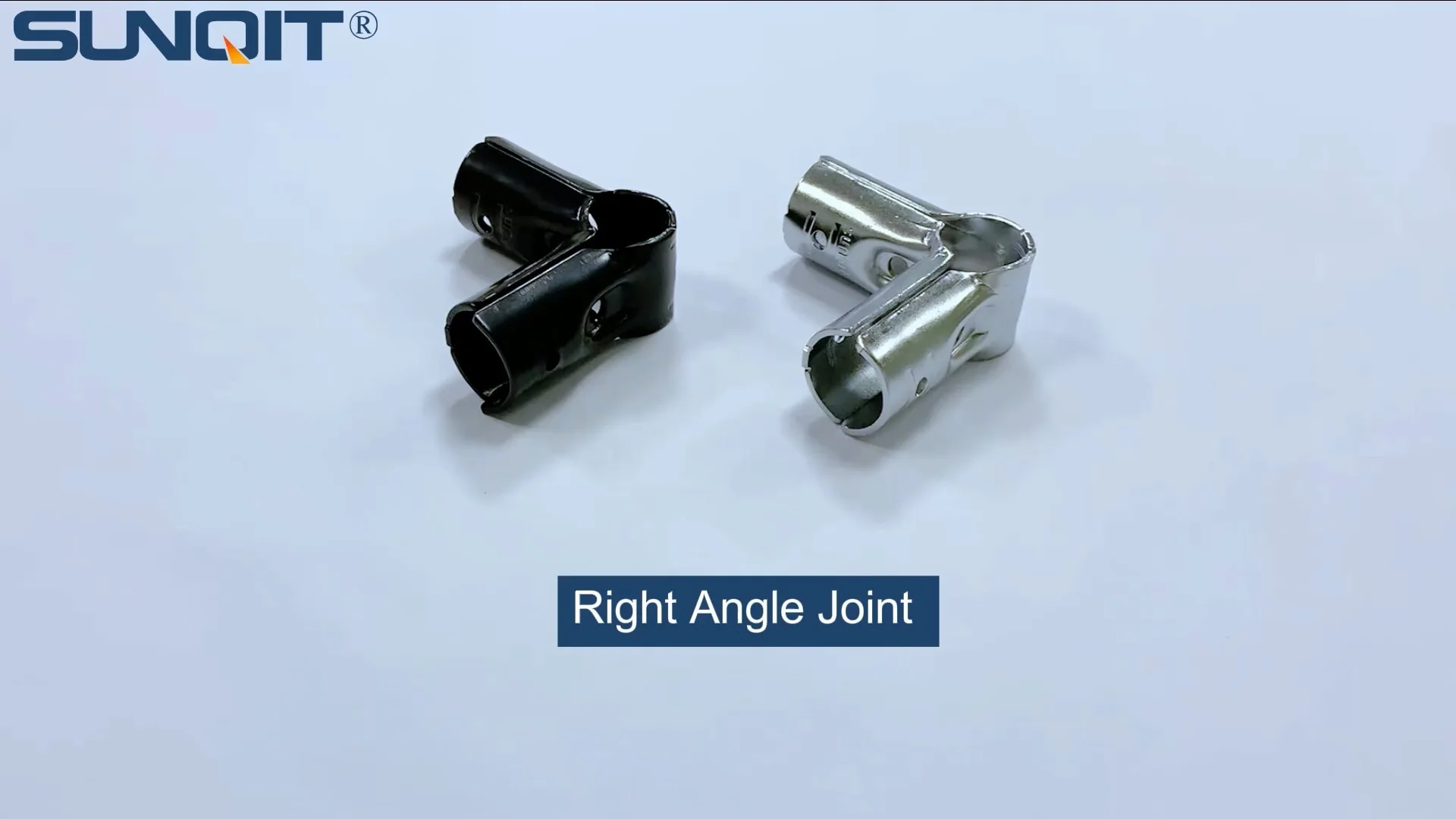
If you've ever spent time setting up a lean system —whether it's a workshop workbench, a material flow rack, or a production line trolley—you know that the smallest components often make the biggest difference. Enter lean pipe joints: the unsung heroes that hold everything together. They're not just metal or plastic connectors; they're the decision points that shape how flexible, stable, and efficient your entire setup can be. Today, we're zeroing in on two of the most common types: the Three Way Lean Pipe Joint and the Four Way Straight Lean Pipe Joint. By the end, you'll have a clear roadmap to pick the one that fits your workflow like a glove.
Let's start with a simple truth: lean pipe joint s are the "glue" of any lean pipe system. They determine how you can arrange pipes, where you can add shelves, how much weight your structure can bear, and even how quickly you can reconfigure things when your needs change. Choose the wrong one, and you might end up with a wobbly workbench that sags under tools, or a flow rack that can't keep up with your team's pace. Choose the right one, and you'll wonder how you ever worked without it.
First Things First: What Even Are Lean Pipe Joints?
Before we dive into the specifics, let's make sure we're all on the same page. Lean pipe systems—often called "flexible pipe systems"—are modular setups used in manufacturing, warehouses, and workshops to build everything from workbenches and shelving to conveyors and material handlers. They're built from lightweight pipes (usually steel, aluminum, or plastic-coated steel) and a variety of joints that let you connect these pipes at different angles and configurations.
Think of it like building with Tinkertoys, but for grown-ups who mean business. The pipes are the sticks, and the joints are the connectors that let you turn those sticks into functional structures. And just like Tinkertoys, the type of connector you use drastically changes what you can build. That's where Three Way and Four Way Straight joints come into play.
Deep Dive: The Three Way Lean Pipe Joint
Let's start with the more common of the two: the Three Way Lean Pipe Joint. As the name suggests, this joint has three connection points—think of a "T" shape or a "Y" shape, depending on the design. It's the go-to for simple, straightforward setups where you need to branch off in one additional direction from a main pipe.
Design & Structure: Simple, But Smart
Most Three Way joints are made from die-cast metal (like zinc alloy) or high-strength plastic, with three hollow ports designed to fit standard lean pipe diameters (typically 28mm or 30mm). The ports are usually set at 90-degree angles to each other, though some models offer adjustable angles for more flexibility. The magic is in the locking mechanism: a setscrew or a spring-loaded pin that tightens against the pipe, holding it securely in place without welding or drilling.
Picture this: You're building a basic lean pipe workbench . The main frame has vertical pipes for legs and horizontal pipes for the tabletop frame. To add a lower shelf halfway up the legs, you'd use Three Way joints. Attach one port to the vertical leg pipe, another to the horizontal shelf pipe, and the third… well, maybe you don't need it. That's the beauty of the Three Way: it's versatile enough to leave a port unused if your design doesn't require it.
Key Features: Versatility Meets Simplicity
1. Easy to Assemble (No Expertise Needed): If you're new to lean systems, Three Way joints are incredibly forgiving. You don't need special tools—just a hex key or a screwdriver to tighten the setscrew. Even if you've never built anything with lean pipes before, you can have a basic structure up in 30 minutes.
2. Lightweight and Cost-Effective: Since they have fewer connection points, Three Way joints are often lighter and cheaper than their Four Way counterparts. This makes them ideal for small-scale projects or budget-conscious setups where you don't need to overengineer.
3. Great for Simple, Static Structures: When your design doesn't require complex branching—like a single-level workbench, a small parts bin rack, or a mobile trolley with basic shelves—the Three Way joint shines. It keeps things simple, which means fewer points of failure and less time spent troubleshooting.
Ideal Applications: When to Reach for the Three Way
Let's get concrete. Here are scenarios where a Three Way joint is the obvious choice:
• Basic Workbenches: A standard lean pipe workbench with a tabletop, a lower shelf, and maybe a back rail for tools? Three Way joints handle this easily. The vertical legs connect to horizontal frame pipes, and the lower shelf uses Three Way joints to branch off the legs.
• Small Flow Racks: If you're building a flow rack with 2-3 levels and simple side rails, Three Way joints keep the structure tight. They let you add vertical supports at the corners and horizontal rails for the roller tracks without overcomplicating things.
• Temporary or Mobile Structures: Trolleys that get moved around the shop or temporary staging areas? Three Way joints are lightweight enough to keep the overall weight down, but still sturdy enough to handle daily use.
The Pros & Cons: Is It Right for You?
Pros:
- Budget-friendly: Lower cost per unit compared to Four Way joints.
- Quick assembly: Fewer connection points mean faster setup.
- Lightweight: Easier to transport and reposition.
- Simple to repair: If a joint wears out, replacing it is straightforward.
Cons:
- Limited branching: Only three directions mean you can't add complex cross-bracing or multi-level shelves without extra joints.
- Lower load capacity: With one fewer connection point, they're not ideal for heavy-duty setups (think: stacks of metal parts or industrial machinery).
- Less stability in complex structures: If you try to build something with multiple angles or overhangs, Three Way joints might not provide enough lateral support.

Deep Dive: The Four Way Straight Lean Pipe Joint
Now, let's meet the more robust cousin: the Four Way Straight Lean Pipe Joint. As you've probably guessed, this joint has four connection points—usually arranged in a straight line, with two ports on one axis and two on a perpendicular axis (like a "+" sign). It's built for setups that need extra stability, more branching options, or the ability to handle heavier loads.
Design & Structure: Built for Stability
Four Way Straight joints are often chunkier than Three Way joints, with a more substantial base to support the extra connection points. They're typically made from thicker metal (like reinforced zinc alloy or aluminum) and feature larger setscrews or clamping mechanisms to ensure a tight grip on pipes. The four ports are usually spaced evenly, allowing pipes to extend in four directions: up, down, left, and right (or front/back, depending on orientation).
Imagine building a multi-level flow rack that needs to hold heavy boxes of inventory. You need vertical supports, horizontal rails for the rollers, cross-braces to keep the rack from swaying, and maybe even side extensions for labeling or tools. A Four Way Straight joint lets you connect all these elements at a single point: vertical pipe, horizontal roller rail, cross-brace, and side extension—all in one joint. No need for extra connectors or messy overlaps.
Key Features: Stability, Scalability, and Strength
1. Multi-Directional Support: The biggest advantage? Four connection points mean you can branch off in more directions without adding extra joints. This reduces the number of parts you need and creates cleaner, sturdier connections.
2. Higher Load Capacity: Thanks to their beefier design and extra connection points, Four Way joints can handle more weight. They distribute load across four pipes instead of three, making them a better choice for heavy tools, dense materials, or tall structures that need to resist tipping.
3. Scalability for Complex Projects: If your setup might grow over time—say, you start with a 3-level flow rack and later add a fourth level or side wings—Four Way joints make expansion easier. They leave room to add pipes in new directions without rebuilding the entire structure.
Ideal Applications: When to Choose Four Way
Four Way Straight joints aren't just "bigger and better"—they're better for specific jobs. Here's where they shine:
• Heavy-Duty Workbenches: If your workbench needs to support industrial tools, welding equipment, or large assemblies, Four Way joints add the stability you need. They let you add cross-bracing between legs (front-to-back and side-to-side) to prevent wobbling, even when you're leaning on the bench or using power tools.
• Large Flow Racks with Multiple Levels: A flow rack that spans 10 feet long with 4+ levels and holds hundreds of pounds of materials? Four Way joints are non-negotiable. They support vertical posts, horizontal roller rails, and diagonal bracing to keep the entire rack rigid, even when items are sliding down the rollers.
• Custom or Complex Structures: Think of a production line workstation with integrated tool holders, parts bins, a computer shelf, and a lighting bar. Four Way joints let you connect all these elements to the main frame without creating weak points or messy, overlapping joints.
The Pros & Cons: Weighing Your Options
Pros:
- Superior stability: Four connection points distribute load and reduce sway.
- Higher weight capacity: Better for heavy tools, materials, or tall structures.
- Simpler complex builds: Fewer joints needed for multi-directional setups.
- Future-proofing: Easier to expand or reconfigure later.
Cons:
- Higher cost: More material and engineering mean a higher price tag per joint.
- Heavier: Adds extra weight to mobile structures (though the stability often makes it worth it).
- Overkill for simple setups: Using a Four Way joint for a basic workbench is like using a sledgehammer to hang a picture—effective, but unnecessary.

Side-by-Side: The Ultimate Comparison Table
| Feature | Three Way Lean Pipe Joint | Four Way Straight Lean Pipe Joint |
|---|---|---|
| Connection Points | 3 (typically "T" or "Y" shape) | 4 (straight "+" shape, 2 axes) |
| Load Capacity | Moderate: Best for light to medium loads (up to ~200 lbs per joint) | High: Handles heavy loads (200+ lbs per joint, depending on pipe material) |
| Best For | Simple setups: Basic workbenches, small flow racks, mobile trolleys | Complex setups: Heavy-duty workbenches, large flow racks, multi-level structures |
| Cost | Lower: ~$2–$5 per joint (varies by material) | Higher: ~$4–$8 per joint (varies by material) |
| Assembly Time | Faster: Fewer ports to tighten | Slower: More ports to align and secure |
| Stability | Good for simple structures; may wobble under heavy or uneven loads | Excellent: Extra connection points reduce sway and improve rigidity |
| Scalability | Limited: Adding branches requires extra joints | High: Easy to add new pipes in multiple directions later |

How to Choose: 5 Questions to Ask Yourself
Still on the fence? Let's break it down with five practical questions to guide your decision:
1. What's the Maximum Weight My Structure Will Hold?
If you're storing lightweight items (like small parts bins or hand tools), Three Way joints are fine. But if you're loading up with heavy machinery, metal stock, or full boxes of inventory, Four Way joints are worth the investment. Remember: a wobbly structure isn't just annoying—it's a safety risk.
2. Will I Need to Reconfigure or Expand Later?
If your setup is temporary or might grow (e.g., adding more shelves to a flow rack next quarter), Four Way joints give you flexibility. They let you add pipes in new directions without tearing down and rebuilding. If it's a permanent, simple structure, Three Way joints will save you money.
3. How Complex Is My Design?
A basic workbench with two shelves? Three Way. A workbench with a tool rail, a computer shelf, a parts bin holder, and a lower cabinet? Four Way joints will reduce the number of connections needed, making the structure cleaner and sturdier.
4. What's My Budget?
If you're working with a tight budget and building something simple, Three Way joints let you stretch your dollars further. But if stability and longevity are priorities, think of Four Way joints as an investment—they'll save you from having to replace wobbly structures later.
5. Is Weight a Concern?
For mobile trolleys that need to be pushed around, Three Way joints keep the total weight lower. But if the structure stays put, the extra weight of Four Way joints is a small price to pay for stability.
Real-World Example: Which Would We Choose?
Let's put this into practice with a scenario we've all faced: Building a flow rack for a small electronics assembly line. The rack needs to hold PCBs (printed circuit boards) in bins, with 3 levels, roller tracks for easy bin sliding, and side rails to keep bins from falling off. The bins are lightweight (~10 lbs each), but the rack itself needs to be sturdy enough to handle daily use.
For this, we'd lean (pun intended) toward Three Way joints. Why? The load is light, the design is simple (3 levels, basic side rails), and the budget is probably better spent on high-quality roller tracks than extra joints. Three Way joints connect the vertical posts to the horizontal roller rails and side rails without overcomplicating things.
Now, flip the script: A flow rack in a warehouse holding 50-lb boxes of automotive parts, with 5 levels, cross-bracing to prevent sway, and side extensions for barcode scanners. Here, Four Way joints are non-negotiable. The extra connection points let us add cross-braces, side extensions, and vertical supports all at the same joint, creating a structure that can handle the weight and resist the daily bumps of warehouse traffic.
Final Verdict: It's All About Your Needs
At the end of the day, there's no "better" joint—only the better joint for your application. Three Way Lean Pipe Joints are the practical choice for simple, budget-friendly, or lightweight setups. They're the reliable workhorses that get the job done without fuss. Four Way Straight Lean Pipe Joints, on the other hand, are the heavy lifters—built for stability, complexity, and long-term scalability.
Here's a quick cheat sheet to remember:
Choose Three Way if: You're building something simple (workbench, small flow rack), on a budget, or need to keep weight down.
Choose Four Way Straight if: You need to support heavy loads, build a complex or tall structure, or want room to expand later.
And hey, there's no rule that says you can't mix them! Many setups use Three Way joints for basic connections and Four Way joints at critical stress points (like the corners of a heavy workbench). The key is to assess your needs, map out your design, and let the joints work for you—not against you.
So, what will it be? Are you Team Three Way or Team Four Way? Whatever you choose, here's to a lean system that's stable, flexible, and ready to keep up with your workflow.