- Company Articles
- Products and Technology
- Solution
- Free Flow Chain Conveyor and Lean Principles: Aligning with Kaizen Practices

Free Flow Chain Conveyor and Lean Principles: Aligning with Kaizen Practices
Related Product
Free Flow Chain Conveyor
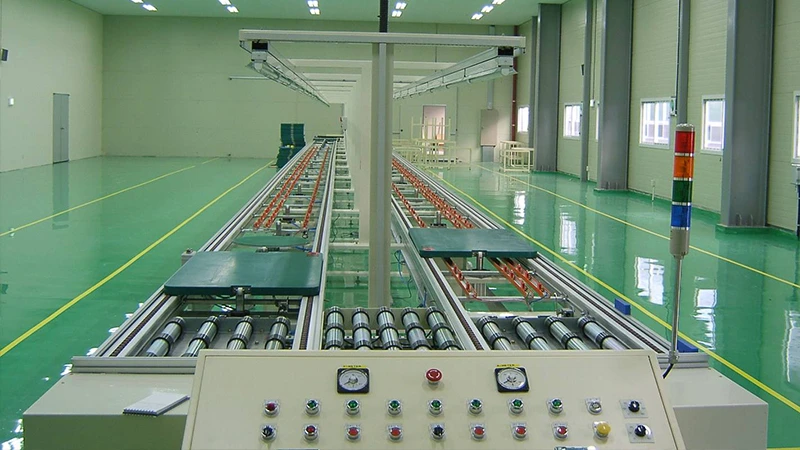
The free flow conveyor system uses a free flow chain that can increase the speed of the tooling board that supports the products. This can improve the efficiency and quality of the production process, as well as reduce the wear and tear of the system.
Introduction: The Pulse of Modern Manufacturing
Walk into any thriving manufacturing facility today, and you'll feel it immediately—the quiet hum of efficiency, the seamless movement of materials, and the sense that every component has a purpose. This isn't just luck; it's the result of intentional systems designed to eliminate waste, boost productivity, and empower teams to do their best work. At the heart of this transformation lies lean manufacturing —a philosophy that's more than a set of tools; it's a mindset focused on continuous improvement. And within this philosophy, few tools are as vital as the free flow chain conveyor , a workhorse that bridges the gap between chaos and order, between stagnation and progress.
But lean isn't just about machines. It's about people. It's about creating environments where employees don't just work—they improve . That's where Kaizen comes in—the Japanese concept of "change for the better," or continuous improvement. Kaizen isn't a one-time project; it's a daily practice, a culture where every small adjustment, every incremental upgrade, adds up to meaningful change. And when paired with the right tools—like free flow chain conveyors, flow racks , and ergonomic workbenches —Kaizen becomes not just a idea, but a tangible reality.
In this article, we'll explore how free flow chain conveyors align with lean principles, why they're indispensable for Kaizen practices, and how partnering with a trusted lean system supplier can turn your manufacturing floor into a hub of efficiency and innovation. Whether you're just starting your lean journey or looking to refine an existing system, this guide will show you how the right tools and mindset can transform your operations—one small improvement at a time.
Understanding Lean Principles: Beyond the Buzzwords
Before diving into the specifics of free flow chain conveyors, let's ground ourselves in what lean manufacturing really means. Born from the Toyota Production System (TPS) in the mid-20th century, lean is built on two core pillars: respect for people and continuous improvement . Everything else—from waste reduction to process optimization—flows from these ideals.
At its core, lean aims to deliver maximum value to the customer while minimizing "muda," the Japanese term for waste. There are seven classic types of muda (later expanded to eight), and they're more common than you might think:
- Transportation: Unnecessary movement of materials or products (e.g., carrying parts across the factory floor instead of conveying them).
- Inventory: Excess stock that ties up capital and space (e.g., piles of components waiting to be used).
- Motion: Unneeded movement of people (e.g., workers walking back and forth to retrieve tools).
- Waiting: Idle time due to bottlenecks (e.g., an assembly line stopping because parts aren't arriving).
- Overproduction: Making more than needed (e.g., manufacturing 100 units when only 80 are ordered).
- Overprocessing: Doing more work than required (e.g., adding unnecessary steps to a product).
- Defects: Products that don't meet standards (e.g., parts that need rework or scrapping).
- Unused Talent: Ignoring employee ideas or skills (the eighth waste, added later).
Lean's goal? Eliminate these wastes. But how? Through tools like 5S (Sort, Set in Order, Shine, Standardize, Sustain), Kanban (visual scheduling), and Just-In-Time (JIT) production. And at the center of many of these tools lies a critical principle: flow . Materials should flow smoothly, information should flow clearly, and work should flow without interruption. When flow is disrupted, waste creeps in. That's where free flow chain conveyors shine—they're designed to keep things moving, to turn stagnant processes into dynamic, responsive systems.
Free Flow Chain Conveyors: The Backbone of Lean Flow
What Are Free Flow Chain Conveyors, Anyway?
Let's start with the basics. A free flow chain conveyor is a material handling system that uses a series of interconnected chains mounted on a track to move products or parts. Unlike traditional belt conveyors, which require power to run continuously, free flow chain conveyors often use gravity or minimal power, allowing items to "flow" freely once set in motion. This design makes them incredibly flexible—they can be configured in straight lines, curves, or inclines, and they're easy to adjust as needs change.
But what really sets them apart is their ability to support lean flow . In a typical manufacturing setup, parts might sit in bins, get carried by hand to the next station, or pile up at bottlenecks. With a free flow chain conveyor, parts move directly from one workstation to the next, reducing the need for manual handling, cutting down on waiting time, and minimizing the risk of damage. Imagine an assembly line where circuit boards glide smoothly from soldering to testing, or where automotive parts flow gently from machining to painting—no delays, no extra steps, just steady progress.
Why Free Flow Chain Conveyors Are a Lean Game-Changer
Let's break down how free flow chain conveyors tackle the seven wastes, making them a cornerstone of lean systems:
- Transportation Waste: By automating the movement of materials, free flow conveyors eliminate the need for workers to carry parts or use forklifts for short distances. This reduces time spent on non-value-added tasks and lowers the risk of accidents.
- Waiting Waste: Bottlenecks happen when one station finishes before the next is ready. Free flow conveyors allow for "paced" production, where parts arrive just as the next workstation is ready—thanks to features like adjustable speed controls and accumulation zones that hold parts until needed.
- Motion Waste: When parts are delivered directly to the workbench via conveyor, workers don't have to walk to retrieve materials. This frees up time for actual assembly or inspection work, boosting productivity and reducing fatigue.
- Inventory Waste: Free flow conveyors support JIT production by moving parts in small batches, rather than stockpiling them. This means less excess inventory taking up space and tying up capital.
But their benefits go beyond waste reduction. Free flow chain conveyors are also highly adaptable—perfect for Kaizen. Need to reconfigure the assembly line to accommodate a new product? Adjust the conveyor track. Want to add a new workstation? Simply extend the chain. This flexibility means your system can evolve with your needs, making continuous improvement not just possible, but easy.
| Traditional Conveyors | Free Flow Chain Conveyors |
|---|---|
| Often require constant power, increasing energy costs. | Use gravity or minimal power, reducing energy use. |
| Fixed configurations make adjustments difficult and costly. | Modular design allows for easy reconfiguration (add curves, extend tracks, etc.). |
| May cause product damage due to rigid belt movement. | Gentle chain movement reduces risk of scratches or dents. |
| Limited flexibility for small-batch or custom production. | Ideal for mixed production runs and frequent changeovers. |
Kaizen in Action: How Free Flow Conveyors Empower Continuous Improvement
Kaizen isn't about grand gestures—it's about the daily, on-the-ground improvements that employees make. For example, a line worker might notice that parts often get stuck at a certain curve on a conveyor. Instead of ignoring it, they suggest adding a guide rail to smooth the transition. Or a supervisor might realize that a workbench is positioned too far from the conveyor, forcing workers to stretch. They adjust the layout, reducing motion waste. These are Kaizen moments, and they're only possible when tools are flexible enough to adapt.
Case Study: From Bottlenecks to Breakthroughs
Let's look at a real-world example. A mid-sized electronics manufacturer was struggling with bottlenecks in their circuit board assembly line. Parts were stored in bins on shelves, requiring workers to walk 10–15 feet to retrieve components for each board. This led to motion waste, waiting time, and frequent errors (workers sometimes grabbed the wrong part). Productivity was stagnant, and employee morale was low—no one likes feeling like they're wasting time.
The company partnered with a lean system supplier to redesign their workflow. The solution? A combination of free flow chain conveyors, flow racks, and ergonomic workbenches. Here's what happened:
- Flow Racks: Parts were moved from shelves to flow racks positioned directly next to the conveyor. Flow racks use gravity to feed parts forward, so the next component is always at the front—no more digging through bins.
- Free Flow Chain Conveyor: A custom conveyor was installed to carry circuit boards from the soldering station to the testing station. The conveyor was positioned at waist height, aligning with the workbenches to minimize reaching.
- Workbench Adjustments: Workbenches were reconfigured to face the conveyor, with tools and materials within arm's reach. Anti-fatigue mats and adjustable heights reduced physical strain.
The results were striking: Within three months, the company saw a 22% reduction in assembly time, a 15% drop in errors, and a noticeable boost in employee satisfaction. But the real win? Kaizen took root. Workers started suggesting more improvements—adding labels to flow rack bins for faster identification, adjusting conveyor speed to match testing times, even redesigning the workbench layout to include built-in storage for small tools. The conveyor wasn't just a machine; it was a catalyst for a culture of continuous improvement.
This is the power of aligning tools with Kaizen. When systems are flexible, employees feel empowered to make changes. They stop seeing themselves as cogs in a machine and start seeing themselves as problem-solvers. And that's when lean truly comes alive.
Beyond Conveyors: Building a Complete Lean Ecosystem
Free flow chain conveyors are powerful, but they're most effective when part of a broader lean ecosystem. Let's explore how they work with other key tools:
Flow Racks: Keeping Parts Accessible and Organized
Flow racks (also called gravity flow racks) are like the perfect partner to free flow conveyors. They use inclined shelves with rollers to move products forward, ensuring that the oldest stock is used first (FIFO—First In, First Out). When positioned near a conveyor, flow racks eliminate the need for workers to walk to storage areas. For example, in a warehouse, flow racks can feed parts directly onto a conveyor that carries them to the assembly line. This reduces transportation waste and ensures a steady supply of materials—no more "starving" workstations.
Workbenches: Where People and Processes Meet
A workbench isn't just a table—it's a command center. Ergonomic workbenches, designed to integrate with conveyors, can transform how work gets done. Imagine a workbench with a cutout for the conveyor, so parts slide directly onto the workspace. Built-in tool holders, power outlets, and storage bins keep everything organized. Adjustable heights ensure that workers of all sizes can work comfortably, reducing fatigue and injury. When workbenches are aligned with conveyors, the transition from "receive part" to "assemble part" to "send to next station" becomes seamless—no more fumbling, no more delays.
Lean System Suppliers: Your Partner in Continuous Improvement
None of this happens in a vacuum. To build a truly lean ecosystem, you need a partner who understands both the tools and the philosophy. A good lean system supplier doesn't just sell conveyors or flow racks—they listen to your challenges, analyze your workflow, and design solutions that grow with you. They should offer customizable options (since no two facilities are the same), provide training on how to use tools effectively, and support Kaizen by making it easy to adjust systems as needs change.
When choosing a supplier, look for these qualities:
- Expertise in Lean Principles: They should understand Kaizen, 5S, and flow— not just conveyor mechanics.
- Customization: One-size-fits-all solutions rarely work in lean. They should offer tailored designs.
- Durability: Tools for continuous improvement need to withstand daily use and adjustments.
- Support: Installation, training, and after-sales service are critical. A supplier who disappears after the sale isn't a partner.
Remember, your supplier should be invested in your success. They should celebrate your Kaizen wins and help you troubleshoot challenges. After all, lean is a journey, not a destination—and every journey is easier with a reliable guide.
Conclusion: Small Changes, Big Results
At the end of the day, lean manufacturing and Kaizen are about more than efficiency—they're about respect. Respect for your employees' time, respect for your customers' needs, and respect for the resources you use. Free flow chain conveyors, flow racks, workbenches, and the right lean system supplier are all tools to honor that respect. They turn chaos into order, waste into value, and stagnation into progress.
So, whether you're just starting to explore lean or looking to take your Kaizen practices to the next level, remember this: the best systems are built on flexibility, adaptability, and a commitment to continuous improvement. A free flow chain conveyor isn't just a machine—it's a symbol of that commitment. It says, "We care about how work gets done. We care about making things better—for our team, for our customers, and for our future."
And in the end, that's what lean is all about. It's not perfection—it's progress. One small adjustment, one incremental improvement, one free-flowing conveyor at a time. The journey may be long, but every step brings you closer to a workplace that's more efficient, more engaging, and more human. Isn't that worth striving for?