- Company Articles
- Products and Technology
- Solution
- Free Flow Chain Conveyor Customization: Tailoring to Your Production Needs

Free Flow Chain Conveyor Customization: Tailoring to Your Production Needs
Related Product
Free Flow Chain Conveyor
The free flow conveyor system uses a free flow chain that can increase the speed of the tooling board that supports the products. This can improve the efficiency and quality of the production process, as well as reduce the wear and tear of the system.
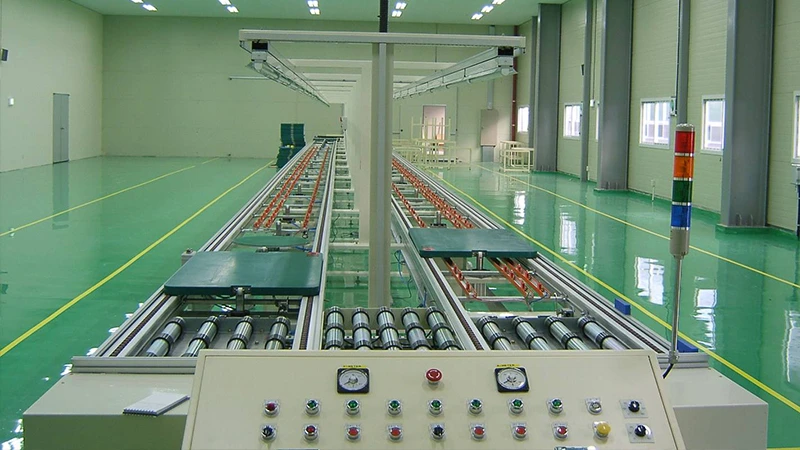
Walk into any high-performing manufacturing facility today, and you'll notice a quiet revolution happening on the production floor. It's not just about robots or fancy software—it's about how materials move. Conveyors, once seen as generic "workhorses," are now being reimagined as strategic assets that can make or break your operational efficiency. Among these, free flow chain conveyors stand out for their ability to keep products moving smoothly, gently, and independently. But here's the hard truth: a standard, off-the-shelf conveyor will never unlock your production line's full potential. The difference between a system that merely "works" and one that thrives lies in customization. In this article, we'll explore why tailoring your free flow chain conveyor to your unique needs is no longer optional—it's essential for aligning with lean system principles, reducing waste, and staying competitive in a fast-paced market.
What Makes Free Flow Chain Conveyors Unique?
Before diving into customization, let's clarify what sets free flow chain conveyors apart. Unlike belt conveyors that drag items along a continuous surface, these systems use a series of precision-engineered rollers (often part of a roller track assembly) mounted on a sturdy frame—typically constructed from lightweight yet durable aluminum profile. This design allows products to glide forward using gravity or minimal external force, making them ideal for applications where speed, gentleness, and flexibility matter most. Think of electronics components that can't withstand rough handling, automotive parts that need to move quickly between assembly stations, or packaged goods that require seamless transitions from production to shipping.
The "free flow" name says it all: each item moves independently, reducing jams and bottlenecks. But here's where many facilities go wrong: they opt for a one-size-fits-all conveyor, assuming it will adapt to their workflow. The reality? Your production line has unique quirks—specific product sizes, varying weights, tight spatial constraints, and workflow patterns that no standard conveyor can fully accommodate. That's where customization turns a basic tool into a game-changer.
Why Customization Aligns with Lean System Principles
Lean system thinking is rooted in eliminating waste—whether it's wasted time, space, or effort. A standard conveyor might seem cost-effective upfront, but it often introduces hidden waste: products getting stuck at awkward angles, workers stretching to reach items, or valuable floor space being wasted on a poorly fitting layout. Customization, by contrast, is lean by design. It starts with a deep understanding of your workflow and ends with a system that fits your space, your products, and your people like a glove.
Consider this example: a manufacturer of small electrical appliances was using a standard conveyor with fixed roller spacing. Their smallest product—a delicate sensor—kept tipping over between rollers, causing frequent stops and product damage. By customizing the roller track to include narrower, 0.5 inch swivel roller balls for that section of the line, they eliminated tipping, reduced downtime by 35%, and cut scrap costs by $20,000 annually. That's the power of aligning your conveyor with lean principles—waste is removed, and efficiency skyrockets.
Key Components of Customization
Customizing a free flow chain conveyor isn't about adding a few extra parts—it's about reengineering the system from the ground up. Let's break down the critical components that can be tailored to your needs:
1. Aluminum Profile Frames: The Foundation of Flexibility
The frame is your conveyor's backbone, and aluminum profile is the material of choice for customizable systems. Unlike rigid steel frames, aluminum profiles are lightweight, corrosion-resistant, and infinitely adaptable. They come in various sizes (like 2020, 3030, 4040, or 8080 series) to support different load capacities—so you can choose a 4040 profile for small parts or a sturdier 8080 for heavier items. What truly sets aluminum apart, though, is its T-slot design. These slots allow you to easily attach accessories like guides, stops, or brackets without welding or drilling. Need to add a sensor mount six months from now? Simply slide a bracket into the T-slot and tighten a screw. This flexibility ensures your conveyor grows with your needs.
2. Roller Track Systems: Precision for Every Product
The roller track is where the magic happens, and it's one of the most customizable elements. Rollers come in a variety of materials (steel, plastic, rubber), sizes (0.5 inch, 1 inch), and configurations (straight, staggered, swivel), each designed for specific products. For example:
- Fragile items (e.g., circuit boards): 0.5 inch swivel roller balls with soft plastic coating to prevent scratches.
- Heavy automotive parts: 1 inch steel rollers with ball bearings for durability and smooth motion.
- ESD-sensitive products: Conductive black ESD wheels to dissipate static electricity, protecting sensitive electronics.
Even roller spacing matters: closer spacing prevents small items from tipping, while wider spacing reduces friction for larger, sturdier products. A customized roller track ensures your products move exactly as they should—no more, no less.
3. Workbench Integration: Bridging the Gap Between Movement and Work
A conveyor shouldn't exist in isolation—it should connect seamlessly with the workbenches where your team builds, inspects, or packages products. Customization here means designing the conveyor to feed directly into workstations at the perfect height, angle, and distance. For example, a workbench positioned at the end of a roller track might include a "pick zone" where products gently stop, allowing workers to access them without stepping away from their stations. This eliminates wasted motion, reduces fatigue, and speeds up cycle times. In some cases, the conveyor itself can incorporate built-in work surfaces, turning transportation and assembly into a single, streamlined process.
4. Layout and Directional Control: Navigating Your Unique Space
Few production floors are perfectly square with unlimited space. Customization lets you design your conveyor to fit your facility's unique layout—whether that means adding 90-degree curves to navigate around equipment, inclines/declines to move products between floors, or switches to route items to different stations. For example, a cosmetics manufacturer might need a conveyor that splits into three branches to send products to different packaging lines, while a furniture maker could use a curved roller track to navigate a tight corner between cutting and assembly areas. The goal? Maximize space, minimize bottlenecks, and keep products moving in the most efficient path possible.
| Feature | Standard Conveyor | Custom Conveyor | Impact on Lean System |
|---|---|---|---|
| Aluminum Profile | Fixed size (e.g., 4040 only) | Tailored width/height (2020 to 8080) with T-slots for accessories | Reduced space waste; easy adaptation to new products/tools |
| Roller Track | Generic 1 inch plastic rollers | Material/size matched to product (e.g., 0.5 inch swivel for fragile items) | Minimized product damage; faster flow rates |
| Workbench Connection | Manual transfer (workers carry items) | Direct feed into workbench at ergonomic height | Eliminated wasted motion; 20-30% faster assembly times |
| Layout | Straight-line only | Curves, inclines, and switches for space efficiency | 30-40% reduction in bottlenecks; better use of floor space |
The Customization Process: From Idea to Installation
Customizing a free flow chain conveyor isn't a guessing game—it's a structured process that ensures the final system fits your needs perfectly. Here's what to expect when working with a reputable supplier:
Step 1: Needs Assessment – Mapping Your Pain Points
The process starts with a deep dive into your current workflow. A good customization expert will ask questions like: What products do you move? Their weights, dimensions, and fragility? Where are the current bottlenecks? Are there future products or production goals to consider? For example, if your team frequently complains about products jamming at a certain turn, or if your current conveyor is too narrow for upcoming larger products, these insights will shape the design.
Step 2: Design and Engineering – Turning Requirements into Blueprints
Using your input, the supplier will create detailed 3D designs, including aluminum profile specifications, roller track layouts, workbench integration points, and directional controls. This is a collaborative phase—you'll review the designs, provide feedback, and make adjustments. Maybe the initial layout places the conveyor too close to a wall, blocking maintenance access, or the roller spacing needs to be tighter for a new product line. This stage ensures the design aligns with your vision before any materials are cut.
Step 3: Prototyping and Testing – "Try Before You Buy"
Many suppliers will build a small prototype or test section of the conveyor to validate the design. This lets you see how your actual products move along the roller track, test different roller types, and ensure the ergonomics work for your team. It's common to discover small tweaks here—maybe the rollers spin too fast, or the stop mechanism needs adjustment. Prototyping catches these issues early, saving time and money during full production.
Step 4: Manufacturing, Installation, and Training
Once the design is finalized, the supplier manufactures the components—cutting aluminum profiles to size, assembling roller tracks, and testing all parts for quality. Installation is scheduled to minimize downtime (often during off-hours), and the team will ensure the conveyor is level, secure, and integrated with existing systems. Finally, they'll train your staff on operation and maintenance, so you can keep the system running smoothly long after installation.
The Tangible Benefits of Customization
Customizing your free flow chain conveyor delivers measurable results that impact your bottom line:
Reduced Waste and Increased Efficiency
By eliminating bottlenecks, jams, and awkward workflows, a custom conveyor reduces waste and speeds up production. For example: A medical device manufacturer we worked with cut production time by 25% after customizing their roller track to match their product sizes, eliminating the need for manual sorting and repositioning.
Improved Product Quality
Gentler handling (thanks to customized rollers) and reduced human contact (via seamless workbench integration) mean fewer damaged products. A electronics client reduced scrap rates by 40% by switching to ESD-safe roller tracks and custom workbench pick zones, protecting sensitive components from static and drops.
Scalability for Future Growth
Aluminum profile frames with T-slots make it easy to add extensions, new roller tracks, or accessories as your business grows. A food packaging company, for instance, started with a single conveyor line and later added two extensions using the same aluminum profile system, doubling capacity without replacing the entire setup.
Ergonomic Benefits for Your Team
Custom workbench integration and optimal conveyor height reduce worker strain, lowering injury rates and boosting morale. A automotive supplier reported a 30% decrease in worker complaints after adjusting their conveyor height to match average arm reach, eliminating constant bending and stretching.
Real-World Examples: Custom Conveyors in Action
Let's look at two fictional but realistic case studies to illustrate the impact of customization:
Case Study 1: Electronics Manufacturer Solves Static Damage with ESD Customization
A mid-sized electronics company was losing $60,000 annually to static damage on circuit boards. Their standard conveyor used non-conductive plastic rollers, and workers had to carry boards 10 feet from the conveyor to ESD workbenches—further building up static. By customizing their free flow chain conveyor with ESD-safe black roller tracks and integrating it directly into ESD workstations at ergonomic height, they eliminated 95% of static damage. The aluminum profile frame included T-slots for mounting static meters, ensuring charge levels stayed within safe limits. Workers now access boards without leaving their stations, cutting handling time by 40%.
Case Study 2: Automotive Supplier Eliminates Bottlenecks with Curved Roller Tracks
A automotive parts supplier struggled with daily bottlenecks at a merge point where three production lines fed into one conveyor. Products often backed up, causing delays and missed deadlines. By customizing the system with two curved roller tracks and a smart switch mechanism, they routed products to three separate assembly stations based on demand. The aluminum profile frame was designed to navigate the facility's tight corners, and roller spacing was adjusted for each station's parts (wider for brackets, closer for small fasteners). The result: a 50% reduction in merge-point delays and a 20% increase in daily output.
Choosing the Right Customization Partner
Customizing your conveyor is a big investment, so choosing the right supplier is critical. Look for partners who:
- Understand lean systems: They should prioritize waste reduction and efficiency in the design.
- Offer end-to-end support: From assessment to installation to training, not just a one-time sale.
- Use high-quality components: Durable aluminum profile, precision roller tracks, and reliable ESD-safe materials.
- Have a proven track record: Ask for case studies or references from similar industries.
Conclusion: Your Conveyor, Your Way
In a world where operational efficiency is everything, a customized free flow chain conveyor isn't a luxury—it's a necessity. By tailoring aluminum profiles, roller tracks, workbench integration, and layout to your unique needs, you align your material handling system with lean system principles, reduce waste, and create a production line that adapts as your business grows. The upfront investment pays off in faster production, fewer defects, happier workers, and a competitive edge that's hard to match.
So, if you're still using a standard conveyor and wondering why your production line isn't reaching its potential, it's time to ask: What would a system designed for you look like? The answer might just be the key to unlocking the efficiency and profitability you've been chasing.