- Company Articles
- Products and Technology
- Product knowledge
- Free Flow Chain Conveyor Design for High-Volume Production Environments

Free Flow Chain Conveyor Design for High-Volume Production Environments
Related Product
Free Flow Chain Conveyor
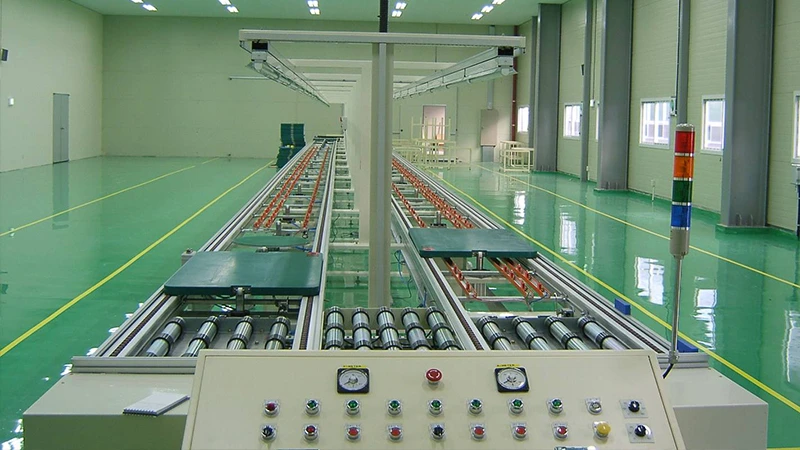
The free flow conveyor system uses a free flow chain that can increase the speed of the tooling board that supports the products. This can improve the efficiency and quality of the production process, as well as reduce the wear and tear of the system.
The Backbone of Modern Manufacturing: Why Material Flow Matters
Walk into any high-volume production facility today—whether it's an automotive assembly plant churning out hundreds of cars daily or an electronics factory assembling smartphones by the thousands—and you'll quickly realize that the unsung hero of efficiency isn't just the machinery on the floor. It's the material handling system that keeps parts moving, stations supplied, and workflows uninterrupted. In these fast-paced environments, even a small delay in part delivery can ripple into missed deadlines, increased labor costs, and frustrated teams. That's where specialized conveyors, like the free flow chain conveyor, step in to transform chaos into order.
Unlike traditional conveyors that rely on belts or heavy rollers, free flow chain conveyors are engineered for precision, speed, and adaptability. They're the quiet workhorses that ensure components glide seamlessly from one workstation to the next, whether it's a tiny circuit board in a laptop factory or a bulky metal bracket in an appliance plant. But what exactly makes them so critical for high-volume settings? And how do you design one that doesn't just keep up with demand but actually enhances your production capabilities? Let's dive in.
What Is a Free Flow Chain Conveyor, Anyway?
At its core, a free flow chain conveyor is a material handling system designed to move products with minimal friction and maximum control. Picture a series of interconnected chains—often made of durable plastic or stainless steel—mounted on a track. These chains are linked in a way that allows products to "flow" freely, guided by the track, without getting stuck or requiring constant manual intervention. Unlike roller conveyors, which depend on gravity or external force to move items, free flow chain conveyors use a powered drive system to propel the chain (and thus the products) at a steady, adjustable speed.
What sets them apart is their ability to handle high throughput with remarkable consistency. In high-volume environments, where thousands of parts need to move per hour, this reliability is non-negotiable. Imagine a scenario where a smartphone manufacturer needs to move circuit boards from the soldering station to the testing area. A free flow chain conveyor ensures each board arrives exactly when the tester is ready, eliminating bottlenecks and reducing the need for workers to manually transport parts. It's not just about moving things faster—it's about moving them smarter .
Key Components: Building Blocks of a Free Flow Chain Conveyor
A well-designed free flow chain conveyor isn't just a "chain on a track." It's a system of carefully selected components working in harmony. Let's break down the parts that make these conveyors tick, and why each matters for high-volume production:
The Chain Itself: The star of the show. Most free flow chains are made of high-strength plastic (like acetal or polypropylene) or stainless steel, chosen for their low friction, resistance to wear, and ability to handle varying weights. Plastic chains are lighter and quieter—ideal for delicate electronics—while stainless steel chains excel in heavy-duty applications, like automotive parts. The chain links are designed with precision to interlock smoothly, ensuring no jams even at high speeds.
The Track/Rail System: The chain needs a stable path to follow, and that's where the track comes in. Tracks are often made of aluminum profile or steel, chosen for their rigidity and lightweight properties. Aluminum profile, in particular, is a favorite among manufacturers because it's easy to customize—you can cut it to length, add brackets, or adjust heights without heavy machinery. This flexibility is a game-changer when designing conveyors that need to fit into tight factory layouts or adapt to evolving production lines.
Drive Units: The "engine" of the conveyor. Typically mounted at one end, drive units use motors and gearboxes to power the chain. In high-volume setups, variable speed drives are a must—they let you adjust the conveyor speed to match upstream and downstream processes. For example, if the assembly station downstream is running slower due to a temporary issue, you can slow the conveyor to prevent a backlog of parts.
Support Structures: Conveyors don't float in mid-air! They're supported by frames, often built from the same aluminum profile as the tracks. These frames are modular, meaning you can add legs, braces, or even integrate them with workbench stations. Imagine a conveyor that feeds directly into a workbench where operators assemble parts—no more walking to retrieve components; everything arrives right at their fingertips.
Guides and Stops: To keep products on track (literally), conveyors include guides—plastic or metal rails that prevent items from sliding off. Stops, often pneumatic or mechanical, temporarily halt products at specific stations (like a testing area) and release them once the task is done. In high-volume settings, these features are critical for preventing collisions and ensuring parts arrive exactly where they need to be, when they need to be there.
Why Free Flow Chain Conveyors Outshine Other Systems in High-Volume Settings
High-volume production environments demand more than just "good enough"—they need systems that can scale, adapt, and perform reliably under pressure. Let's compare free flow chain conveyors to other common material handling solutions to see why they're often the top choice:
| Conveyor Type | Speed (Parts per Hour) | Load Capacity (Max per Unit) | Maintenance Needs | Best For |
|---|---|---|---|---|
| Free Flow Chain Conveyor | Up to 5,000+ | 50–500 lbs (depending on chain) | Low (sealed bearings, minimal lubrication) | High-throughput, precision parts (electronics, automotive) |
| Roller Conveyor (Gravity) | Depends on slope; 100–500 | 100–2,000 lbs | Moderate (rollers need periodic cleaning/lubrication) | Heavy, uniform items (pallets, large boxes) |
| Belt Conveyor | 1,000–3,000 | 50–1,000 lbs | High (belts wear, need tension adjustments) | Irregularly shaped items (bags, packages) |
As the table shows, free flow chain conveyors stand out for their speed and low maintenance—two factors that directly impact high-volume efficiency. Let's unpack why these advantages matter:
Unmatched Throughput: In a factory producing 10,000 units per day, every minute counts. Free flow chain conveyors can move up to 5,000 parts per hour, far exceeding gravity roller conveyors and matching or surpassing belt conveyors. This speed isn't just about raw numbers; it's about consistency. Unlike belt conveyors, which can slow down as belts stretch or accumulate debris, free flow chains maintain a steady pace, ensuring production lines stay on schedule.
Low Maintenance, High Uptime: High-volume production can't afford downtime. Free flow chain conveyors are designed with sealed bearings and self-lubricating components, meaning they need minimal attention. Compare that to belt conveyors, which require regular belt replacements, tension checks, and cleaning to prevent slippage. For a plant running 24/7, the hours saved on maintenance translate directly to higher output.
Flexibility to Adapt: High-volume doesn't always mean "one-size-fits-all." Factories often produce multiple product lines, each with different part sizes and weights. Free flow conveyors excel here because they're modular. Need to add a curve to navigate around a workbench ? Swap out the straight track for a curved aluminum profile section. Handling heavier parts next month? Upgrade to a stainless steel chain. This adaptability means your conveyor grows with your production needs, not against them.
Designing for High-Volume: Critical Considerations
Building a free flow chain conveyor for high-volume production isn't a "set it and forget it" task. It requires careful planning to ensure the system aligns with your specific products, layout, and goals. Here are the key questions to answer before diving into design:
1. What Are You Moving, and How Much Does It Weigh? The first rule of conveyor design: know your load. A 10-ounce circuit board and a 50-pound engine part need very different chains and tracks. For lightweight electronics, a plastic chain with a narrow aluminum profile track works best. For heavy automotive components, you'll need a stainless steel chain and reinforced steel tracks. Miscalculating weight can lead to premature wear, frequent breakdowns, or even safety hazards.
2. How Fast Do You Need Parts to Move? Speed isn't just about going as fast as possible—it's about matching the pace of your production line. If your assembly stations can process 100 parts per minute, your conveyor should deliver exactly 100 parts per minute. Going faster risks overwhelming workers; going slower creates bottlenecks. Most free flow conveyors come with variable speed drives, so you can adjust on the fly, but it's critical to design the system with your target throughput in mind from the start.
3. What's Your Layout, and Where Are the Bottlenecks? A conveyor is only as efficient as its path. Before designing, map your factory floor: Are there tight corners? Do parts need to move up or down inclines? Will the conveyor need to pass under other equipment or around existing workbench stations? For example, in an electronics plant, the conveyor might need to dip slightly to feed parts into a testing machine, then rise again to reach the packaging area. Using aluminum profile tracks makes it easy to create these custom paths, but you'll need to account for elevation changes and turns to avoid jams.
4. How Will It Integrate with Other Systems? A free flow chain conveyor rarely works alone. It needs to play nice with upstream systems (like automated part feeders) and downstream stations (like packaging machines or workbench assembly lines). For example, if parts arrive at the conveyor via a robotic arm, the conveyor's speed should sync with the arm's cycle time to prevent backups. Similarly, if parts exit the conveyor onto a roller track for manual sorting, the handoff must be smooth to avoid damaging delicate items.
5. What About the Environment? High-volume production environments can be harsh. Will the conveyor be exposed to oils (like in automotive plants), dust (like in furniture manufacturing), or moisture (like in food processing)? For oily or wet environments, stainless steel chains and corrosion-resistant aluminum profiles are a must. In cleanrooms (common in electronics), plastic chains with minimal particle shedding are preferred. Ignoring environmental factors can lead to premature failure and costly replacements.
Lean Systems and Free Flow Conveyors: A Match Made in Efficiency Heaven
In today's manufacturing world, "lean" isn't just a buzzword—it's a philosophy that drives every decision. Lean manufacturing focuses on eliminating waste (muda), optimizing flow, and continuous improvement. So how does a free flow chain conveyor fit into this framework? It turns out, they're practically built for lean systems.
At its core, lean is about producing only what's needed, when it's needed. Free flow chain conveyors support this by enabling "just-in-time" (JIT) delivery of parts. Instead of stockpiling components in bins or carts (which ties up capital and takes up space), parts arrive at each workstation exactly as they're needed. For example, in a lean automotive plant, brake calipers might move via free flow conveyor directly to the assembly line just as the workers are ready to install them. No excess inventory, no wasted space, no waiting.
Waste reduction also comes in the form of labor savings. In non-lean setups, workers often spend hours pushing carts or carrying parts between stations—a classic example of "motion waste." A free flow conveyor eliminates this by automating material transport, freeing up teams to focus on value-adding tasks, like assembling or inspecting products. This not only boosts efficiency but also reduces worker fatigue and injury risk.
Of course, to truly leverage a free flow conveyor in a lean system, you need the right partner. A knowledgeable lean system supplier won't just sell you a conveyor—they'll work with you to design a system that aligns with your lean goals. They'll ask about your current waste points, your production cycles, and your future growth plans, then tailor the conveyor to address those needs. For example, if your team is struggling with "waiting waste" (workers idle while parts arrive), a lean system supplier might recommend adding sensors to the conveyor that signal when parts are approaching, so workers can prep in advance.
Real-World Impact: How One Factory Boosted Output by 30% with Free Flow Conveyors
Let's put this all into perspective with a real-world example (names changed for privacy). A mid-sized electronics manufacturer was struggling to keep up with demand for its smart home devices. Their production line relied on manual carts to move circuit boards from the soldering station to the assembly workbench , then to testing, and finally to packaging. The process was slow, error-prone, and led to frequent bottlenecks—especially when cart drivers were busy with other tasks.
The team partnered with a lean system supplier to design a custom free flow chain conveyor system. Here's what changed:
Custom Path Design: The supplier mapped the factory floor and designed a conveyor path that weaved around existing workbenches, with gentle curves to avoid disrupting other workflows. They used aluminum profile tracks for lightweight support and easy adjustments.
Variable Speed Control: The conveyor was equipped with a variable speed drive to match the pace of each workstation. For example, it slowed down at the testing station (where workers needed extra time to inspect boards) and sped up between stations to maintain throughput.
Integration with Workbenches: The conveyor fed directly into custom-cutouts in the assembly workbench surfaces, so parts arrived at eye level—no more bending or reaching for workers.
The results? Within three months, the factory saw a 30% increase in daily output, a 25% reduction in labor costs (since cart drivers were reassigned to value-adding tasks), and a 15% drop in defective products (fewer parts damaged during manual transport). The conveyor paid for itself in under a year, and the team now plans to expand the system to other production lines.
Choosing the Right Supplier: What to Look For
A great free flow chain conveyor design starts with a great supplier. With so many options on the market, how do you separate the reliable partners from the ones who'll leave you with a clunky, inefficient system? Here are the key traits to prioritize:
Experience in High-Volume Settings: Not all conveyor suppliers understand the unique demands of high-volume production. Look for a partner who has worked with factories similar to yours—whether that's automotive, electronics, or consumer goods. Ask for case studies or references to verify their track record.
Customization Capabilities: Off-the-shelf conveyors rarely work for high-volume environments. Your supplier should be willing to design a system tailored to your products, layout, and goals. This includes custom aluminum profile tracks, specialized chains, and integration with existing equipment like workbench stations or roller track systems.
Focus on Lean Principles: As we've seen, the best conveyors support lean goals. A good lean system supplier will ask about your waste points, throughput targets, and future growth plans, then design a conveyor that addresses these. Avoid suppliers who push a "one-size-fits-all" solution—your factory isn't generic, and your conveyor shouldn't be either.
After-Sales Support: Even the best conveyor needs maintenance. Look for a supplier that offers training for your team (so they can handle basic upkeep), fast response times for repairs, and easy access to replacement parts (like chains, tracks, or aluminum profile brackets). A supplier who disappears after installation is a red flag.
The Future of Free Flow Chain Conveyors: What's Next?
As manufacturing evolves, so too will the tools that power it. Free flow chain conveyors are no exception. Here are a few trends shaping their future in high-volume production:
Smart Conveyors with IoT Integration: Imagine a conveyor that "talks" to your production management system. Sensors embedded in the chain or track could monitor speed, temperature, and part flow, sending real-time data to a dashboard. If a chain starts to wear, the system alerts maintenance before it breaks. If throughput drops, managers can adjust speeds remotely. This level of connectivity will make high-volume production even more efficient and proactive.
Sustainability Focus: With manufacturers under increasing pressure to reduce their carbon footprint, we'll see more conveyors made from recycled aluminum profile and biodegradable plastic chains. Energy-efficient motors and regenerative drives (which capture energy when slowing down) will also become standard, cutting both costs and environmental impact.
Collaborative Conveyors: As human-robot collaboration (cobots) becomes more common, conveyors will need to adapt. Future designs might include built-in safety features, like sensors that pause the conveyor if a worker steps too close, or zones that slow down when a cobot is loading/unloading parts. This ensures safety without sacrificing speed.
Final Thoughts: Investing in Efficiency That Lasts
In high-volume production, every decision comes down to one question: "Will this make us faster, better, or more reliable?" A well-designed free flow chain conveyor answers "yes" to all three. By moving parts with precision, reducing waste, and integrating seamlessly with lean systems, these conveyors aren't just equipment—they're investments in your factory's future.
Whether you're upgrading an existing line or building a new facility, remember that the best conveyor isn't the most expensive one—it's the one that's tailored to your unique needs. Work with a lean system supplier who listens, understands your goals, and designs a system that grows with you. After all, in manufacturing, the only constant is change—and your conveyor should be ready to keep up.
So, take a look at your current material handling setup. Is it keeping pace with your production goals? Or is it holding you back? The right free flow chain conveyor might just be the key to unlocking the efficiency you've been chasing.