- Company Articles
- Products and Technology
- Product knowledge
- Free Flow Chain Conveyor Explained: Key Components and Working Principles

Free Flow Chain Conveyor Explained: Key Components and Working Principles
Related Product
Free Flow Chain Conveyor
The free flow conveyor system uses a free flow chain that can increase the speed of the tooling board that supports the products. This can improve the efficiency and quality of the production process, as well as reduce the wear and tear of the system.
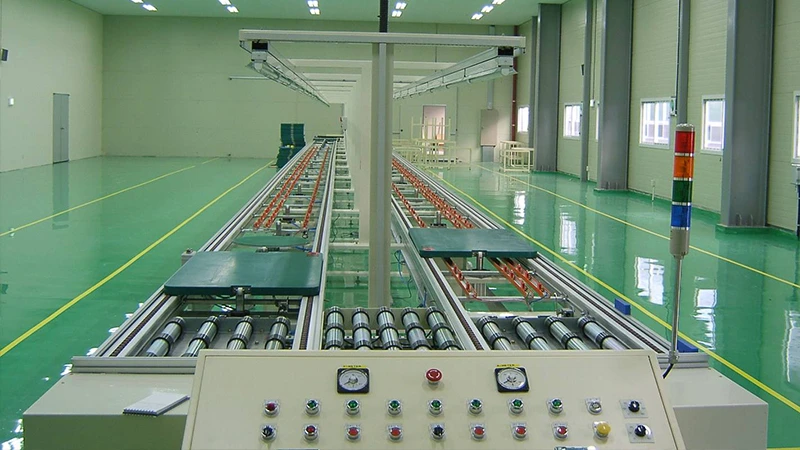
Step onto the floor of a bustling manufacturing plant, and you'll quickly spot the unsung heroes keeping operations running like clockwork: conveyors. Among them, the free flow chain conveyor stands out—not for flashy design, but for its quiet reliability. It's the steady hand that moves components from assembly stations to packaging lines, the silent problem-solver that cuts down on delays, and the backbone of lean systems worldwide. Whether you're watching car parts glide toward a workbench or electronics components zip through a production line, chances are a free flow chain conveyor is making it happen. In this guide, we'll peel back the curtain on these workhorses, exploring their key components, how they operate, and why they've become indispensable in modern manufacturing.
What Is a Free Flow Chain Conveyor, Anyway?
Let's start with the basics. A free flow chain conveyor is a material handling system designed to move products smoothly and continuously along a fixed path. Unlike belt conveyors, which use a continuous belt, or roller conveyors that rely on individual rollers, free flow chain conveyors use a series of interconnected chains (or sometimes roller tracks) to propel items forward. The "free flow" part? That's the magic—products move with minimal friction, often gravity or gentle motorized force, ensuring a steady, uninterrupted flow that keeps pace with production demands.
Think of it as a highway for your materials. Just as cars move seamlessly on a well-designed road, components glide along these conveyors, bypassing bottlenecks and ensuring every part reaches its destination on time. This isn't just about speed, though—it's about precision. In industries where timing is critical, like automotive or electronics manufacturing, a free flow chain conveyor ensures that the right part arrives at the right workstation (hello, workbench!) exactly when the operator needs it. No more hunting for misplaced components, no more delays while waiting for a batch to be manually transported. It's lean system thinking in action: eliminate waste, optimize flow, and keep the focus on value-adding work.
Key Components: The Building Blocks of Smooth Flow
A free flow chain conveyor isn't just a single piece of equipment—it's a team of components working together. Let's break down the stars of the show, from the tracks that guide the flow to the rollers that keep things moving.
| Component | Function | Why It Matters |
|---|---|---|
| Chain Tracks/Roller Tracks | The "roadway" for materials. Can be made of steel, plastic, or aluminum, with integrated rollers or chains to reduce friction. | Without a smooth track, materials might jam or slow down. Roller tracks, in particular, are designed to let items glide with minimal effort, even when loaded. |
| Aluminum Profiles | Structural supports that frame the conveyor, holding tracks, motors, and guides in place. | Aluminum is lightweight yet strong, making it easy to install and reconfigure—perfect for adapting to changing production needs in lean systems. |
| Sprockets & Drives (for motorized systems) | Sprockets are toothed wheels that engage with the conveyor chain, driven by a motor to move the chain (and thus the materials) forward. | Precision here is key. Misaligned sprockets can cause jams or uneven movement, throwing off the entire production timeline. |
| Guides & Side Rails | Vertical barriers along the track edges that keep materials centered and prevent them from sliding off. | Ever tried carrying a tray of glasses while walking? Guides do the same for your materials—keeping them stable and on course. |
| Support Frames | The "legs" of the conveyor, often made from steel or aluminum, that elevate the track to the right height for workers or other equipment. | A sturdy frame ensures the conveyor doesn't wobble, which is crucial for delicate items like electronics components. |
Each component plays a role, but here's the thing: they're designed to be modular. That means if a roller track gets worn, you can replace just that section, not the entire conveyor. If you need to extend the line to reach a new workbench, you can add more aluminum profiles and tracks without a complete overhaul. This modularity is a cornerstone of lean systems—it keeps maintenance costs low and adaptability high, so your conveyor grows and changes with your business.
How It Actually Works: The Science of "Free Flow"
Let's get into the nitty-gritty of how these conveyors move materials. There are two main types: gravity-driven and motorized. Both rely on the same core idea—reducing friction to keep things moving—but they go about it in slightly different ways.
Gravity-Driven Free Flow Conveyors: Imagine a slide at a playground. Tilt it slightly, and a ball rolls down effortlessly. That's gravity-driven conveyors in a nutshell. The track is angled just enough (usually 1-3 degrees) so that materials slide forward under their own weight. The roller tracks here are critical—each roller spins independently, letting the product glide without catching. This is perfect for lightweight to medium-weight items, like boxes or small parts, and it's super low-maintenance since there are no motors or complicated drives. Walk into a warehouse, and you'll often see these in picking areas, where orders slide down to packing stations, or in assembly lines where components flow to a workbench for final assembly.
Motorized Free Flow Conveyors: For heavier loads or when you need precise control over speed, motorized conveyors step in. Here, a motor turns a sprocket, which pulls the chain (or drives the rollers) along the track. The speed can be adjusted to match the production line—faster for high-volume areas, slower for stations where workers need more time with each item. Think of a car manufacturing plant: heavy car doors or engine parts need a little extra push, so motorized free flow conveyors move them steadily from one workstation to the next, ensuring the assembly line never stalls.
The key to both types is "free flow" itself. Unlike some conveyors that stop and start, these systems keep moving, so materials arrive at workstations in a constant, predictable stream. In lean terms, this is called "continuous flow," and it's a game-changer. Instead of batching materials (e.g., piling up 50 parts at a workbench and then letting the operator work through them), you deliver parts one at a time, just as they're needed. This reduces inventory, frees up floor space, and keeps workers focused on building, not waiting.
Why Lean Systems Love Free Flow Chain Conveyors
Lean manufacturing is all about eliminating waste—whether that's wasted time, wasted space, or wasted effort. Free flow chain conveyors are like a lean system's best friend, addressing these wastes head-on. Let's count the ways:
- Eliminates Transportation Waste: No more workers pushing carts back and forth between stations. Materials move automatically, so employees can focus on assembling, inspecting, or testing—tasks that add value.
- Reduces Inventory Waste: With continuous flow, you only have as many parts in the system as needed at any time. No more stockpiling components "just in case," which ties up cash and takes up space.
- Minimizes Waiting Waste: A workbench never sits idle waiting for the next part because the conveyor delivers it right on schedule. This keeps the entire line balanced and efficient.
- Adapts to Change: Aluminum profiles and modular components make it easy to reconfigure the conveyor if your production line changes. Need to add a new workstation? Extend the track. Shifting to a new product? Adjust the guides. Lean systems thrive on flexibility, and these conveyors deliver.
I once visited a small electronics factory that switched to a gravity-driven free flow conveyor system for their PCB assembly line. Before, workers would carry bins of circuit boards from the soldering station to the testing workbench—back and forth, dozens of times a day. After installing the conveyor, the PCBs glided directly from soldering to testing, cutting transit time by 70%. The team reclaimed hours each week, and the workbench operators reported less stress because parts arrived consistently, no more rushing to keep up with uneven deliveries. That's the human impact of lean systems supported by the right tools.
Where You'll Find Them: Real-World Applications
Free flow chain conveyors aren't limited to one industry—they're everywhere materials need to move smoothly. Here are a few places you've probably interacted with (without even realizing it):
Electronics Manufacturing: Delicate components like semiconductors or phone screens need gentle handling. Free flow conveyors with plastic roller tracks (to avoid scratches) move these parts between assembly stations, often feeding into a workbench where technicians install chips or test functionality.
Food & Beverage: Ever wonder how bottles move from filling to capping to labeling? Motorized free flow conveyors with stainless steel tracks (easy to clean!) keep the line moving, even with wet or sticky products. The speed can be synced with filling machines, so there's never a backup.
Logistics & Warehousing: In e-commerce warehouses, gravity-driven roller track conveyors zip orders from picking zones to packing stations. Workers scan items, place them on the conveyor, and they glide to the packers—no more carrying heavy boxes across the warehouse floor.
Automotive: From small screws to large engine blocks, automotive plants rely on motorized free flow conveyors to move parts to assembly lines. Imagine a workbench where a mechanic installs door handles—parts arrive steadily via conveyor, so the mechanic stays in a rhythm, no interruptions.
Choosing the Right Conveyor: What to Keep in Mind
Not all free flow chain conveyors are created equal. To pick the right one for your operation, ask yourself these questions:
What are you moving? Light items (like envelopes) might do fine on a gravity-driven roller track, while heavy machinery parts need a motorized system with steel tracks. Delicate items? Look for plastic or aluminum roller tracks to prevent damage.
How fast do you need it to go? If your production line runs at 100 units per hour, a slow gravity conveyor might work. If it's 500 units per hour, you'll need a motorized system with adjustable speed.
Is your space fixed or flexible? If you anticipate reconfiguring your layout (common in lean systems), go for modular components like aluminum profiles and easy-to-connect roller tracks. This way, you can expand or adjust the conveyor without a complete rebuild.
What's your budget? Gravity-driven conveyors are cheaper upfront and have lower maintenance costs. Motorized systems cost more initially but save labor and handle heavier loads. Think long-term—investing in the right system now can save you money on inefficiencies later.
Keeping It Running: Maintenance Tips
Even the best conveyor needs a little TLC to keep flowing freely. Here's how to keep yours in top shape:
- Clean the tracks regularly: Dust, debris, or spilled lubricant can gum up roller tracks. A quick wipe-down with a dry cloth (or mild cleaner for food-grade systems) prevents jams.
- Lubricate moving parts: For motorized conveyors, grease the sprockets and chains every few months to reduce wear. Check the manufacturer's guidelines—too much lubricant can attract dirt!
- Check for wear and tear: Inspect roller tracks for cracked rollers or bent guides. replace worn parts immediately—small issues can turn into big delays if ignored.
- Level the track (for gravity systems): If materials start slowing down or getting stuck, the track might be out of alignment. A quick adjustment to the slope keeps things moving smoothly.
The Bottom Line: More Than Just a Conveyor
At the end of the day, a free flow chain conveyor isn't just about moving materials—it's about creating a better way to work. It's about giving workers the tools they need to focus on what matters, not on pushing carts or chasing down parts. It's about building a production line that adapts, grows, and eliminates waste—core principles of lean systems.
Whether you're running a small workshop with a single workbench or a massive factory with miles of conveyor lines, these systems quietly transform chaos into order. They turn "almost on time" into "always on time." They turn wasted steps into smooth, continuous flow. And in a world where efficiency and adaptability are everything, that's not just a nice-to-have—it's a game-changer.
So the next time you walk through a factory or warehouse and see materials gliding along a track, take a moment to appreciate the free flow chain conveyor. It might not have the flash of a robot arm or the buzz of a high-tech machine, but it's the steady, reliable partner that keeps the whole operation moving forward. And in manufacturing, as in life, sometimes the quietest heroes make the biggest difference.