- Company Articles
- Products and Technology
- Product knowledge
- Free Flow Chain Conveyor for Computer Peripheral Assembly Lines

Free Flow Chain Conveyor for Computer Peripheral Assembly Lines
Related Product
Free Flow Chain Conveyor
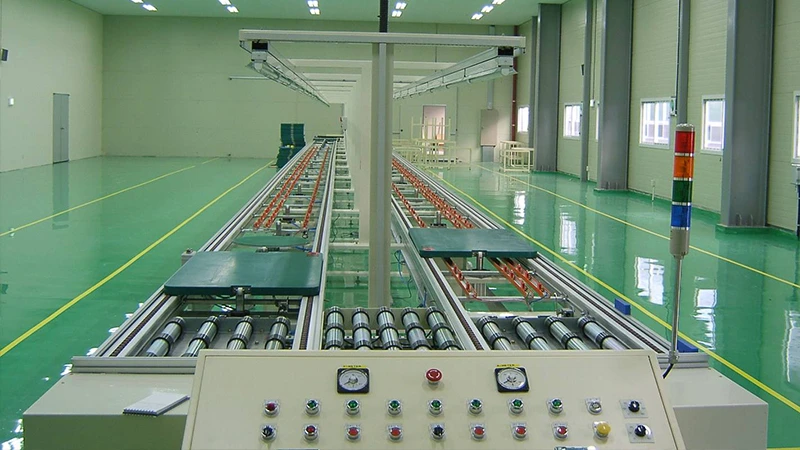
The free flow conveyor system uses a free flow chain that can increase the speed of the tooling board that supports the products. This can improve the efficiency and quality of the production process, as well as reduce the wear and tear of the system.
The Unsung Hero of Tech Manufacturing: Why Assembly Lines Struggle Without the Right Conveyor
Walk into any computer peripheral factory, and you'll see a symphony of motion: tiny circuit boards zipping from station to station, plastic casings being polished, wires being soldered, and finally, a keyboard or mouse taking shape before being boxed up for shipping. But behind that seamless dance of production lies a critical question: How do all these parts move so smoothly, without bottlenecks, delays, or errors? For decades, the answer has often been "conveyors"—but not just any conveyor. In the high-stakes world of computer peripheral manufacturing, where precision matters as much as speed, the free flow chain conveyor has emerged as the unsung hero.
Computer peripherals—think keyboards, mice, webcams, printers, and monitors—are marvels of miniaturization. A single keyboard might have dozens of tiny components: keycaps, switches, PCBs, backlight LEDs, and more. Each part needs to reach the right assembly station at the right time, in the right orientation, and without damage. Traditional conveyors, like belt or roller conveyors, often fall short here. Belt conveyors can stretch or slip, causing parts to bunch up. Heavy roller conveyors might jostle delicate components, leading to scratches or misalignment. And worst of all, rigid, one-size-fits-all conveyors make it nearly impossible to adapt when a factory switches from manufacturing a slim wireless mouse to a bulkier gaming keyboard. That's where free flow chain conveyors step in.
Unlike their rigid counterparts, free flow chain conveyors are designed for flexibility, precision, and adaptability. They use a series of interconnected chains with small, low-friction rollers that allow parts to glide smoothly along the track—hence the "free flow" name. But what truly sets them apart is their ability to integrate with modern manufacturing principles, especially lean system methodologies. In a lean system, the goal is to eliminate waste: wasted time, wasted space, wasted effort. Free flow chain conveyors do exactly that by ensuring parts move only when needed, reducing idle time at workstations, and making it easy to reconfigure lines as production needs change.
What Is a Free Flow Chain Conveyor, Anyway? Breaking Down the Basics
Let's start with the basics: A free flow chain conveyor is a material handling system that uses a chain-driven track with small, freely rotating rollers to move products along a production line. The "free flow" part comes from the fact that products can stop at any point along the track without halting the entire conveyor—thanks to a clever design where the chain continues moving, but individual rollers can lock in place when a product needs to pause at a workstation. This is a game-changer for assembly lines, where each station might need a few extra seconds to complete a task (like soldering a wire or testing a switch).
At first glance, you might mistake a free flow chain conveyor for a standard roller conveyor, but look closer, and the differences become clear. The chain is typically made of durable materials like stainless steel or high-strength plastic, ensuring it can handle the wear and tear of 24/7 operation. The rollers are small—often just a few inches in diameter—and spaced closely together to support even tiny components, like the microchips in a wireless mouse. And unlike belt conveyors, which rely on friction to move products, free flow chain conveyors use the momentum of the chain and the low friction of the rollers, reducing the risk of parts slipping or getting stuck.
But perhaps the most important feature is modularity. Free flow chain conveyors are built using standardized components, many of which are made from aluminum profile —lightweight, corrosion-resistant, and easy to cut, drill, or connect with simple fasteners. This modularity means factories can customize the conveyor's length, width, height, and even direction (curved tracks are common for tight spaces) without overhauling the entire system. Need to add a new assembly station for a new product? Just bolt on a few extra aluminum profile sections and extend the chain. Want to adjust the height to match ergonomic workbenches? Swap out the support legs. It's this flexibility that makes free flow chain conveyors indispensable in computer peripheral manufacturing, where product designs and production volumes change constantly.
Lean System Meets Free Flow: How These Conveyors Cut Waste and Boost Efficiency
To understand why free flow chain conveyors and lean systems are a match made in manufacturing heaven, let's first recall what a lean system is all about. Coined by Toyota in the 1950s, lean manufacturing focuses on five key principles: value, value stream, flow, pull, and perfection. In short, it's about delivering maximum value to the customer while minimizing waste—whether that waste is excess inventory, unnecessary movement, or idle time. Free flow chain conveyors excel at supporting all five principles, but especially "flow" and "pull."
Take "flow," for example. In a traditional assembly line, parts often pile up at certain stations because the conveyor moves at a fixed speed, regardless of how fast workers are assembling. A worker might finish soldering a keyboard PCB in 30 seconds, but the next station—where the PCB is tested—might take 45 seconds. Soon, PCBs start stacking up before the testing station, creating a bottleneck. With a free flow chain conveyor, this problem disappears. Each workstation can "release" a part only when it's ready, using simple sensors or manual triggers. The conveyor's rollers lock in place to hold the part until the next station is free, then release it to glide forward. This ensures a steady, uninterrupted flow—no more piles, no more waiting, no more wasted time.
Then there's "pull," the lean principle that says production should be driven by customer demand, not by pushing products through the line. Free flow chain conveyors make pull production possible by allowing factories to produce in smaller batches. For example, if a customer orders 500 wireless mice instead of the usual 1,000, the conveyor can be adjusted to move smaller batches, reducing excess inventory. Since the conveyor is modular, it's easy to reconfigure the line to prioritize the mouse production without disrupting other products. This flexibility is a far cry from rigid belt conveyors, which often require hours of downtime to retool for small-batch runs.
Waste reduction isn't just about time, either—it's about space. Computer peripheral factories are often tight on square footage, with assembly lines, storage areas, and testing labs all competing for room. Free flow chain conveyors, with their lightweight aluminum profile frames, take up less space than heavy steel conveyors. They can also be built to run at different heights—some sections low to the ground for loading raw materials, others elevated to feed parts directly to workbench stations—maximizing vertical space. And because they're easy to disassemble and reassemble, factories can rearrange lines seasonally (e.g., ramping up for holiday demand) without permanently altering the facility layout.
From Aluminum Profile to Roller Track: The Building Blocks of a Free Flow Chain Conveyor
A free flow chain conveyor might look like a simple track at first, but it's actually a carefully engineered system of components working together. Let's break down the key parts, starting with the backbone: the frame. Most modern free flow chain conveyors use aluminum profile for the frame, and for good reason. Aluminum is lightweight (about 1/3 the weight of steel), which makes the conveyor easy to install and reposition. It's also resistant to rust and corrosion—important in factories where cleaning solutions or lubricants might spill. But perhaps best of all, aluminum profiles come with pre-drilled T-slots along their length, allowing workers to attach brackets, sensors, or guides without welding or drilling new holes. Need to add a side guard to keep parts from falling off? Just slide a T-slot nut into the aluminum profile and bolt on the guard. It's that simple.
Next, the chain and rollers. The chain itself is usually made of plastic or stainless steel, with small, cylindrical rollers attached at regular intervals. These rollers are what give the conveyor its "free flow". When a part is placed on the track, the rollers spin freely, letting the part glide along with minimal friction. For delicate components, like the glass panels in a monitor, factories might use soft, rubber-coated rollers to prevent scratches. For heavier parts, like printer casings, steel rollers with ball bearings ensure smooth movement even under load. The chain is driven by a motor at one end, but because the rollers are free-spinning, the chain can continue moving even if a part is stopped at a workstation—no need to stop the entire line.
Then there's the roller track —the surface along which the chain and rollers run. The track is typically made of aluminum or steel, with a smooth, polished finish to reduce friction. Some tracks have side guides (also made from aluminum profile) to keep parts centered, which is crucial for small components like the buttons on a gaming mouse. For curved sections of the conveyor, the track is bent to match the radius of the curve, and the chain is designed to flex without binding. This allows the conveyor to navigate around pillars or other obstacles in the factory.
Another critical component is the "stop and release" mechanism. As mentioned earlier, free flow conveyors allow parts to pause at workstations without stopping the entire line. This is done using small pneumatic or mechanical stops—think of them as tiny gates—that pop up from the track to block a part, then retract when the workstation is ready. These stops are controlled by sensors that detect when a part arrives and when the operator is done with the previous part. For example, at a keyboard assembly station, a sensor might trigger the stop when a PCB arrives; once the operator solders the wires, they press a button to retract the stop, and the PCB glides to the next station.
Finally, there are the accessories that make the conveyor truly customizable: adjustable feet to level the track on uneven floors, drip pans to catch lubricant or debris, and even LED strip lights mounted along the aluminum profile to illuminate the track (critical for inspecting parts as they move). Some conveyors also integrate with workbench systems, with the track feeding directly into the workbench surface so operators can reach parts without leaning or stretching. This not only improves ergonomics but also reduces the risk of dropped or damaged components.
Customizing for Peripherals: Why One Size Never Fits All
Imagine trying to use the same conveyor to move a 27-inch monitor as you do to move a tiny USB-C adapter. It wouldn't work—the monitor is heavy and bulky, while the adapter could slip through gaps in the track. That's why free flow chain conveyors are built to be customized, and nowhere is this more important than in computer peripheral manufacturing, where product sizes and shapes vary wildly.
Let's start with small peripherals: think wireless earbuds, USB hubs, or microphones. These tiny devices require conveyors with narrow tracks (sometimes as little as 4 inches wide) and closely spaced rollers to prevent parts from falling through. The rollers themselves might be made of soft plastic to avoid scratching delicate surfaces, and the track might include dividers or "pucks" (small plastic carriers) to hold individual parts in place. For example, a factory making wireless mouse sensors (about the size of a dime) might use a free flow chain conveyor with custom pucks that have recesses shaped like the sensors, ensuring they don't shift during transport.
Medium-sized peripherals, like keyboards or webcams, need a balance of stability and speed. Keyboards, for instance, are flat and relatively lightweight, but they have fragile components (like the membrane under the keys) that can tear if jostled. A free flow chain conveyor for keyboards might use a wider track (12–18 inches) with slightly larger rollers and side guides to keep the keyboard flat. The stop-and-release mechanism would be calibrated to pause the keyboard long enough for an operator to attach the keycaps, then release it gently to the next station for testing.
Large peripherals, such as printers or monitors, demand heavy-duty conveyors. These might use thicker aluminum profile frames (to support the weight), steel rollers instead of plastic, and reinforced chains. For monitors, the conveyor might even include tilt mechanisms to rotate the screen so operators can access both the front (for attaching the bezel) and the back (for connecting cables). Some factories use double-decker free flow chain conveyors for large items: the top deck carries assembled monitors to packaging, while the bottom deck returns empty pallets or defective units for rework.
But customization isn't just about size—it's about speed. A factory making budget mice might need a conveyor moving at 60 parts per minute, while a high-end mechanical keyboard line (with more manual assembly steps) might run at 20 parts per minute. Free flow chain conveyors can adjust speed easily by changing the motor's RPM or using variable frequency drives. They can also be set to "batch mode," where a group of parts moves together, then stops at a workstation, which is useful for tasks that require multiple parts (e.g., assembling a printer needs a casing, a printhead, and a power supply to arrive at the same time).
Perhaps the most impressive customization is the ability to integrate with other systems. For example, a free flow chain conveyor might feed directly into a robotic arm station, where the arm picks up a part from the conveyor, assembles it, and places it back on the track. Or it might connect to an automated testing station, where sensors check a keyboard's key switches as it glides by—if a switch fails, the conveyor automatically diverts the keyboard to a rework workbench using a pop-up diverter. All of this is possible because the conveyor's aluminum profile frame is easy to mount sensors, robots, or diverters onto, with T-slots that make adding new components a matter of minutes, not days.
The Numbers Speak: How Free Flow Chain Conveyors Improve Bottom Lines
At the end of the day, manufacturing is about results—and free flow chain conveyors deliver them. Let's look at real-world data from factories that have switched from traditional conveyors to free flow chain systems, focusing on key metrics: production speed, error rates, and cost savings.
Production Speed: A mid-sized keyboard manufacturer in China recently upgraded from a belt conveyor to a free flow chain conveyor with aluminum profile framing. Before the upgrade, the line produced 300 keyboards per hour, with frequent delays when the belt slipped or parts bunched up. After installing the free flow system, production jumped to 375 keyboards per hour—a 25% increase. The factory attributed the boost to the conveyor's smoother flow and the ability to adjust speeds per workstation. "We no longer have to slow down the entire line because one station is a bit slower," said the plant manager. "Each operator works at their own pace, and the conveyor keeps up."
Error Rates: A U.S.-based mouse manufacturer was struggling with a 5% error rate—mostly due to scratched PCBs from jostling on a roller conveyor. They switched to a free flow chain conveyor with plastic rollers and custom pucks to hold the PCBs. Within three months, the error rate dropped to 1.2%. "The pucks keep the PCBs stable, and the free flow rollers are so gentle, you could slide a piece of paper under them without tearing it," noted the quality control supervisor. Fewer errors meant less rework, which saved the factory an estimated $40,000 per year in labor and materials.
Cost Savings: Labor and energy costs are two of the biggest expenses in manufacturing, and free flow chain conveyors reduce both. Because they integrate with lean systems, they cut idle time at workstations—operators spend less time waiting for parts and more time assembling. A printer factory in Germany reported a 15% reduction in labor hours after installing free flow conveyors, as workers no longer had to manually move heavy printer bases between stations. Energy costs also dropped: aluminum profile conveyors are lighter, so the motors use less power to move the chain. The German factory saw a 20% decrease in monthly electricity bills for its conveyor system.
To put these benefits in perspective, let's compare traditional conveyors and free flow chain conveyors side by side:
| Metric | Traditional Belt Conveyor | Free Flow Chain Conveyor |
|---|---|---|
| Production Speed | Fixed speed; prone to bottlenecks | Adjustable speed; stop-and-release prevents bottlenecks |
| Error Rate (Delicate Parts) | 3–5% (due to slipping/bunching) | 0.5–1.5% (stable, low-friction movement) |
| Energy Use | Higher (heavy frames, friction-based movement) | Lower (light aluminum frames, low-friction rollers) |
| Customization Time | Weeks (requires welding/heavy modification) | Days (modular aluminum profile components) |
| Maintenance Costs | Higher (belts need replacing, rollers need frequent lubrication) | Lower (durable chains, sealed bearings in rollers) |
It's clear from these numbers that free flow chain conveyors aren't just a "nice-to-have"—they're a competitive advantage. In an industry where profit margins are tight and customer demand shifts overnight, the ability to produce faster, with fewer errors, and at lower cost can make or break a factory.
Maintaining the Flow: How to Keep Your Conveyor Running Smoothly for Years
Like any piece of machinery, a free flow chain conveyor needs regular maintenance to perform at its best. But unlike traditional conveyors, which can require hours of downtime for repairs, free flow systems are designed to be low-maintenance—if you know what to look for. Let's walk through the key maintenance tasks, from daily checks to annual overhauls.
Daily Checks: These take just 10–15 minutes per conveyor and can prevent major issues. Start by inspecting the chain: look for loose links, bent pins, or signs of wear (like rust or discoloration). If the chain is sagging more than 1/2 inch between sprockets, it needs to be tensioned—most free flow conveyors have adjustable take-up units for this. Next, check the rollers: spin them by hand to ensure they rotate freely (a stuck roller can cause parts to jam). Wipe down the roller track to remove dust, grease, or debris (especially important for plastic components that might pick up particles). Finally, test the stop-and-release mechanisms: trigger a few stops and releases to make sure they engage smoothly and don't stick.
Weekly Maintenance: Once a week, lubricate the chain and sprockets with a light machine oil (avoid heavy greases, which can attract dust). Use a brush to apply oil to the chain links, focusing on the pins and bushings. For plastic rollers, a silicone spray can help reduce friction. Inspect the aluminum profile frame for loose bolts or brackets—tighten any that are wobbly. Check the motor and drive system: listen for unusual noises (grinding, squealing) which could indicate a misaligned sprocket or worn bearing. If you hear something off, shut down the conveyor and investigate—ignoring it could lead to a breakdown.
Monthly Tasks: Once a month, deep-clean the conveyor. Remove any guards or covers, and use a compressed air gun to blow out dust from the chain and roller bearings. For stubborn grime, wipe the track with a cloth dampened with isopropyl alcohol (avoid harsh solvents that could damage plastic rollers). Inspect the electrical components: check wires for fraying, sensors for dirt (a dusty sensor might misread parts), and control panels for loose buttons. If your conveyor has pneumatic stops, check the air lines for leaks and drain any moisture from the air compressor.
Annual Overhaul: Every year, schedule a 4–6 hour downtime window for a full inspection. replace any worn parts: chains (they typically last 3–5 years), rollers with cracked or chipped surfaces, and worn sprockets (look for "teeth" that are flattened or rounded). Check the aluminum profile frame for corrosion (unlikely with aluminum, but possible in humid environments) and straightness—if the frame is bent, it can cause the chain to run off-track. Finally, recalibrate the speed and stop timing: over time, motors can slow down or sensors can drift, leading to uneven flow. Most modern conveyors have digital controls that make recalibration as simple as entering new parameters on a touchscreen.
The good news? Because free flow chain conveyors use modular components, replacing parts is easy. A worn chain can be swapped out in sections (no need to replace the entire length), and rollers can be popped out of their brackets with a screwdriver. Many manufacturers offer "maintenance kits" with common parts (chain links, rollers, bolts) so factories don't have to wait for shipments. With proper care, a free flow chain conveyor can last 10–15 years—far longer than a belt conveyor, which might need replacing every 5–7 years.
The Future of Free Flow Chain Conveyors: Where Tech Manufacturing Is Headed
As computer peripherals become smarter, smaller, and more complex, the conveyors that build them are evolving too. Free flow chain conveyors are no exception—manufacturers are adding new features to make them more connected, sustainable, and adaptable than ever before. Here's a glimpse of what the future holds.
Smart Conveyors with IoT Integration: Imagine a conveyor that can "talk" to your factory's ERP system, alerting you when a roller is about to fail or when production is falling behind schedule. That's already happening with IoT-enabled free flow chain conveyors. Sensors embedded in the roller track monitor vibration, temperature, and speed, sending data to a cloud platform. AI algorithms analyze this data to predict maintenance needs—for example, if a roller's vibration increases by 20%, the system flags it for replacement before it jams. Some conveyors even use machine vision cameras to inspect parts as they move, rejecting defective components automatically and sending real-time feedback to the assembly line.
Sustainability Upgrades: With factories under pressure to reduce their carbon footprint, free flow chain conveyors are getting greener. Aluminum profile frames are already recyclable, but manufacturers are now using recycled aluminum (which uses 95% less energy to produce than virgin aluminum). Motors are becoming more efficient—some new conveyors use brushless DC motors that cut energy use by 30%. Even the lubricants are getting eco-friendly: plant-based oils that biodegrade if spilled, replacing petroleum-based products. And because free flow conveyors are modular, they can be disassembled and reused when a factory moves or upgrades, reducing waste.
Human-Robot Collaboration (Cobots): The rise of collaborative robots (cobots)—small, lightweight robots that work alongside humans—is changing assembly lines, and free flow chain conveyors are adapting to keep up. New conveyors have built-in "cobot stations," where the track pauses to let a cobot pick up a part, perform a task (like soldering or labeling), and place it back. The conveyor's sensors communicate with the cobot to ensure safe, precise handoffs—no more waiting for a human operator to load/unload the robot. For example, a cobot might attach a USB port to a keyboard on the conveyor, then signal the conveyor to release the keyboard once done.
Hyper-Customization: As consumers demand more personalized peripherals (e.g., custom-colored keyboards, engraved mice), factories need conveyors that can handle one-off orders efficiently. Future free flow chain conveyors might use 3D-printed rollers or track inserts to adapt to unique part shapes on the fly. Some manufacturers are experimenting with "digital twins"—virtual replicas of the conveyor that let engineers test new configurations (like adding a curved section or changing roller spacing) on a computer before making physical changes. This reduces downtime and ensures the conveyor works perfectly the first time.
Perhaps the most exciting trend is the integration of free flow chain conveyors with lean system 2.0—smart lean, which uses data to eliminate waste even more precisely. For example, a conveyor's sensors might track how long each workstation takes to process a part, identifying bottlenecks that human observers might miss. The system could then automatically adjust the conveyor speed or reassign tasks to balance the line, all without human intervention. It's lean manufacturing, but with the power of AI to make decisions in real time.
Conclusion: More Than a Conveyor—The Backbone of Modern Peripheral Manufacturing
When you unbox a new keyboard or mouse, you probably don't think about how it got there. But behind that sleek, finished product is a journey through a factory where every part, every step, and every second counts. The free flow chain conveyor is the silent partner in that journey, ensuring parts move smoothly, efficiently, and precisely from raw material to finished product.
What makes free flow chain conveyors indispensable isn't just their technical specs—it's their ability to adapt. In an industry where product lifecycles are shorter than ever (a new mouse model might be obsolete in 18 months), factories can't afford to invest in rigid, one-use equipment. Free flow conveyors, with their modular aluminum profile frames, adjustable speeds, and customizable roller track systems, grow and change with the factory. They integrate with lean system principles to cut waste, with workbench stations to boost ergonomics, and with the latest IoT tech to keep production running 24/7.
As computer peripherals continue to evolve—becoming smarter, smaller, and more connected—so too will the conveyors that build them. But one thing is clear: the free flow chain conveyor isn't just a tool. It's the backbone of modern tech manufacturing, turning chaos into order, parts into products, and ideas into the devices we use every day. So the next time you type on your keyboard or click your mouse, take a moment to appreciate the conveyor that helped bring it to life.