- Company Articles
- Products and Technology
- Product knowledge
- Free Flow Chain Conveyor for Electronic Component Assembly: Precision Handling

Free Flow Chain Conveyor for Electronic Component Assembly: Precision Handling
Related Product
Free Flow Chain Conveyor
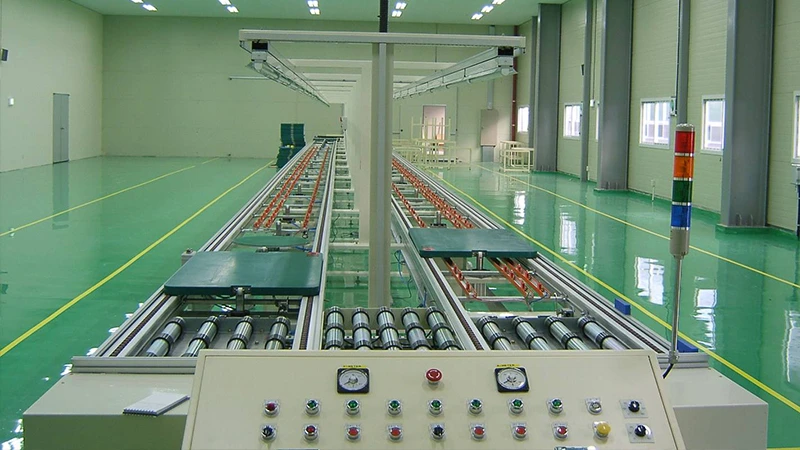
The free flow conveyor system uses a free flow chain that can increase the speed of the tooling board that supports the products. This can improve the efficiency and quality of the production process, as well as reduce the wear and tear of the system.
Introduction: The Precision Imperative in Electronic Component Assembly
In the world of electronic manufacturing, where components shrink by the day and complexity grows by the hour, precision isn't just a buzzword—it's the backbone of reliability. Imagine assembling a smartphone motherboard, where a resistor smaller than a grain of rice must align perfectly with microscopic solder pads, or a medical device sensor that can't tolerate even a micron of misalignment without risking patient safety. These scenarios aren't exceptions; they're the daily reality for electronics manufacturers. The pressure to produce smaller, faster, and more powerful devices has never been higher, and with it comes an uncompromising demand for handling solutions that marry speed with surgical accuracy.
But precision in electronics assembly isn't just about placing parts correctly. It's about protecting sensitive components from electrostatic discharge (ESD), reducing waste from missteps, and keeping up with the relentless pace of mass production. Traditional conveyor systems, designed for heavier, less delicate goods, often fall short here. They vibrate too much, move unevenly, or lack the flexibility to adapt to rapidly changing production lines. This is where specialized handling equipment steps in—and few solutions have proven as transformative as the free flow chain conveyor.
More than just a tool for moving parts from Point A to Point B, the free flow chain conveyor is a precision partner. It's engineered to handle the tiniest components with care, integrate seamlessly into ESD-safe work environments, and align with lean manufacturing principles that eliminate waste. In this article, we'll dive deep into how free flow chain conveyors are redefining precision handling in electronic component assembly, exploring their design, benefits, and integration with critical systems like aluminum profiles, ESD workstations, and lean manufacturing frameworks. Whether you're a production manager looking to upgrade your line or a curious engineer wanting to understand the mechanics behind smooth component flow, this guide will unpack why free flow chain conveyors have become indispensable in modern electronics manufacturing.
What Is a Free Flow Chain Conveyor? Breaking Down the Basics
At first glance, a free flow chain conveyor might look similar to other material handling systems, but its design is tailored for one key goal: smooth, controlled movement of goods with minimal friction. Unlike belt conveyors, which rely on a continuous loop of fabric or rubber, or roller conveyors, which use rotating cylinders, free flow chain conveyors use a series of interconnected chain links mounted on a track. These chains glide along sprockets and guides, creating a flow that's both gentle and efficient—ideal for delicate items like electronic components.
Let's break down its core components. The heart of the system is the chain itself, typically made from durable materials like stainless steel or high-strength plastic, depending on the application. Each link in the chain is designed to interlock seamlessly, ensuring no gaps or jolts as parts move along. Above the chain, guide rails—often made from aluminum or plastic—keep components aligned, preventing shifting or tipping. Beneath the chain, sprockets driven by a motor (or, in some cases, gravity for low-speed applications) control the conveyor's speed, which can be adjusted to match the rhythm of the assembly line.
What sets free flow chain conveyors apart is their "free flow". Unlike some conveyors that require constant contact with the drive mechanism, these systems allow products to move independently once in motion, thanks to low-friction bearings and precision-engineered tracks. This means if a worker at one station needs to pause to inspect a component, the rest of the line can keep moving—a critical feature for maintaining efficiency in electronics assembly, where tasks often have varying cycle times.
Another standout feature is modularity. Most free flow chain conveyors are built using standardized components, making them easy to extend, shorten, or reconfigure as production needs change. Need to add a 90-degree turn to route components to a new workstation? Or adjust the height to align with an ESD workbench? With compatible aluminum profile accessories and connectors, these modifications can be done in hours, not days. This flexibility is a game-changer in an industry where product lifecycles are shorter than ever, and assembly lines must adapt quickly to new models or designs.
Material choice also plays a role in their effectiveness. Many free flow chain conveyors use aluminum profiles for their frame and guides. Aluminum brings a winning combination of strength and lightness, reducing the conveyor's overall weight without sacrificing durability. It's also resistant to corrosion, making it suitable for cleanroom environments common in semiconductor or medical device manufacturing. Plus, aluminum's smooth surface minimizes friction, further enhancing the conveyor's ability to move components gently—no small detail when handling parts that can be damaged by even minor abrasion.
Precision Handling: Why Electronics Can't Afford Compromise
Electronic components are the building blocks of modern technology, but they're also some of the most fragile items in manufacturing. A typical PCB (printed circuit board) might contain hundreds of components, from 01005-sized resistors (measuring just 0.4mm x 0.2mm) to larger ICs (integrated circuits) with thousands of tiny pins. Mishandling these parts—even a slight bump or misalignment—can lead to soldering defects, electrical failures, or complete product recalls. Precision handling isn't just about accuracy; it's about protecting these components at every step of the assembly process.
Free flow chain conveyors excel here by addressing three critical challenges in electronics handling: minimal vibration , controlled speed , and customizable guidance .
Minimal Vibration: Protecting Delicate Components
Vibration is the silent enemy of precision assembly. Even small oscillations can cause tiny components to shift on a PCB or damage sensitive internal structures, like the thin wires in a microchip. Free flow chain conveyors tackle this with precision-engineered tracks and low-friction chain links that glide smoothly, reducing vibration to near-negligible levels. The use of aluminum profiles for the conveyor frame further dampens vibrations, as aluminum's natural rigidity absorbs shocks that might otherwise transfer to the components. For ultra-sensitive parts, some models even include vibration-dampening mounts or rubberized guides to provide an extra layer of protection.
Controlled Speed: Matching the Rhythm of Assembly
In electronics assembly, speed isn't about going as fast as possible—it's about going at the right speed. A conveyor that moves too quickly can cause components to slide or tip, while one that's too slow bottlenecks the entire line. Free flow chain conveyors offer variable speed control, allowing operators to fine-tune the pace to match tasks like automated pick-and-place (which requires rapid, precise movement) or manual inspection (which needs a slower, steady flow). This control is especially valuable for mixed-model assembly lines, where different products might have different handling requirements.
Customizable Guidance: Keeping Components on Track
Not all electronic components are the same shape or size. A PCB panel might be rectangular and rigid, while a flexible circuit could be thin and prone to bending. Free flow chain conveyors address this with customizable guide rails—often made from plastic or aluminum—that can be adjusted to cradle each component type securely. For example, low-profile plastic roller track guide rails (available in yellow or grey) can be used for small PCBs, while taller aluminum guide rails provide stability for larger assemblies. Some systems even include adjustable stops or diverters that route components to specific workstations based on barcode scans or sensor inputs—ensuring each part reaches the right operator at the right time.
Real-World Example: A Contract Manufacturer's Precision Win
A leading electronics contract manufacturer (CM) specializing in IoT devices was struggling with inconsistent yields on their sensor assembly line. The issue? Their old roller conveyor vibrated excessively, causing tiny MEMS sensors to shift during transport, leading to misalignment during soldering. After switching to a free flow chain conveyor with aluminum guide rails and vibration-dampening mounts, they saw a 40% reduction in soldering defects and a 15% increase in line throughput. The key? The new conveyor's smooth movement ensured sensors arrived at the soldering station perfectly positioned, every time.
For electronics manufacturers, the cost of imprecision is too high to ignore. A single misaligned component can lead to product failures, warranty claims, or even safety risks. Free flow chain conveyors don't just move parts—they protect them, guide them, and ensure they're ready for the next step in assembly, all while keeping the line flowing efficiently. In the next section, we'll explore how these conveyors integrate with other critical systems, like aluminum profiles and ESD workstations, to create a seamless, precision-focused assembly ecosystem.
Integration with Aluminum Profiles: Building a Strong, Flexible Foundation
A conveyor is only as reliable as the structure that supports it. In electronic component assembly, where stability and flexibility are equally important, aluminum profiles have emerged as the gold standard for building conveyor frames and workstations. Lightweight yet surprisingly strong, these extruded aluminum rails (think of them as industrial-grade building blocks) pair perfectly with free flow chain conveyors, creating a system that's both rock-solid and easy to adapt.
Aluminum profiles come in a range of sizes and shapes, from small 2020 profiles (20mm x 20mm) for light-duty applications to robust 4080 profiles (40mm x 80mm) for heavy conveyors or workbenches. Their T-slot design—grooves running along the length of the profile—makes it simple to attach accessories like conveyor tracks, guide rails, or ESD workbench tops using bolts, brackets, or sliding nuts. This means you're not stuck with a fixed conveyor layout; if you need to raise the conveyor by 6 inches to align with a new inspection station, you can do it by swapping out the support brackets, no welding or custom fabrication required.
For free flow chain conveyors, aluminum profiles serve two key roles: structural support and customization. As a support structure, they provide a rigid base that minimizes flexing, which is critical for maintaining conveyor alignment over long distances. A wobbly frame would cause the chain to shift, leading to uneven movement or premature wear—problems that are disastrous for precision handling. Aluminum's high strength-to-weight ratio ensures the frame stays stable even when the conveyor is fully loaded with components, while its light weight makes installation and reconfiguration easier than with steel.
When it comes to customization, aluminum profile accessories are the secret weapon. Need to mount the conveyor to the floor? Use aluminum foot bases or heavy-duty split foot seats for stability. Want to add a side guard to prevent components from falling off? Attach aluminum side guards using T-slot bolts. Even complex setups, like a conveyor that transitions from a horizontal to an incline, can be achieved with angle brackets and 45° or 90° aluminum profile connectors. This level of flexibility is invaluable for electronics manufacturers, who often need to reconfigure lines to accommodate new products or processes.
Another advantage of aluminum profiles is their compatibility with other lean manufacturing tools. For example, you can build a material rack B (3 row and 3 floor) using the same aluminum profiles as your conveyor frame, creating a cohesive, modular workspace where components flow smoothly from storage to conveyor to assembly. This integration reduces the need for separate, disconnected systems, streamlining workflows and reducing the risk of errors from manual material handling.
Durability is also a factor. Electronic assembly environments are often clean, but they're not immune to wear and tear. Aluminum profiles resist corrosion and scratches, and their anodized finishes (common in industrial profiles) stand up to daily cleaning with solvents or disinfectants. Unlike painted steel, which can chip and flake over time, aluminum maintains its integrity, ensuring the conveyor frame remains stable and reliable for years.
In short, aluminum profiles don't just support free flow chain conveyors—they elevate them. By providing a strong, flexible, and customizable foundation, they turn a simple conveyor into a fully integrated part of the assembly ecosystem, ready to adapt to whatever the next generation of electronics manufacturing brings.
ESD Workstations and Conveyor Synergy: Protecting Sensitive Components
Electrostatic discharge (ESD) is a silent killer in electronics manufacturing. A single static shock—often too small for humans to feel—can fry a microchip, render a sensor useless, or corrupt data in a memory module. In fact, the Electronics Industry Alliance estimates that ESD causes over $5 billion in losses annually for electronics manufacturers. For this reason, ESD protection isn't just a best practice; it's a requirement, and it starts with the work environment—including the conveyors that connect ESD workstations.
Free flow chain conveyors and ESD workstations are natural partners in this mission. An ESD workstation is designed to dissipate static charge, with features like grounded work surfaces, anti-static mats, and wrist straps for operators. But what happens when a component leaves the workstation and moves onto a conveyor that isn't ESD-safe? All that protection goes out the window if the conveyor itself generates static or fails to ground the component. That's why free flow chain conveyors used in electronics assembly are often built with ESD-safe materials and integrated grounding systems.
Take the conveyor chain, for example. Many free flow chain models use static-dissipative plastic links or stainless steel chains with conductive lubricants, ensuring any static charge generated during movement is safely grounded. The guide rails, too, can be made from ESD-safe plastic (like the black ESD wheels used in some 40 steel roller track models) or aluminum, which is naturally conductive and can be grounded to the facility's ESD protection system. Even the casters (if the conveyor is mobile) are often ESD-safe, with conductive wheels that prevent static buildup as the conveyor moves.
The integration between conveyor and ESD workstation goes beyond materials, though. It's about creating a seamless, static-safe path for components. Imagine a PCB leaving an ESD workbench E (single deck, without caster) after being populated with ICs. It needs to move to the next station for testing, but if the conveyor between them isn't grounded, the PCB could pick up static along the way, damaging the sensitive chips. By grounding the conveyor frame (using aluminum profiles connected to the facility's earth ground) and using ESD-safe rollers or chain links, the PCB remains protected from the moment it leaves the workstation until it arrives at the next step.
Another key synergy is in workflow design. Free flow chain conveyors can be positioned to feed directly into ESD workstations, reducing the need for operators to manually carry components. This not only saves time but also minimizes the risk of ESD damage from human contact (even with wrist straps, repeated handling increases the chance of charge transfer). For example, a conveyor can deliver trays of resistors directly to an ESD workstation, where an operator picks them up without ever leaving the static-safe zone.
Customization plays a role here, too. ESD workstations come in various configurations—some with built-in shelves for tools, others with overhead lighting for inspection—and free flow chain conveyors can be tailored to match. Need the conveyor to sit flush with the workstation's surface to allow easy sliding of PCBs? Adjust the height using aluminum pipe adjustable leveling feet. Want to add a static-dissipative cover over the conveyor to shield components from dust and static? Use aluminum profile accessories to mount the cover securely.
In the end, the goal is simple: create a closed-loop ESD protection system where components are never exposed to static, from the moment they enter the assembly line to the moment they're packaged. Free flow chain conveyors, when paired with ESD workstations and grounded aluminum profiles, make this possible, turning potential losses into reliable, high-quality production.
Lean System Optimization: Streamlining Flow with Free Flow Conveyors
Lean manufacturing isn't just about cutting costs—it's about creating value by eliminating waste, whether that waste is time, materials, or unnecessary movement. For electronics manufacturers, lean principles are especially critical, as profit margins often hinge on squeezing every inefficiency out of the production process. Free flow chain conveyors are more than just material handlers in this context; they're lean enablers, designed to support continuous flow, reduce bottlenecks, and make waste visible.
At the heart of lean manufacturing is the concept of "continuous flow," where products move through the assembly line with minimal stops or delays. Traditional batch processing—where components are collected in bins and moved in groups—creates waste in the form of waiting time and excess inventory. Free flow chain conveyors eliminate this by enabling one-piece flow, where each component moves to the next workstation as soon as the previous task is complete. This not only reduces inventory (a key lean metric) but also makes defects easier to catch early, before they multiply in a batch.
For example, in a lean system using free flow conveyors, a PCB might move from solder paste printing to pick-and-place to reflow soldering without ever sitting idle in a bin. If a defect is spotted at the pick-and-place station, it can be corrected immediately, rather than being discovered hours later when the entire batch is inspected. This reduces rework, saves materials, and keeps the line moving—all hallmarks of a lean operation.
Another lean principle is "takt time," the rate at which products must be produced to meet customer demand. Free flow chain conveyors help align production with takt time by allowing operators to adjust the conveyor speed to match customer demand. If orders increase, speed up the conveyor slightly; if demand drops, slow it down. This flexibility prevents overproduction (another form of waste) and ensures the line isn't running faster than necessary, saving energy and reducing wear on equipment.
Modularity, a key feature of free flow chain conveyors, also supports lean's "flexible workforce" principle. In many electronics plants, operators are cross-trained to work at multiple stations, and the assembly line must adapt to absences or skill gaps. With a modular conveyor system, stations can be reconfigured quickly to balance workloads. Need to move a testing station closer to the packaging area to reduce operator movement? Disconnect the relevant aluminum profile sections, reposition the conveyor, and reconnect—all without disrupting the entire line. This agility ensures the workforce stays productive, even when plans change.
Waste from transportation is another target for lean improvement. By integrating free flow chain conveyors with other lean tools like turnover trolleys and racks, manufacturers can reduce the need for manual material handling. For example, components can be delivered to the line via a hand trolley A, loaded onto the conveyor, and transported directly to the assembly station—eliminating the waste of operators walking back and forth to fetch parts. This not only saves time but also reduces the risk of injuries from lifting or carrying heavy loads.
conveyor-table">
| Lean Waste | How Free Flow Chain Conveyors Help Eliminate It |
|---|---|
| Waiting | Continuous flow reduces idle time between stations; independent movement allows parts to bypass paused workstations. |
| Inventory | One-piece flow minimizes work-in-progress (WIP) inventory, reducing storage costs and obsolescence risk. |
| Transportation | Direct, automated movement from station to station reduces manual carrying and material handling. |
| Overproduction | Speed control aligns production with takt time, preventing production of more units than needed. |
| Motion | Conveyor alignment with workstations reduces operator movement for loading/unloading components. |
Perhaps most importantly, free flow chain conveyors make waste visible. Unlike hidden processes (like components stored in bins), a conveyor line puts production flow on display. If a station is consistently backing up, or a section of the conveyor is frequently empty, it's immediately obvious—allowing supervisors to investigate and address the root cause (e.g., a slow machine, a bottleneck at inspection). This visibility is the first step toward continuous improvement, a cornerstone of lean manufacturing.
In the end, free flow chain conveyors don't just support lean systems—they embody them. By prioritizing flow, flexibility, and visibility, they help electronics manufacturers do more with less, turning lean principles into tangible results: lower costs, higher quality, and happier customers.
Maintenance and Longevity: Keeping Your Conveyor Running Smoothly
Even the most well-designed equipment needs care to perform at its best, and free flow chain conveyors are no exception. In electronic component assembly, where downtime can cost thousands of dollars per minute, a well-maintained conveyor isn't just a convenience—it's a critical asset. The good news is that with proper maintenance, these conveyors can last for years, delivering consistent precision and reliability.
At the heart of conveyor maintenance is the chain itself. Over time, dust, debris, and lubricant buildup can cause the chain to stiffen or wear unevenly, leading to jerky movement or increased friction. Regular cleaning—using a soft brush or compressed air to remove debris from the chain links and sprockets—prevents this. For chains with lubricated bearings, a light application of food-grade or ESD-safe lubricant (depending on the environment) every few weeks keeps movement smooth. Be careful not to over-lubricate, though; excess oil can attract dust and create a gummy mess.
Guide rails and tracks also need attention. Misaligned guides can cause components to bind or tip, while worn plastic roller track guide rails may no longer provide the smooth surface needed for precision handling. Inspect guides weekly for cracks, chips, or signs of wear, and replace them if they're damaged. For adjustable guides, check that they're still securely fastened to the aluminum profile using roller track placon mounts—loose guides are a common cause of component misalignment.
Sprockets and drive mechanisms are another key area. The sprockets that drive the chain should be inspected for worn teeth, which can cause the chain to skip or jump. If teeth are visibly rounded or chipped, replace the sprockets immediately to avoid damaging the chain. The drive motor and gearbox should also be checked for unusual noise or vibration, which could indicate a loose belt, worn bearings, or misalignment. Keeping the motor clean and ensuring proper ventilation prevents overheating, especially in high-speed applications.
Casters and leveling feet, if your conveyor is mobile, require their own maintenance routine. Casters should roll smoothly without wobbling; if they don't, check for debris in the wheels or worn bearings. Caster accessories like brakes should be tested regularly to ensure they hold the conveyor securely in place during operation. Leveling feet, whether anti-slip adjustable or aluminum pipe adjustable, should be inspected for cracks or stripped threads—uneven leveling can cause the conveyor to tilt, leading to component sliding or premature wear on the chain.
Preventive maintenance schedules are essential. Many manufacturers create a checklist for daily, weekly, and monthly tasks: daily checks for debris and chain tension, weekly inspections of guides and sprockets, and monthly lubrication and motor checks. By sticking to this schedule, you can catch small issues before they become big problems—like a loose guide rail that's tightened today instead of causing a line shutdown next week.
Finally, training is key. Even the best maintenance plan fails if operators don't know how to spot issues. Teach your team to recognize signs of trouble: unusual noises, components that stick or tip, or visible wear on the chain. Encourage them to report problems immediately, and reward proactive maintenance habits. After all, the people who work with the conveyor every day are often the first to notice when something isn't right.
With a little care and attention, a free flow chain conveyor can be a workhorse for your electronics assembly line, delivering precision handling day in and day out. By investing in maintenance, you're not just protecting your equipment—you're protecting the precision, efficiency, and reliability that your customers depend on.
Conclusion: Precision Handling for the Future of Electronics Manufacturing
In the fast-paced world of electronic component assembly, where innovation never stops and demands grow ever higher, the tools we choose define our ability to succeed. Free flow chain conveyors, with their focus on precision, flexibility, and integration, have emerged as more than just a piece of equipment—they're a strategic investment in quality, efficiency, and adaptability.
From their smooth, vibration-free movement that protects the tiniest components to their modular design that adapts to changing production needs, these conveyors address the unique challenges of electronics manufacturing. When paired with aluminum profiles, they become a stable, customizable foundation for lean workflows. When integrated with ESD workstations, they create a static-safe environment where sensitive components are protected at every step. And when aligned with lean principles, they eliminate waste, streamline flow, and turn inefficiencies into opportunities for improvement.
But perhaps the greatest strength of free flow chain conveyors is their ability to grow with your business. As electronic components continue to shrink and assembly processes become more complex, these conveyors won't become obsolete. With compatible accessories, replacement parts, and a design built for reconfiguration, they'll adapt to new products, new technologies, and new demands—ensuring your assembly line remains competitive for years to come.
So, whether you're building smartphones, medical devices, or industrial sensors, remember this: precision handling isn't just about moving parts. It's about moving forward—with confidence, with efficiency, and with the knowledge that your equipment is as committed to quality as you are. Free flow chain conveyors don't just meet that commitment; they exceed it, one precise movement at a time.