- Company Articles
- Products and Technology
- Product knowledge
- Free Flow Chain Conveyor for Food Processing: Hygienic Design Considerations

Free Flow Chain Conveyor for Food Processing: Hygienic Design Considerations
Related Product
Free Flow Chain Conveyor
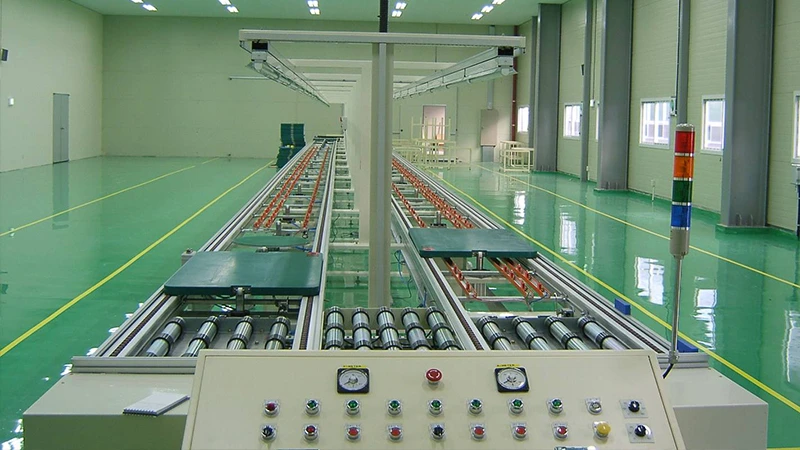
The free flow conveyor system uses a free flow chain that can increase the speed of the tooling board that supports the products. This can improve the efficiency and quality of the production process, as well as reduce the wear and tear of the system.
The Critical Role of Conveyors in Modern Food Processing
In the fast-paced world of food processing, every second counts. From raw ingredient handling to packaging, the efficiency of material flow directly impacts productivity, product quality, and ultimately, consumer safety. At the heart of this flow lies a workhorse often taken for granted: the conveyor system. Among the various types available, free flow chain conveyors have emerged as a staple in facilities handling everything from baked goods to fresh produce, thanks to their ability to move products smoothly, reduce bottlenecks, and adapt to diverse production layouts.
But in food processing, "smooth flow" is never just about speed. It's about ensuring that every inch of the conveyor—from the chain links to the support structures—meets the strictest hygiene standards. A single oversight in design can turn a conveyor into a hidden threat, harboring bacteria, allergens, or debris that compromise product integrity. For plant managers and operations teams, choosing a free flow chain conveyor isn't just a matter of selecting equipment; it's about investing in a system that protects both the brand and the end consumer.
This article dives into the hygienic design considerations that make free flow chain conveyors safe and reliable for food processing. We'll explore material choices, structural features, compliance standards, and maintenance practices that turn a basic conveyor into a hygiene-focused solution. Along the way, we'll highlight how components like stainless steel pipe series, roller track, and caster wheels play pivotal roles in creating a system that's both efficient and sanitary.
Material Selection: The Foundation of Hygiene
When it comes to hygiene in food processing equipment, the materials used are the first line of defense. Free flow chain conveyors, which often operate in wet, humid, or debris-prone environments, demand materials that resist corrosion, prevent bacterial growth, and stand up to frequent cleaning—including harsh sanitizers. Let's break down the key materials that set hygienic conveyors apart, with a focus on why stainless steel pipe series and other corrosion-resistant options are non-negotiable.
Stainless Steel Pipe Series: The Gold Standard
Stainless steel has long been the material of choice for food contact surfaces, and for good reason. Unlike carbon steel, which rusts when exposed to moisture, stainless steel contains chromium (at least 10.5%), which forms a passive oxide layer that resists corrosion and repels contaminants. For free flow chain conveyors, the frame, support structures, and even chain components are often constructed using stainless steel pipe series—specifically grades like 304 or 316, which are approved for food contact by regulatory bodies like the FDA.
304 stainless steel, sometimes called "food-grade stainless," is ideal for dry or mildly wet environments, such as bakeries or snack processing lines. It offers excellent resistance to oxidation and most organic acids. For facilities with high humidity, frequent washdowns, or exposure to saltwater (like seafood processing), 316 stainless steel is preferred. Its addition of molybdenum enhances resistance to chloride corrosion, ensuring the conveyor remains intact even after daily hosing with sanitizing solutions.
Beyond corrosion resistance, stainless steel pipe series brings another hygiene benefit: smooth, non-porous surfaces. Unlike painted or coated metals, which can chip or crack over time, stainless steel doesn't provide crevices for bacteria like Listeria or Salmonella to hide. This smoothness also makes cleaning faster and more effective—critical in facilities where downtime for sanitation directly cuts into production hours.
Roller Track: Minimizing Contact, Maximizing Cleanability
While the frame and chain get much of the attention, the roller track—the component that guides and supports products as they move along the conveyor—plays an equally vital role in hygiene. Traditional roller tracks with exposed bearings or gaps between rollers can trap food particles, especially in lines handling small items like berries or nuts. Modern hygienic designs address this by using sealed roller tracks with smooth, continuous surfaces.
Hygienic roller tracks are typically made from the same stainless steel as the frame, ensuring consistency in corrosion resistance. The rollers themselves may feature FDA-approved plastic coatings (like polyurethane) to prevent product damage, but the key is that the track's structure leaves no room for debris to accumulate. For example, some roller tracks use "full-width" rollers that eliminate gaps between individual wheels, while others integrate sealed bearings to prevent lubricants from leaking onto food products. In wet environments, drainage holes in the track frame ensure water from washdowns doesn't pool, reducing the risk of mold growth.
Avoiding Compromises: Why Low-Quality Materials Pose Risks
In an industry where profit margins are tight, it's tempting to cut costs by choosing conveyors with galvanized steel frames or plastic components. But these materials often fall short in hygiene. Galvanized steel, for instance, may resist rust initially, but the zinc coating can chip or wear away over time, exposing the underlying steel to moisture. Similarly, low-grade plastics can degrade when exposed to high temperatures or strong sanitizers, creating cracks that harbor bacteria.
Even seemingly minor components, like the caster wheels used on mobile conveyors, require careful material selection. Standard rubber caster wheels may absorb oils or debris, while non-marking, food-grade polyurethane wheels are designed to resist staining and are easy to wipe clean. When paired with stainless steel swivel brackets, these caster wheels ensure that even the mobile parts of the conveyor don't become hygiene blind spots.
| Material | Hygiene Benefits | Best For | Limitations |
|---|---|---|---|
| 304 Stainless Steel (Stainless Steel Pipe Series) | Corrosion-resistant, non-porous, easy to clean | Dry/mildly wet environments (bakeries, snacks) | Less resistant to chloride than 316 |
| 316 Stainless Steel | Enhanced chloride resistance, suitable for saltwater or heavy washdowns | Seafood, meat processing, high-humidity areas | Higher cost than 304 |
| Food-Grade Polyurethane (Caster Wheels) | Non-marking, chemical-resistant, easy to sanitize | Mobile conveyors, cleanrooms | Not suitable for extreme heat |
| Anodized Aluminum | Lightweight, corrosion-resistant | Dry, low-debris applications (packaging lines) | Prone to scratching; may harbor bacteria if damaged |
The takeaway? Hygienic material selection is not a one-size-fits-all process. It requires aligning the conveyor's materials with the specific conditions of the production environment—whether that's a dry cookie line or a high-moisture poultry plant. Stainless steel pipe series, paired with food-grade plastics for moving parts like caster wheels, offers the most reliable foundation for long-term hygiene.
Structural Design: Eliminating "Hygiene Traps"
Even the best materials can't compensate for poor structural design. A conveyor made with 316 stainless steel but riddled with sharp corners, overlapping components, or hard-to-reach crevices is still a hygiene risk. In food processing, "design for hygiene" means engineering every part of the conveyor to be self-cleaning by default—minimizing nooks where debris can hide and ensuring that water, sanitizers, and cleaning tools can reach every surface.
Let's explore the key structural features that turn a free flow chain conveyor into a hygiene-focused system, from the chain design to the roller track layout and support frames.
Sealed and Smooth: The Free Flow Chain Itself
The chain is the heart of a free flow chain conveyor, and its design has the biggest impact on hygiene. Traditional roller chains, with their open links and exposed pins, are magnets for food particles and lubricants. In contrast, hygienic free flow chains are engineered to eliminate these "traps." Look for chains with:
- Sealed bearings: Pre-lubricated, sealed bearings prevent lubricant leakage (which can contaminate food) and keep debris out of the chain joints.
- Smooth, rounded links: Sharp edges or overlapping plates create crevices. Hygienic chains have rounded profiles and minimal gaps between links.
- Easy disassembly: Quick-release pins or tool-less chain links allow for thorough cleaning or replacement without disassembling the entire conveyor.
Some manufacturers take this a step further by offering "hollow pin" chains, where the pins are hollow to allow sanitizing fluids to flow through during cleaning. For high-risk applications (e.g., raw meat processing), these features are not just preferences—they're requirements.
Roller Track: Guiding Products Without Guiding Contaminants
The roller track, which supports and guides products along the conveyor, is another critical area for hygienic design. In non-hygienic conveyors, roller tracks often have open ends, exposed axles, or gaps between rollers—all of which can catch crumbs, dust, or liquid. Hygienic roller track designs address these issues with:
- Closed-end rollers: Caps on roller ends prevent debris from entering the axle housing.
- Flush mounting: Rollers are mounted flush with the track frame, eliminating ledges where debris can accumulate.
- Sloped surfaces: The track frame itself may be sloped slightly to ensure water runs off during washdowns, rather than pooling.
For example, a roller track used in a fruit processing line might feature 1-inch swivel roller balls (a type of roller track component) with sealed bearings and rounded edges, ensuring that juice or pulp doesn't get trapped between the rollers and the track. When paired with a stainless steel frame, this design ensures that even sticky or wet products don't leave behind residue that could spoil later batches.
Frame and Support Structures: No Nooks, No Crannies
The frame that supports the conveyor—often constructed using stainless steel pipe series—must be designed with the same attention to detail. Welds, for instance, are a common hygiene weak point. Rough or uneven welds create crevices where bacteria thrive. Hygienic conveyors use continuous, ground welds that are smooth and flush with the surrounding metal, then polished to eliminate any ridges.
Similarly, bolted connections should be minimized, as bolts can loosen over time, creating gaps. When bolts are necessary, they should be recessed or covered with caps to prevent debris buildup. Some manufacturers use "clamp-style" connections, where stainless steel brackets secure the frame without exposed fasteners. This not only improves hygiene but also makes the frame easier to disassemble for deep cleaning.
Even the height of the conveyor matters. A frame that sits too low to the ground may be harder to clean underneath, while one that's too high could require ladders (increasing fall risks during cleaning). Adjustable height legs, often with stainless steel or food-grade plastic feet, allow facilities to customize the conveyor's height for both ergonomics and cleanability.
Mobile Conveyors: Caster Wheels as Hygiene Allies
Many food processing facilities use mobile free flow chain conveyors to adapt to changing production needs—for example, moving the conveyor to a different line during seasonal rushes. But mobility introduces a new hygiene challenge: the caster wheels. Standard caster wheels can track in dirt, water, or debris from one area of the plant to another, cross-contaminating zones.
Hygienic caster wheels address this with features like:
- Non-marking, food-grade polyurethane treads: These resist staining and are easy to wipe clean with sanitizers.
- Sealed swivel housings: Prevent debris from entering the swivel mechanism, which could otherwise spread contaminants as the caster turns.
- Locking brakes: Secure the conveyor in place during operation and cleaning, preventing accidental movement that could spill sanitizers or dislodge debris.
Some caster wheels even feature "total lock" brakes, which lock both the wheel and the swivel, ensuring stability during high-pressure washdowns. For facilities with strict zone separation (e.g., raw vs. cooked areas), these wheels are essential for preventing cross-contamination.
Compliance and Certification: Meeting Regulatory Expectations
Hygienic design isn't just about best practices—it's about meeting or exceeding the regulations set by global food safety authorities. For free flow chain conveyors, compliance ensures that the equipment won't become a liability during audits or inspections. Let's explore the key standards that govern hygienic conveyor design and how manufacturers demonstrate compliance.
FDA, USDA, and EHEDG: The Big Three
In the United States, the Food and Drug Administration (FDA) sets guidelines for materials and surfaces that contact food. Under 21 CFR Part 174-178, the FDA mandates that food contact surfaces be "safe for their intended use," "adequately cleanable," and "non-absorbent." Stainless steel pipe series, for example, is explicitly approved under these regulations, as it meets all three criteria.
The United States Department of Agriculture (USDA) goes a step further, issuing certifications for equipment used in meat, poultry, and egg processing. USDA-certified conveyors must meet strict design standards, including smooth welds, corrosion resistance, and the absence of hidden areas where meat particles or bacteria can accumulate. For free flow chain conveyors in these facilities, USDA approval is often a prerequisite for installation.
Internationally, the European Hygienic Engineering & Design Group (EHEDG) is a leading authority. EHEDG publishes guidelines (e.g., Doc. 8) that outline "hygienic design criteria" for equipment, including conveyors. These guidelines are highly detailed, specifying everything from the radius of rounded edges (minimum 3mm to prevent crevices) to the angle of slopes (minimum 1.5° to ensure water runoff during cleaning).
EHEDG certification involves rigorous testing, including microbial challenge tests where equipment is intentionally contaminated, then cleaned to demonstrate that it can be effectively sanitized. For facilities exporting to the EU or seeking to align with global best practices, EHEDG compliance is a strong differentiator.
Third-Party Testing: Beyond Self-Declaration
While manufacturers may claim compliance with FDA or EHEDG standards, third-party testing adds credibility. Organizations like NSF International (NSF/ANSI 169) certify equipment for food safety, conducting independent audits of materials, design, and performance. A conveyor with an NSF mark provides assurance that it has been tested to meet objective hygiene criteria.
For example, NSF/ANSI 169 requires that equipment be "designed to allow for inspection, maintenance, cleaning, and sanitizing without disassembly, except for routine maintenance." This aligns with the earlier focus on easy disassembly and tool-less cleaning features in hygienic conveyors.
Documentation: The Paper Trail of Hygiene
Compliance isn't just about the equipment itself—it's about the documentation that proves it meets standards. Reputable conveyor manufacturers provide detailed "hygiene dossiers" that include:
- Material safety data sheets (MSDS) for all components, including stainless steel pipe series and caster wheel materials.
- Test reports from third-party labs (e.g., NSF, EHEDG) verifying compliance.
- Cleaning and maintenance instructions tailored to food processing environments.
- Certificates of compliance with FDA, USDA, or EHEDG standards.
For plant managers, this documentation is critical during regulatory audits. It demonstrates due diligence and provides a roadmap for training staff on proper cleaning protocols.
Maintenance and Cleaning: Sustaining Hygiene Over Time
Even the most hygienically designed conveyor will degrade over time without proper maintenance. In food processing, maintenance isn't just about keeping the conveyor running—it's about preserving its hygiene features. Let's explore the practices that ensure a free flow chain conveyor remains a clean, safe part of the production line for years.
Daily Cleaning: Preventing Buildup Before It Starts
Daily cleaning should focus on removing surface debris, spills, and residue before they harden or become breeding grounds for bacteria. For free flow chain conveyors, this typically involves:
- Wiping down surfaces: Using a food-grade sanitizer and a lint-free cloth to clean the chain, roller track, and frame.
- Flushing with low-pressure water: For wet environments, a low-pressure hose (avoiding high pressure, which can drive debris into crevices) removes loose particles from the roller track and chain.
- Inspecting for damage: Checking for worn chain links, loose caster wheels, or cracked roller track components that could trap debris.
For facilities with automated cleaning systems (e.g., CIP—Clean-In-Place), the conveyor should be designed to integrate with these systems. This may include spray balls positioned to target the chain and roller track, or drains in the frame to channel wastewater away from the production area.
Deep Cleaning: Getting to the Hidden Spots
Daily cleaning is essential, but deep cleaning—performed weekly or monthly, depending on the product—removes contaminants that accumulate in hard-to-reach areas. For free flow chain conveyors, this often involves partial disassembly, such as removing the chain or roller track sections for soaking in sanitizing solutions. Components like caster wheels may also be removed to clean the swivel housings and brakes.
Stainless steel pipe series frames simplify deep cleaning, as they can withstand repeated exposure to hot water and strong sanitizers (e.g., chlorine or peracetic acid) without corroding. Manufacturers may provide cleaning guides specific to their conveyors, including recommended sanitizers, soak times, and reassembly steps to ensure components are put back correctly and securely.
Preventive Maintenance: Extending Life and Hygiene
Preventive maintenance goes hand-in-hand with cleaning, ensuring that the conveyor remains structurally sound and hygienic over time. Key tasks include:
- Lubricating chain bearings: Using food-grade lubricants (approved by the FDA) to keep sealed bearings functioning smoothly—over-lubrication is avoided, as excess can attract debris.
- Tightening fasteners: Checking and tightening bolts or clamps on the frame and roller track to prevent gaps that trap debris.
- Replacing worn parts: Swapping out damaged caster wheels, cracked roller track guides, or stretched chain links before they compromise hygiene.
Many facilities use computerized maintenance management systems (CMMS) to track maintenance schedules, ensuring that deep cleaning and part replacements aren't overlooked. This proactive approach not only extends the conveyor's lifespan but also reduces the risk of unexpected breakdowns that disrupt production and compromise hygiene.
Case Study: How a Bakery Upgraded Hygiene with Free Flow Chain Conveyors
To put these concepts into context, let's look at a real-world example: a mid-sized bakery in the Midwest that upgraded its free flow chain conveyors to improve hygiene and reduce downtime. Prior to the upgrade, the bakery used older, galvanized steel conveyors with standard roller tracks and rubber caster wheels. The results were predictable: frequent product recalls due to allergen cross-contamination, and hours lost each week to manual cleaning.
The bakery's key challenges were:
- Galvanized steel frames were rusting in humid areas, creating flaky residue that fell onto products.
- Standard roller tracks had gaps between rollers where crumbs accumulated, leading to mold growth.
- Rubber caster wheels were absorbing oil and flour, which transferred between production zones.
The solution? A custom free flow chain conveyor system built with 304 stainless steel pipe series frames, sealed-bearing chains, and EHEDG-compliant roller track. The caster wheels were replaced with food-grade polyurethane wheels with sealed swivel housings and total-lock brakes. The chain featured quick-release links for easy disassembly, and the roller track had closed-end rollers and sloped frames to prevent pooling water.
The results were transformative: allergen cross-contamination incidents dropped to zero within six months, cleaning time was reduced by 40%, and the conveyor required fewer repairs due to the durability of the stainless steel components. As the plant manager noted, "We used to dread FDA audits because of the conveyors. Now, they're one of the first things we show off."
Conclusion: Hygiene as a Competitive Advantage
In food processing, free flow chain conveyors are more than just equipment—they're guardians of product safety. By prioritizing hygienic design considerations—from stainless steel pipe series frames to sealed roller track and food-grade caster wheels—facilities can reduce contamination risks, comply with regulations, and build trust with consumers.
The key takeaways are clear: material selection must prioritize corrosion resistance and cleanability; structural design must eliminate crevices and simplify cleaning; compliance with FDA, USDA, or EHEDG standards is non-negotiable; and maintenance practices must be proactive to sustain hygiene over time. When these elements come together, a free flow chain conveyor becomes more than a tool for efficiency—it becomes a strategic asset that protects the brand and the bottom line.
For plant managers and operations teams, the message is simple: don't just buy a conveyor. Invest in a hygiene solution. Your products, your customers, and your peace of mind will thank you.