- Company Articles
- Products and Technology
- Product knowledge
- Free Flow Chain Conveyor for Heavy-Duty Material Handling in Machinery Plants

Free Flow Chain Conveyor for Heavy-Duty Material Handling in Machinery Plants
Related Product
Free Flow Chain Conveyor
The free flow conveyor system uses a free flow chain that can increase the speed of the tooling board that supports the products. This can improve the efficiency and quality of the production process, as well as reduce the wear and tear of the system.
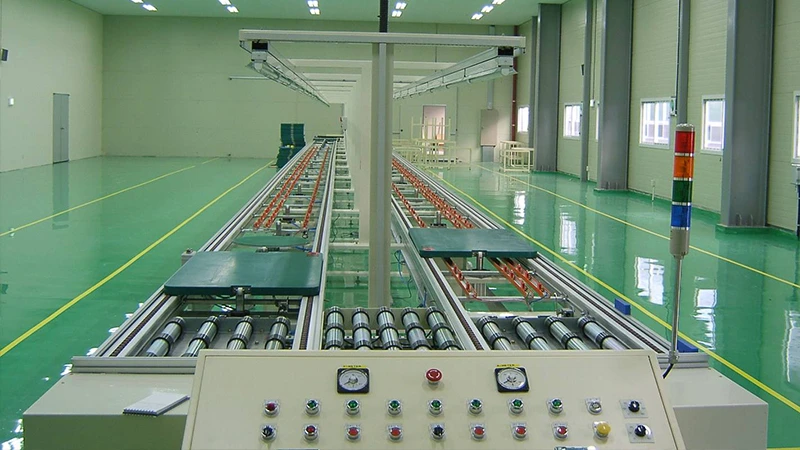
Step into any machinery plant, and you'll quickly realize that the heartbeat of operations lies in how efficiently materials move. From raw metal sheets to bulky engine components, the ability to transport heavy loads smoothly, safely, and without delays can make or break production timelines. Yet, for many plant managers, this remains a daily struggle: workers strained by manual lifting, bottlenecks at transfer points, and systems that buckle under the weight of "heavy-duty" demands. Enter the free flow chain conveyor—a solution designed not just to move materials, but to redefine how machinery plants handle the grit and grind of heavy industry.
In this article, we'll dive into why free flow chain conveyors have become indispensable in modern machinery plants, how they integrate with other lean tools like roller track and aluminum profile workbenches, and why they're more than just a piece of equipment—they're a catalyst for safer, faster, and more reliable operations. Whether you're looking to upgrade an aging system or design a new facility from the ground up, understanding the value of free flow chain conveyors could be the first step toward transforming your plant's material handling workflow.
What Is a Free Flow Chain Conveyor, and Why Does It Matter for Heavy-Duty Work?
At its core, a free flow chain conveyor is a material handling system built for resilience. Unlike lighter-duty belt conveyors that struggle with sharp edges or heavy loads, or roller conveyors that can jam under uneven weight, free flow chain conveyors are engineered to thrive in tough environments. They consist of a series of interconnected chains mounted on a rigid track, powered by a drive mechanism that propels materials forward with consistent force—even when those materials weigh hundreds or thousands of pounds.
What sets them apart? Think of them as the workhorses of the conveyor world. The chains are typically made from hardened steel or stainless steel, resistant to rust, wear, and impact. The track, often constructed from aluminum profile or reinforced steel, ensures stability, while adjustable speed controls let operators match the conveyor's pace to the plant's workflow. This combination makes them ideal for machinery plants, where parts like engine blocks, gearboxes, or metal castings need to be moved gently but firmly from one station to the next—without risking damage to the product or the system.
But it's not just about strength. "Free flow" refers to their ability to maintain a continuous, uninterrupted movement, even when materials are loaded unevenly or at varying intervals. Unlike some conveyors that require precise alignment, these systems adapt to real-world chaos: a worker placing a part slightly off-center, a sudden surge in production, or a temporary slowdown at the next workstation. This flexibility is critical in machinery plants, where no two days (or even two hours) are exactly alike.
How Free Flow Chain Conveyors Work in Heavy-Duty Machinery Settings
Let's walk through a typical scenario: A machinery plant manufactures large hydraulic cylinders, each weighing 500 pounds. The process starts with raw steel tubes arriving at the cutting station, then moves to welding, machining, assembly, and finally quality control. Without a free flow chain conveyor, this might involve forklifts shuttling tubes between stations (risking accidents), or workers manually rolling them on carts (straining backs and slowing down production).
With a free flow chain conveyor, here's how it changes: The steel tubes are loaded onto the conveyor at the cutting station. The conveyor's chains, moving at a steady 10 feet per minute, carry them to the welding area. There, a worker uses a hoist to lift the tube off the conveyor and onto an aluminum profile workbench—custom-built to hold the cylinder at waist height, reducing bending. Once welded, the tube is placed back on the conveyor, which then moves it to machining. Along the way, roller track sections integrated into the conveyor system allow for easy diverting: if a tube needs an extra inspection, a quick flip of a lever sends it down a side track, while the rest continue to the next station.
This seamless flow is possible thanks to the conveyor's design. The chains are mounted on sprockets that distribute power evenly, preventing jams. The track is sloped slightly (often adjustable) to use gravity for movement, reducing strain on the drive motor. And because the chains are elevated above the track, debris like metal shavings or oil drips fall through, avoiding buildup that could halt operations. For machinery plants, where cleanliness and reliability go hand in hand, this is a game-changer.
Key Benefits: Why Machinery Plants Are Switching to Free Flow Chain Conveyors
1. Unmatched Load Capacity for Heavy Parts
Most standard belt conveyors top out at around 200 pounds per linear foot. Free flow chain conveyors? They can handle 500 pounds or more per linear foot, with some industrial models rated for over 2,000 pounds. This makes them perfect for machinery plants dealing with large components—think turbine blades, industrial gears, or construction equipment parts. No more worrying about overloading the system; these conveyors are built to take the weight.
2. Durability That Stands Up to Harsh Environments
Machinery plants are messy places. Oil, coolant, metal chips, and extreme temperatures are part of the daily routine. Free flow chain conveyors are designed to withstand this abuse. Stainless steel chains resist corrosion from coolants, while aluminum profile tracks stand up to dents and scratches. Even the drive motors are enclosed to protect against dust and debris. This durability translates to less downtime for repairs and longer system life—often 10–15 years with basic maintenance.
3. Improved Safety for Workers
Heavy lifting is one of the leading causes of workplace injuries in manufacturing. Free flow chain conveyors eliminate much of this risk by automating material movement. Workers no longer need to push, pull, or lift heavy parts; instead, they focus on skilled tasks like welding or assembly. Additionally, the conveyor's low profile (typically 6–12 inches off the ground) reduces trip hazards, while emergency stop buttons and safety guards prevent accidents if something goes wrong. In short, it's not just about moving materials—it's about protecting the people who make your plant run.
4. Integration with Lean Systems for Smarter Workflows
Modern machinery plants don't operate in silos, and neither should their conveyors. Free flow chain conveyors play well with other lean tools, creating a cohesive system. For example, they can connect to turnover trolley and rack systems: finished parts are offloaded from the conveyor onto trolleys, which are then stored in racks until shipping. Or, they can feed into automated sorting systems using roller track diverters, ensuring parts go to the right station without manual intervention. This integration reduces bottlenecks and turns "islands of production" into a unified, efficient process.
Comparing Conveyor Systems: Why Free Flow Chain Stands Out for Heavy-Duty Work
| Conveyor Type | Max Load Capacity (per linear foot) | Best For | Maintenance Needs | Suitability for Heavy-Duty Machinery Plants |
|---|---|---|---|---|
| Free Flow Chain Conveyor | 500–2,000 lbs | Heavy parts (engine blocks, steel tubes), uneven loads, harsh environments | Low (chain lubrication every 3 months, track cleaning monthly) | Excellent—built for durability and flexibility |
| Belt Conveyor | 100–300 lbs | Light to medium parts (small gears, plastic components), clean environments | High (belt replacement every 6–12 months, motor tune-ups) | Poor—belts wear quickly with heavy/abrasive parts |
| Roller Conveyor | 200–800 lbs | Medium parts (castings, assemblies), flat-bottomed items | Medium (roller bearing replacement, track alignment) | Fair—can jam with uneven loads; not ideal for sharp edges |
| Overhead Conveyor | 300–1,500 lbs | Large parts (vehicle frames), saving floor space | High (chain tension adjustments, trolley maintenance) | Good—saves space but limited to fixed paths; hard to integrate with workbenches |
As the table shows, free flow chain conveyors outperform other types when it comes to heavy-duty machinery plant needs. While overhead conveyors save floor space, they lack the flexibility to adapt to changing workflows. Roller conveyors struggle with uneven loads, and belt conveyors simply can't handle the weight or abrasion of metal parts. For most machinery plants, the choice is clear: free flow chain conveyors offer the best balance of strength, adaptability, and low maintenance.
Real-World Impact: How One Machinery Plant Boosted Productivity by 40% with Free Flow Chain Conveyors
Let's look at a case study to bring this to life. A mid-sized machinery plant in Ohio specializing in agricultural equipment was struggling with production delays. Their old system relied on forklifts to move 800-pound gearboxes between machining and assembly—leading to 3–4 accidents per year, and a bottleneck at the assembly line (workers often waited 20+ minutes for the next gearbox). They also used basic wooden workbenches that weren't height-adjustable, leading to high employee turnover due to back pain.
After installing a free flow chain conveyor system with integrated roller track diverters and aluminum profile workbenches, here's what happened in six months:
- Accidents dropped to zero—no more forklift traffic near workstations.
- Assembly line wait times decreased from 20 minutes to 2 minutes, as gearboxes arrived continuously via the conveyor.
- Employee turnover fell by 30%—the aluminum profile workbenches reduced physical strain, and workers reported feeling "valued" by the investment in their safety.
- Overall productivity increased by 40%—they went from assembling 10 gearboxes per day to 14, meeting a long-standing client backlog.
This isn't an isolated success story. Across the industry, machinery plants that switch to free flow chain conveyors report similar gains: safer workplaces, happier employees, and bottom-line results that justify the initial investment.
Maintenance Tips to Keep Your Free Flow Chain Conveyor Running Strong
Like any piece of industrial equipment, a free flow chain conveyor needs regular care to perform at its best. The good news? Compared to other systems, maintenance is minimal—if you stay on top of a few key tasks:
1. Lubricate the Chains
Chains are the heart of the system, and dry chains lead to friction, noise, and premature wear. Use a high-quality industrial lubricant (avoid water-based formulas, which wash off easily in messy plants) every 3 months. Focus on the chain links and sprockets—this simple step can extend chain life by 2–3 years.
2. Clean the Track Regularly
Metal shavings, oil, and debris can build up in the track, causing the chains to drag or jam. Once a month, use a broom or shop vac to clean out the track. For stubborn grime, a wire brush works well—just be gentle to avoid scratching the track's surface (which could create rough spots that wear down chains).
3. Inspect for Wear and Tear
Every week, walk the length of the conveyor and check for loose bolts, bent chain links, or damaged sprockets. Tighten bolts with a wrench, and replace any worn parts immediately—small issues (like a single bent link) can turn into big problems (a chain snap) if ignored. Pay extra attention to areas where materials are loaded/unloaded—these are high-stress points.
4. Test the Drive System
The drive motor and gearbox should be inspected quarterly. Listen for unusual noises (grinding, squealing) which could signal a misalignment or failing bearing. Check the motor's temperature—if it's too hot to touch, it may be overworked, and you may need to adjust the conveyor's speed or load capacity.
Choosing the Right Free Flow Chain Conveyor: Key Factors for Machinery Plant Managers
Not all free flow chain conveyors are created equal. When selecting a system for your plant, consider these factors to ensure it meets your unique needs:
1. Load Capacity and Speed
Start with the basics: What's the heaviest part you'll move? How fast do you need materials to flow? A conveyor rated for 500 pounds may work for small engine parts, but if you're moving 1,500-pound castings, you'll need a heavy-duty model with reinforced chains and a higher-horsepower motor.
2. Track Material
Aluminum profile tracks are lightweight and corrosion-resistant, ideal for plants with moderate moisture or chemical exposure. Stainless steel tracks are better for extreme environments (e.g., plants using coolants or acids). For most machinery plants, aluminum profile offers the best balance of durability and cost.
3. Integration with Existing Systems
Do you already use turnover trolley and rack systems? Roller track for diverting materials? Look for a conveyor supplier who can customize the system to connect with your current setup. For example, adding a "drop-off" section that aligns with your trolleys, or integrating sensors that automatically slow the conveyor when the next workstation is full.
4. Space and Layout
Measure your available floor space carefully. Free flow chain conveyors can be straight, curved, or inclined, but sharp turns may require special chain guides. If floor space is limited, consider a two-level system—lower level for incoming materials, upper level for outgoing—though this adds complexity and cost.
Conclusion: Free Flow Chain Conveyors—More Than Equipment, a Foundation for Lean Manufacturing
In the fast-paced world of machinery manufacturing, every second counts. Delays from inefficient material handling, accidents from manual lifting, or downtime from unreliable equipment eat into profits and morale. Free flow chain conveyors aren't just a tool to move parts—they're a cornerstone of lean manufacturing, turning chaos into order, and stress into productivity.
By combining unmatched durability, flexibility, and integration with other systems like roller track and aluminum profile workbenches, these conveyors help machinery plants do more than keep up—they stay ahead. Whether you're producing agricultural equipment, industrial pumps, or heavy construction machinery, a free flow chain conveyor is an investment in safety, efficiency, and the future of your plant.
So, if you're tired of watching your team struggle with outdated material handling, or if you're designing a new facility and want to build in efficiency from day one, it's time to consider the difference a free flow chain conveyor can make. After all, in machinery manufacturing, the strongest systems aren't just built to last—they're built to adapt, evolve, and keep your plant moving forward, no matter what the day brings.